Funeral Live Streaming in a Church With No Signal — St Nicholas', Charlwood
Some funerals are straightforward to stream. This was not one of them — and that's exactly why it's worth writing about.
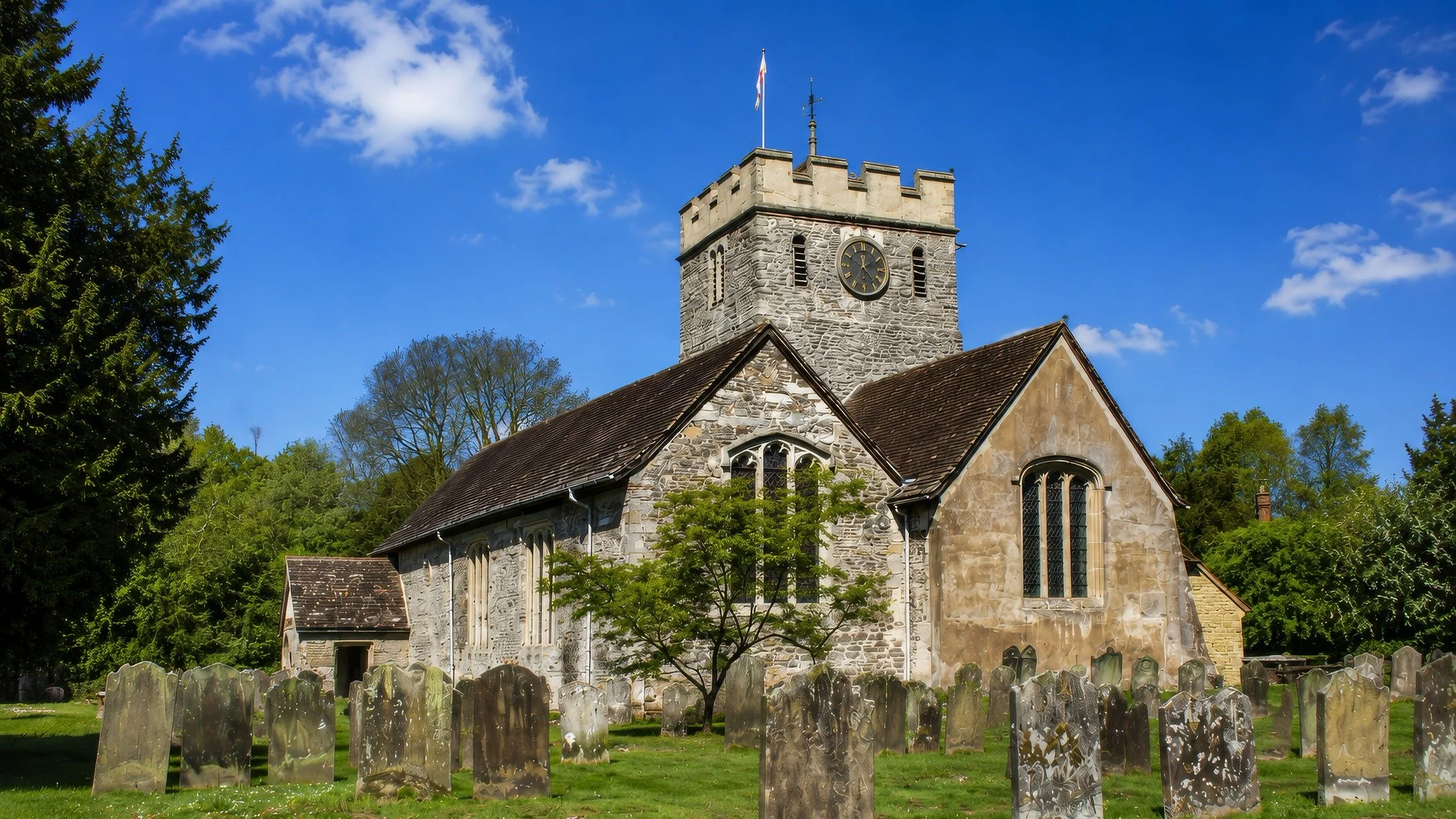
I recently provided the funeral streaming for a traditional Church of England funeral at St Nicholas' Church in Charlwood, a village on the edge of Gatwick, just minutes from Crawley and Horley. It's one of the oldest churches I've ever worked in — a Grade I listed Norman church with parts dating back to around 1080, only fourteen years after the Norman Conquest, complete with nationally important medieval wall paintings and stone walls (which were incredible) the best part of a metre thick. Beautiful to stand in but a serious technical challenge to stream from.
This is the story of how I did it, and why arriving early, having lots of experience and knowing what you're doing makes all the difference on a day like this.
Knowing It Would Be Difficult — and Arriving Early
I knew before I set off that this was going to be a hard one. Ancient churches like St Nicholas' are built to keep the weather out, and metre-thick stone walls with leaded stained-glass windows do a very effective job of keeping mobile signal out too. Charlwood is also a genuinely remote village — the kind of place where locals struggle to make a call on their mobiles, let alone push a live HD video feed to the other side of the world. The church warden, who lives just opposite, told me that even making a phone call from home is a struggle — she has to go outside and stand on her step to get a signal at all, and if she moves from that one spot, the call drops.
So I arrived with plenty of time in hand, because on a service like this the setup can't be rushed. You don't get a second chance to stream a funeral — it has to be right first time.
Finding a Signal — Over an Hour of Work Before a Single Camera Went Up
The first job was the internet connection, because on this day everything else had to be built around it.
Before I could even think about cameras, I had to answer one question: was there anywhere in this building I could hold a signal strong and stable enough to carry a live HD stream? I started outside, working out where the nearest mobile mast was and which direction the signal was actually coming from — because knowing that tells you where inside the building you've got any chance, and how to orient the equipment to pull the most out of a weak signal.
Outside, near the church, I found a workable signal — not the strongest I've ever had, but usable. The hard part was replicating that inside a thousand-year-old stone building designed, in effect, to block it.
So I tested. Methodically, corner by corner. I ran speed test after speed test in every part of the church — down the aisles, by the windows, near the door, at the front by the altar, at the back, high spots and low spots — checking not just whether there were bars showing on a screen, but the real upload speed and stability in each position, because a stream doesn't care about signal bars, it cares about a steady, sustained upload that won't drop mid-service. A spot that looks fine for ten seconds is no good if it falls over two minutes later.
This took over an hour. Most positions were unusable. But eventually, through sheer persistence and testing every possible location, I found the one place in the church where I could hold a stable, sustained connection strong enough to stream reliably from start to finish. Only once I'd pinpointed that could I plan everything else — because on this day, the signal dictated the setup, not the other way round.
Why One Signal Was Never Going to Be Enough
It's worth explaining what I'm actually working with, because it's a world away from simply using a phone as a hotspot.
Rather than relying on a single connection, I combine four separate mobile internet connections — each on a different network, so where one network is weak, another may be stronger, and the gaps in coverage don't line up. These feed into a dedicated streaming system with intelligent software that bonds all four together into one signal and actively manages them in real time throughout the service, balancing the load and compensating if any one of them weakens. It's what allows me to hold a broadcast-quality stream in places a normal setup simply couldn't.
The catch is that all of this equipment has to physically stand in one place — and in a signal blackspot like St Nicholas', that place has to be the exact spot where the combined signal is strongest. That's why the hour of testing mattered so much: everything else on the day would be built around wherever that tower of connections had to stand.
Building the Setup Around the Signal
With the connection point fixed, I could plan the cameras — and the church itself added another layer of complexity.
The lectern where family and friends would speak from was very tall. A straight-on view would have hidden most of their faces, so I set up a side angle instead, so everyone giving a tribute or reading could be seen properly. I also wanted to capture the coffin, which was resting in place before guests arrived, and the congregation — who, because of the church's unusual layout, were seated at a range of different angles. And I wanted a clear view of the coffin being carried out at the end.
For sound, I microphoned the lectern and the minister directly, and the music was all delivered from the organ, so the audio side was relatively straightforward on this occasion — one less thing to fight on a day that had plenty of challenges already.
The Clever Bit — Beaming the Feed Across the Church
Here's where experience really earned its keep. The ideal filming position was on one side of the church. The only stable internet connection was on the other. On a normal job I'd simply run a cable between my mixer and the streaming box — but building the kit around the signal meant that wasn't possible here.
So instead of hardwiring, I wirelessly transmitted the mixed feed from my camera position across the church to the streaming box sitting by the connection point, using a piece of kit designed for exactly this. It worked perfectly.
I also ran everything with backup in mind. There were a lot of links in the chain on this service — cameras, mixer, wireless transmission, bonded connection, streaming box — so I had the cameras recording independently and an additional unit capturing the mixed feed separately, so that whatever happened, the family would have their recording. Backups are everything!!
The Result — Flawless, Worldwide, From a Signal Blackspot
The funeral directors arrived early and had everything set beautifully, with the coffin already in place as guests arrived. The service was led by the Vicar, Sue, who was warm, calm and wonderfully accommodating throughout — she made my job easy and led the day with real care as family and friends shared tributes, readings, traditional elements and hymns. When the service closed, the coffin was carried out and the family left together.
And the stream? It ran perfectly from start to finish — crisp, sharp, richly coloured, broadcast-quality footage, watched live on more than 67 devices across England, Scotland, Australia and Canada. From a thousand-year-old church in a rural signal blackspot, loved ones on the other side of the world were there in real time.
Why This Matters When You're Choosing a Live Streamer
This is the kind of service where the difference between an experienced professional and someone with a basic setup becomes very real. Thick walls, leaded windows, a remote village, a challenging layout and a lot of links in the technical chain — any one of these can defeat a stream that relies on venue Wi-Fi or a single connection. Many less experienced live streamers would have struggled to get anything out of St Nicholas' at all.
If your family's service is at an old church, a rural chapel or anywhere you're worried about signal, this is exactly the kind of challenge I'm set up to solve. You can read more about my coverage across Crawley, Horley and the Gatwick area, see more real services on my Real Funerals page, or explore how funeral live streaming works.
To talk to me about a service — however straightforward or however difficult the venue — call or text me on 07772 509101, seven days a week from 9am to 10pm, or get in touch online.