Funeral Streaming, Videography and Photography Blog
Guides and real funerals I have streamed, filmed and photographed across the UK. How the services work, what they cost, and what the days actually look like.
Funeral Live Streaming · Funeral Videography · Funeral Photography
Funeral Videography for a Baby Born Sleeping | Islington & Camden Cemetery
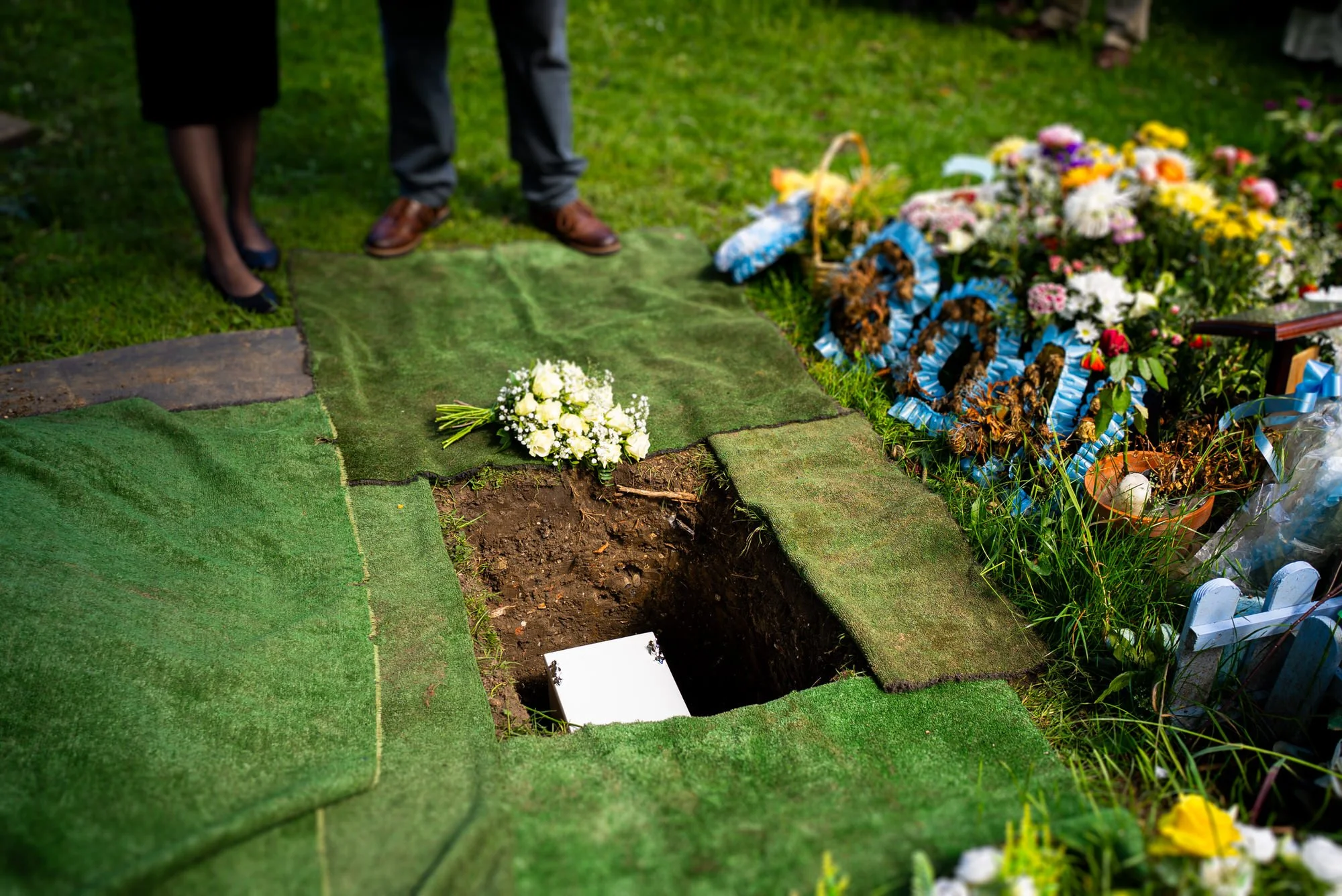
This film was made at Saint Pancras & Islington Cemetery on High Road, East Finchley, Barnet, London near the borough of Camden & Islington, in the children’s memorial section. It was a graveside service only, for a baby born sleeping.
The family carried a tiny coffin from the hearse to the graveside. A Catholic priest led the service. Dad said a few words. Then people left. It was short, and it mattered. The family wanted a film for the wider family who could not get to London.
The cemetery
The children’s section at East Finchley is its own part of the cemetery. Wind chimes hang near the graves. Trees break the light and provide a quiet and private way that would not be the case in a church.
Before anyone arrived I flew the drone over the cemetery to show where the burial would be — the paths, the trees, the corner of ground they had chosen. Establishing shots like that help a short film breathe and create context. Without them you only have the minutes at the graveside, and those minutes go so quickly.
I also recorded the place itself. The wind chimes. The sun coming through the trees, the clouds in the sky. That natural sound of the wind chimes went into the finished film with all the original audio of the catholic priest and the family when they spoke.
The service
The family carried the coffin from the hearse. It was small, delicate and had a huge impact on me as I realised again how cruel life can be. Somehow, the family still found the courage and a way to celebrate the small amount of time they managed to spend with her. People always amaze me. The grace, the compassion and just the sheer courage they can bring from the depths in such times. Amazing!
The priest took them through a Catholic graveside service. It was lovely in the simplest sense: clear, unhurried, the right length for a gathering this small. Dad spoke. Then it was over.
I filmed it as funeral videography, not as part of a live funeral stream. The family wanted a high quality 4k film, with all the details they could send to relatives around the world. A stream is for people watching at the same time and is often reduced in quality, HD rather than 4k to send it over the internet. This was for people who needed the day kept with all the extra details.
The finished film
The finished piece is fairly short as this was a small service. Instrumental music was added over the sounds of the cemetery which I collected, and the original audio from the priest and from Dad were used. My approach was to add the detail and keep the film as honest to the location and the people as possible, representing the day as it unfolded.
Delicate funerals are not filmed by standing a long way off and hoping. They are filmed by knowing what the family want kept — the carrying of the coffin, the words at the grave, the place itself — and not crowding them while it happens. This family were clear. They wanted it recorded so the rest of the family could see it.
Videography for a baby funeral
I have filmed and photographed funerals for babies born sleeping at cemeteries and churches across the UK. The work changes with the family. Some want stills only, some want a short film and some want both. There is no standard package that fits every one of these days.
If you are deciding whether funeral photography is right as well, this is the companion piece: Photographing a Baby’s Funeral
Funeral videography starts from £750.
Call or text 07772 509101, or use the contact page.
How to Watch a Funeral Live Stream
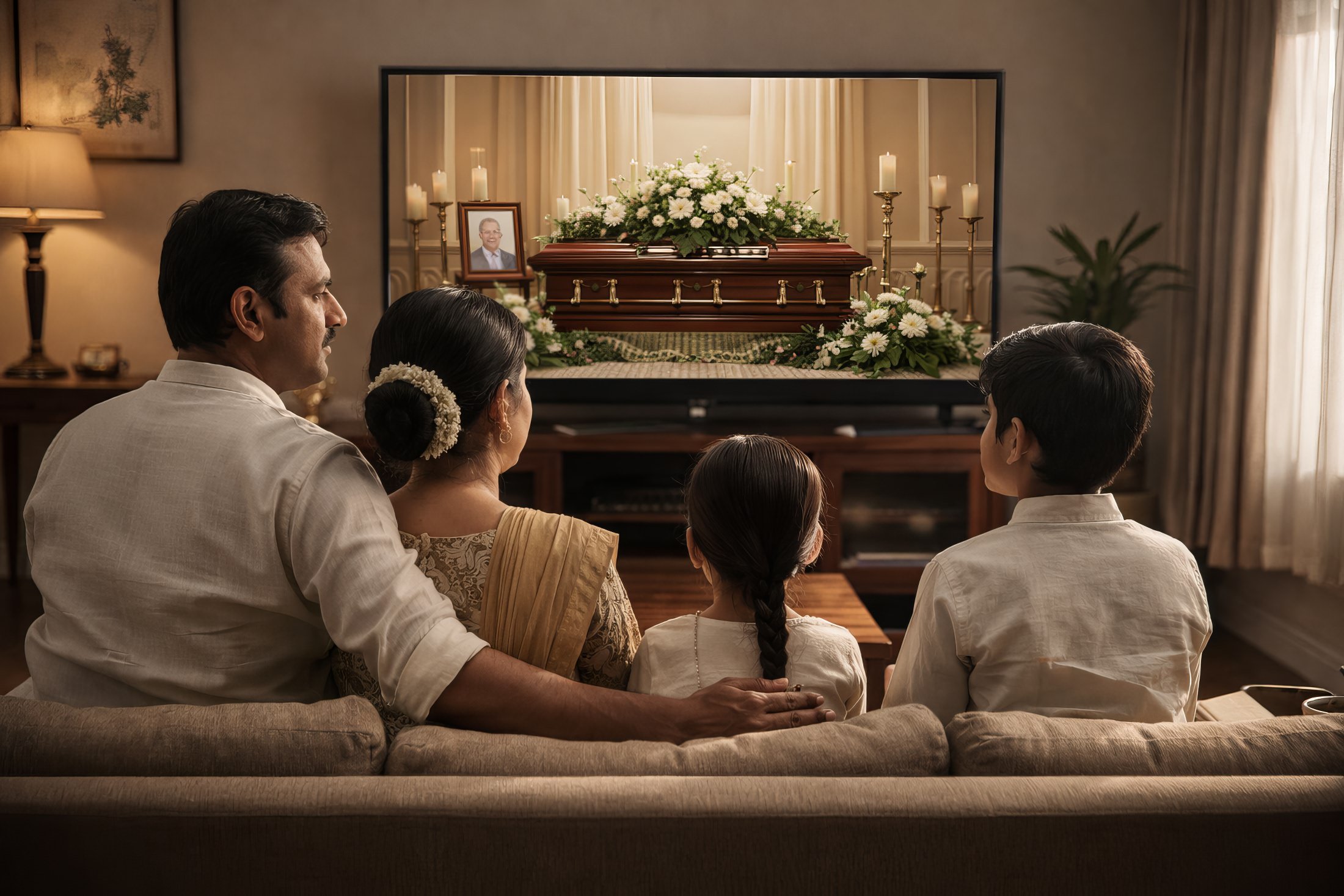
You do not need to download an app or create an account to watch a funeral live stream. The family will send you a viewing link, which you can open on a phone, tablet, laptop or smart TV before the service begins.
The dedicated live streaming page for the funeral is usually live around 20 minutes beforehand, so there is plenty of time to check the sound and settle before everything begins. After the service, the same link is used to watch the recording should you wish. There is never any additional charges for guests to watch a funeral live stream.
If you are arranging the stream rather than watching one, the service page is here: Funeral Live Streaming
How to Access a Funeral Live Stream
The family always decides who receives the funeral live streaming link. They send it ahead of time by text, email or WhatsApp. Once you have it, open the link and wait for the page to go live — usually around 20 minutes before the service.
If the family chose a password, that will be in the same message. Enter it when the page asks.
The viewing page is not listed on Google on Google as only people with the link can find it. A password is an extra step on top of that, used when the family wants tighter control over who can watch and have access.
How to Watch a Funeral Live Stream on a Phone or Tablet
Open the message shared by the family, tap the funeral streaming link, and let the page load. Turning the device sideways when the live stream begins and pressing the full screen button, will make the video go full screen and give you a larger picture. Ensure your volume is turned up. You can always use headphones if other people are in the room.
Try not to lock the phone during the service. Some devices pause the stream when the screen sleeps. If you can, keep the phone plugged in.
Using your phone is probably the easiest way for most people to watch a funeral live stream, including relatives who do not use a computer.
How to Watch a Funeral Live Stream on a Laptop
Open the live streaming link in Chrome, Safari, Edge or other browser. Use the full-screen control if you want the picture to fill the screen. Keep the laptop plugged in so it does not run out of power or go to sleep halfway through.
If more than one person in the house wants to watch, one laptop is often clearer for a group of people rather than several phones.
How to Watch a Funeral Live Stream on a Smart TV
Open the TV’s internet browser and enter the viewing link. Some families request a YouTube link, if we have provided this then you can open YouTube and search that way.
If typing the link on the TV is awkward, open it on a phone or laptop first and send it to the television with AirPlay, Chromecast or an HDMI cable. That is usually the simplest option for older relatives.
Turn the volume up before the service starts so you are not adjusting it during the first hymn or reading.
Can You Watch a Funeral Live Stream from Abroad?
Yes. A funeral live stream can be watched from abroad, as long as you have an internet connection. If the time difference means you cannot join live, use the same link afterwards as the recording is available as soon as the funeral ends for another 3 months. More detail is here: Can You Watch a Funeral Live Stream Later?
What If the Funeral Streaming Link Does Not Work?
Check the whole link was copied
Try a different browser
Check the Wi-Fi
Restart your device
Close all other apps on your device down
Ask the family whether a password was set
If the picture pauses, refresh the page. The service is being recorded at the same time, so a short break on your screen does not mean the funeral is lost.
How to Share a Funeral Streaming Link
Send the link at least 4-5 days before the funeral, not as people are leaving for the church. Include the time the page goes live, and the password if there is one.
A simple message is enough:
The funeral will be live streamed so all of you who are unable to be there on the day can join us online. Open this link 15-20 minutes before [time] and you will see the live stream appear once the videographer goes live. You can also use the same link afterwards to watch the recording.
Ask people not to post the link on public social media unless the page was set up to be openly shareable. Privacy options are explained on the funeral live streaming page.
How Funeral Live Streaming Works If You Need One Arranged
I provide funeral live streaming across the UK from £650. Guests watch on a viewing page. After the service they use the same link for the recording, which stays online for 3 months.
How Funeral Live Streaming Works
How Much Does Funeral Streaming Cost
Contact · 07772 509101
Cinematic Funeral Videography at Henley Natural Burial Ground
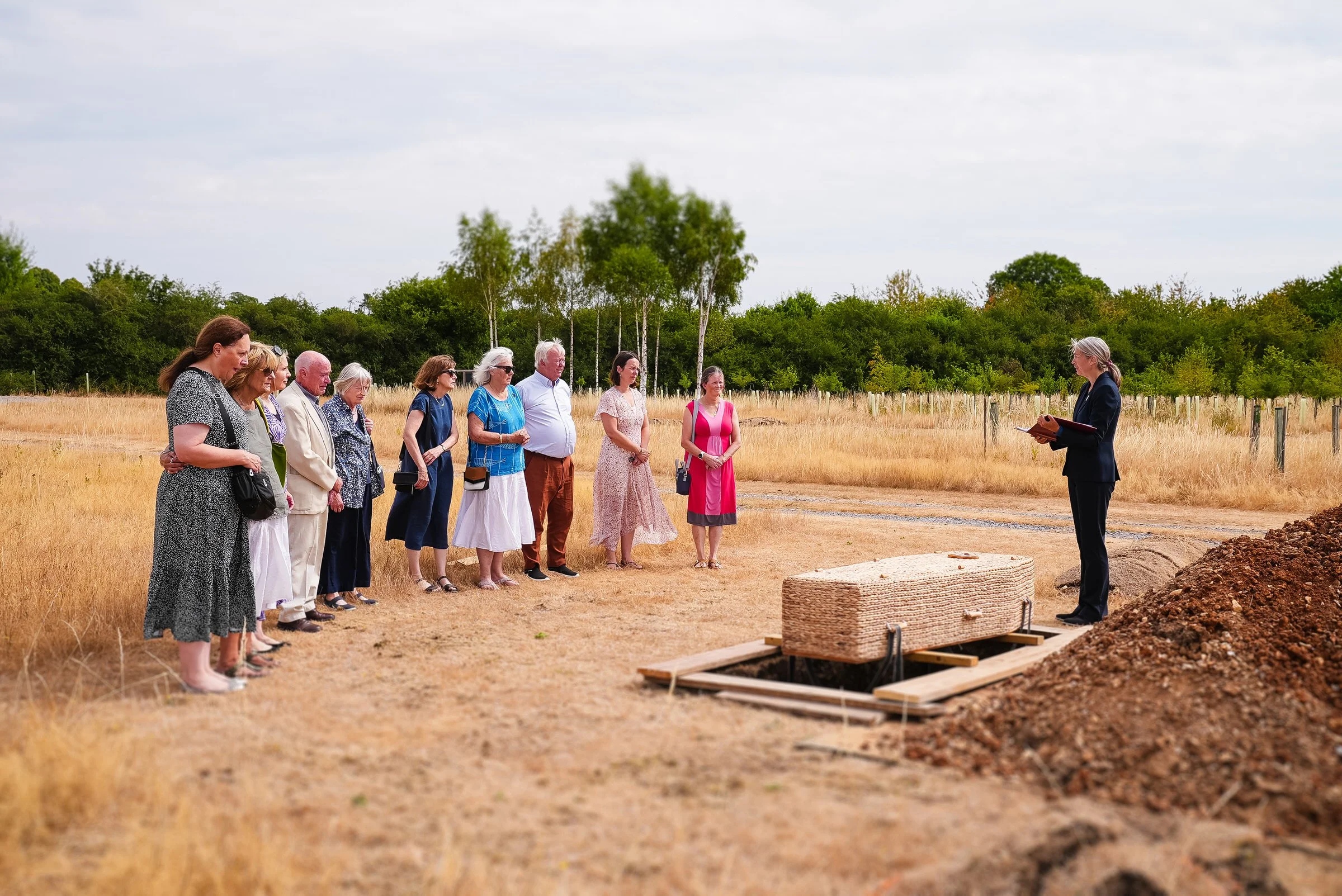
A few weeks ago I had the privilege of filming a funeral at the beautiful Henley Natural Burial Ground in Henley-on-Thames.
It was another hot summer’s day. A small group of close family and friends gathered in the open countryside for a very personal ceremony, led with care by the celebrant. The setting itself — peaceful, green, and surrounded by fields and trees — already carried a quiet sense of calm.
A Different Kind of Funeral Film
The brief for this funeral was a little different from funeral streaming or a traditional long-form recording.
The family didn’t want a complete, unedited record of the service with the original audio. Instead, they asked me to create a short-form cinematic funeral film — a carefully edited collection of moments from the day, set to one music track and shaped through visual storytelling.
This style of funeral videography is less about documenting every minute and more about capturing the feeling and atmosphere of the farewell.
What I Focused On
For a cinematic funeral film, I concentrate on the details that tell the story without words:
The surroundings before everyone arrives, the trees, the woodlands, the meadows
Flowers and personal touches
People gathering and quiet interactions between family and friends
Moments from the ceremony itself
The landscape surrounding the burial which I achieved with some stunning Drone Shots
The finished film is relatively short and can be viewed above. That was very much the intention. It is designed to be watched and rewatched — a lasting, atmospheric record of the day rather than a full-length document. Easy to share!
Why Natural Burial Grounds Suit Cinematic Filming
Natural burial grounds lend themselves particularly well to this kind of visual storytelling. There is something especially peaceful about a farewell that takes place outdoors, surrounded by trees, open fields and countryside.
The light, the space, and the natural setting all help create a film that feels calm, respectful and true to the day.
Every Family Wants Something Different
One of the things I value most about being a funeral videographer is that no two families want exactly the same thing. Some prefer a full recording of the service. Others want a shorter, more cinematic piece that captures the mood and the important moments.
That is why I always take time to listen carefully to what the family actually wants their finished film to be.
It was a privilege to be trusted with this one at Henley Natural Burial Ground.
How Funeral Live Streaming Works | Complete UK Guide
How Funeral Live Streaming Works
Funeral live streaming is the process of broadcasting a funeral as it happens, so family and friends who cannot attend in person can watch on a phone, tablet, laptop or TV.
With my funeral live streaming service, I bring the cameras, microphones and internet, set up a viewing page, stream the funeral live, then leave the recording on the same link afterwards.
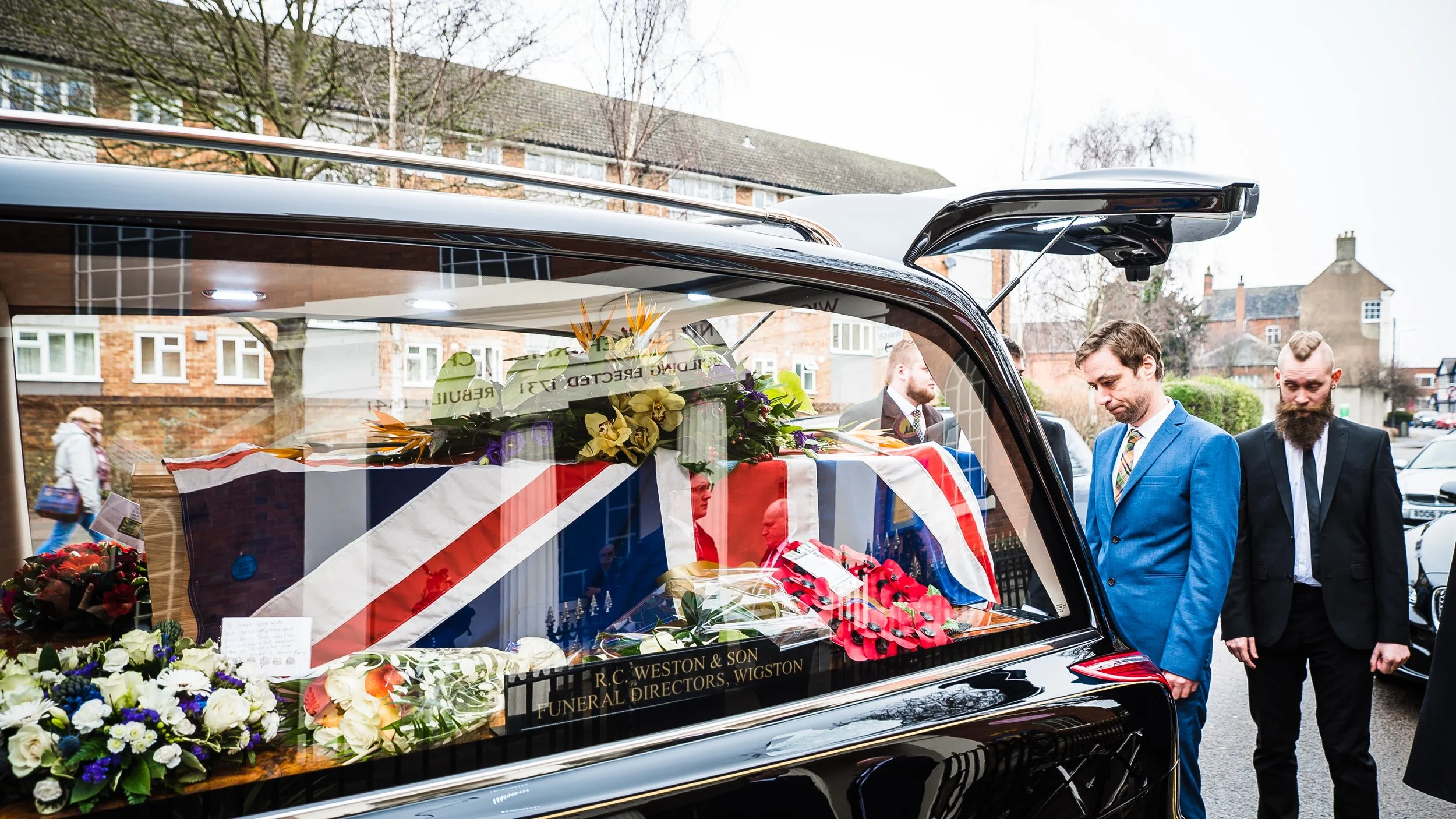
A funeral I live streamed from a family home, with cameras positioned both inside and outside to respectfully capture the arrival and service.
What is Funeral Live Streaming?
Funeral live streaming lets people who are overseas, unwell or unable to travel take part in the service in real time. Guests open a viewing link. Nothing needs to be downloaded.
A venue camera or a phone can do a basic version of this. Professional funeral live streaming is used when the family wants clearer pictures, clearer sound, and a recording they can watch later.
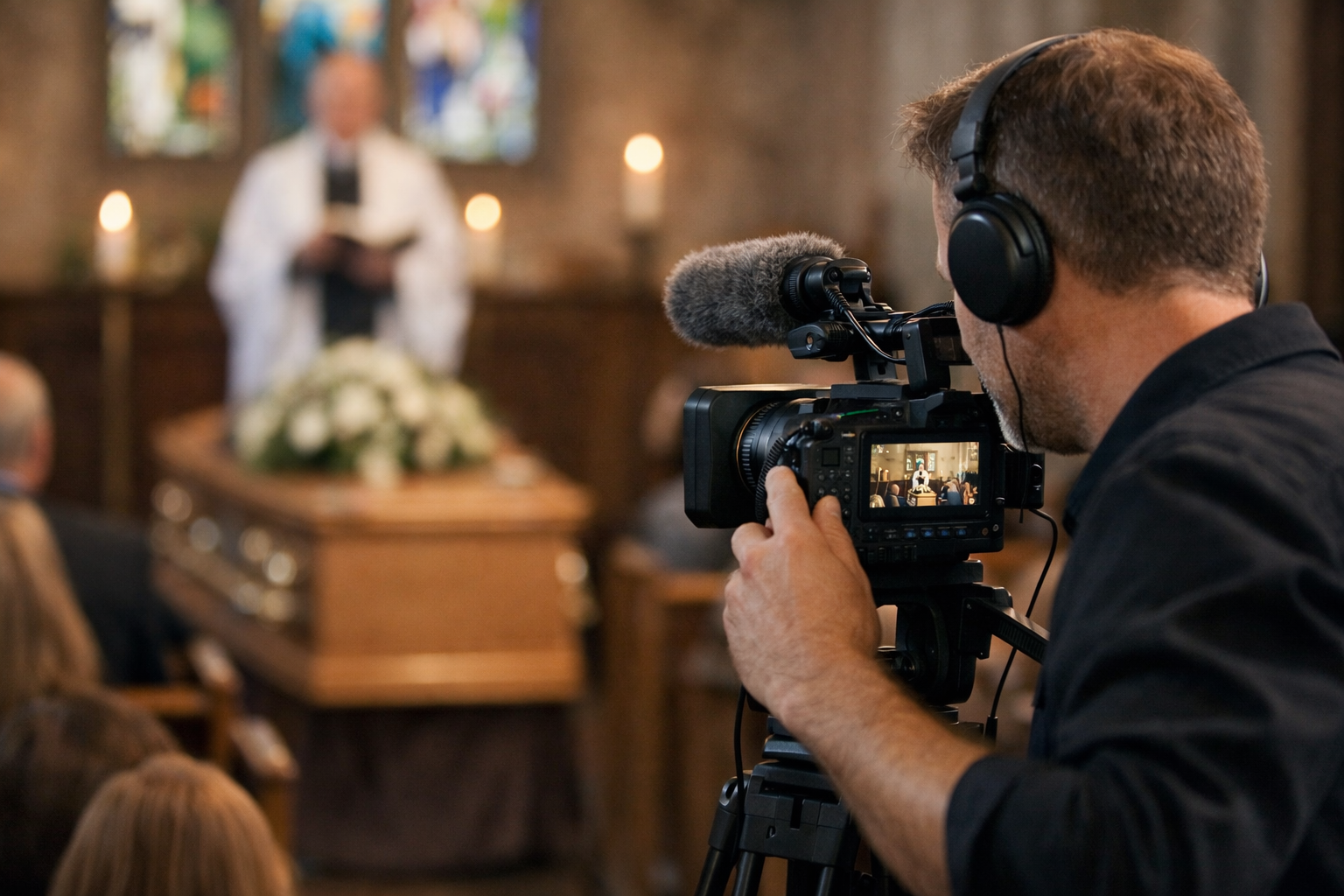
Professional funeral live streaming in progress, with camera positioned to capture the funeral service clearly and respectfully.
How Funeral Live Streaming Works
Before the funeral
Get in touch with the date, time and venue
I’ll confirm availability and send a quote
Once booked, the family receives a viewing link to share
You choose whether the page is password-protected or openly shareable
On the day
I arrive early and set up discreetly
Cameras, audio and internet are tested before guests arrive
The viewing page goes live around 20 minutes before the service
I manage the stream throughout, including a second venue if needed
After the funeral
The recording is available on the same link as soon as the service ends
Family can watch it back and download an HD copy
The stream stays online for 3 months
This is the same process I use for funeral live streaming across the UK.
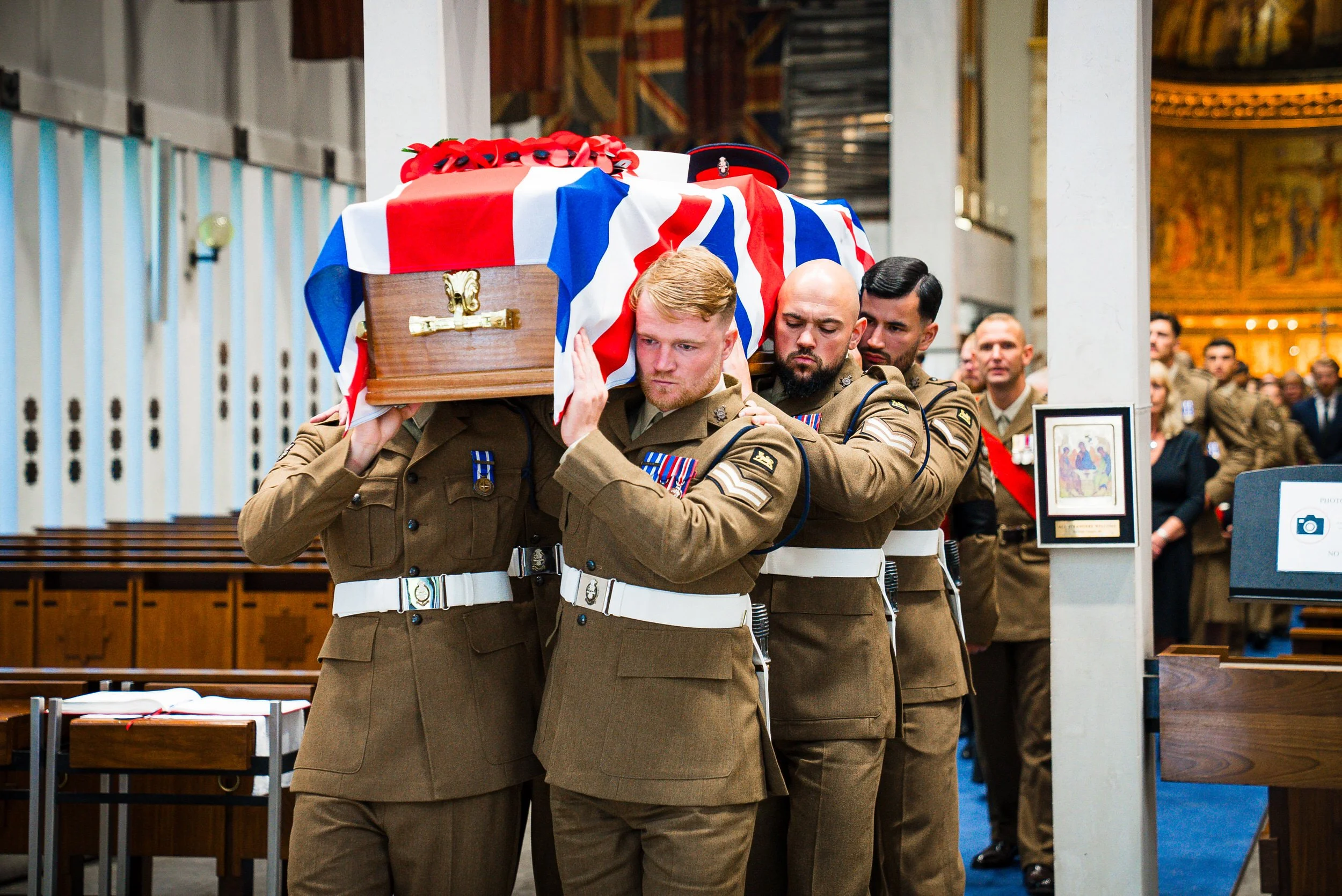
A military funeral I live streamed, respectfully capturing the final moments of the service with professionalism and care.
What Equipment Is Used for Funeral Live Streaming?
I do not rely on venue Wi-Fi or the church sound system.
The usual setup is:
Two or more professional cameras
Dedicated microphones for the officiant, speakers and music
Bonded 4G/5G internet across multiple networks
Starlink satellite internet where there is no signal
Battery-powered equipment for gravesides and venues without reliable power
If the venue has no usable signal, I use satellite funeral streaming.
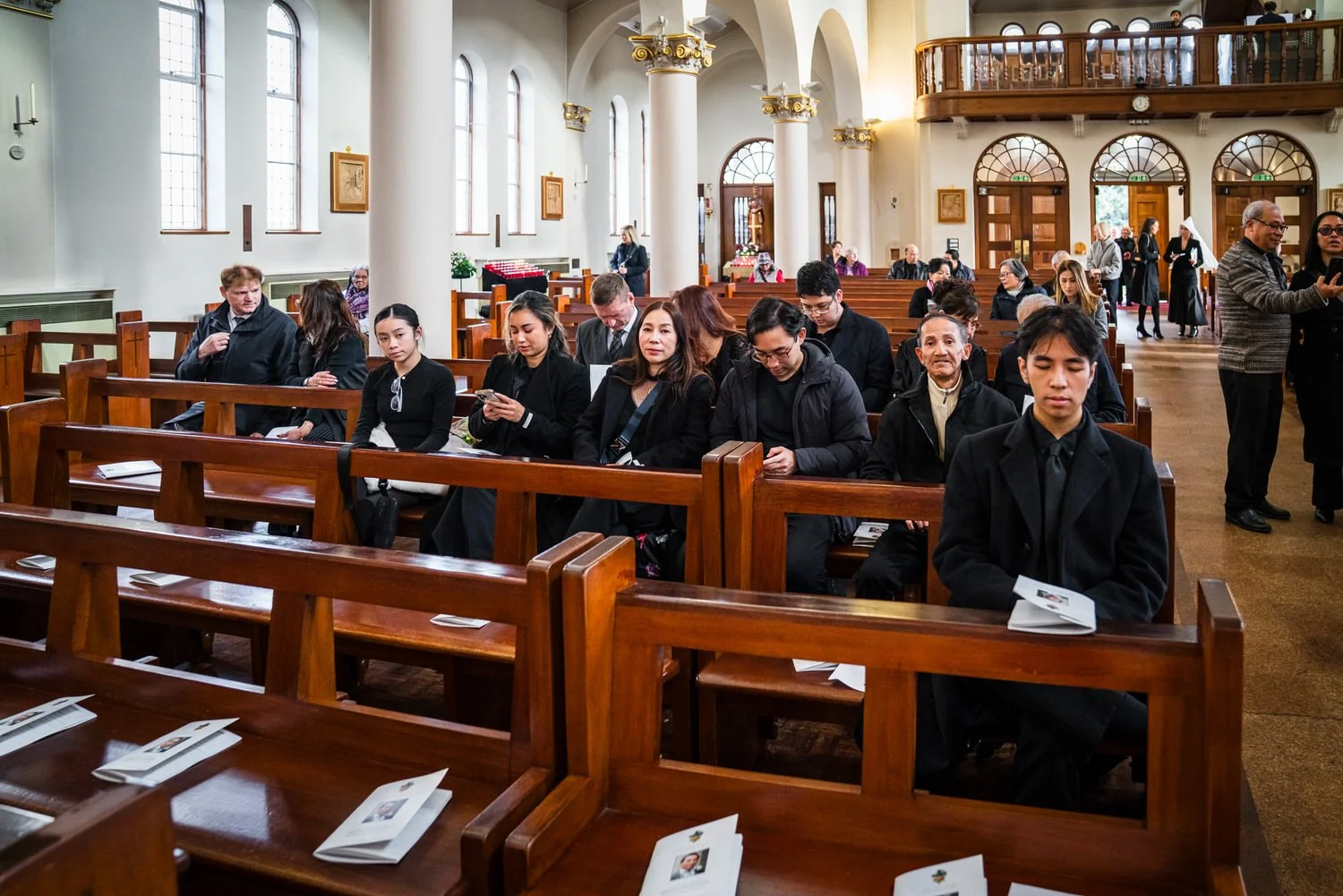
Funeral live streaming in London, where I was helping family members abroad feel connected by seeing those gathered for the service
Funeral Streaming at Church, Graveside and Reception
Funeral live streaming is not limited to one room. I regularly cover the church or crematorium first, then move with the family to the graveside, and on to a reception or wake if needed.
Moving from the church to the graveside can be a challenge, but the changeover is planned in advance. The same viewing link keeps running so people watching online can follow the day.
How to Watch a Funeral Live Stream
The family receives a viewing link and shares it with relatives and friends. Guests open that link on a phone, tablet, laptop or smart TV. No app or account is needed.
The page is ready before the service begins. After the funeral, the same link is used to watch the recording.
There is no charge for guests to watch.
Can You Watch a Funeral Live Stream Later?
Yes. The service is recorded as it happens. The recording is available as soon as the funeral ends, and the same viewing link is used for both the live stream and the replay.
More detail is here: Can You Watch a Funeral Live Stream Later?
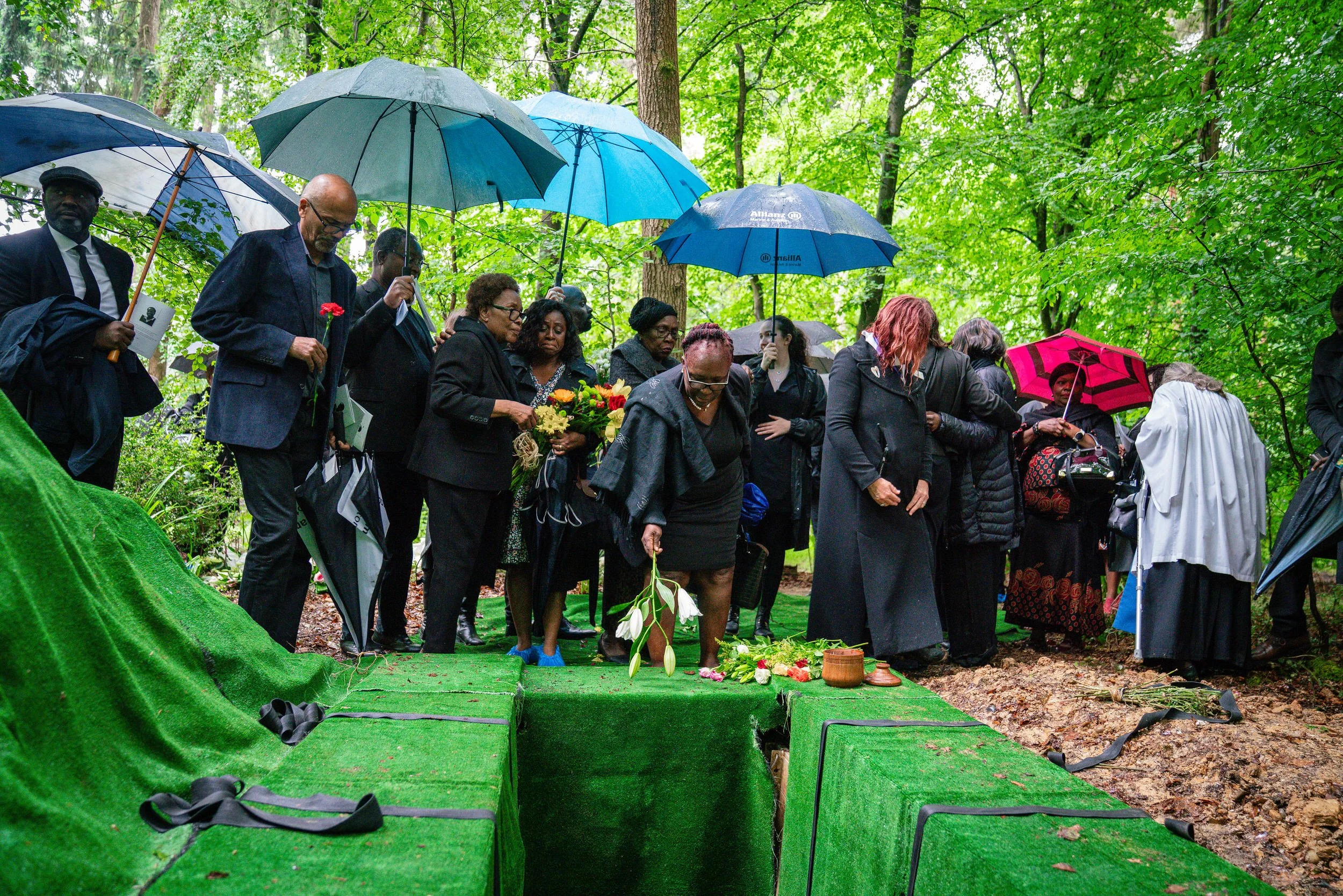
A natural burial I live streamed, respectfully capturing the final moments of the service in a peaceful woodland setting.
How Much Does Funeral Streaming Cost?
Funeral live streaming starts from £650 for a single location. That includes two cameras, professional audio, bonded internet, a viewing page, 3 months of hosting and a downloadable HD recording.
A full breakdown is here: How Much Does Funeral Streaming Cost
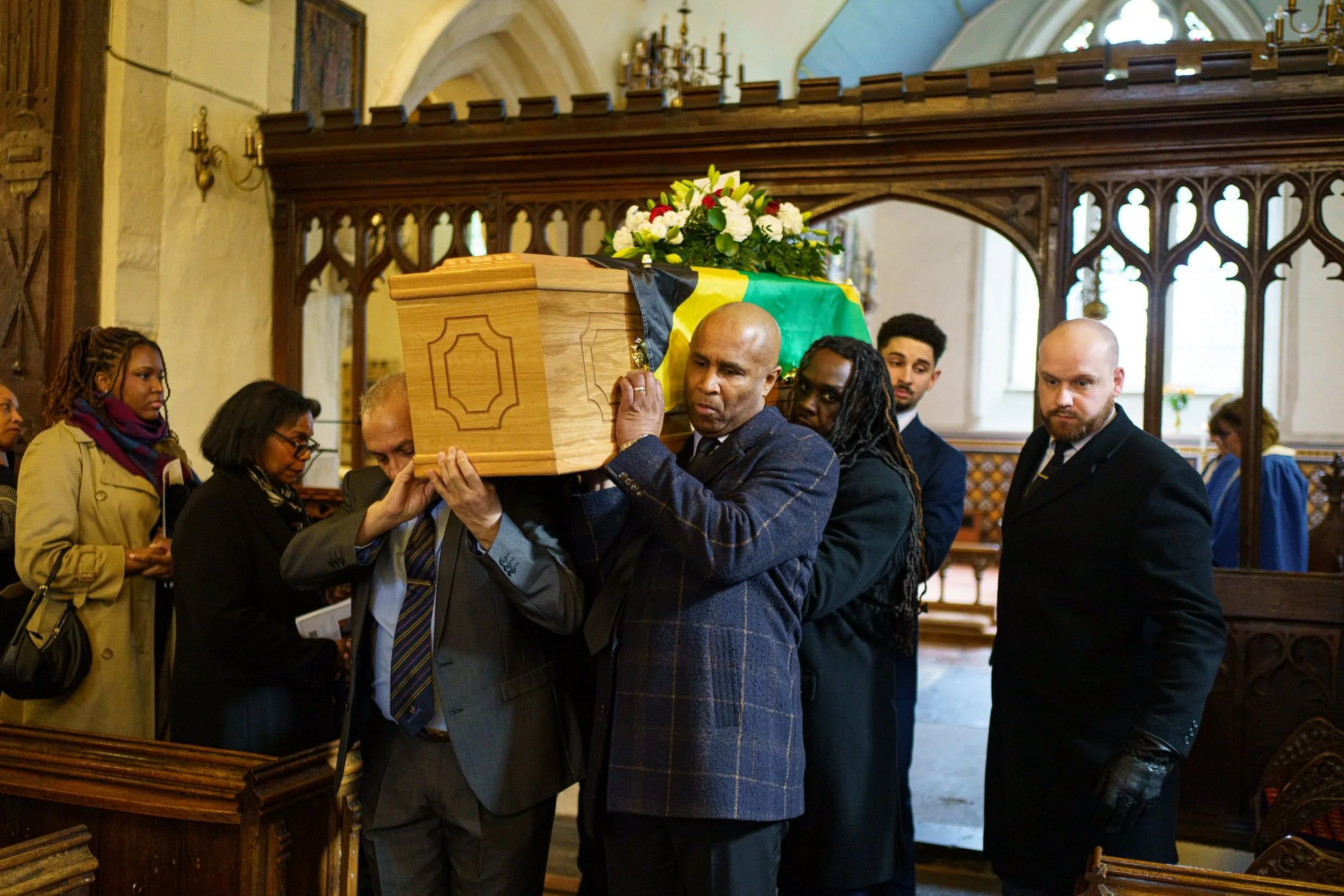
Funeral live streaming where I captured the whole service, including the family as they carried the coffin into the church.
How to Arrange Funeral Live Streaming
Call or text 07772 509101, or use the contact page. I’m available seven days a week from 9am to 10pm.
You can also see real funeral live streaming examples and check coverage on the funeral streaming near me page.
The main service page is here:
Funeral Live Streaming

Can You watch a Funeral Live Stream Later?
Can You Watch a Funeral Live Stream Later?
Yes. You can watch a funeral live stream later if the service was recorded.
Not every provider handles this the same way. Some venue webcasts stay online for a couple of weeks. Some DIY streams cannot be rewatched at all. With my funeral live streaming, the service is recorded as it happens, the recording is available as soon as the funeral ends, and the same viewing link is used for both the live stream and the replay.
Quick Answer
Yes, you can rewatch a funeral live stream after the service
Guests who join late can rewind and watch from the beginning
The same viewing link is used for the live stream and the recording
No app or account is needed
With my service, the recording stays online for 3 months and can be downloaded
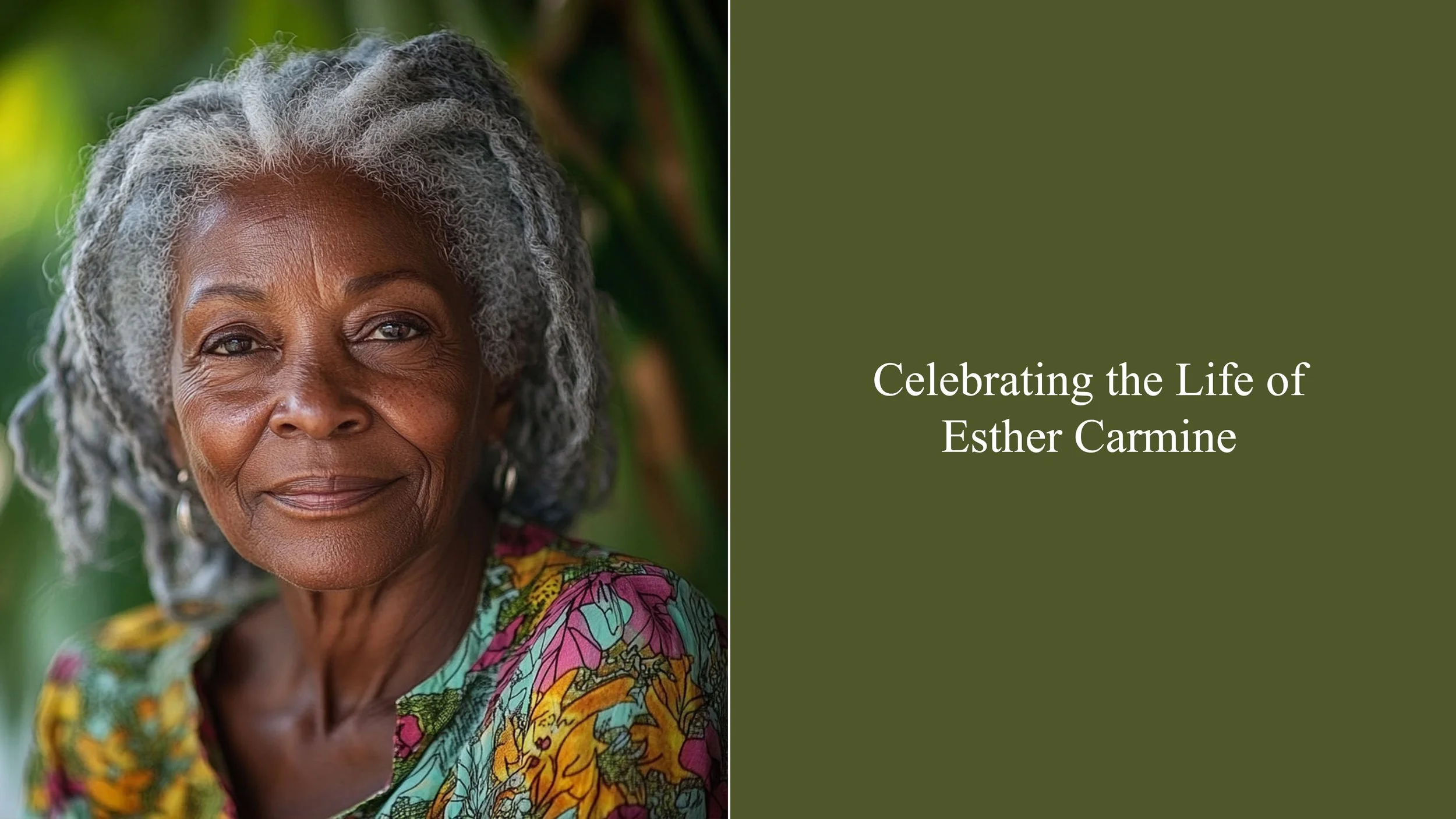
Here is an example of what a Live Stream Link would look like on a Phone, tablet or computer
Can You Rewind a Funeral Live Stream?
Yes. If someone joins after the service has started, they can go back to the beginning rather than picking it up halfway through.
This matters when relatives are in another time zone, delayed, or watching on a phone.
Do All Funeral Live Streams Allow You to Watch Later?
Not all in the same way.
Venue cameras
Crematorium and church webcasts are often recorded, but access can be short — sometimes around 14 to 28 days — and the download may be limited and is an additional cost.
DIY streams
A phone or Facebook Live video may disappear, get blocked because of music, or be hard to share later.
My funeral live streaming
The service is recorded as it happens. After the funeral, the same link becomes the replay. Family can watch it back and download a free HD copy. The recording stays online for 3 months.
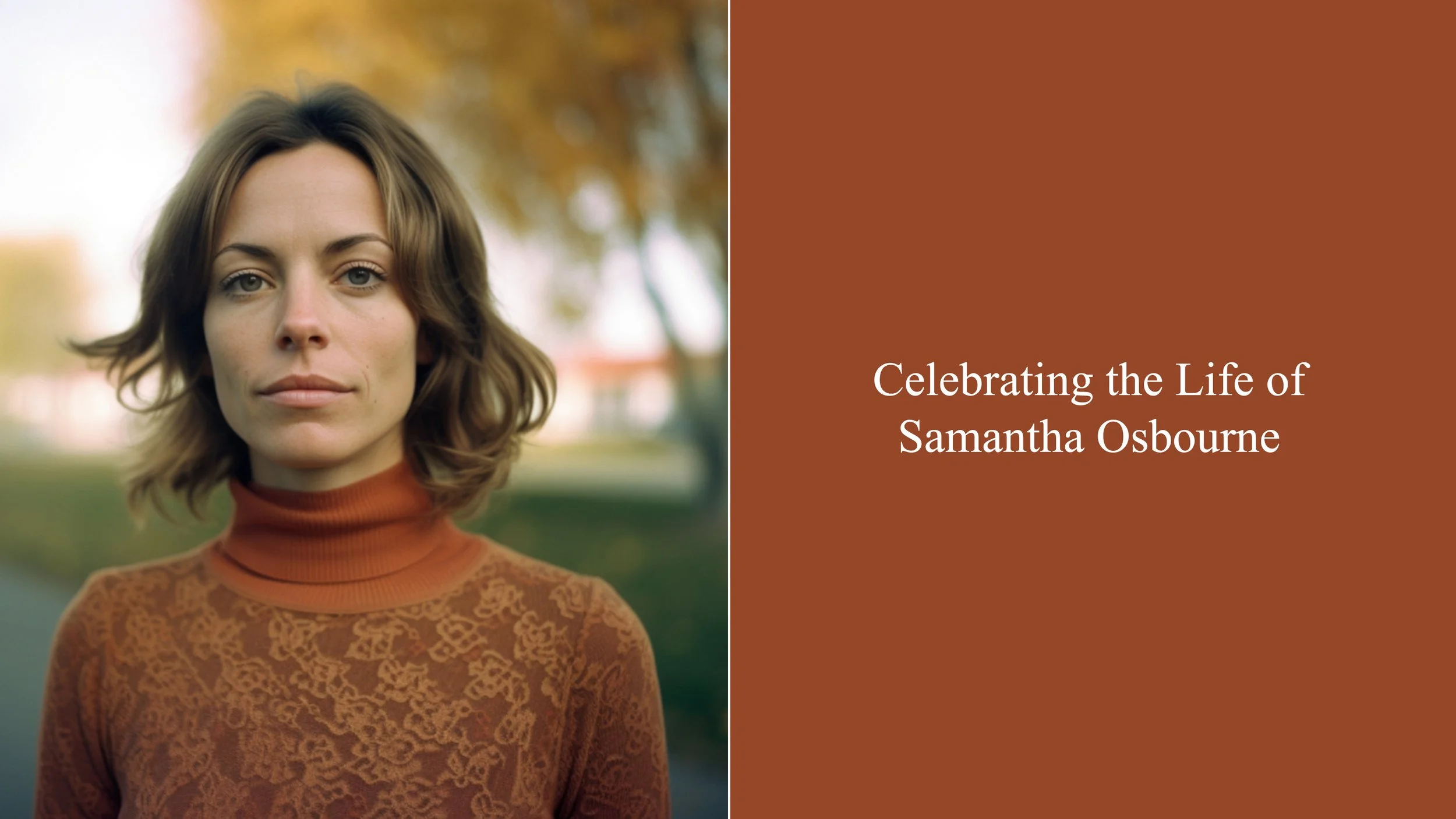
Example of a personalised funeral live stream holding page with photo, name, and service details
How Rewatching a Funeral Stream Works
The family receives a viewing link before the funeral
Guests open it on a phone, tablet, laptop or smart TV — no app is needed
The page goes live before the service begins
After the funeral, the same link is used to watch the recording
The family can download a copy to keep
The recording is available as soon as the service ends.
Why Families Rewatch a Funeral Stream
People rewatch a streamed funeral because:
They could not watch live because of work or time zones
They were at the funeral and want to hear the tributes again
Relatives overseas want to watch when it is morning or evening where they are
The day itself was too much to take in first time
The recording is often used more than the live stream.
Is the Recording Private?
The family controls who can watch. The viewing page can be password-protected or shared more openly. It is not listed in Google unless the family asks for that.
How to Arrange a Funeral Stream You Can Watch Later
Funeral live streaming starts from £650 and includes the live stream, playback after the service, 3 months of hosting and a downloadable HD recording.
Call or text 07772 509101, seven days a week from 9am to 10pm.
The Importance of Live Streaming Funerals
A funeral only happens once. Funeral live streaming matters because it lets people take part when they cannot be in the room.
That may be family overseas, someone too unwell to travel, a relative who cannot get time off work, or people who want to watch later when they feel ready. The service still happens in one place. The stream means it is not limited to the people who can get there.
Why Funeral Live Streaming Matters
Distance should not decide who is included
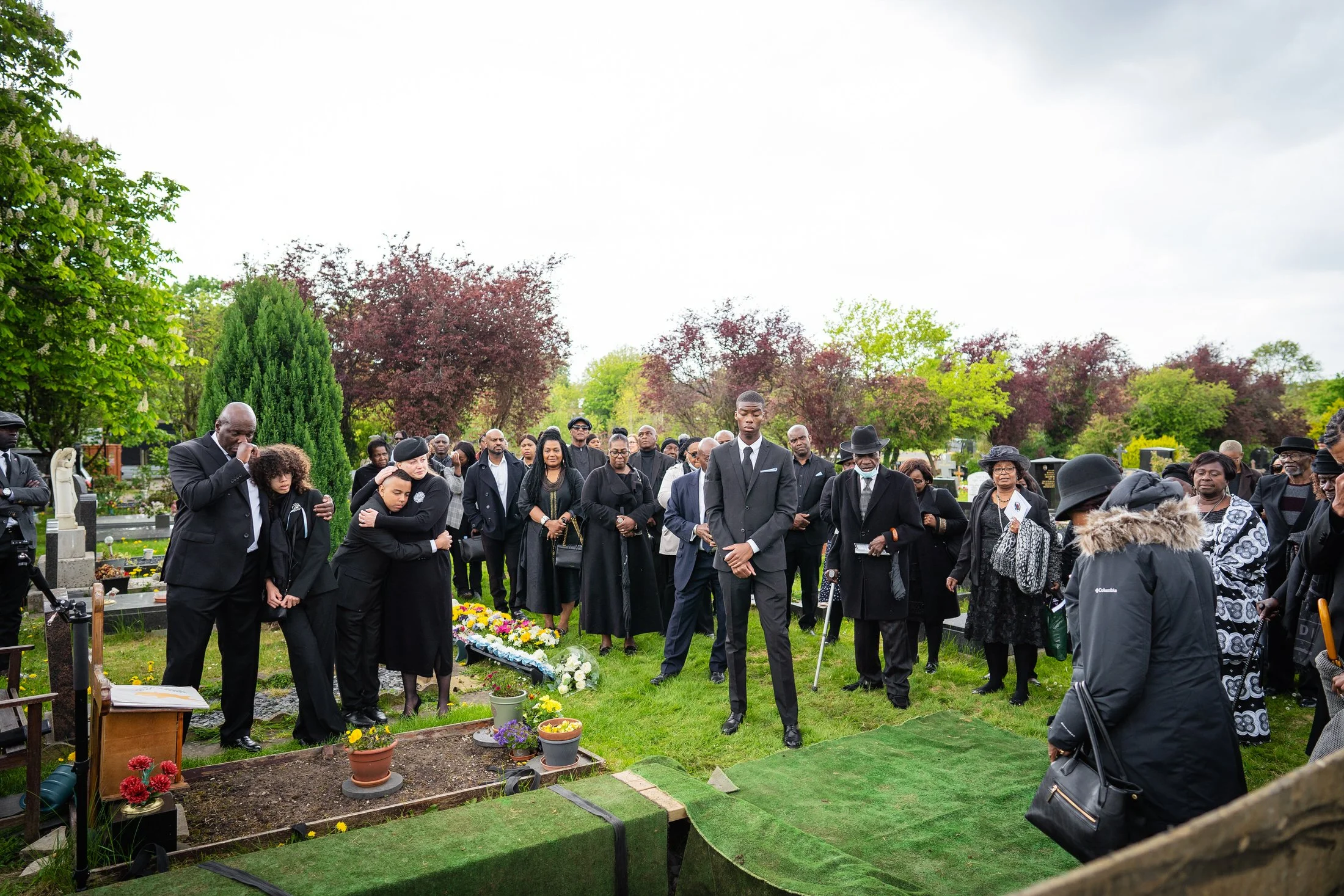
Families are often spread across the UK and further afield. I regularly stream funerals watched in Jamaica, India, Australia, the United States, Africa and Europe. Without a stream, those people miss the readings, the music and the committal.
Not everyone can travel at short notice
Illness, age, cost and work are the usual reasons. Funeral live streaming gives them a way to be there without making the day harder for the family organising it.
Time zones make a live stream and a recording both important
A morning funeral in London can be the middle of the night in Australia. People can watch live if they want to, then use the same link afterwards. More on that here: Can You Watch a Funeral Live Stream Later?
Large funerals often overflow the building
Some churches fill quickly. Streaming can also feed an overflow room, hall or nearby venue so people who cannot get a seat still see and hear the service. That is part of funeral AV support as well as the live stream.
The recording helps people who were there
Many families tell me they watch the stream back later. On the day itself, it can be too much to take in. The recording is included with my funeral live streaming service and stays online for 3 months.
Is It Respectful to Live Stream a Funeral?
Yes, when it is done quietly and the family is in control of the viewing link.
I set up early, work from the edge of the room, and do not get in the way of the funeral director, celebrant or family. The page can be password-protected or shared more openly. It is the family’s choice who watches.
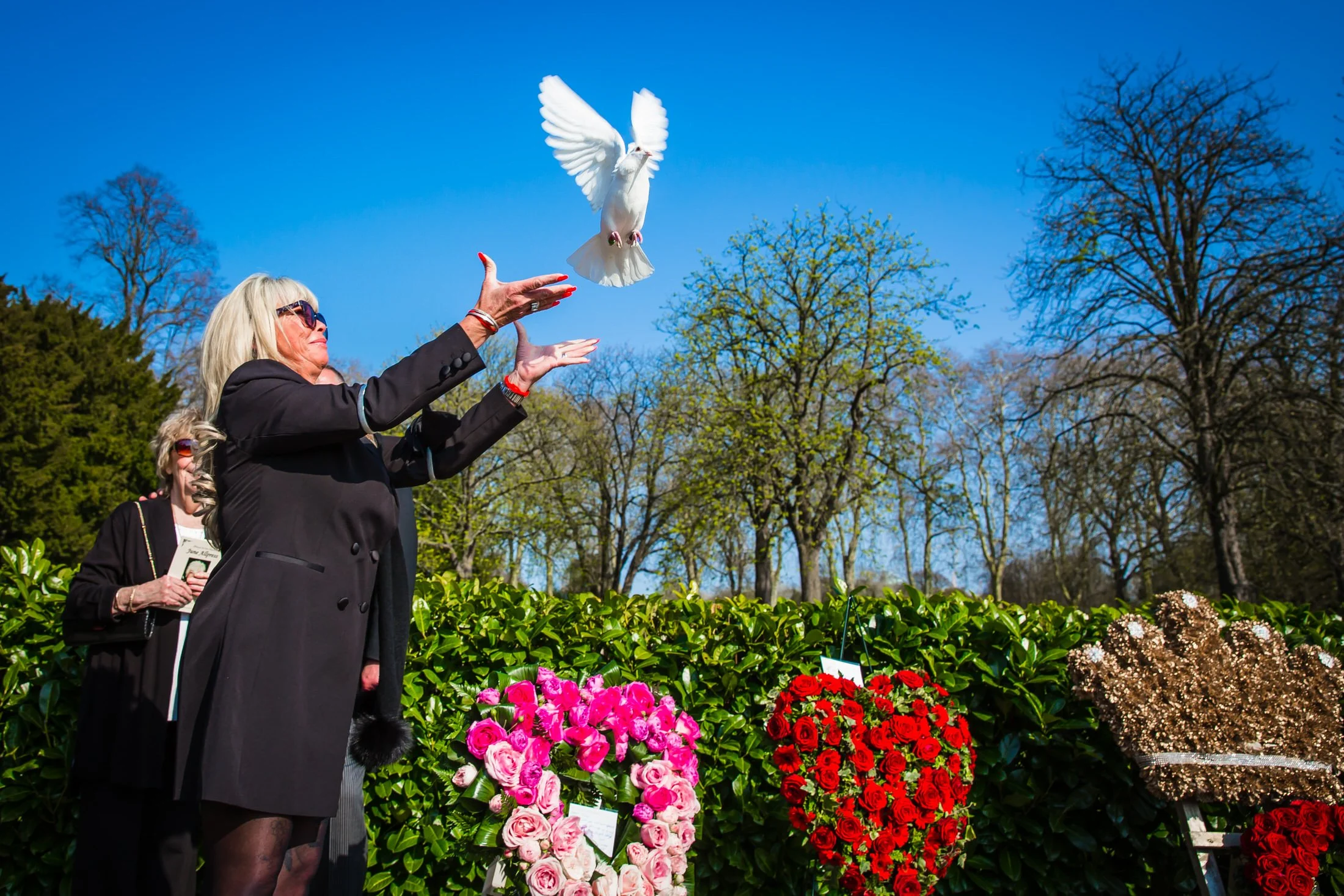
When Funeral Live Streaming Makes the Biggest Difference
Funeral streaming is particularly important when:
Relatives live abroad
The venue has poor signal and a phone stream would not hold
The day includes church and graveside
The family wants a recording as well as the live broadcast
A celebration of life or memorial is being held later for people who missed the funeral
How the process works, from booking through to the recording, is explained here:
How Funeral Live Streaming Works
Caribbean family funeral with church service and graveside live stream
What My Funeral Live Streaming Includes
Funeral live streaming starts from £650 for a single location. That includes two cameras, dedicated microphones, bonded internet, a viewing page, 3 months of hosting and a downloadable HD recording. There is no charge for guests to watch.
See the full service and examples here: Funeral Live Streaming · Funeral Live Streaming Examples
A breakdown of price is here: How Much Does Funeral Streaming Cost
How to Arrange Funeral Live Streaming
Call or text 07772 509101, or use the contact page. I’m available seven days a week from 9am to 10pm.
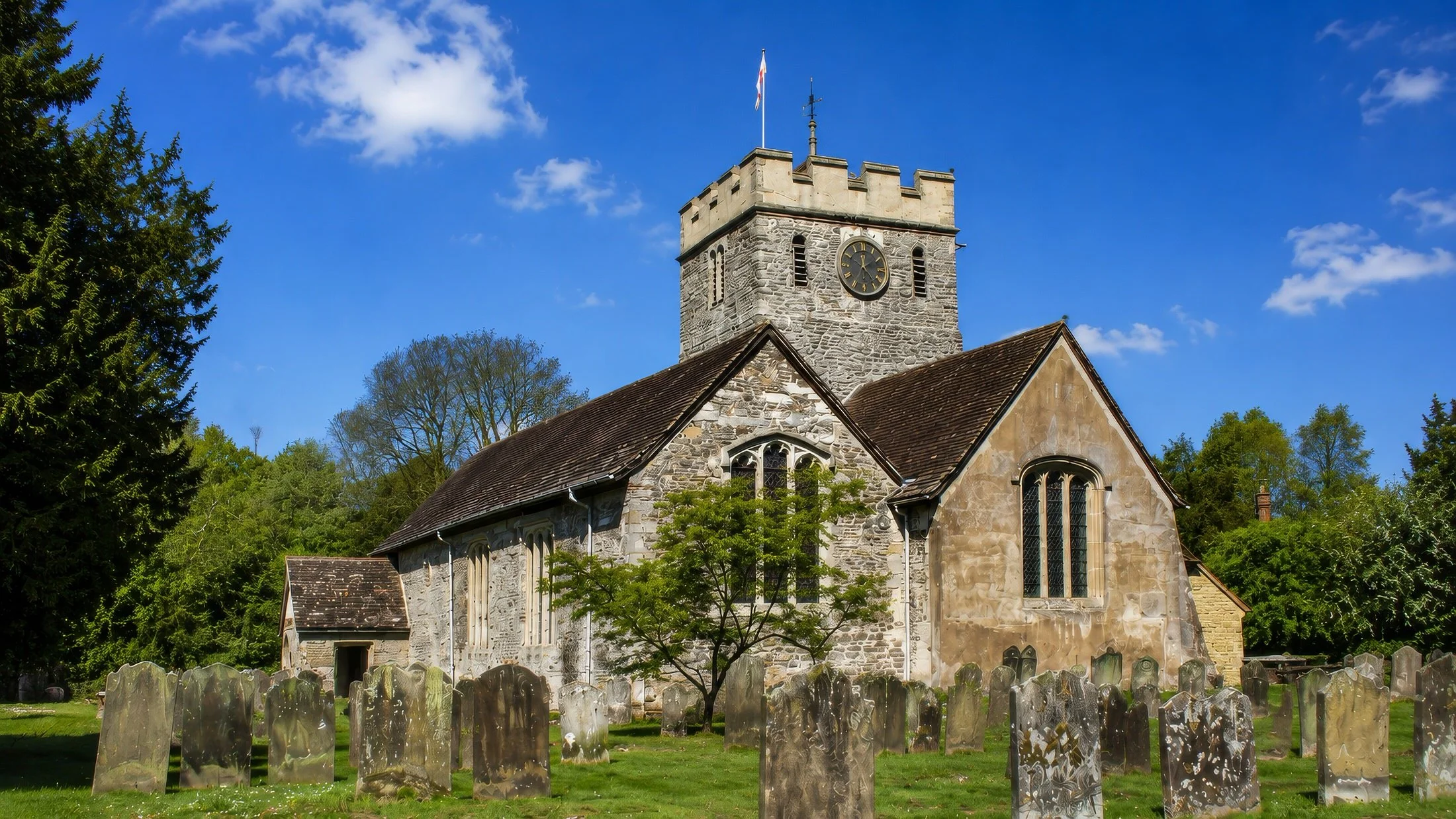
Funeral Live Streaming in a Church With No Signal — St Nicholas', Charlwood
Some funerals are straightforward to stream. This was not one of them.
I provided the funeral live streaming for a traditional Church of England funeral at St Nicholas’ Church in Charlwood, a village on the edge of Gatwick, a few minutes from Crawley and Horley.
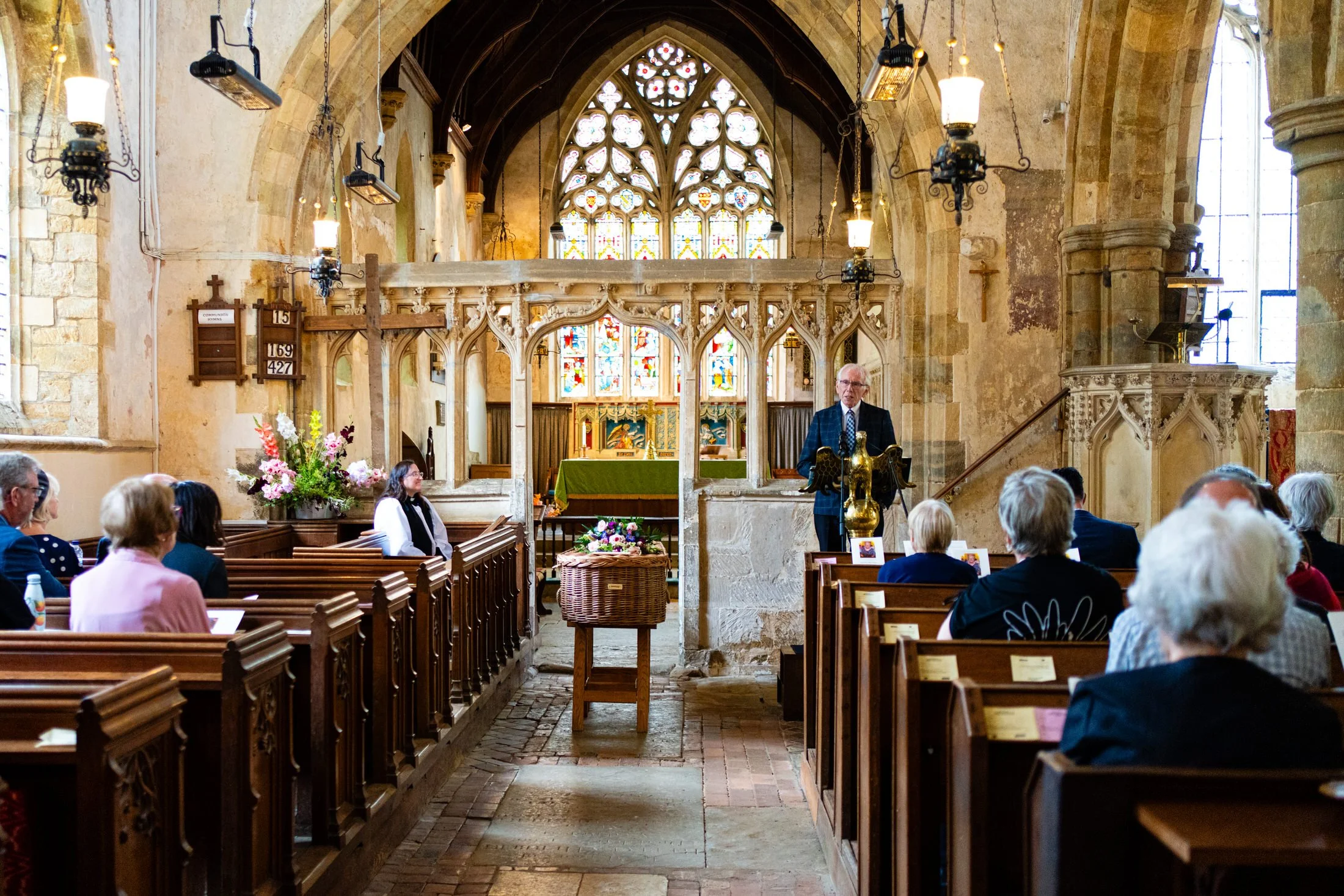
St Nicholas’ is a Grade I listed Norman church, with parts dating from around 1080. It has thick stone walls, leaded stained-glass windows and nationally important medieval wall paintings. That history is why families choose it. It is also why there is almost no mobile signal inside.
A Church With No Signal
Charlwood is a poor-signal village. The church warden lives opposite and has to stand on her front step to make a call. If she moves, it drops.
Inside the church, thick walls and leaded glass block what little signal there is. Venue Wi-Fi was not an option I would rely on anyway. This needed satellite funeral streaming thinking from the start: find a usable connection, then build the cameras and audio around it.
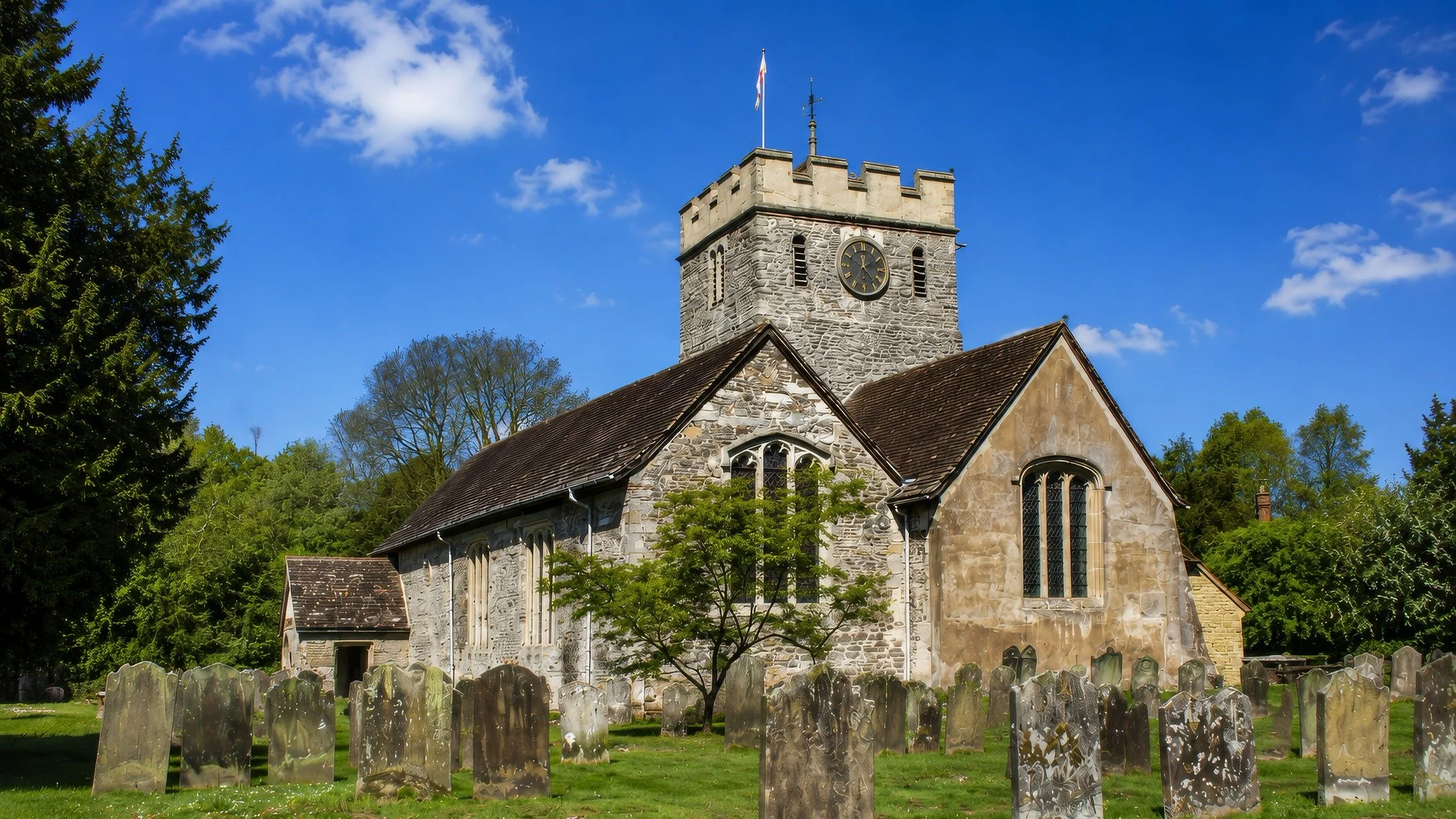
Why One Connection Was Never Going to Be Enough
One mobile network would not have been reliable enough. I bonded four connections from different networks so the stream could keep going if one of them dipped.
The cameras and microphones had to work from the best positions for the service. The streaming box had to sit where the signal actually existed. Those two places were not the same.
I mixed the cameras in the church, then sent that feed wirelessly across to the streaming box at the signal point. Cabling the whole building was not practical.
Backup recordings ran independently, so the family would still have the service if the live feed had failed.
The Service
The funeral directors arrived early and had the church ready, with the coffin already in place as guests arrived.
The service was led by the vicar, Sue — warm, calm and easy to work with. There were tributes, readings, hymns and the traditional shape of a Church of England funeral. I had a camera angle that could see faces at the tall lectern, coverage of the coffin, and dedicated microphones on the minister and lectern. The organ provided the music.
The Result
The stream ran from start to finish. Family and friends watched live on more than 67 devices in England, Scotland, Australia and Canada.
That is the point of professional funeral live streaming in a building like this. A phone would not have held. A fixed venue camera was not available. The family needed someone who could solve the signal first, then film the service.
Funeral Streaming in Crawley, Charlwood and Horley
If your family’s service is at an old church, a rural chapel or anywhere you are worried about signal, this is the kind of funeral I am set up for.
Coverage in this area is here:
Funeral Live Streaming in Crawley
You can also see more real services on my Real Funerals page, or read how funeral live streaming works.
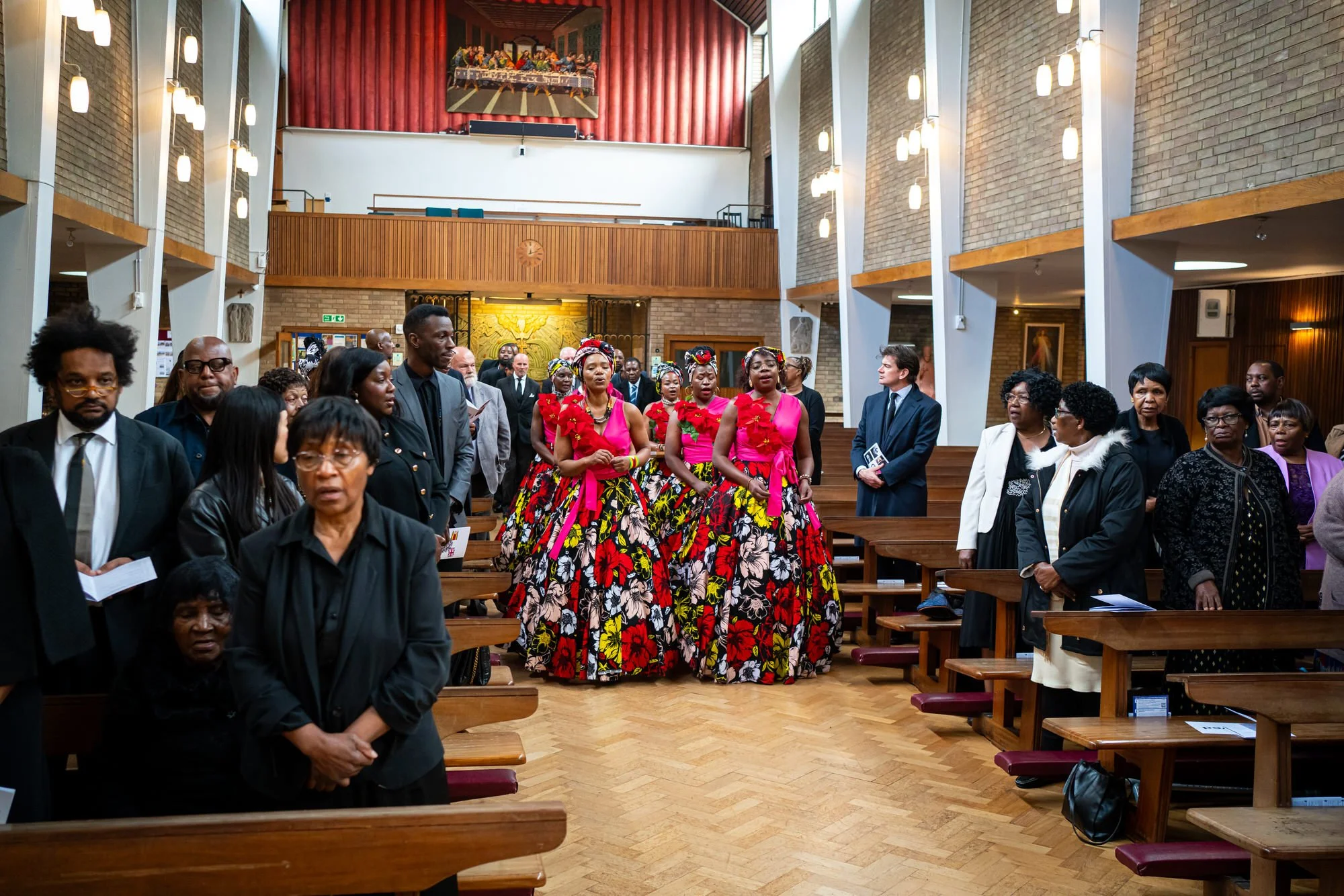
A Zimbabwean Funeral Live Streamed from Pimlico
I provided the funeral live streaming for a Zimbabwean funeral at the Church of the Holy Apostles on Cumberland Street in Pimlico, central London.
The church was full. Family and congregation were in traditional dress — rich pinks and reds. There was African singing as the coffin was carried in, a viewing where people paid their respects, then hymns, readings and tributes. The stream had to carry the music and the room, not just a speaker at a lectern.
571 people watched live across nine countries, including the UK, Zimbabwe, South Africa, Poland, the Netherlands, the United States, Jersey, Hungary and Switzerland.
That is why funeral live streaming matters for a service like this. A large part of the family could not get to London. The viewing page let them take part as it happened, then watch the recording afterwards.
You can find more about our Funeral Live Streaming here
Streaming a service like this
I used two cameras and dedicated microphones so people online could follow the singing, the viewing and the tributes. When a coffin is carried in with singing, a single wide shot from the back of the church is not enough. You need the room and the faces. You need the sound of the singing as it actually was in the building, not a phone mic two pews back.
Guests watched on a viewing page shared by the family. No app. No account. After the service the same link was used for the recording, which stays online for 3 months, with a downloadable HD copy for the family.
I regularly cover Zimbabwean, African and Caribbean funerals where relatives are watching from several countries at once. The work is the same technically. The day is not. These services run longer, move more, and ask more of the audio.
Funeral streaming in Pimlico and Westminster
Holy Apostles sits in a dense part of Westminster. Churches here are busy, access is tight, and the congregation often includes people who have flown in and people who could not. A stream is not an extra in that situation. It is how the family stay in the same funeral.
More on the recording afterwards: Can You Watch a Funeral Live Stream Later?
Funeral live streaming starts from £650.
Call or text 07772 509101, or use the contact page.
Looking for an Obitus Alternative?
Obitus is the built-in webcast used in many UK crematoriums. It is booked through the funeral director and uses the camera already in the chapel.
That works for a simple service in that one room. It is not the same as professional funeral live streaming.
What the Crematorium Webcast Does
One fixed camera, usually at the back of the chapel
One room only
Unmanned — nobody is adjusting the shot or the sound
The recording is often only available for a short time, sometimes around 28 days
It cannot follow the family to a church, graveside or reception
If the funeral is only in that chapel and the family just need a basic webcast, the venue system can be enough.
What I Do Instead
I attend the funeral and run the stream myself.
Two cameras, not one fixed shot
Dedicated microphones for the officiant, speakers and music
Coverage at church, crematorium, graveside or a second venue
Bonded 4G/5G, and Starlink if there is no signal
A viewing page the family controls — password-protected or openly shareable
Playback on the same link after the service
3 months of hosting and a downloadable HD recording
Funeral live streaming starts from £650.
Full service: Funeral Live Streaming
Price breakdown: How Much Does Funeral Streaming Cost
When the Venue Camera Is Enough
The whole funeral is in one crematorium chapel
Nobody needs graveside coverage
A single wide shot is acceptable
When a Professional Stream Is the Better Option
Relatives are watching from other countries
The day includes church and burial
The venue has poor sound or a poor camera angle
The family want a recording they can keep, not a short chapel replay
How to Book an Alternative to Obitus
You do not have to use the crematorium system. Tell the funeral director you are booking your own streaming, then get in touch with the date, time and venue.
Call or text 07772 509101, or use the contact page.
Funeral Videography at St Michael at the North Gate, Oxford
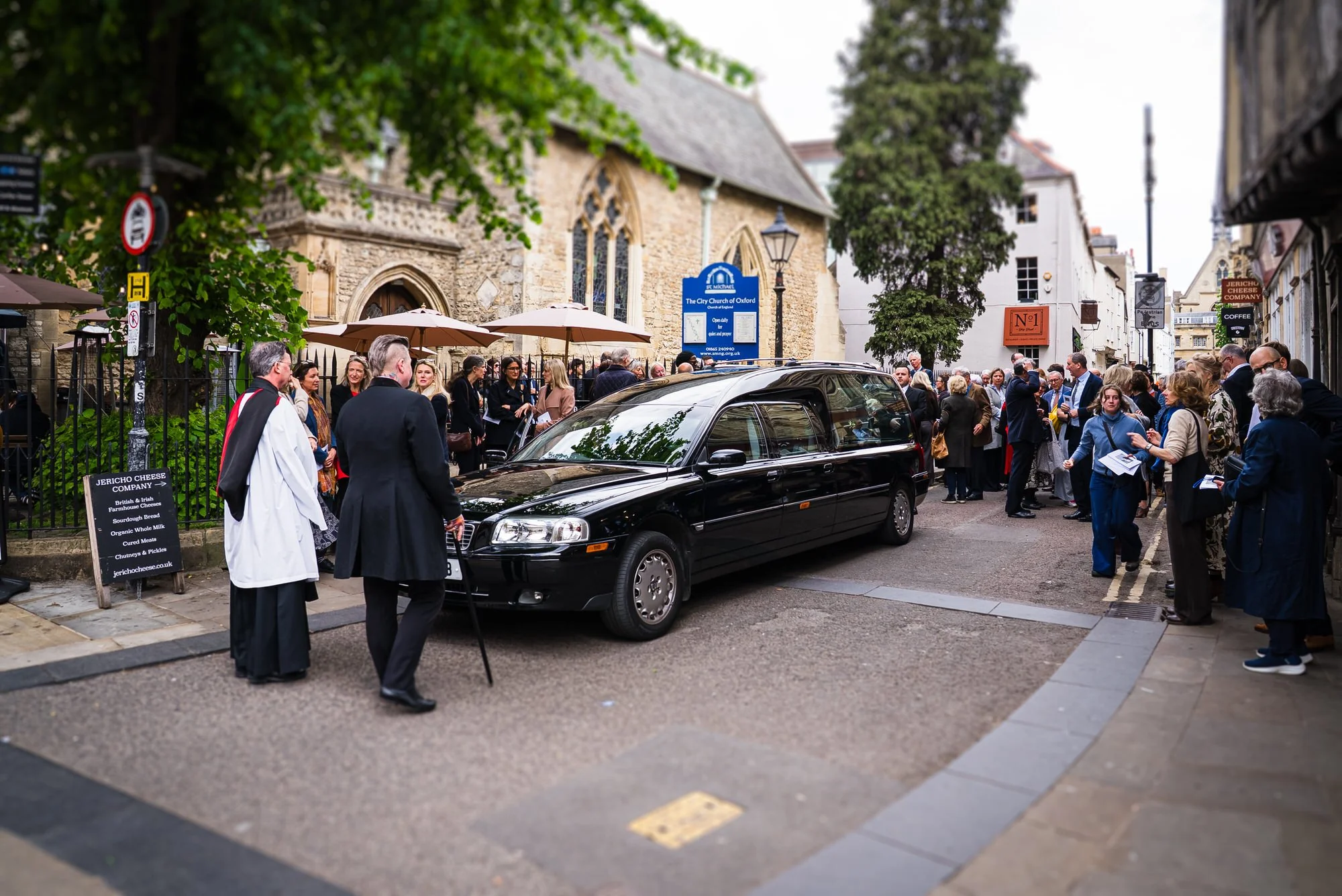
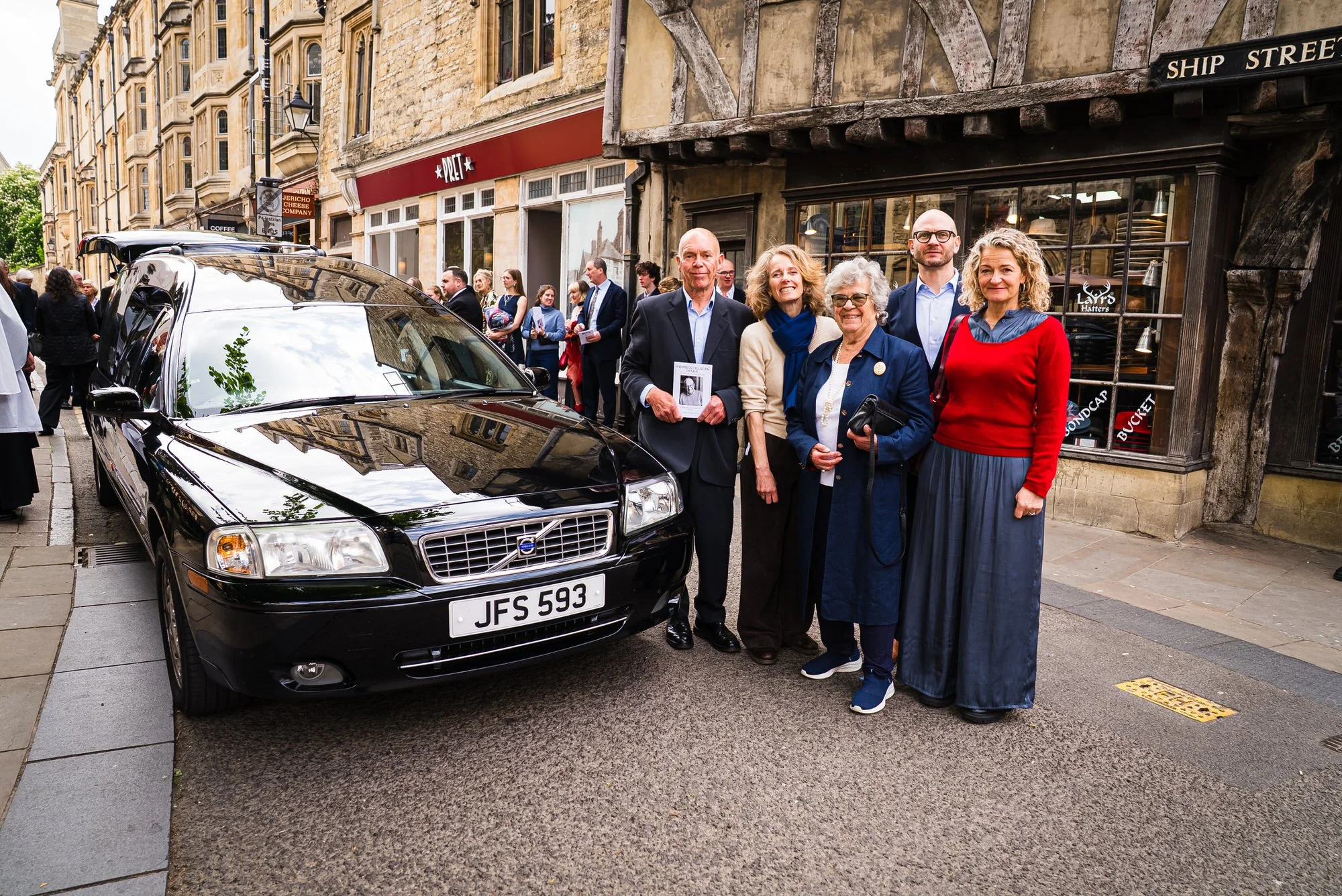
This funeral was filmed at St Michael at the North Gate in Oxford, Oxfordshire — the city’s church, with a Saxon tower from around 1040 standing just inside the old north gate.
It was a Church of England service for Stephen Charles Dixon. The building, the light and the family’s music gave the film its character. This was funeral videography, not a live stream: three cameras through the service, drone footage inside the church, then an edited film for the family to keep.
The Church
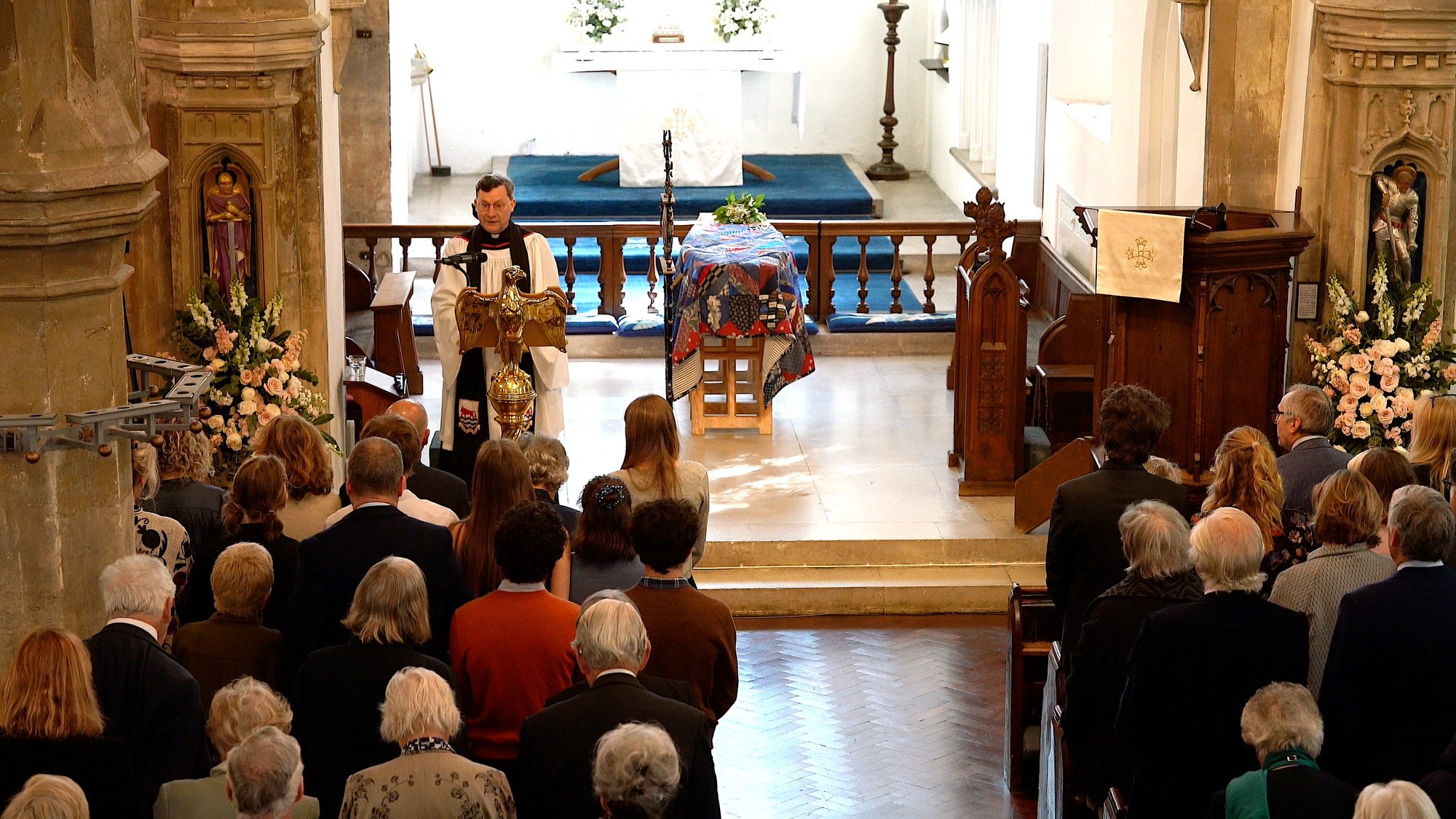
St Michael’s is small, old and vertical. The nave is narrow. Light drops from above. There is a balcony, and the Saxon tower sits on the street outside. A single camera at the back would have given you the pews and flattened the rest.
I arrived early, before the family, and walked the building with the vicar. He was easy to work with, which matters in a church this old. Positions have to be agreed. Nothing should cut across the service.
Three cameras went in. One wide on the floor, so the whole church stayed in frame. One closer for the minister, the readers and the front. One on the balcony for the height of the room — the roof, the aisle, the way people filled the nave.
The drone
Before anyone arrived I flew a drone inside the church, down the nave, so the film opens on the building itself: ceiling, aisle, stone, the length of the room. That only happens when the vicar is comfortable with it and the church is empty enough to do it safely.
It is a small thing in the finished film and a large part of why this church was worth filming properly. St Michael’s is not a blank chapel. The pictures should show that.
Stephen’s music
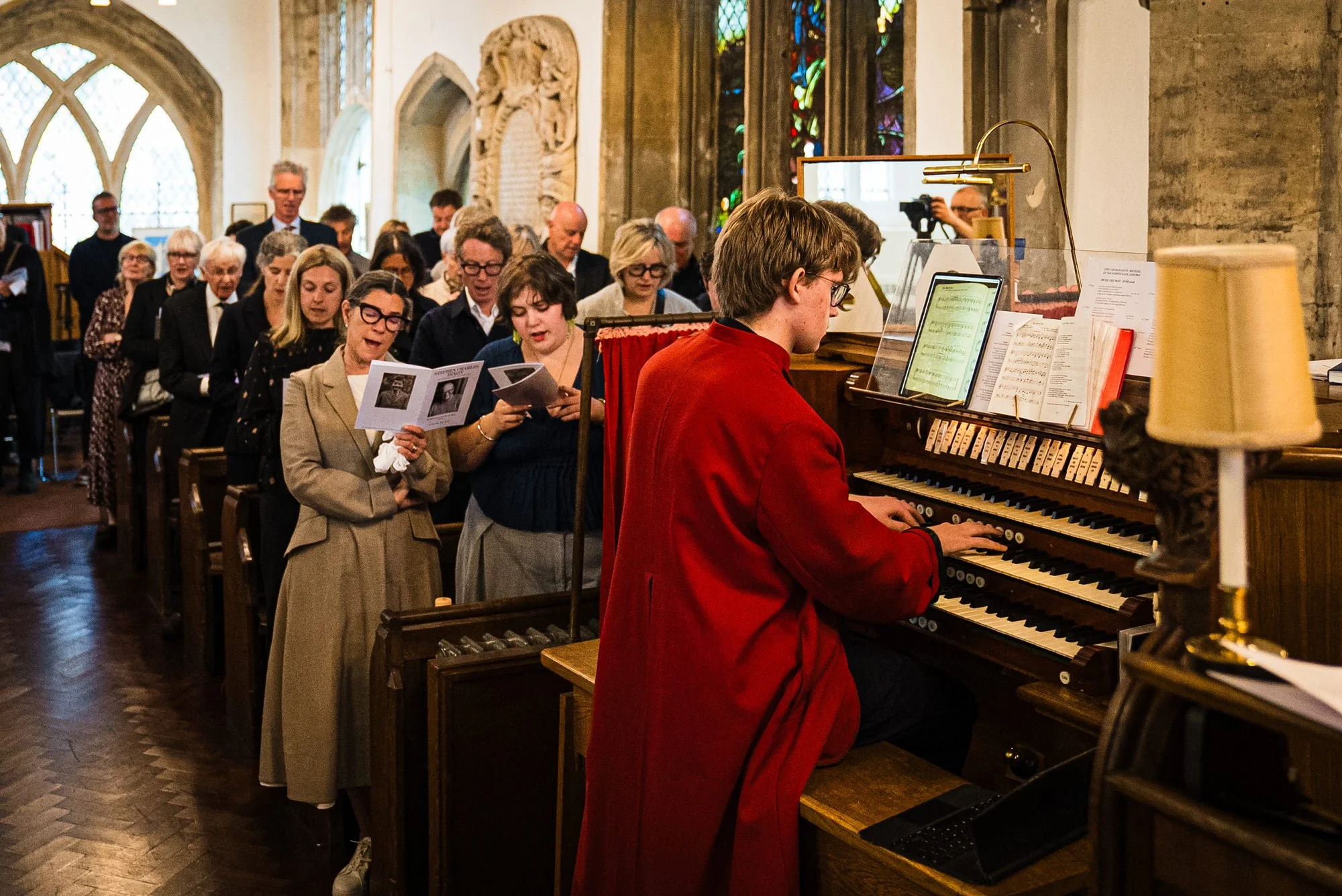
The family led parts of the service. Stephen’s grandchildren played guitar and sang. That is the passage families go back to. A live stream would have let people watch it once. The film lets them sit with it again.
The funeral was arranged with The Individual Funeral Company in Oxford, with Lucy’s team. Days like this work when the funeral director, the vicar and the cameras are not fighting each other for the same space.
Funeral Videography in Oxford
I film funerals across Oxford and Oxfordshire — city churches, college chapels, crematoriums and burial grounds. If you want a film of the day rather than a live audience, start here: Funeral Videography
Funeral videos and funeral videography starts from £750.
Call or text 07772 509101, or use the contact page.
Celebration of Life at the London Rowing Club, Putney
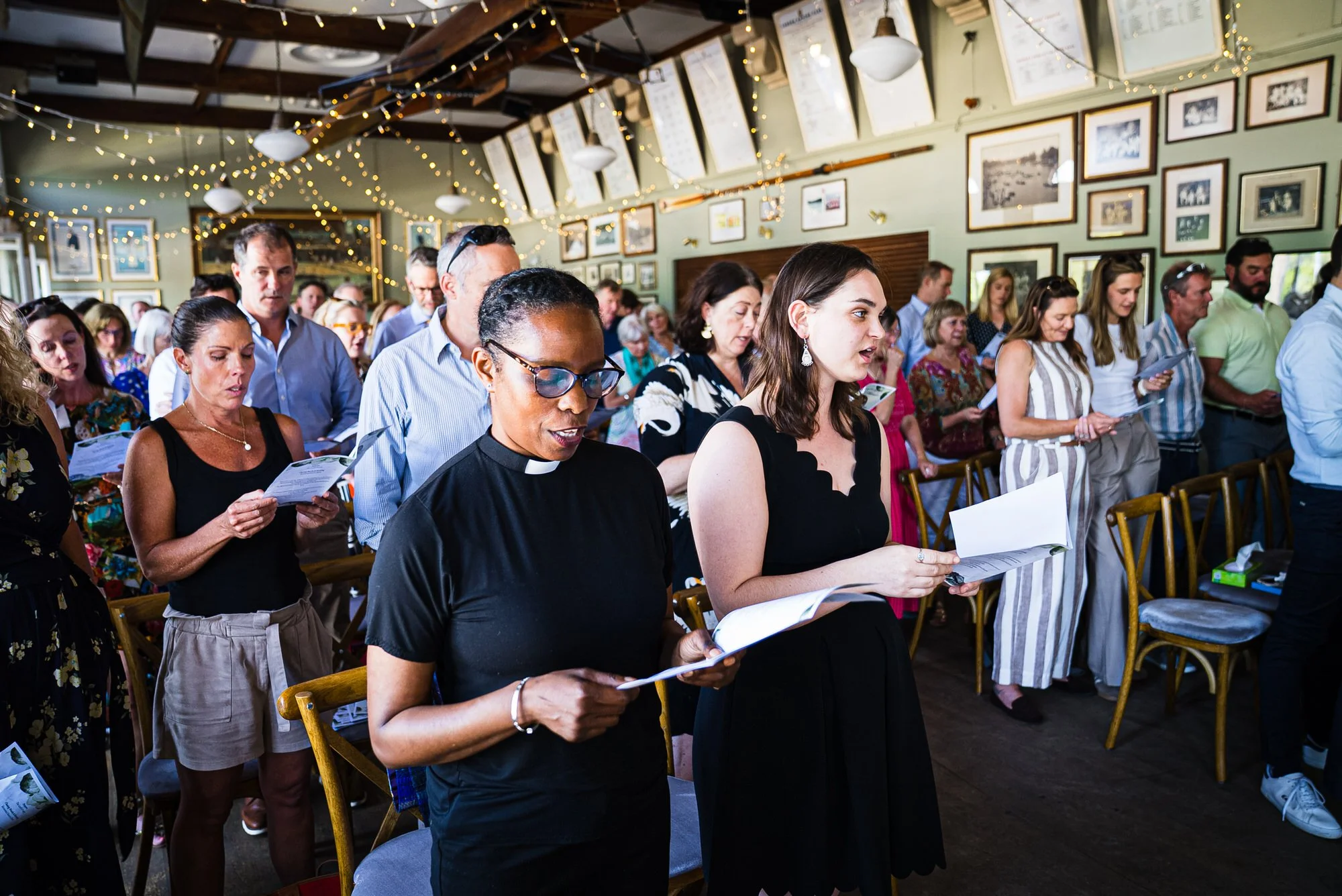
Richard’s celebration of life was held at the London Rowing Club on Putney Embankment, looking out over the Thames.
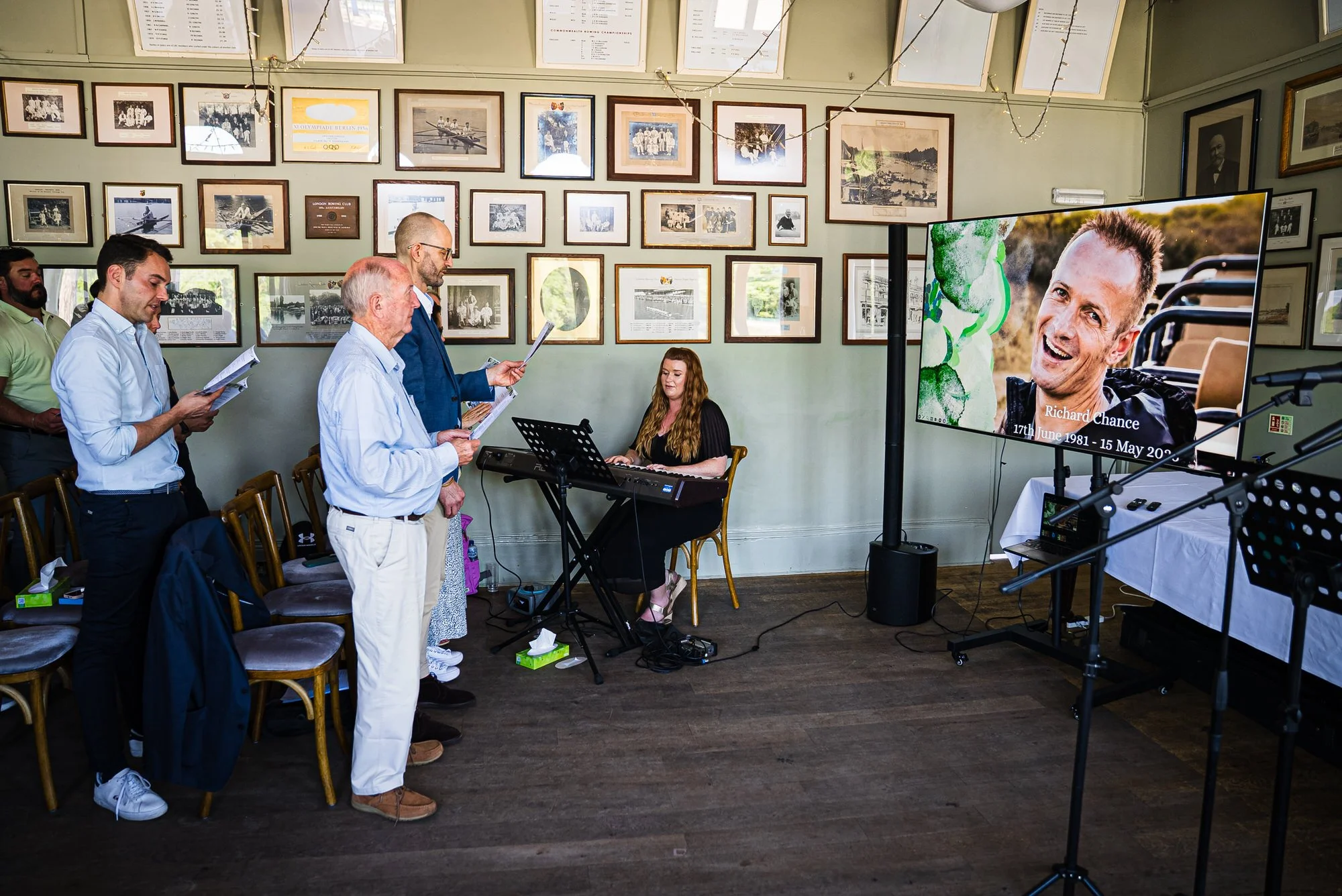
I provided the funeral live streaming and the AV support in the room — cameras, microphones, support for the live musician, and the family’s photographs on the club’s screen. People sitting by the river and people on the other side of the world were watching the same afternoon.
664 devices joined from 27 countries.
That is what a celebration of life can be when the person’s life was larger than one postcode. The room in Putney was full. The rest of Richard’s story was in Zimbabwe, South Africa, Australia, the United States, Kenya, New Zealand and across Europe.
Celebration of Life Services
Visit our Funeral Live Streaming to find out more
Funeral AV Support
The London Rowing Club
The club sits on the Embankment. It is a hall on the water, not a church: a wide room, windows onto the Thames, a stage end for speakers and music. It had to work as a room people were sitting in, and as a stream for everyone who could not get to Putney.
I arrived four hours early as a venue like this needs the cameras placed correctly, the sound checked with a live musician, the family’s photographs and tribute film running through the club PA and screen, and the stream tested on more than one network before anyone important walks in.
For this Funeral broadcast I set up two cameras and three dedicated microphones. Bonded 4G/5G ran it, so the stream did not depend on the venue Wi-Fi. In the room I stayed with the AV throughout — the musician, the tributes, the photographs — so the family were not managing a laptop on the day.
The Service
There were tributes, music and singing. One of the messages came from a friend on Everest, sent from 8,849 metres up, after he had climbed it for Richard. That is the kind of moment a celebration of life can hold. It is also the kind of moment that is wasted if the people watching in another country cannot hear it.
The afternoon moved between laughter and tears. The stream had to carry both. A single camera at the back of the room would have given you the hall. It would not have given you the speakers, the musician, or the feeling of the river through the windows.
Who Watched
664 devices logged in from 27 countries, including Zimbabwe, South Africa, Zambia, Malawi, Kenya, Tanzania, Botswana, Mozambique, Australia, New Zealand, the United States, Ireland, Spain, France, Portugal, Greece and the UK.
Some people watched live. Others used the same viewing link afterwards. There is no charge for guests to watch, and the recording is there for anyone in a different time zone.
This is why families book a proper stream for a celebration of life. The people in the room matter. So do the people who knew Richard well and could not stand on Putney Embankment that afternoon.
Celebrations of Life in London
I cover memorials and celebrations of life across London — clubs, halls, churches, riverside rooms and private venues. Funeral Streaming, AV, photography and videography can be booked together or on their own.
Funeral live streaming starts from £650. The wider celebration-of-life page is here: Celebration of Life Services
Call or text 07772 509101, or use the contact page.

Memorial Photography and Videography at Pitzhanger Manor, Ealing
This memorial was held in Soane’s Garden Room at Pitzhanger Manor in Ealing — a restored Regency villa with garden light coming into a small, formal room. It was a celebration of a young woman’s life, led by celebrant Ruth Graham, with speeches from people who knew her, live piano, and a tribute film played during the afternoon.
Me and my team photographed and filmed the day. The tribute film, made from photographs of her life and music the family chose, ran on a screen in the room.
Soane’s Garden Room
Pitzhanger is a great venue. It feels welcoming: large windows, natural light, and a garden beyond them. The tables, tea, cake, flowers and a family friend playing the piano in the background made the room inviting.
I photographed from the edges as the family greeted their guests. That is what funeral photography is for — the moments that pass quickly. An embrace at the door. Someone pausing over the cake. And the quieter points where the loss is recognised and shows on people’s faces.


The tribute film
Part way through the afternoon the tribute film I had put together for the family was shown. Photographs of her life, set to music the family had chosen. People laughed and went quiet in the same few minutes.
The speeches told the room who she was. The film put her face back in front of them. I make those films so they can be played during the memorial and kept afterwards.



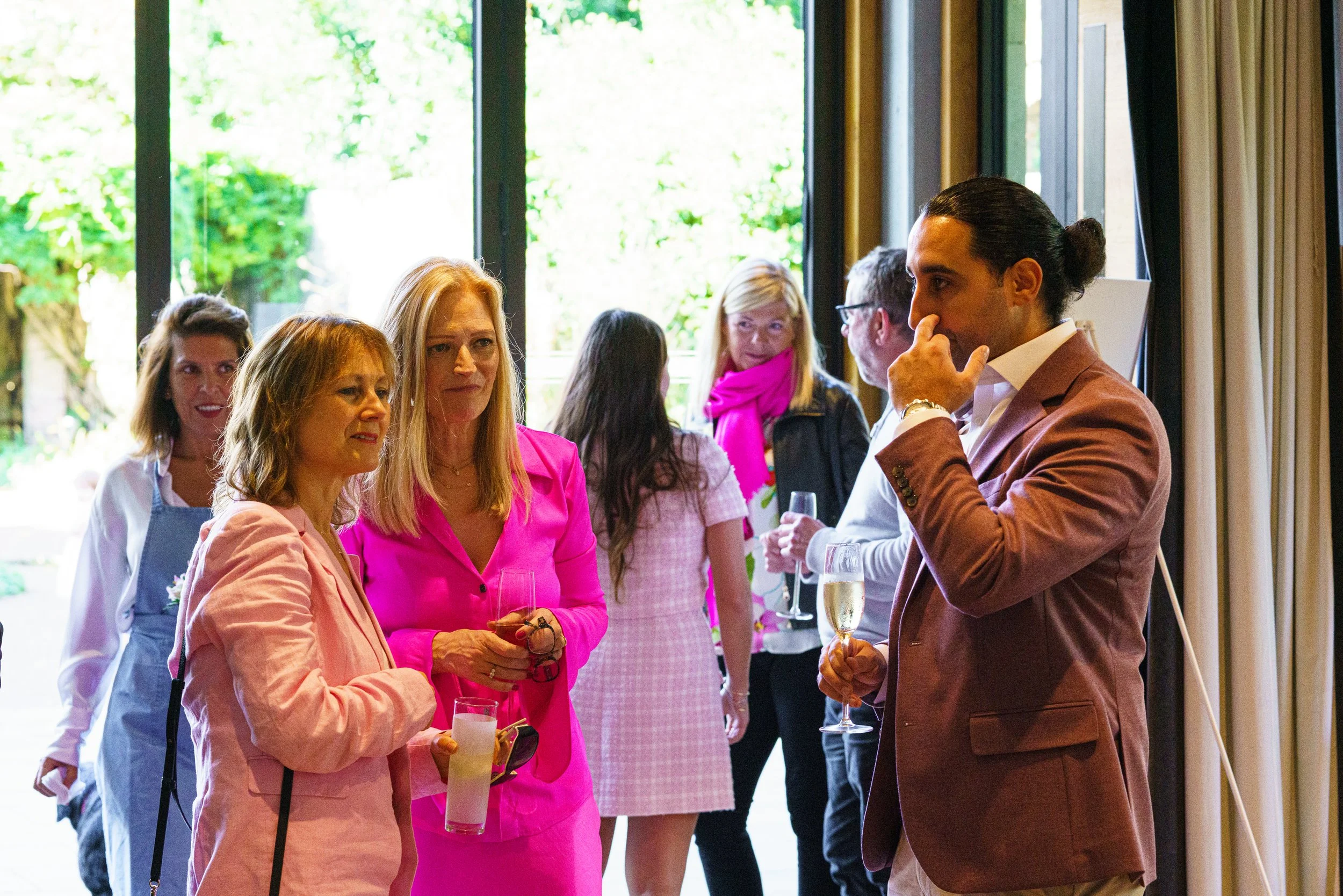


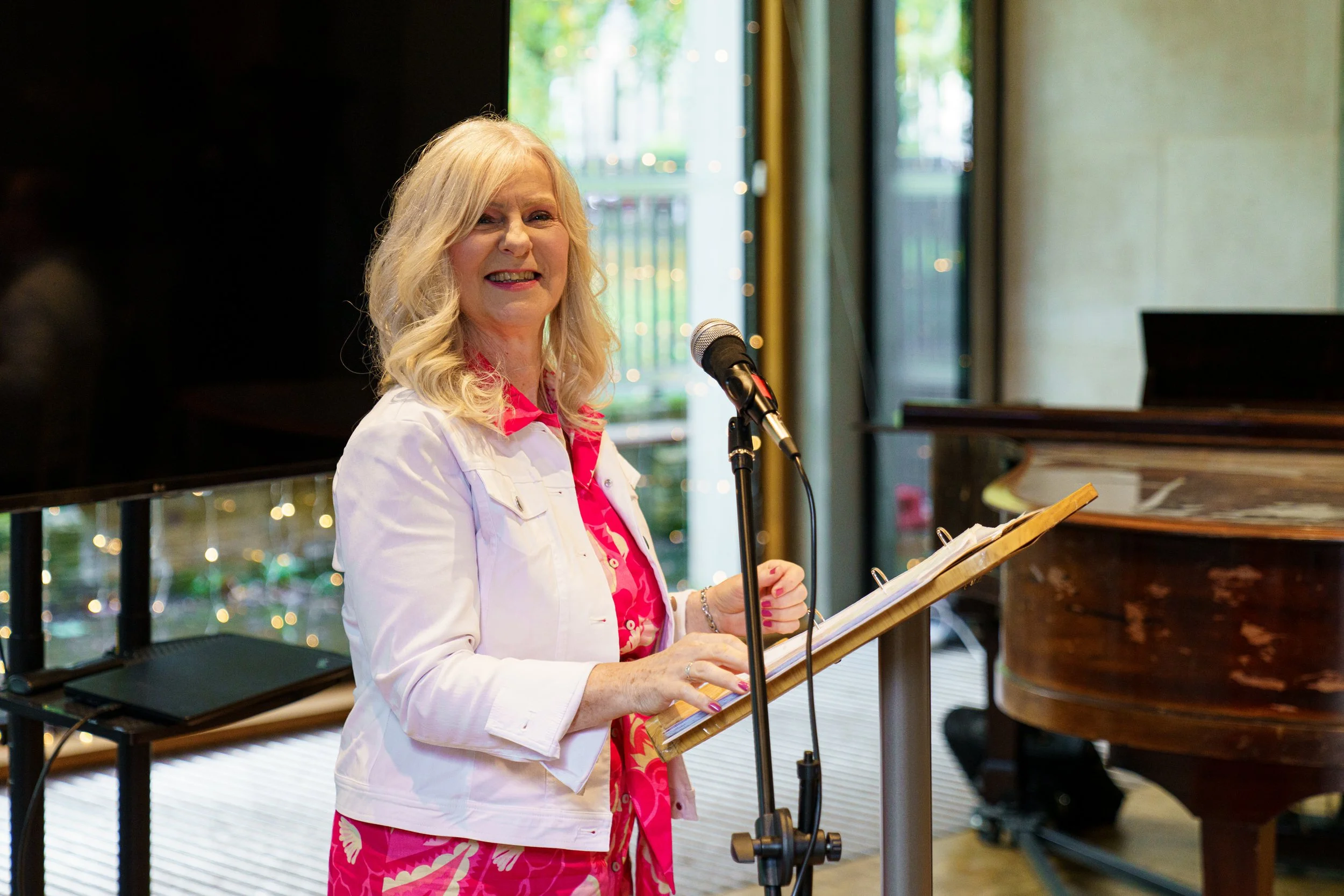


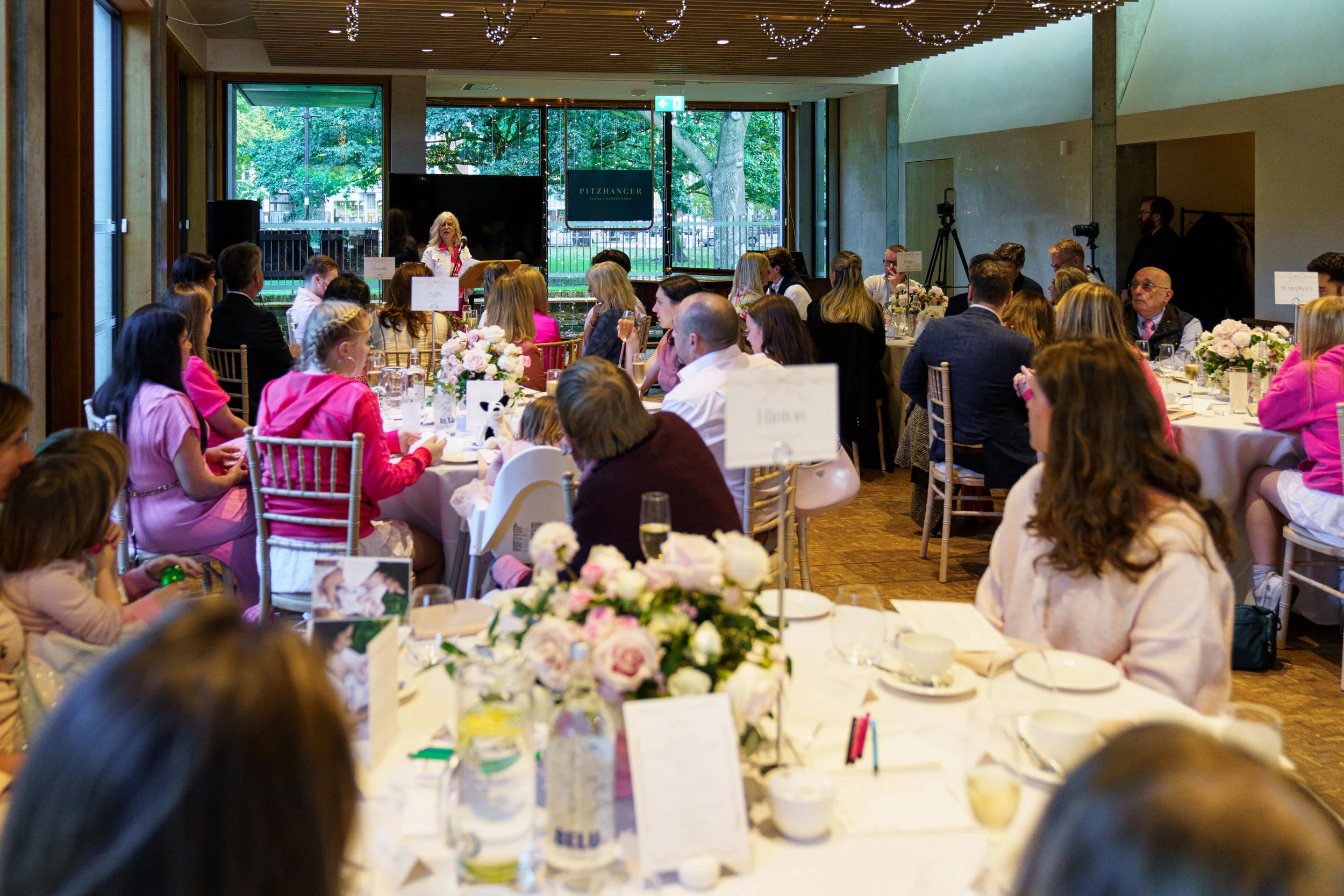


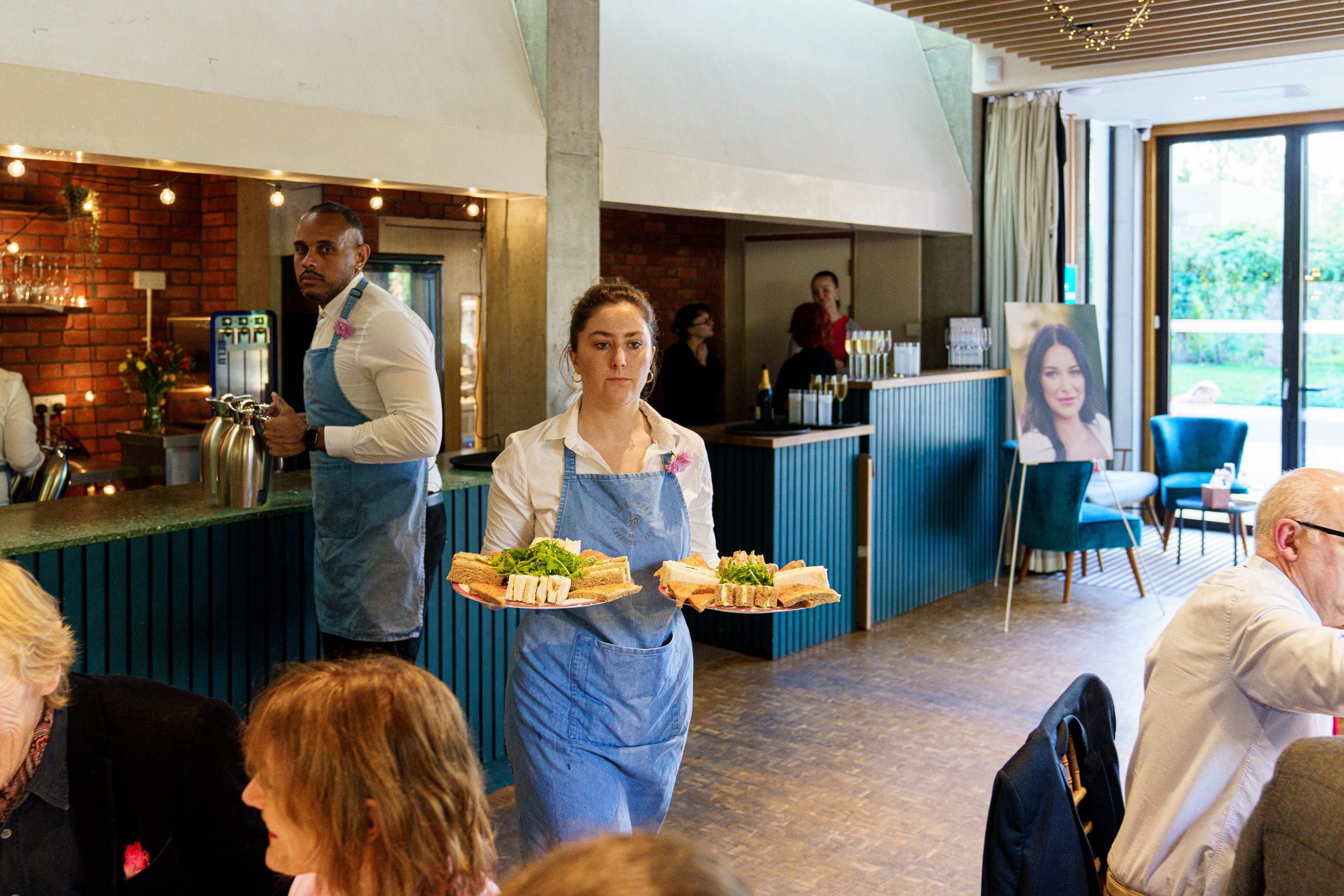


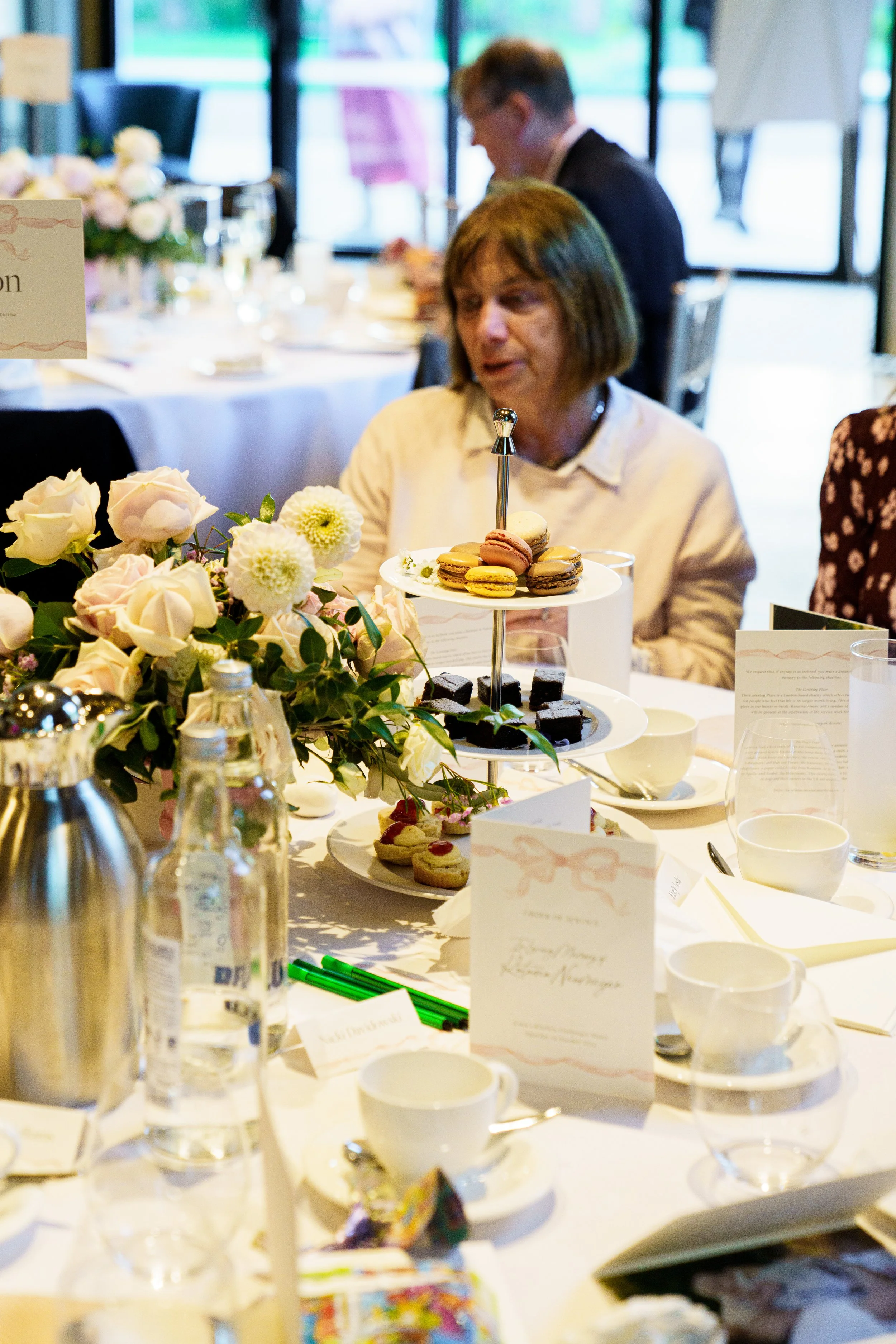
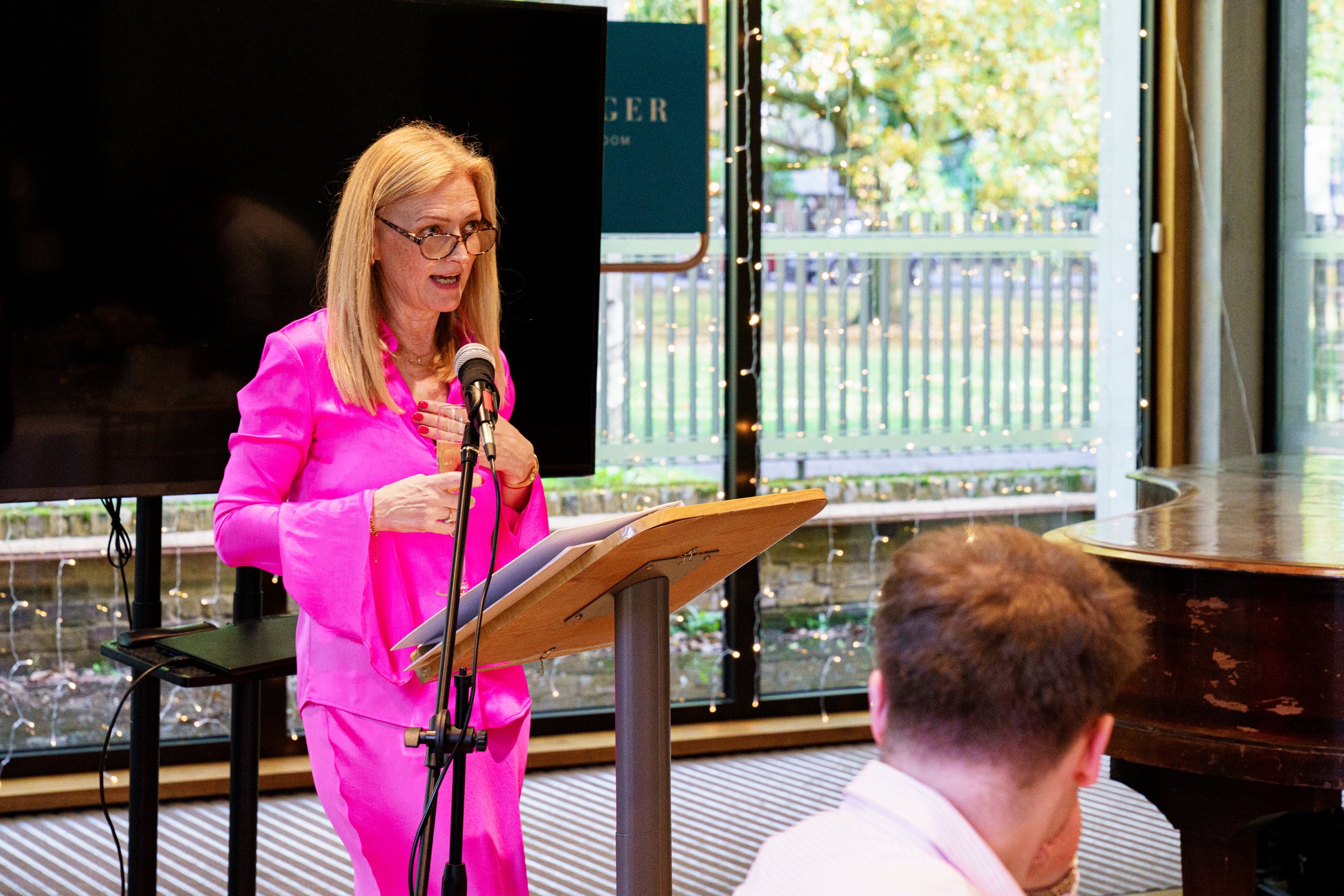


Photographing the memorial
I started before guests arrived — the flowers, the layout, the light — then photographed people coming in, the speeches, and the conversations after.
Some pictures cover the main parts such as the celebrant, the speakers, the film, the piano. Others are much more intimate, and often the ones missed or not remembered by the family on the da: a look between friends, the location, the details, the garden through the window. Both are part of the whole story.
Funeral photography starts from £750: Funeral Photography
Filming it for her daughter
The videography kept the voices. Speeches, piano, the tribute film playing in the room, the feeling of the afternoon. Her daughter will not remember the running order. One day she want to hear the people who stood up and how they talked about her mother.
That is why families book a film as well as photographs as both approach the same event in very different ways.
Funeral videography starts from £750: Funeral Videography
Memorials and celebrations of life
I cover memorials like this across London — manor rooms, clubs, gardens, churches and private houses. Photography, videography, tribute films, live streaming and AV can be booked together or on their own.
Call or text 07772 509101, or use the contact page.

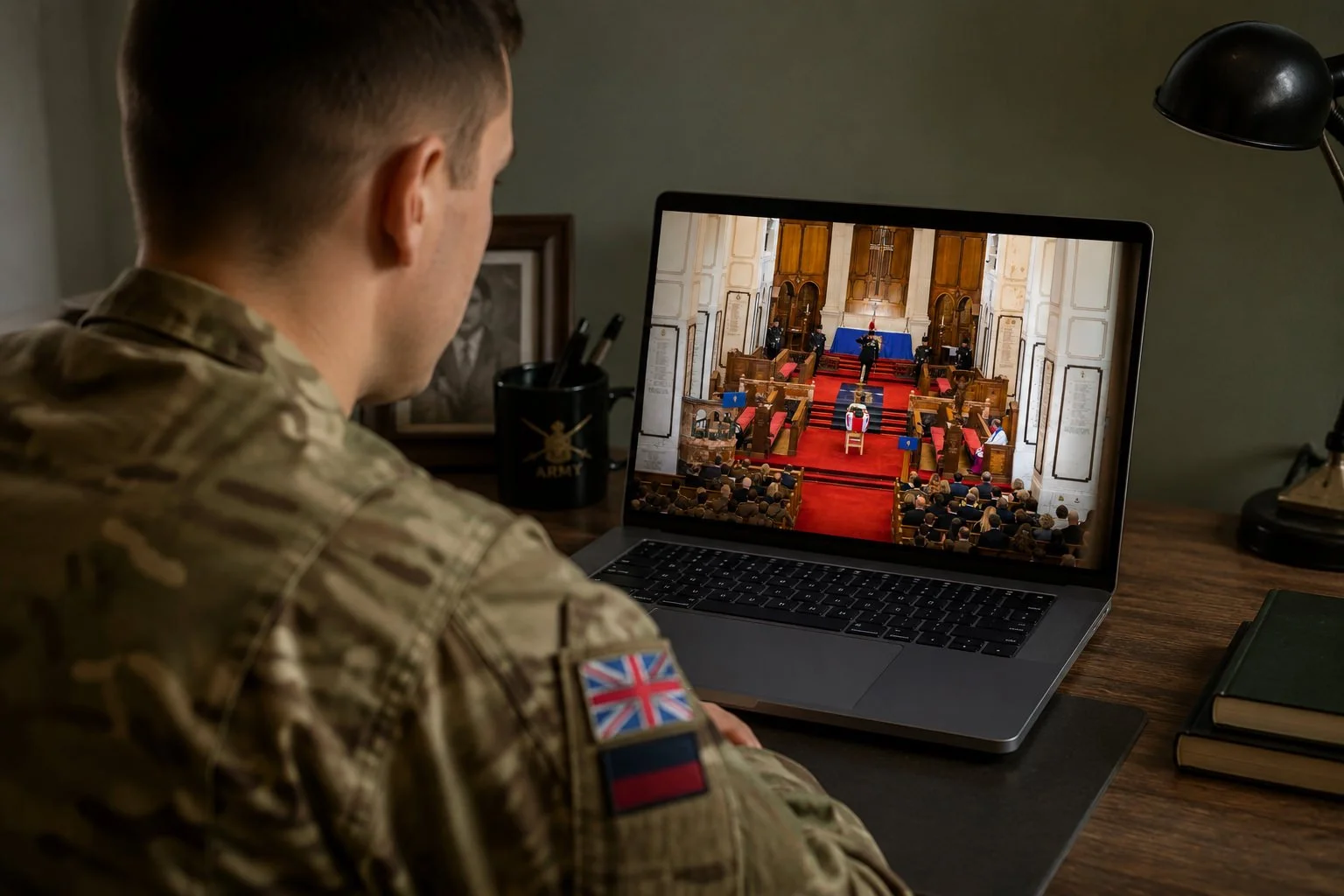
How to Live Stream a Military Funeral in the UK
A military funeral is not a standard church service with extra uniforms. The timing is tighter, there are indoor and outdoor sections, and the stream has to pick up commands, salutes and silence as well as the readings.
I provide funeral live streaming for Armed Forces funerals across the UK, including ceremonial services at Sandhurst and Wellington Barracks.
The booking process is the same as any other stream. The difference is the planning on the day.
Visit our main Funeral Live Streaming page
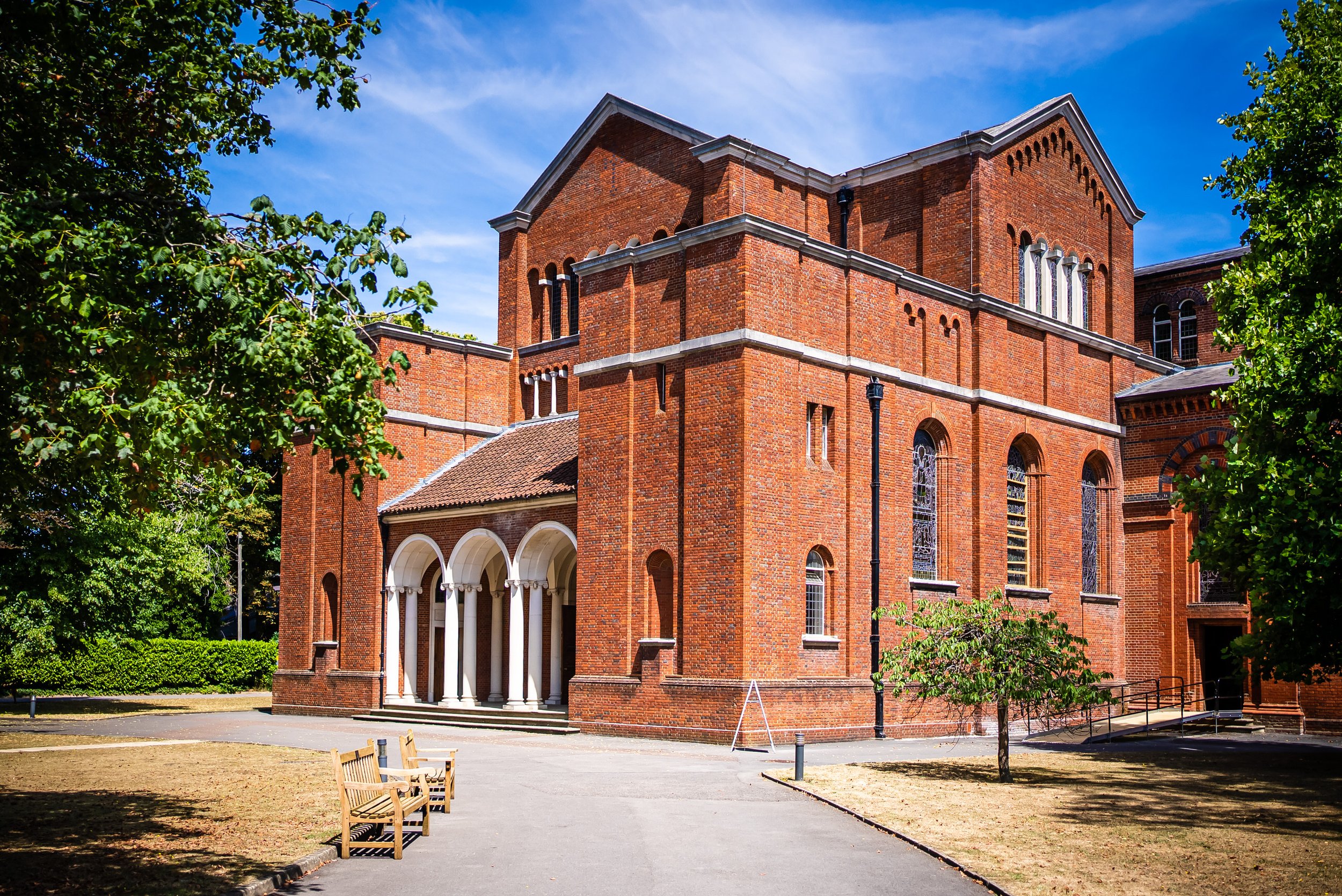
Why a military funeral is different to stream
The coffin arrival, guard of honour and salutes often happen outside before anyone is seated. The service then moves into a chapel. Sound has to cover the officiant, the lectern and the open air. There is little room to set up once the parade has started. Families and colleagues are often watching from other bases, ships or countries.
A single fixed camera at the back of a chapel will miss half of that. It will also miss the moment the honours happen in the yard, which is the part people overseas most need to see.

A Royal Navy funeral at Sandhurst
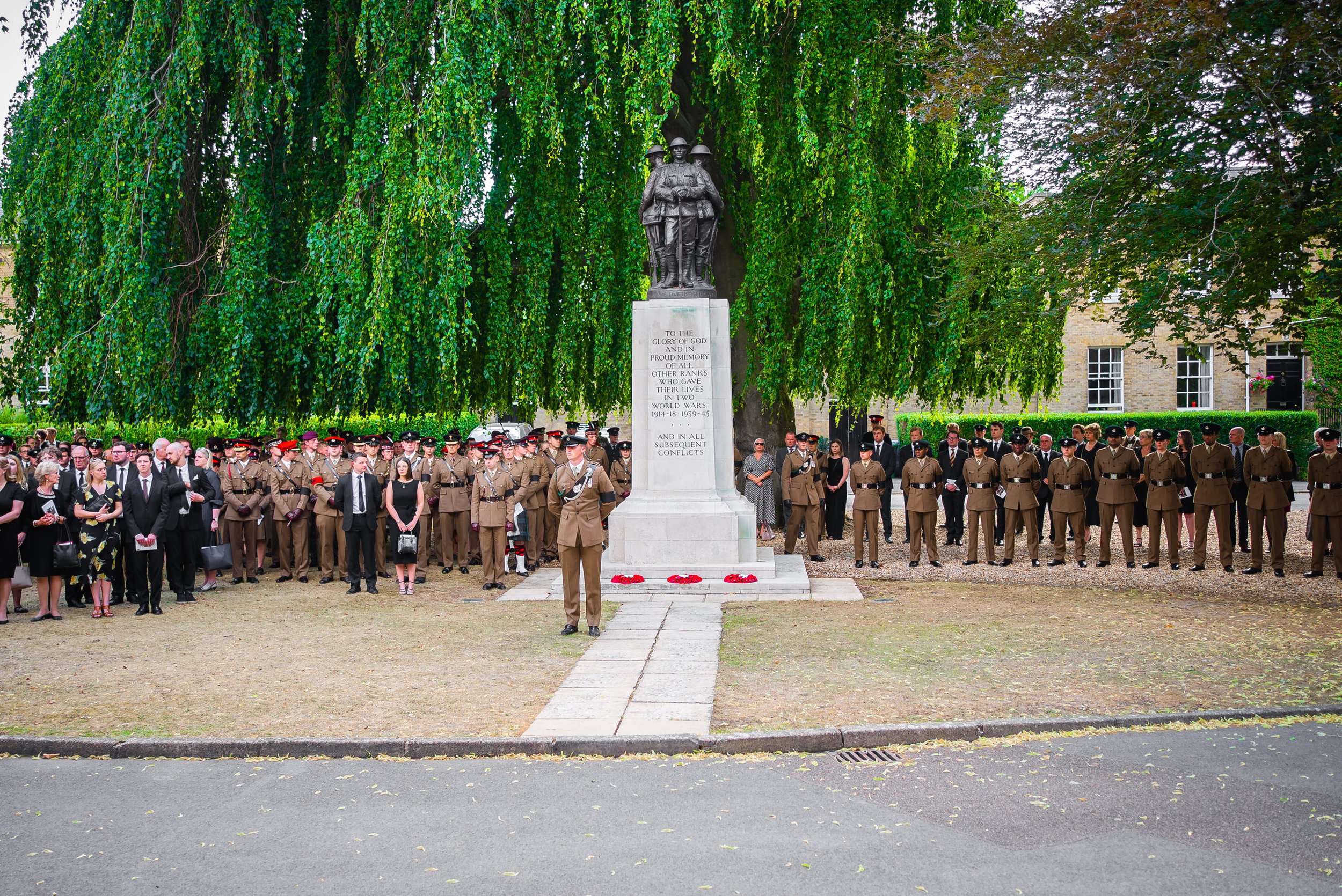
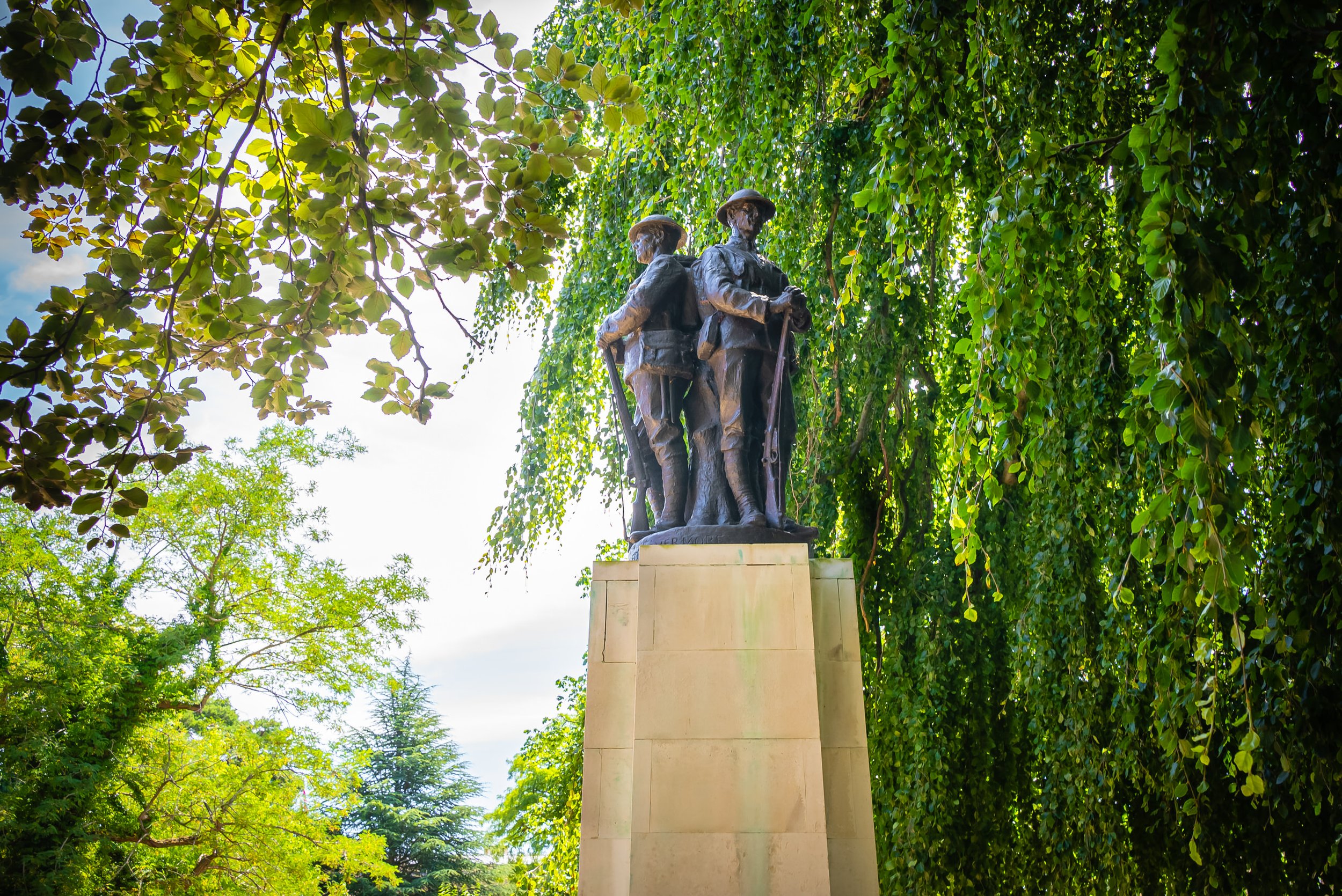
I was asked by the Ministry of Defence to live stream the funeral of Second Lieutenant Max George at the Royal Military Academy Sandhurst.
The day combined the outdoor ceremonial elements — the coffin arrival, guard of honour and salutes on the parade ground — with the chapel service. Cameras covered both. Two inside the chapel from the balcony: one wide on the congregation, one closer on the lectern, minister and family. One outside for the arrivals and the honours.
Microphones covered the minister, the lectern and the outdoor commands. Bonded 4G/5G ran the stream so it did not depend on venue Wi-Fi. People watched from more than 20 countries. The recording was available on the same viewing link afterwards.
I have also streamed a full ceremonial military funeral at Wellington Barracks in London. The same rule applies there: know where the formation will move, or you end up standing in it.
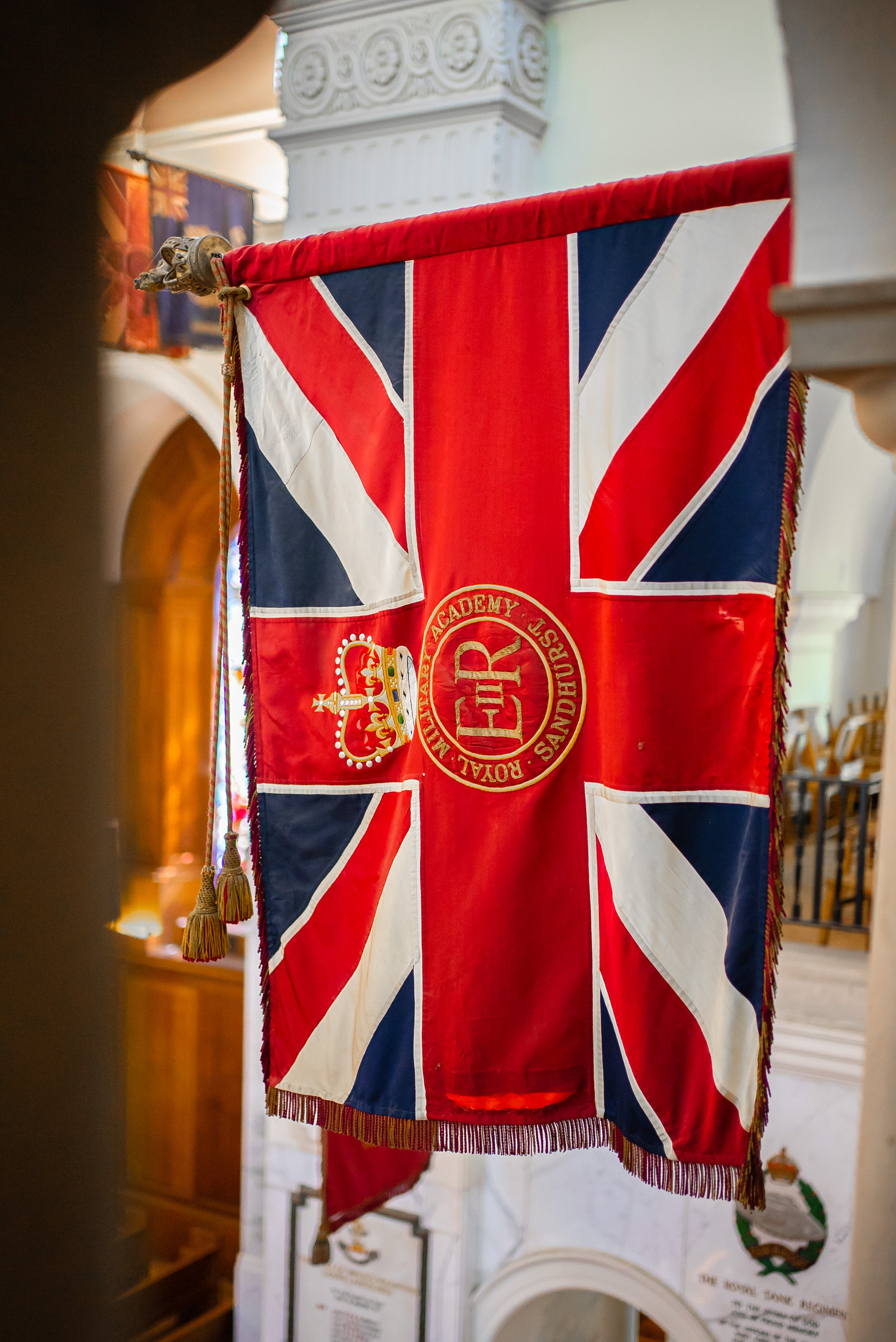

What I set up for a military funeral stream
Two or more cameras, so the chapel and the outdoor honours can both be seen
Dedicated microphones for speech, plus ambient sound for salutes and hymns
Bonded 4G/5G, and Starlink if the site has no usable signal
A viewing page for invited guests, password-protected or openly shareable
The same link for the live stream and the recording
3 months of hosting and a downloadable HD copy
Funeral live streaming starts from £650. Extra locations, such as the parade ground and then the chapel, are quoted before the day.

How to arrange streaming for a military funeral
Get in touch with the date, time and venue
Tell me whether the honours are outside, inside, or both
I confirm access, arrival time and the quote
You receive the viewing link to share with family and colleagues
Call or text 07772 509101, or use the contact page.
How the service works in general: How Funeral Live Streaming Works
How to Photograph a Natural Burial – Clandon Wood, Surrey
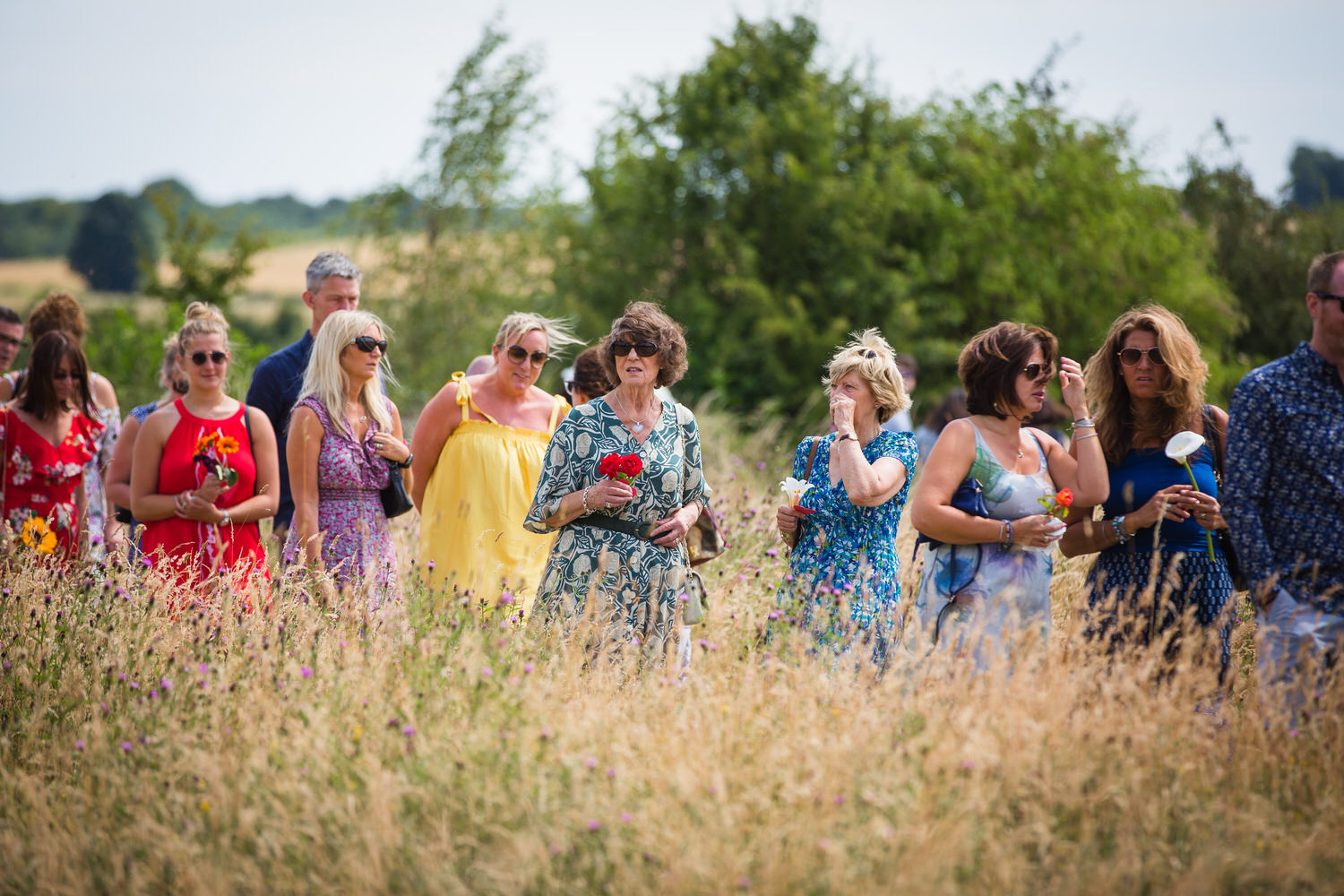
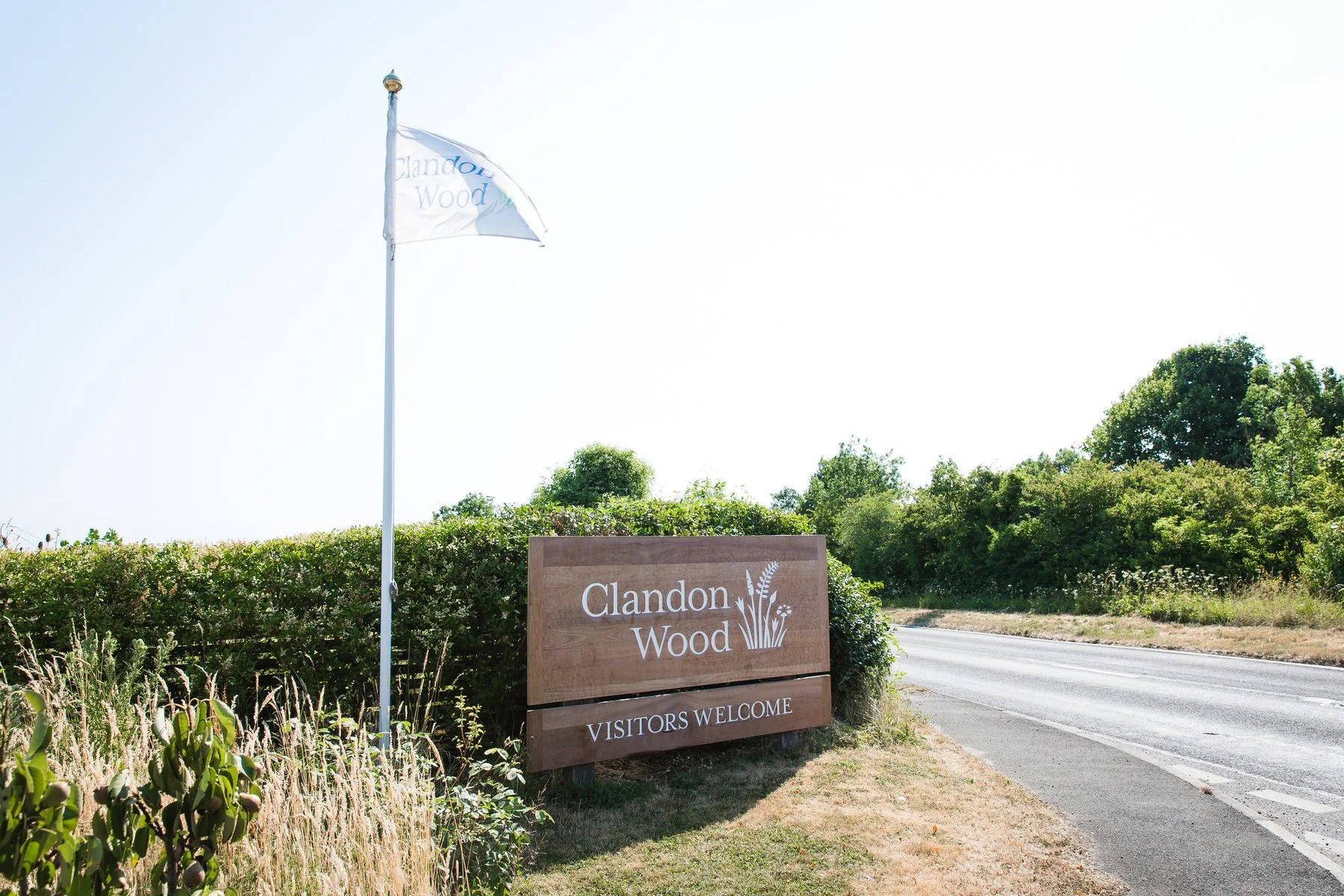
Natural burials are some of the most beautiful and meaningful funerals to photograph. Instead of rows of headstones and traffic, there are meadows, trees, birdsong and open sky. Families choose these places because they want something simpler, greener and closer to nature – and the photography should reflect that.
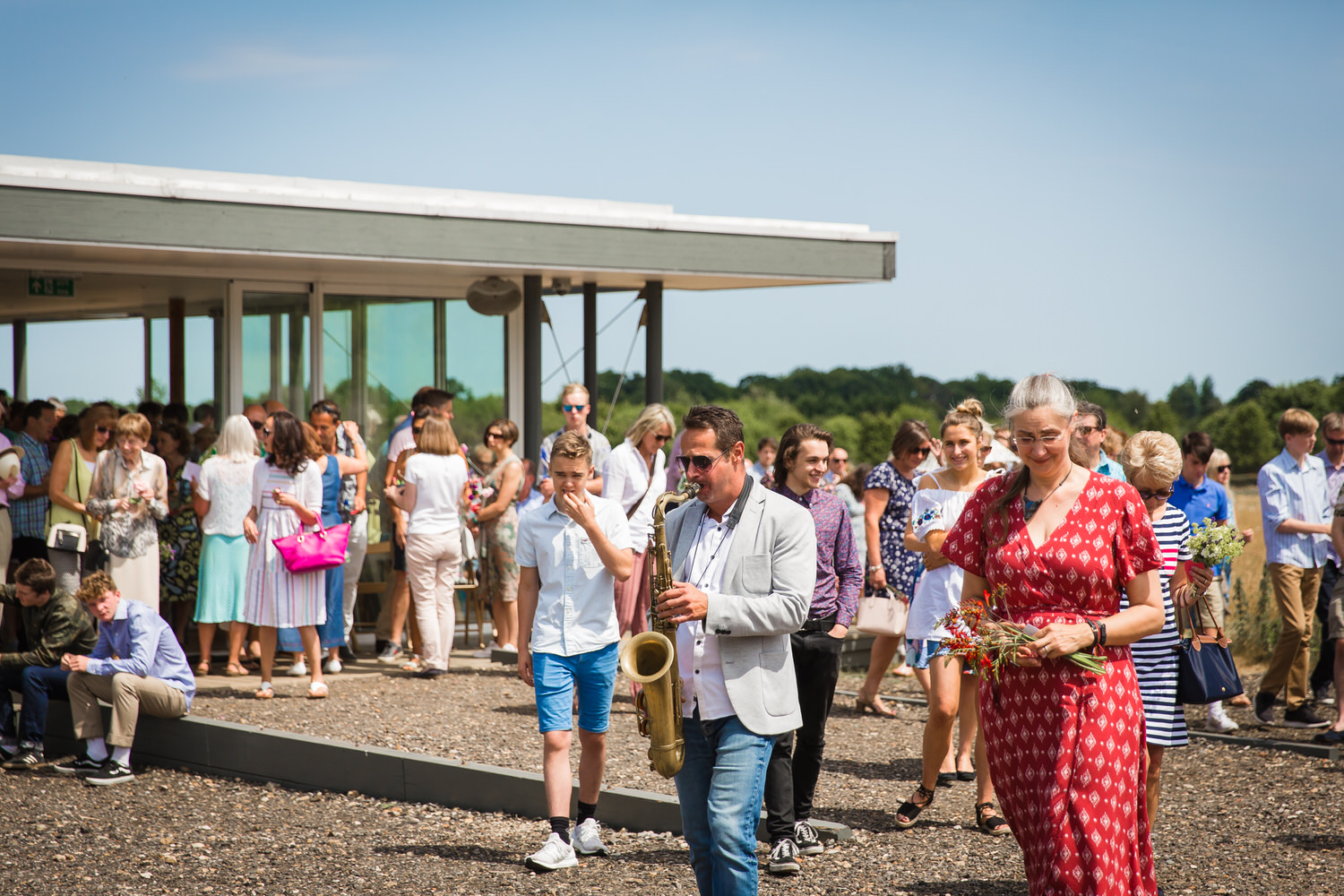
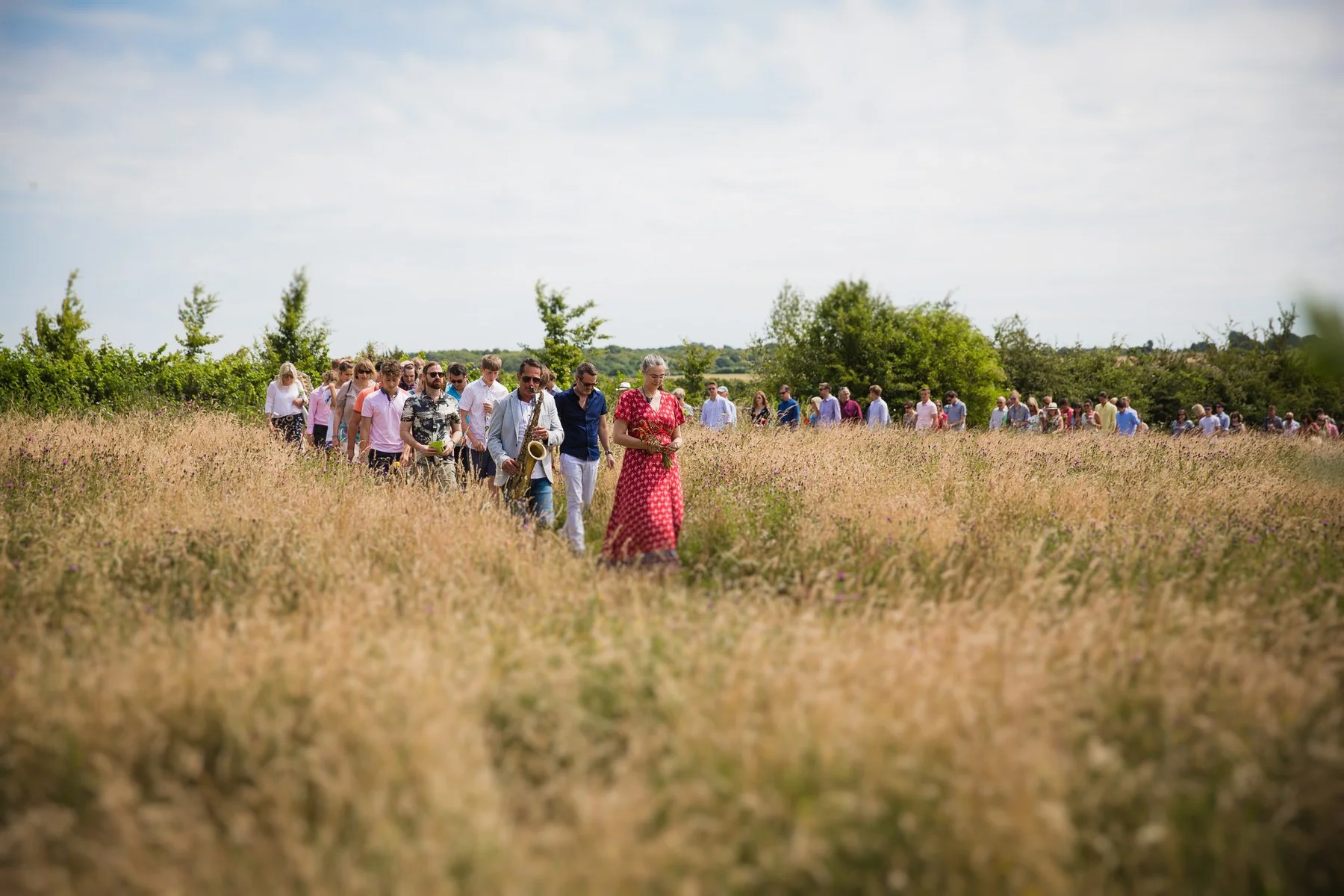
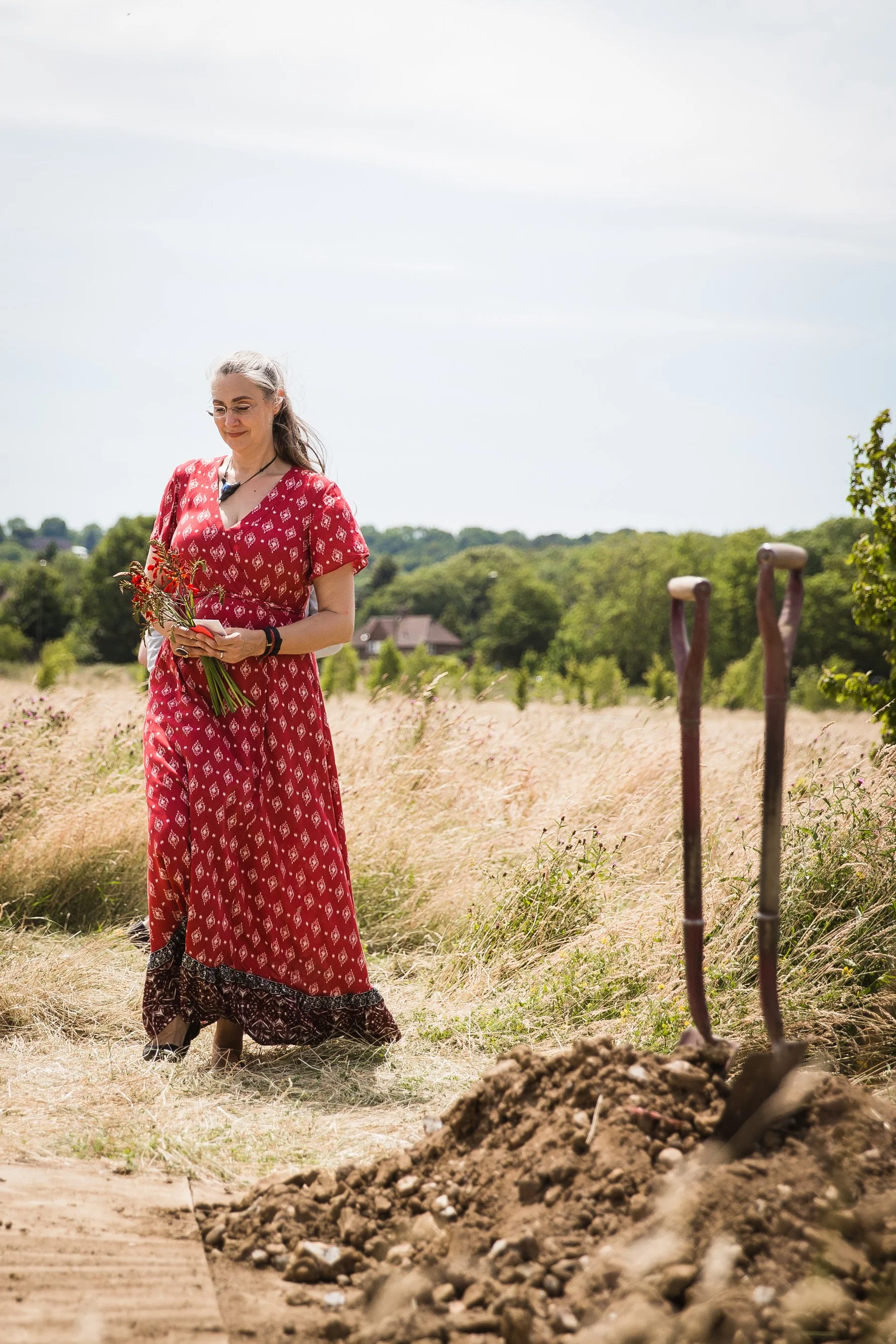
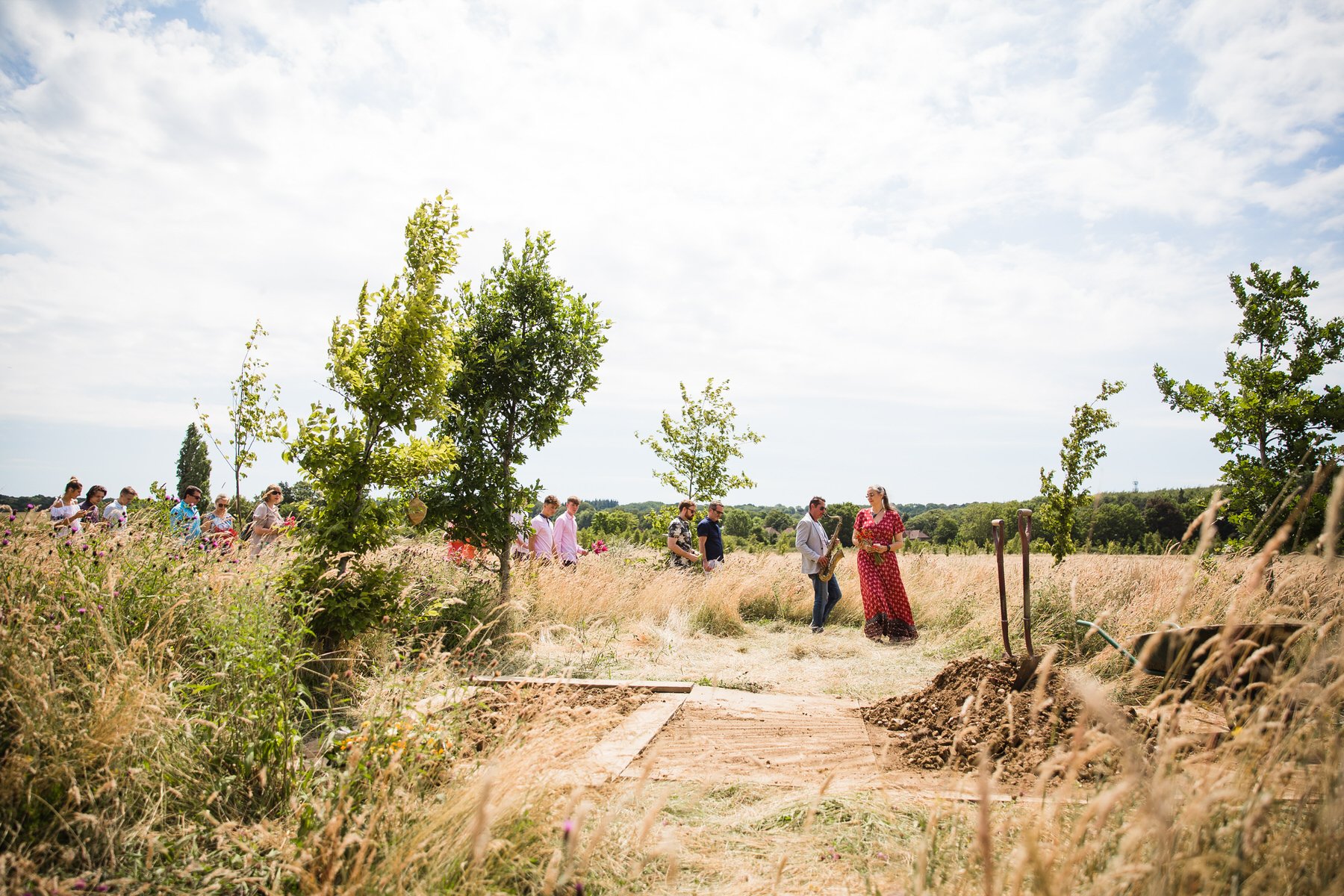
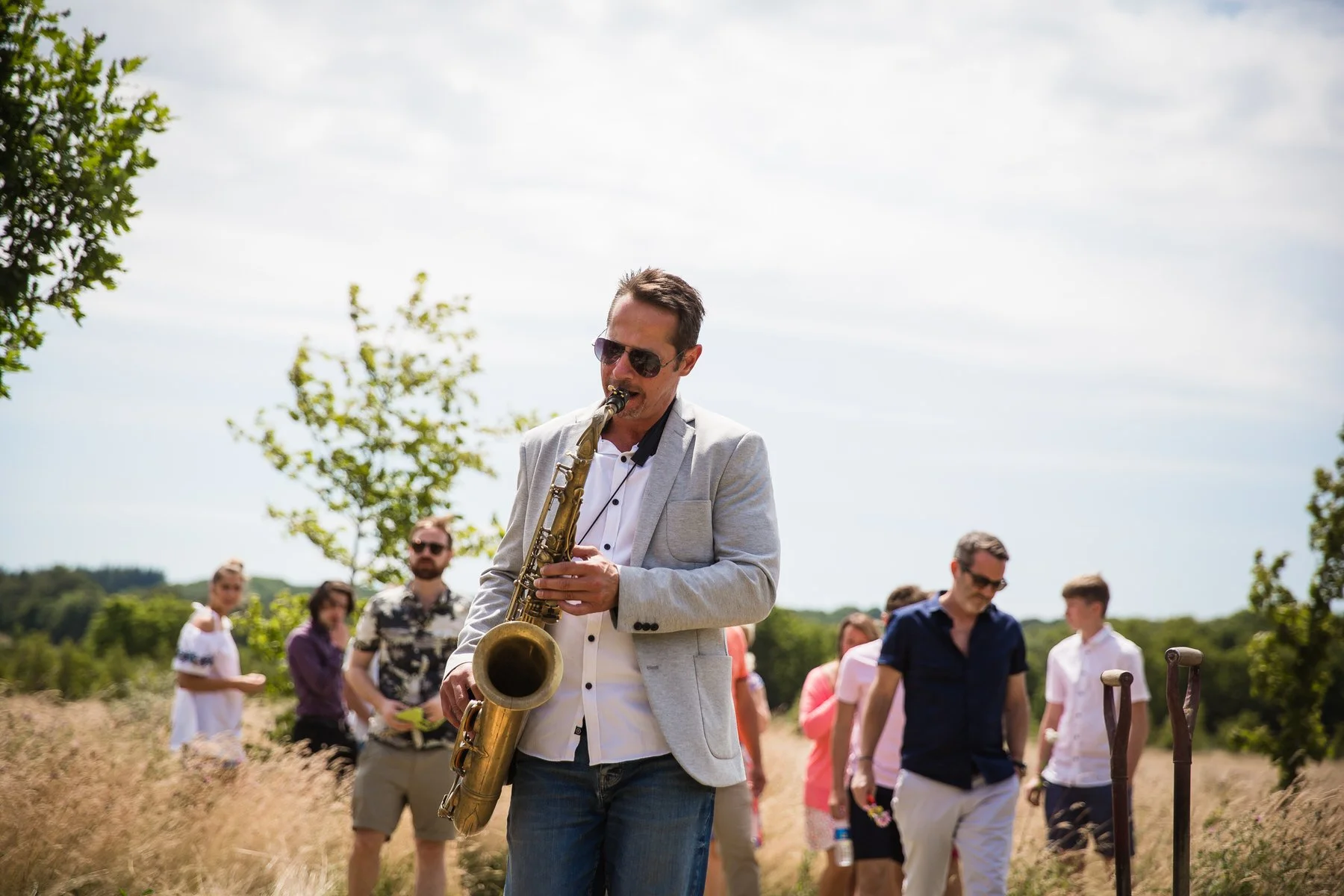
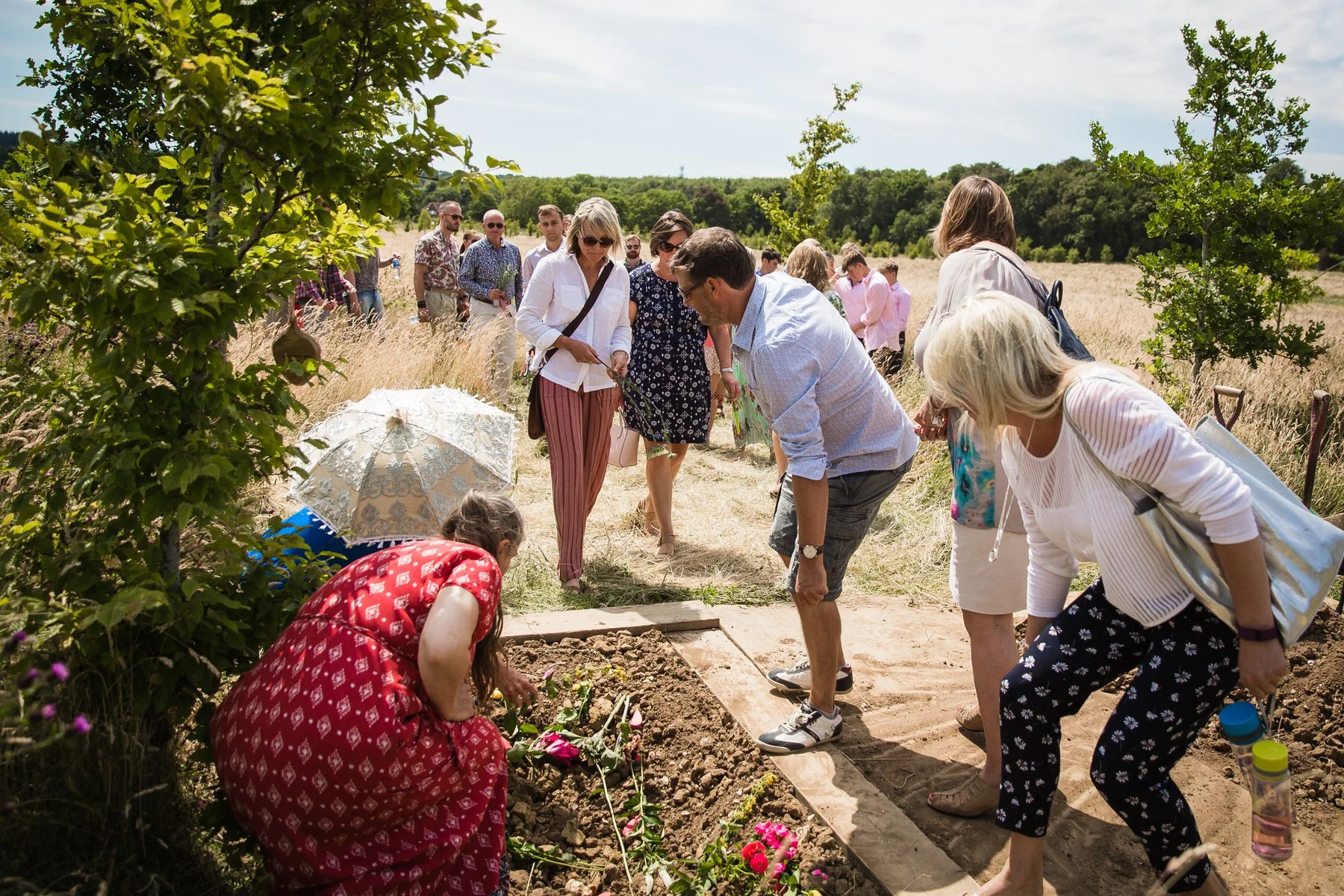
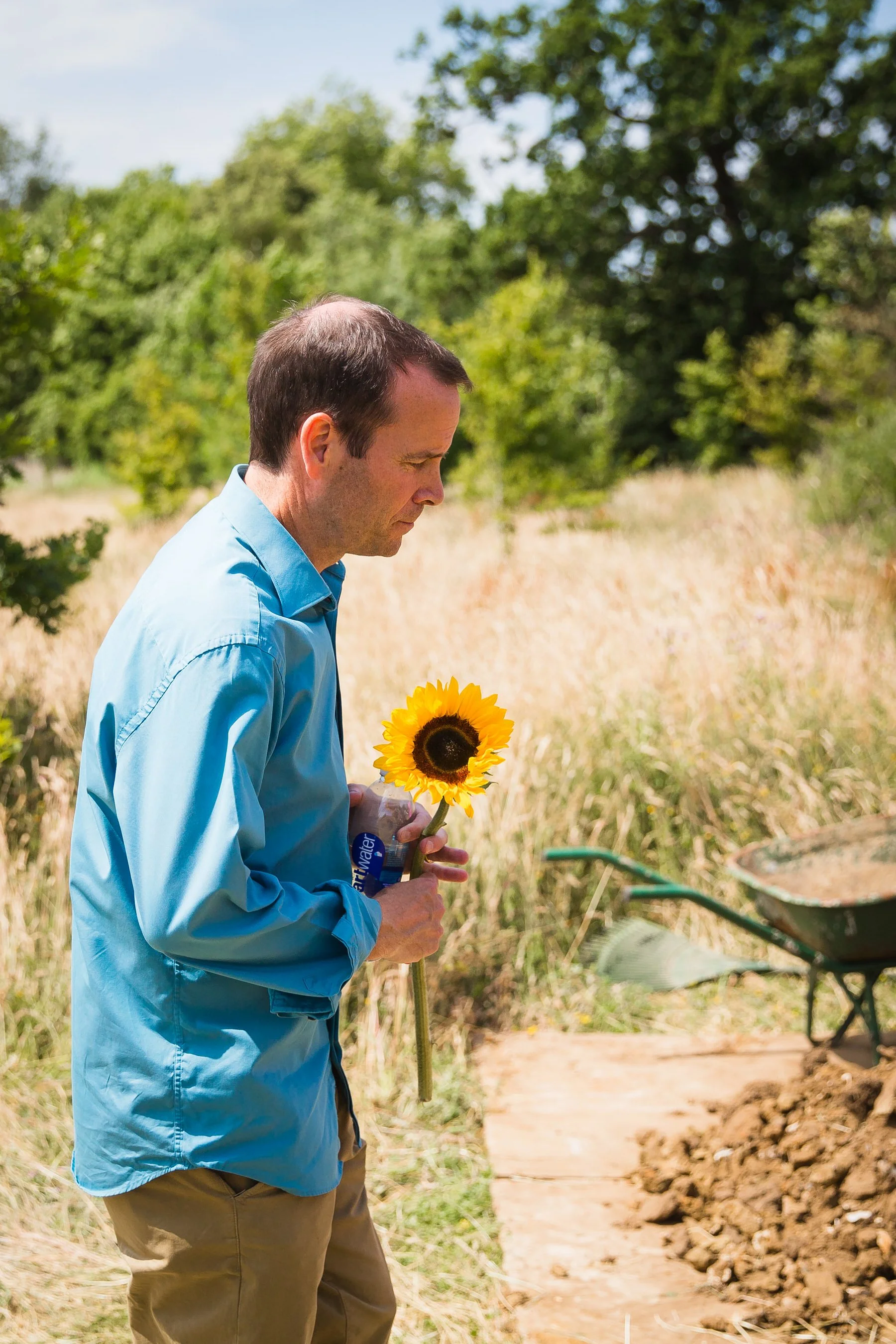
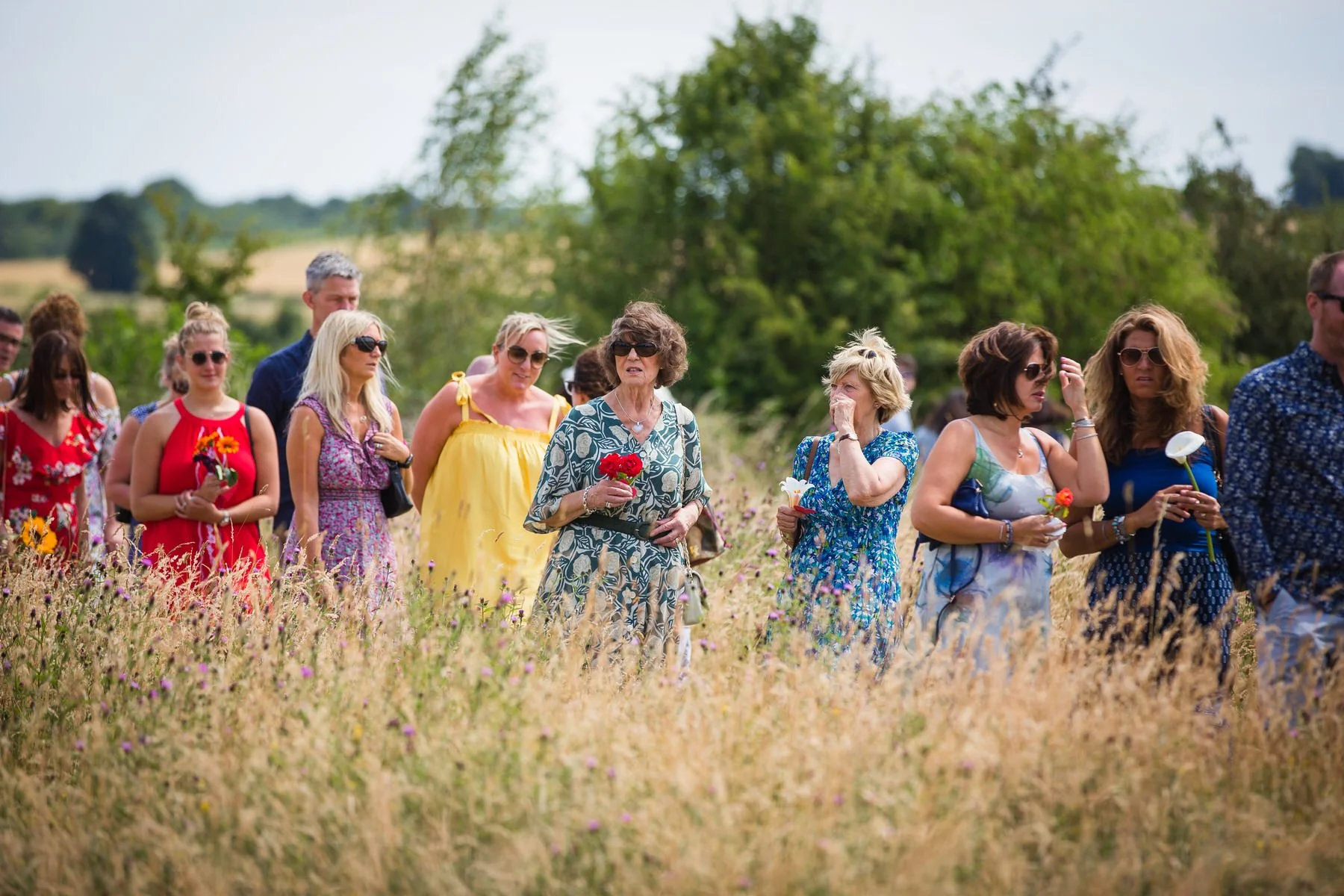
This guide is built around one of the most memorable funerals I have ever photographed, at Clandon Wood Natural Burial Ground in Surrey . It was a bright, hot summer’s day, with a woollen shroud, a simple cart, sunflowers, saxophone and a long line of friends and family walking through the meadows. It’s a powerful example of how a thoughtful, documentary approach can quietly honour a natural burial from start to finish.
If you are considering funeral photography for a natural or woodland burial, this guide will help you understand what’s possible and how I work, so you can decide if Funeral Photography feels right for your family.
Why this natural burial at Clandon Wood stands out
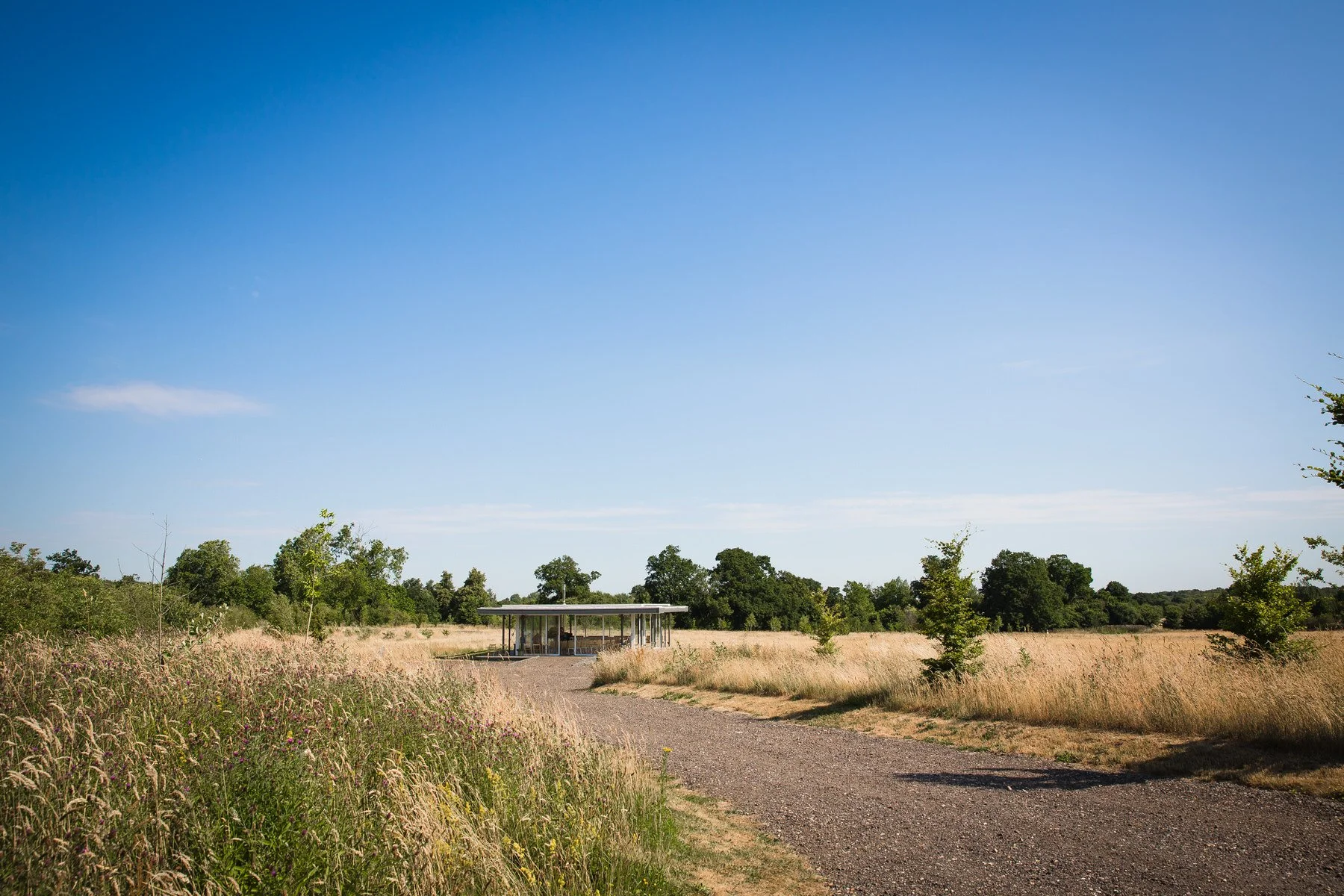
Clandon Wood is designed as both a nature reserve and a natural burial ground – wildflower meadows, young woodland, lakes and open views. On this particular day, the sun was high, the sky was clear and the meadows were glowing.
This funeral stood out because:
It was a fully eco‑focused natural burial, with a woollen shroud rather than a coffin.
The day was structured in two parts: a small, private burial for close family, and a larger service in the glass pavilion later on.
The journey to and from the grave involved a simple cart, sunflowers and long walks through the fields, led by a celebrant and, later, a saxophonist.
For photography, it meant there were multiple “chapters” to the story: quiet time with immediate family, the walk to the grave, the burial itself, the return to the pavilion, the gathering of the wider community, and a second walk back to the grave with everyone together.

What makes natural burial photography different?
Photographing a natural burial is very different to photographing a traditional churchyard or crematorium:
The setting is a living landscape, not just a plot. At Clandon Wood, the burial ground is managed as a nature reserve, with wildflowers, trees and water attracting wildlife.
Funerals often have a more spacious rhythm. Families may have time for a private graveside service before a larger gathering, and there is less pressure from fixed chapel slots.
Eco choices are central: simple coffins or woollen shrouds, minimal memorials and an emphasis on returning the body to the earth.
For photography, this means:
You can tell a wider story – including the environment, the walks, and the transitions between spaces.
Light and weather play a much bigger role and need to be handled carefully to keep images gentle.
Respect for the environment and for people’s privacy is as important as technical skill.
Clandon Wood – arrival and preparation in the pavilion
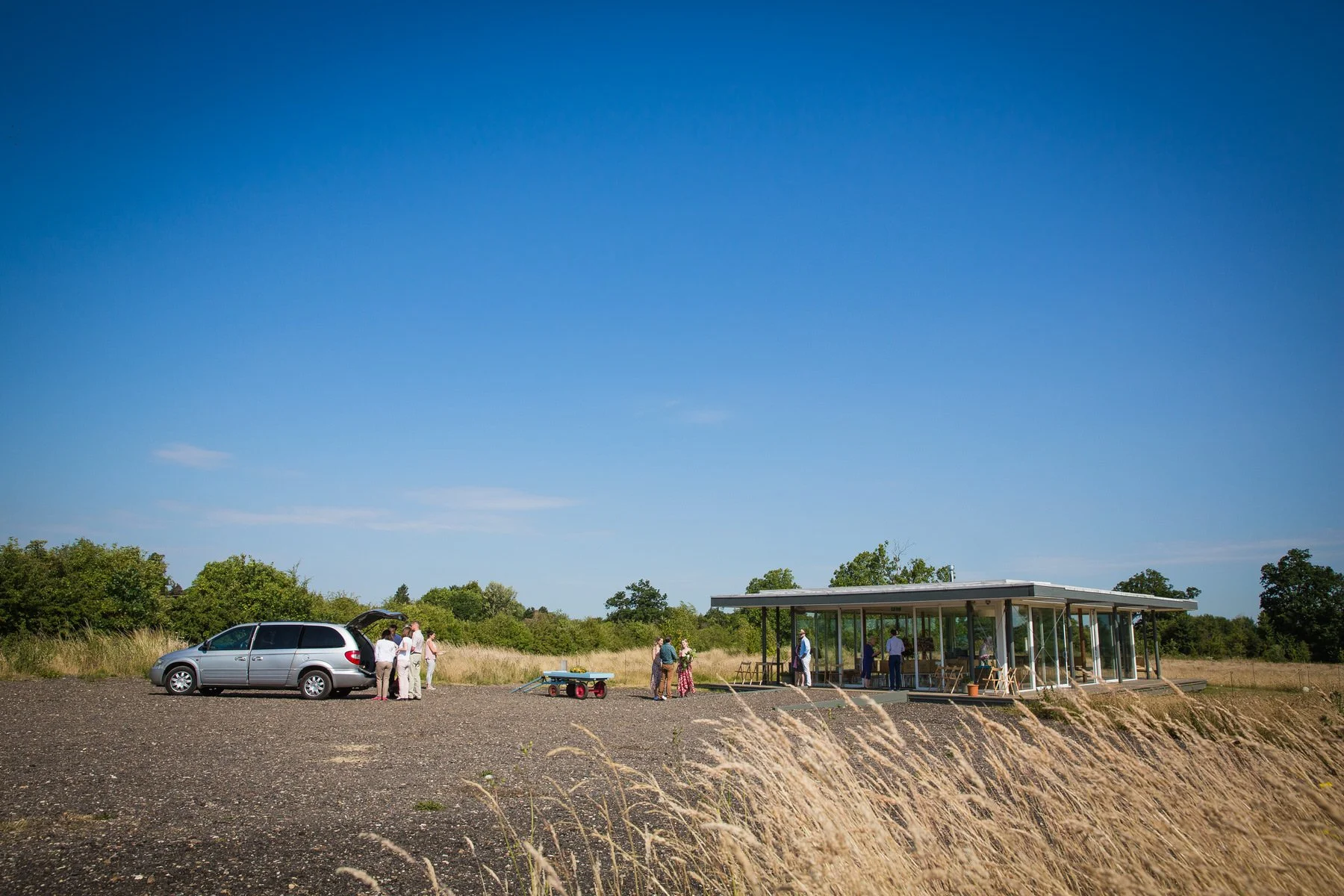
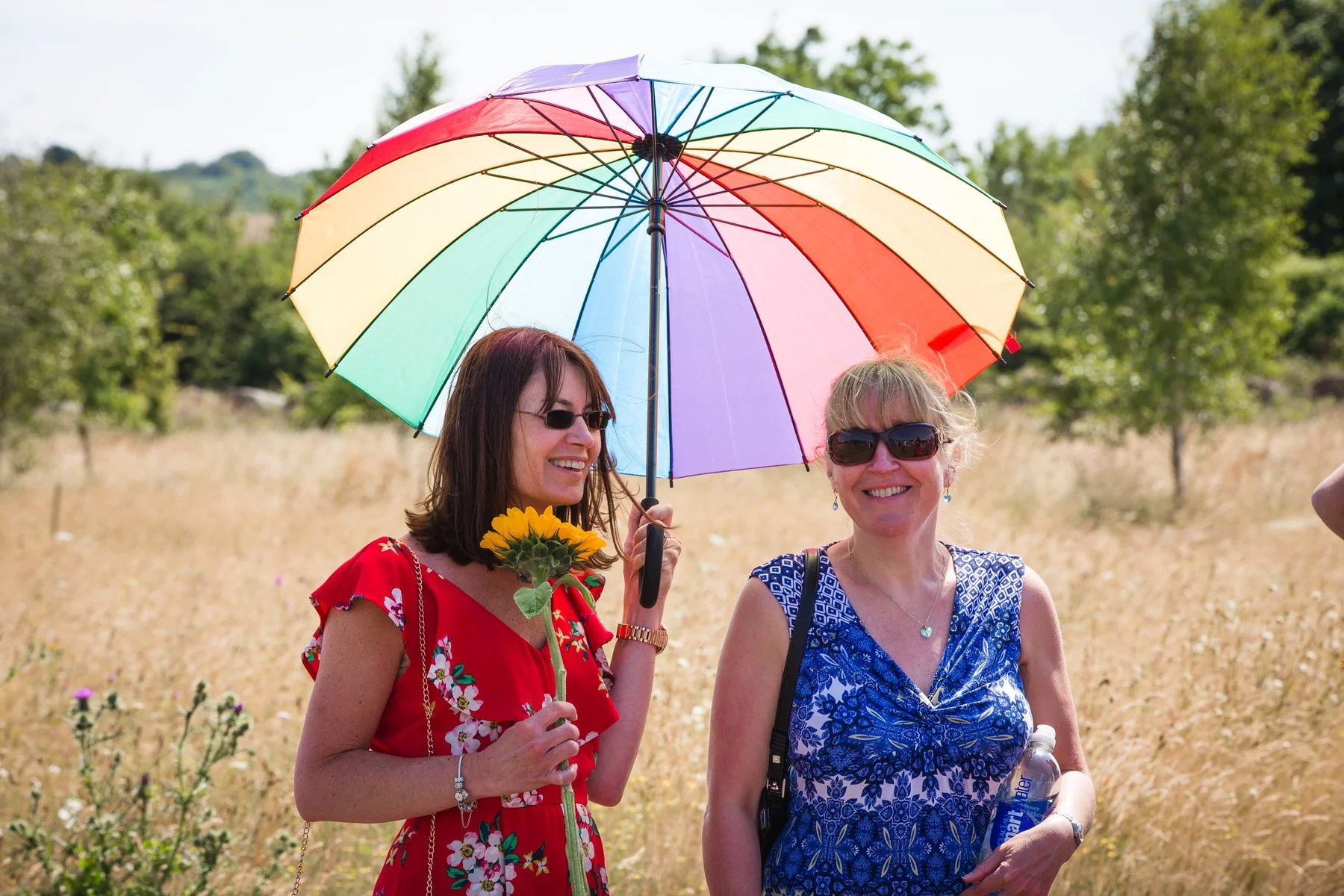
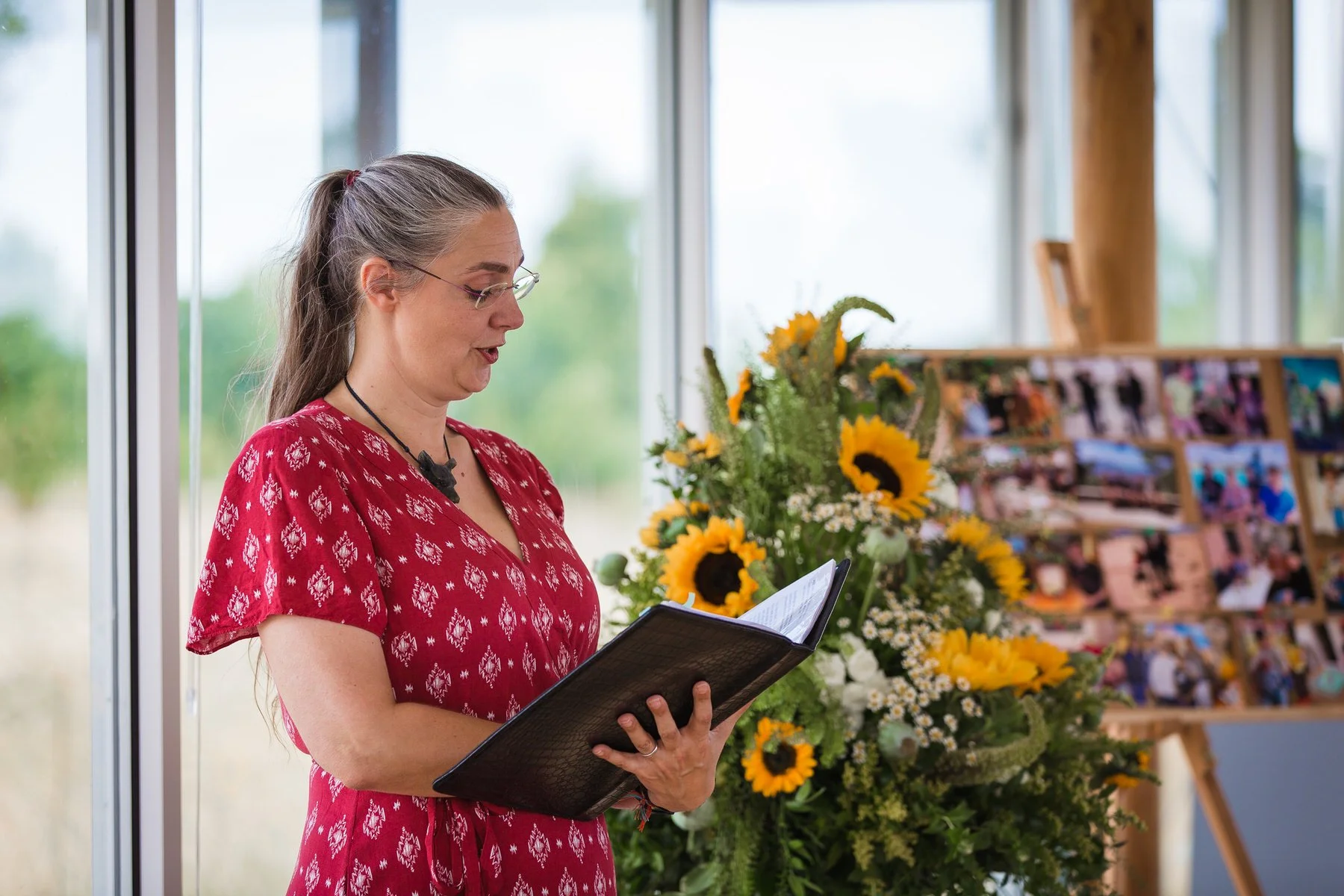
The day began with very close family arriving at the glass pavilion well before the main service. The first focus wasn’t the crowd; it was the memories.
Inside the pavilion, the family:
Laid out a memory table with photos, picture boards and small details from Rory’s life.
Arranged memory books and albums for people to look through later.
Prepared the space so that when others arrived, they would immediately sense who he was and what mattered to him.
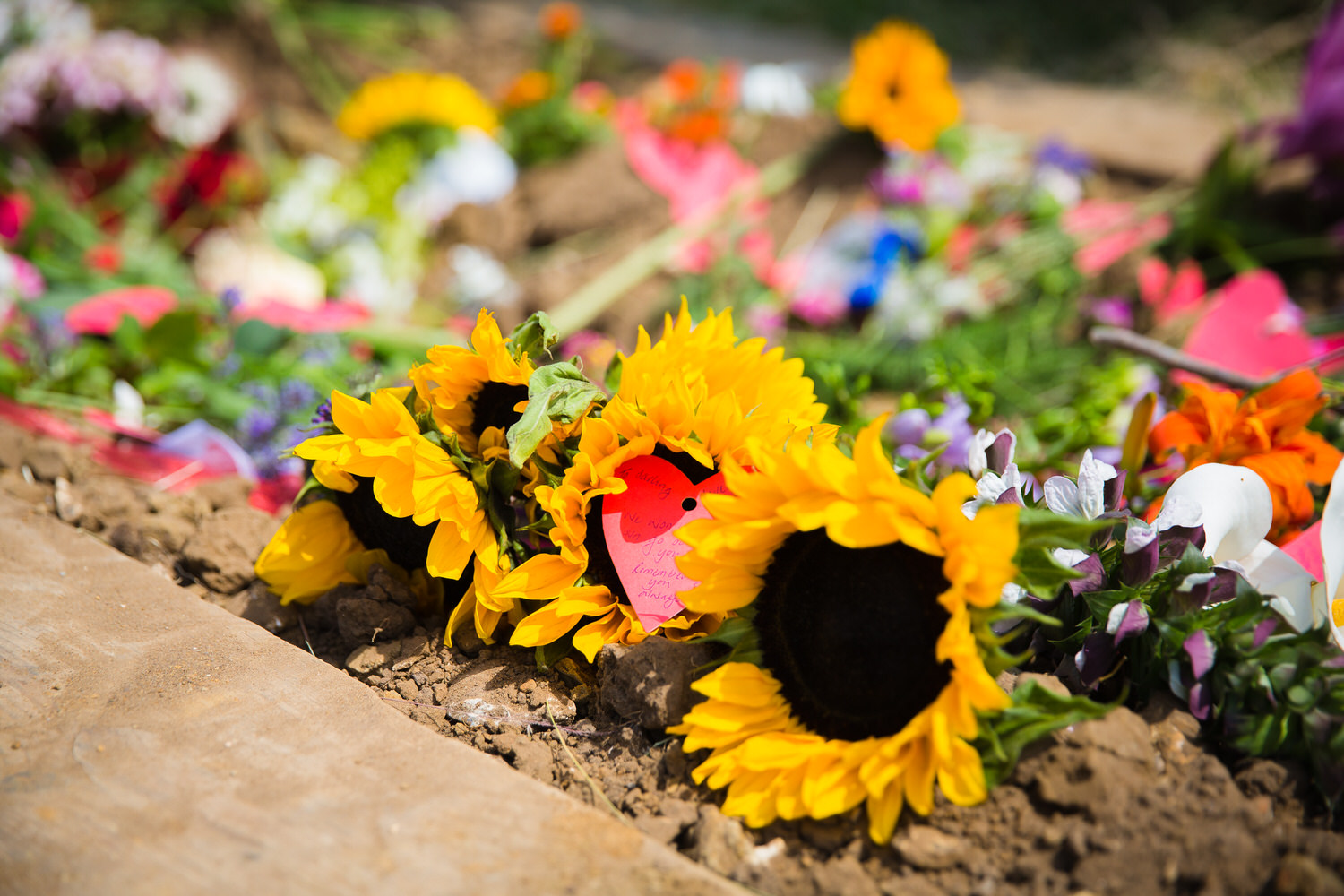
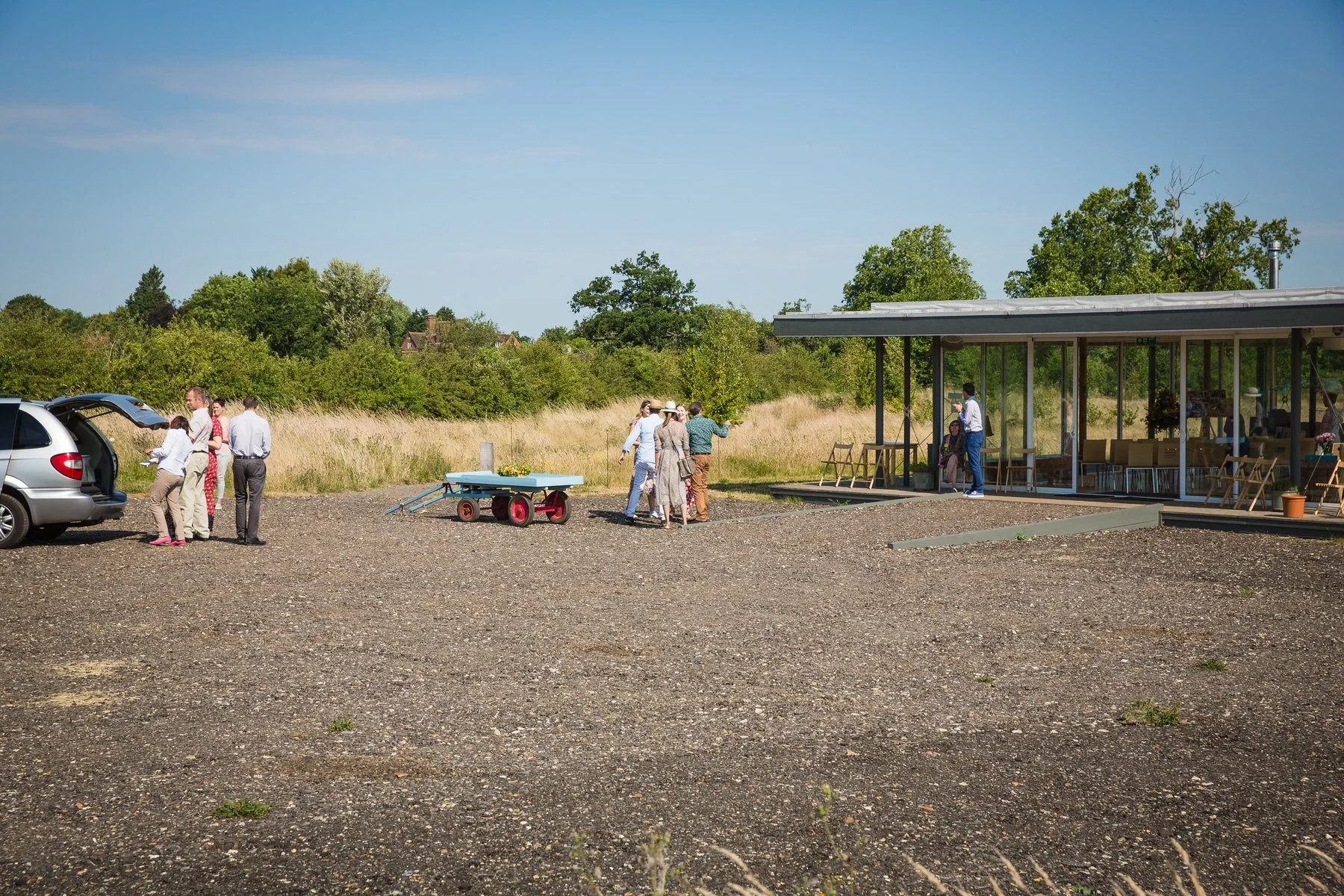
Outside, an old cart had been prepared for Rory’s final journey to the grave. Beautiful sunflowers were placed on the cart, ready for when his shroud would arrive.
Photographically, this early stage was about:
Details – memory boards, books, flowers, the cart.
Quiet interactions between close family as they set everything out.
The way the pavilion and surrounding countryside framed these moments.
This was the calm before the public part of the day, and the photographs from this time are some of the most personal: small gestures, private preparations, and a sense of anticipation.
Photographing the ceremony in the glass pavilion
The funeral service later in the day also took place in Clandon Wood’s glass pavilion – a light, simple building with views over the meadows and countryside.
Inside, I focused on:
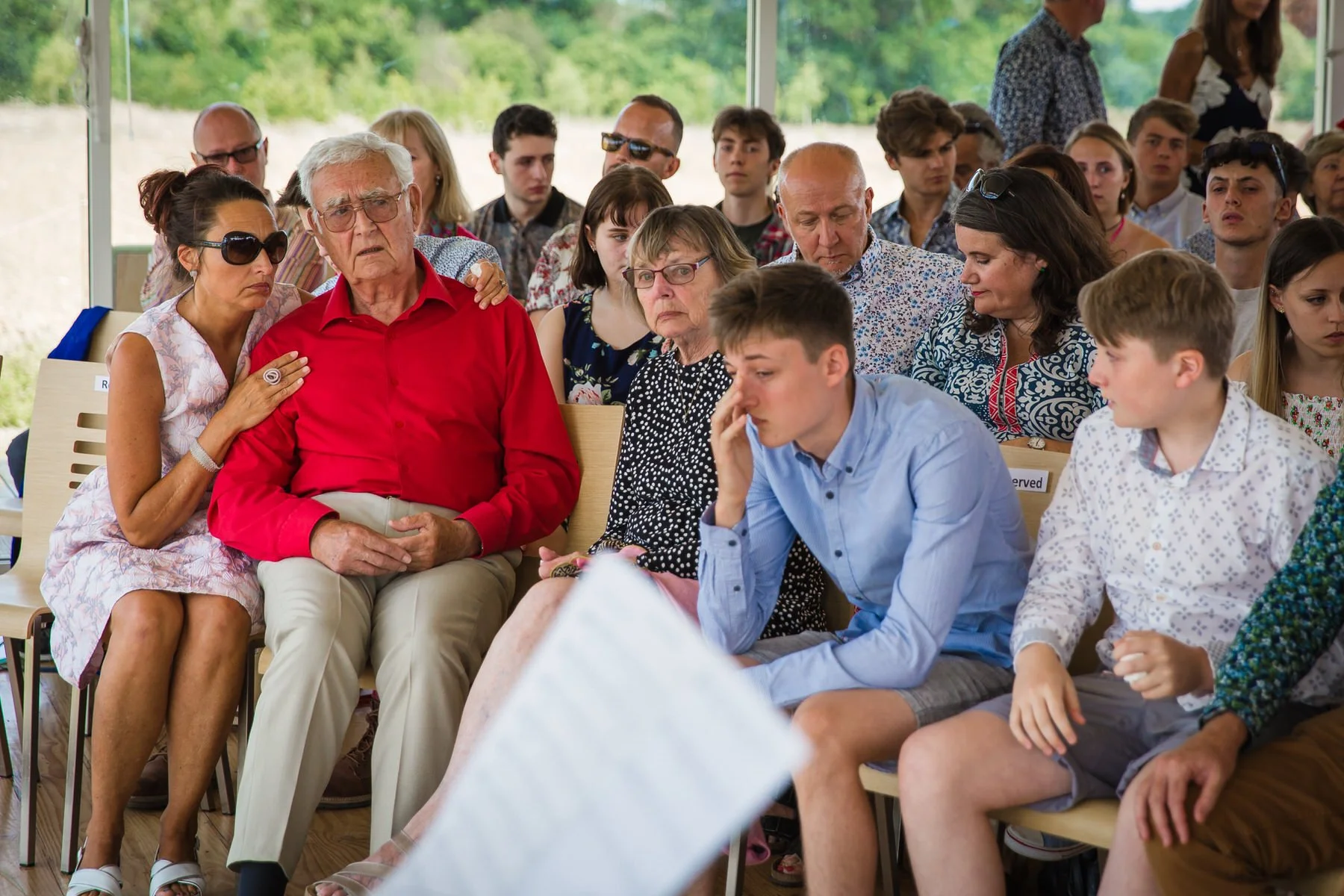
Faces and expressions during readings, tributes and music.
The interplay between people and the landscape outside – for example, framing the celebrant or family members with trees and sky softly visible beyond the glass.
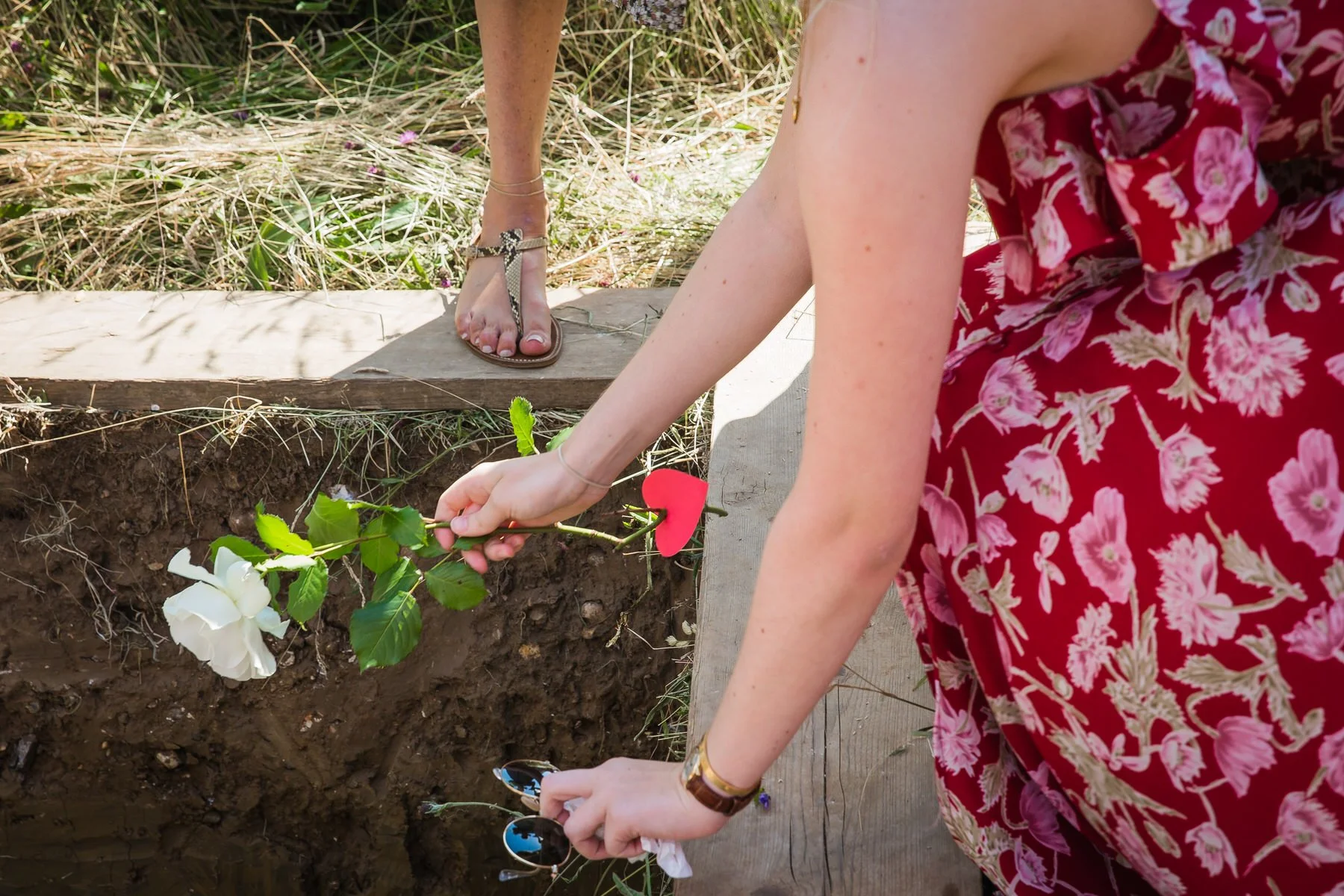
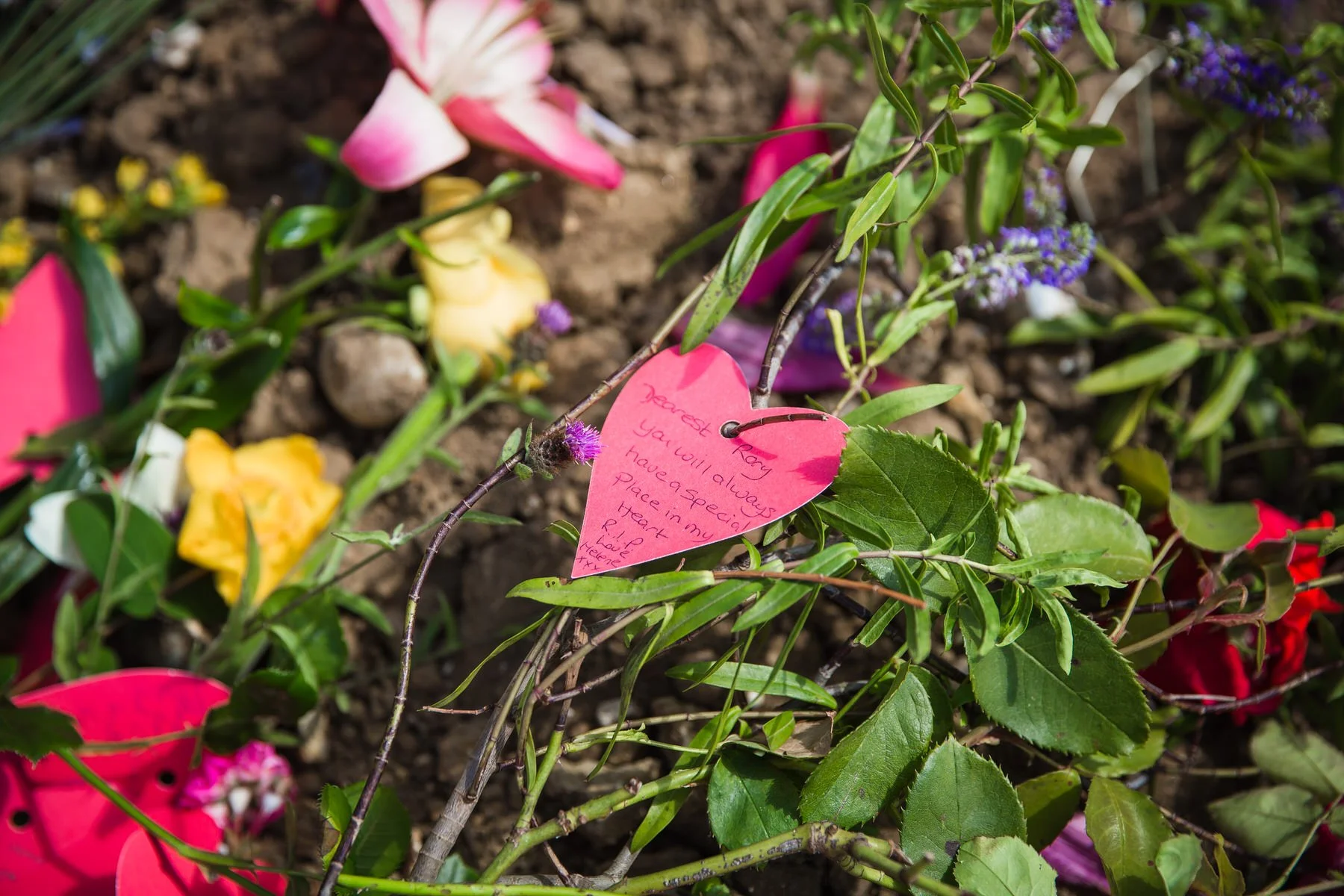
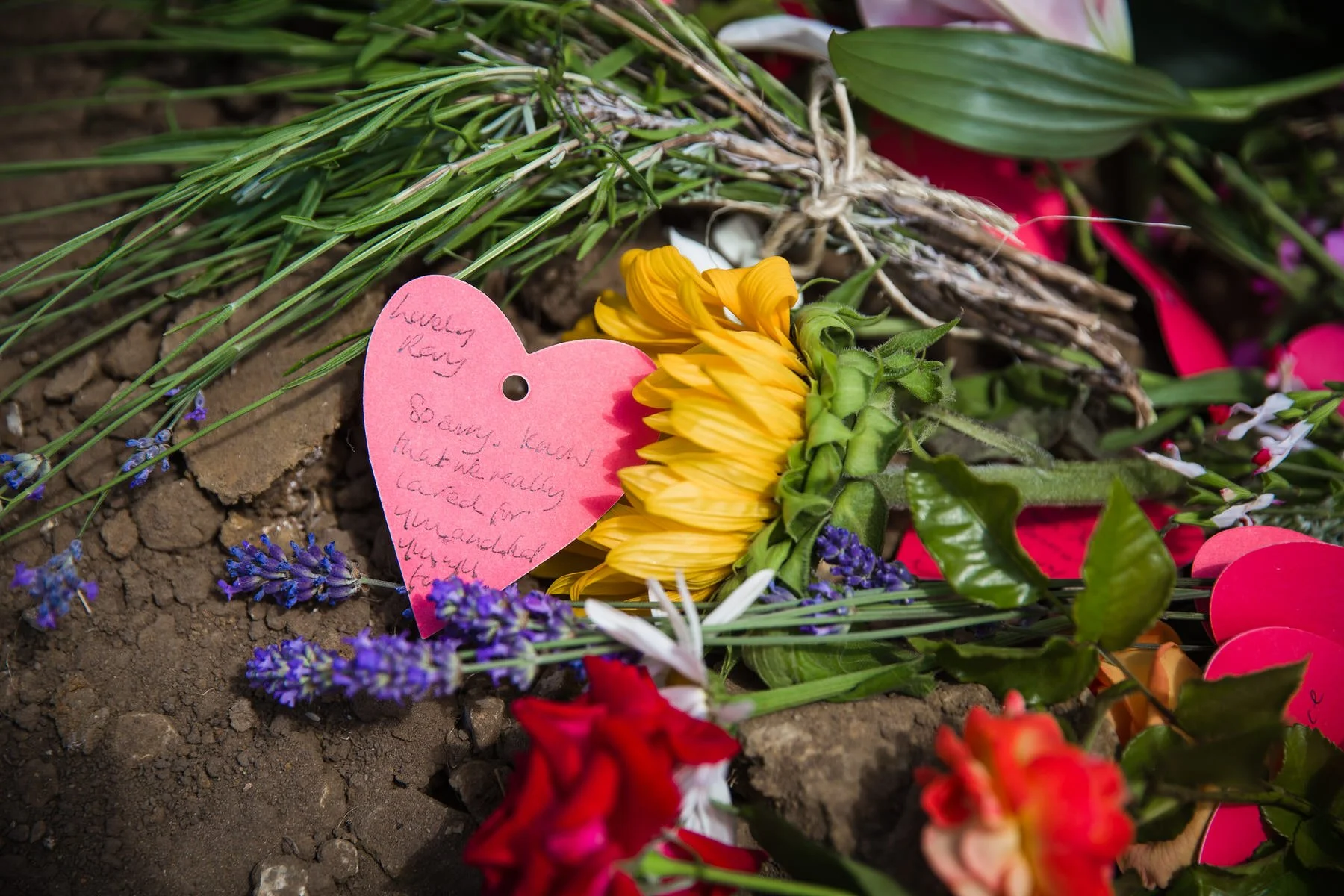
Details that mattered to the family: flowers, photographs, messages on red paper hearts, and items chosen to be placed at the grave.
Because the pavilion is surrounded by glass, the light moved throughout the day. Years of photographing live events meant I could work with that changing light – adjusting position rather than asking people to move, and exposing carefully so skin tones stayed soft and natural even against bright backgrounds.
My approach is always documentary and unobtrusive:
I do not interrupt the service or ask people to pause or repeat anything.
I work from the edges of the space, moving quietly to capture a range of angles.
The aim is that people quickly forget the camera is there, so they can be fully present.
You can read more about this style of work on my main Funeral Photography page.
Private family burial – a shroud, a cart and a walk through the meadows
Before the main service, the family chose to hold a small, private burial just for immediate family. This part of the day was deeply intimate.
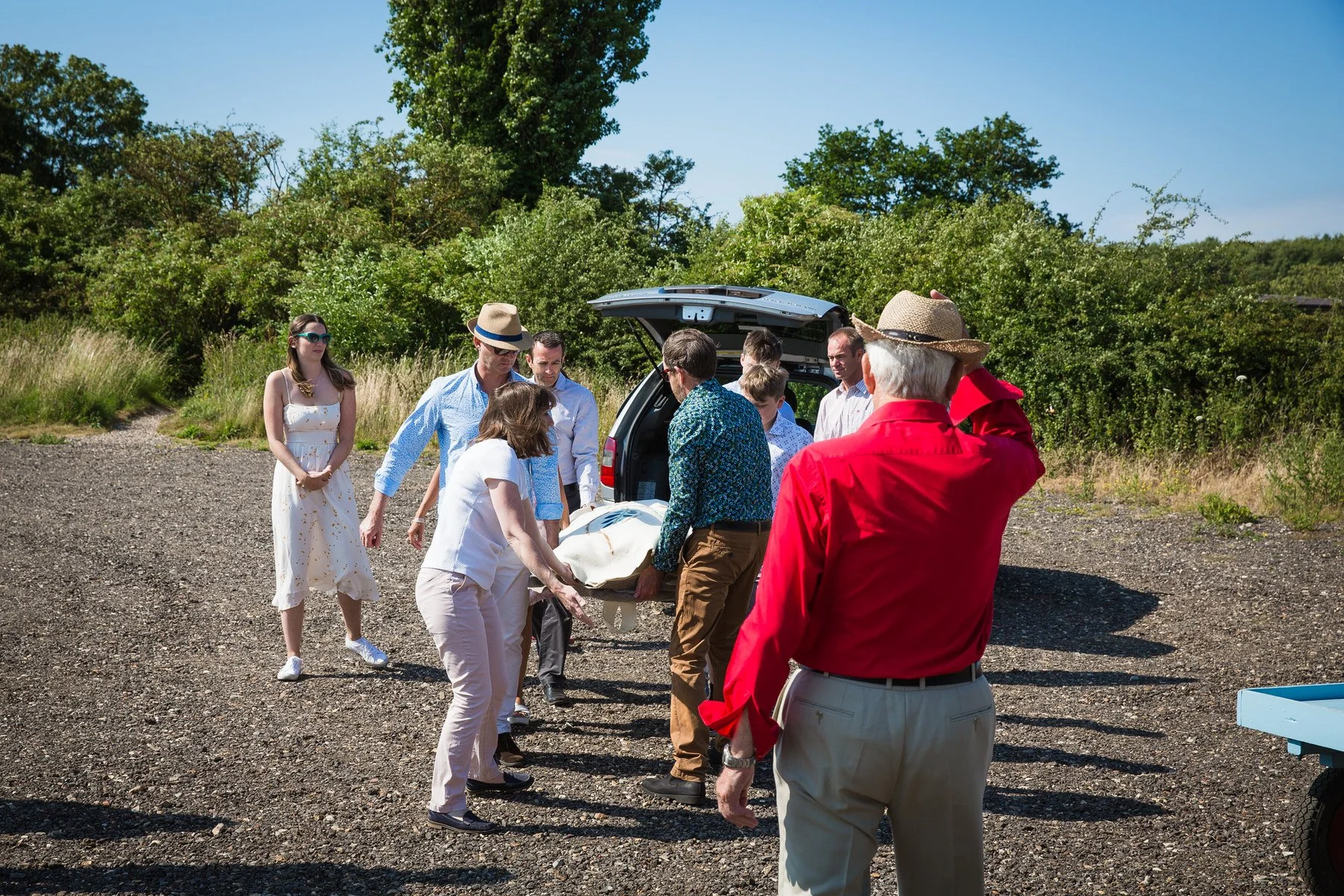
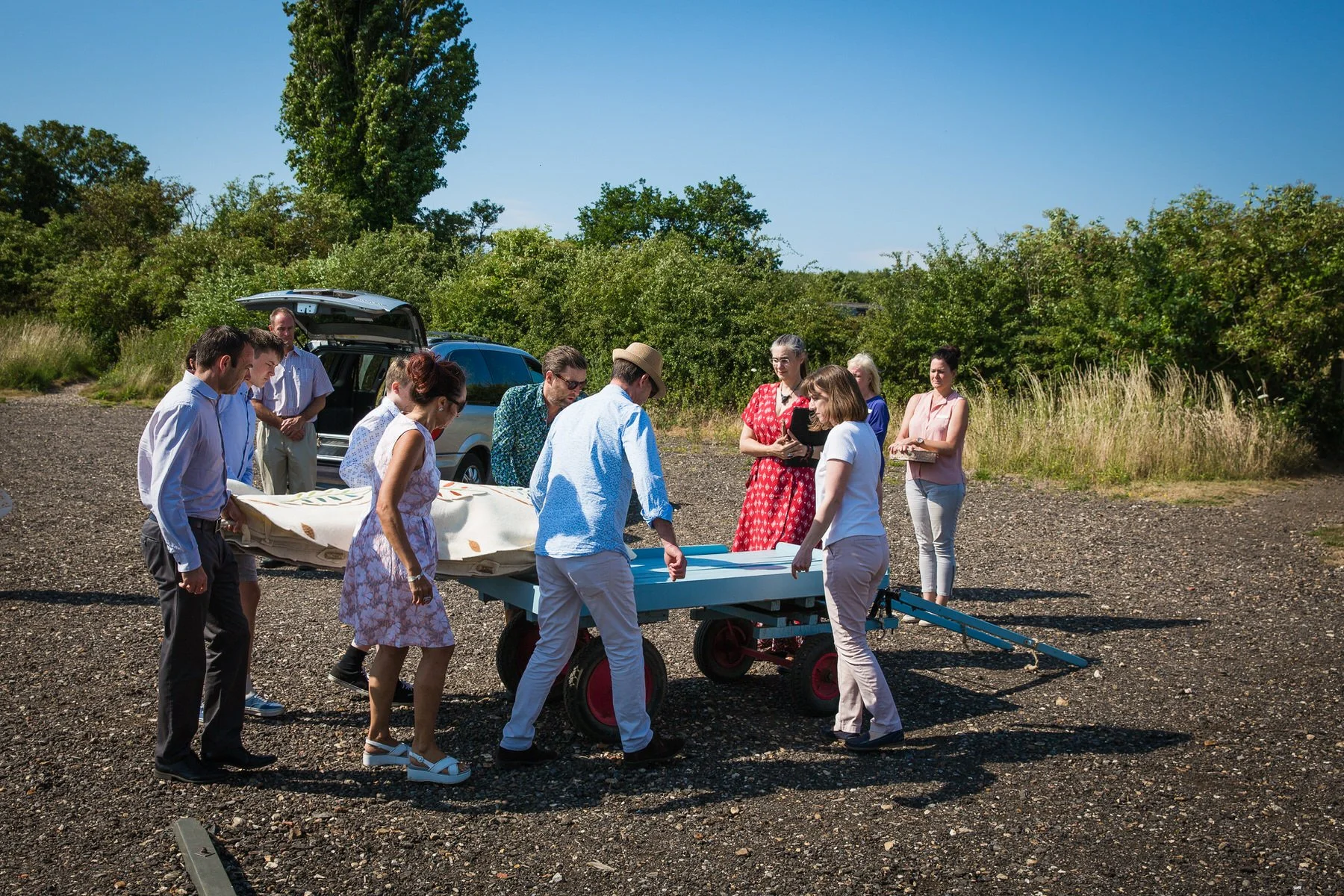
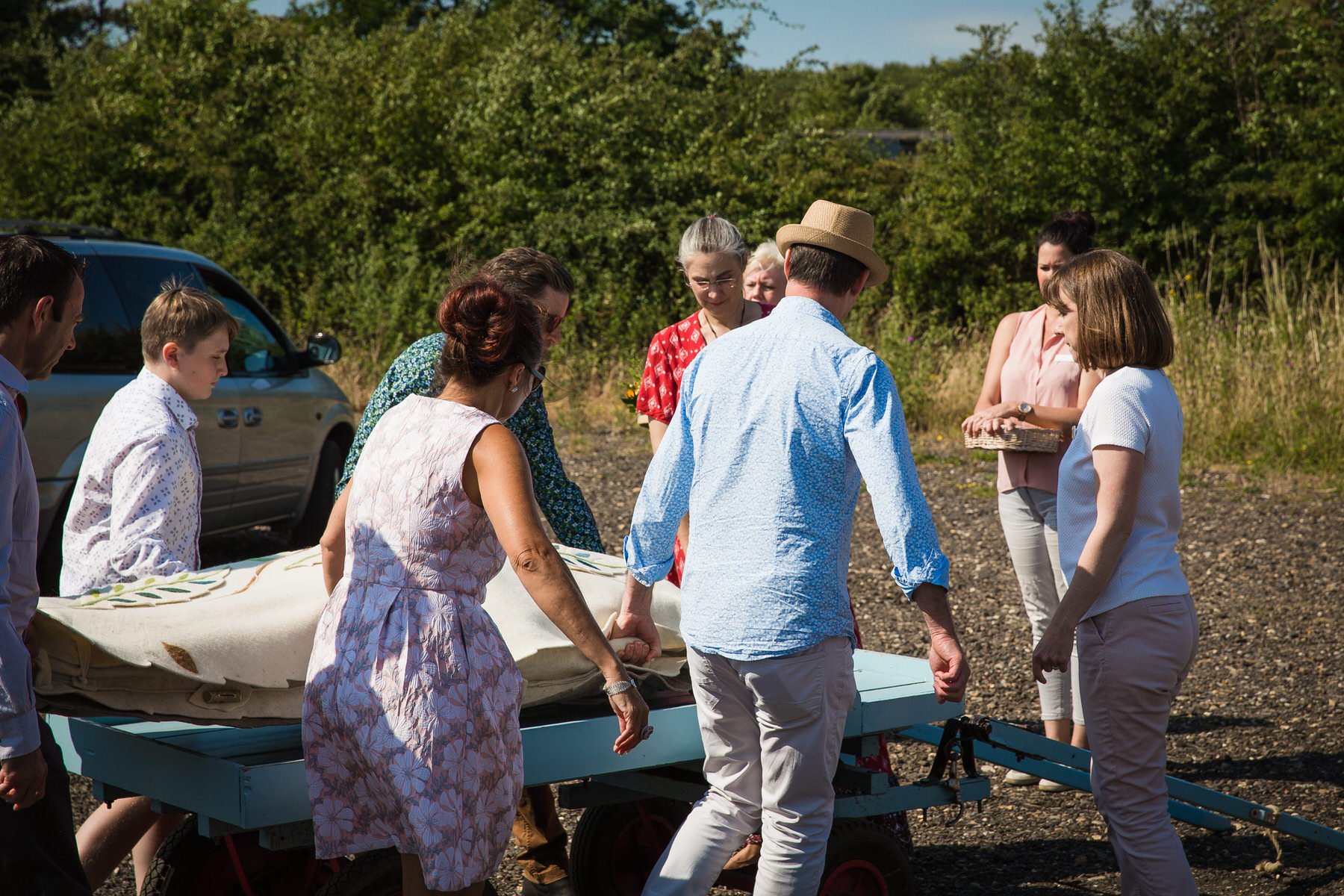
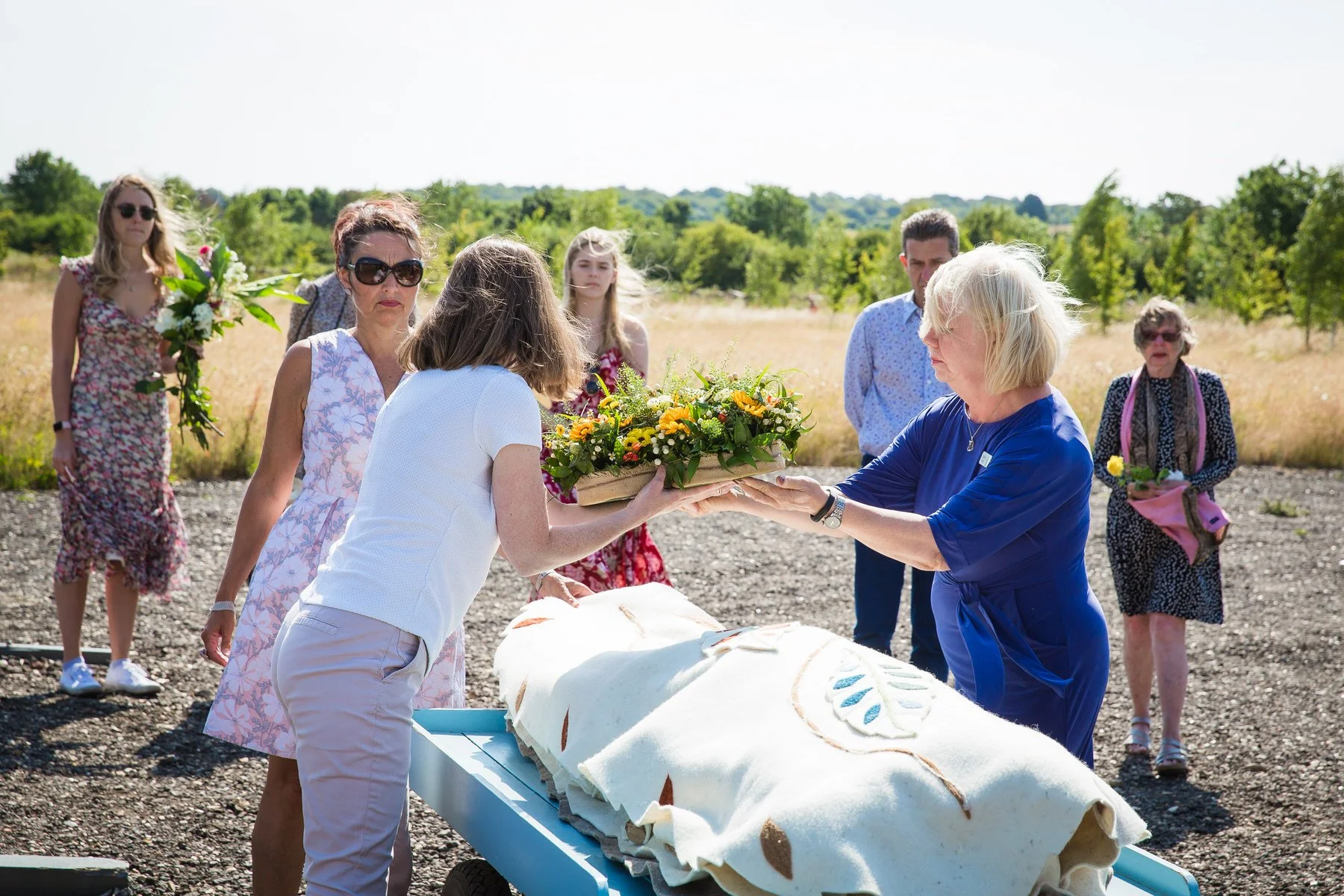
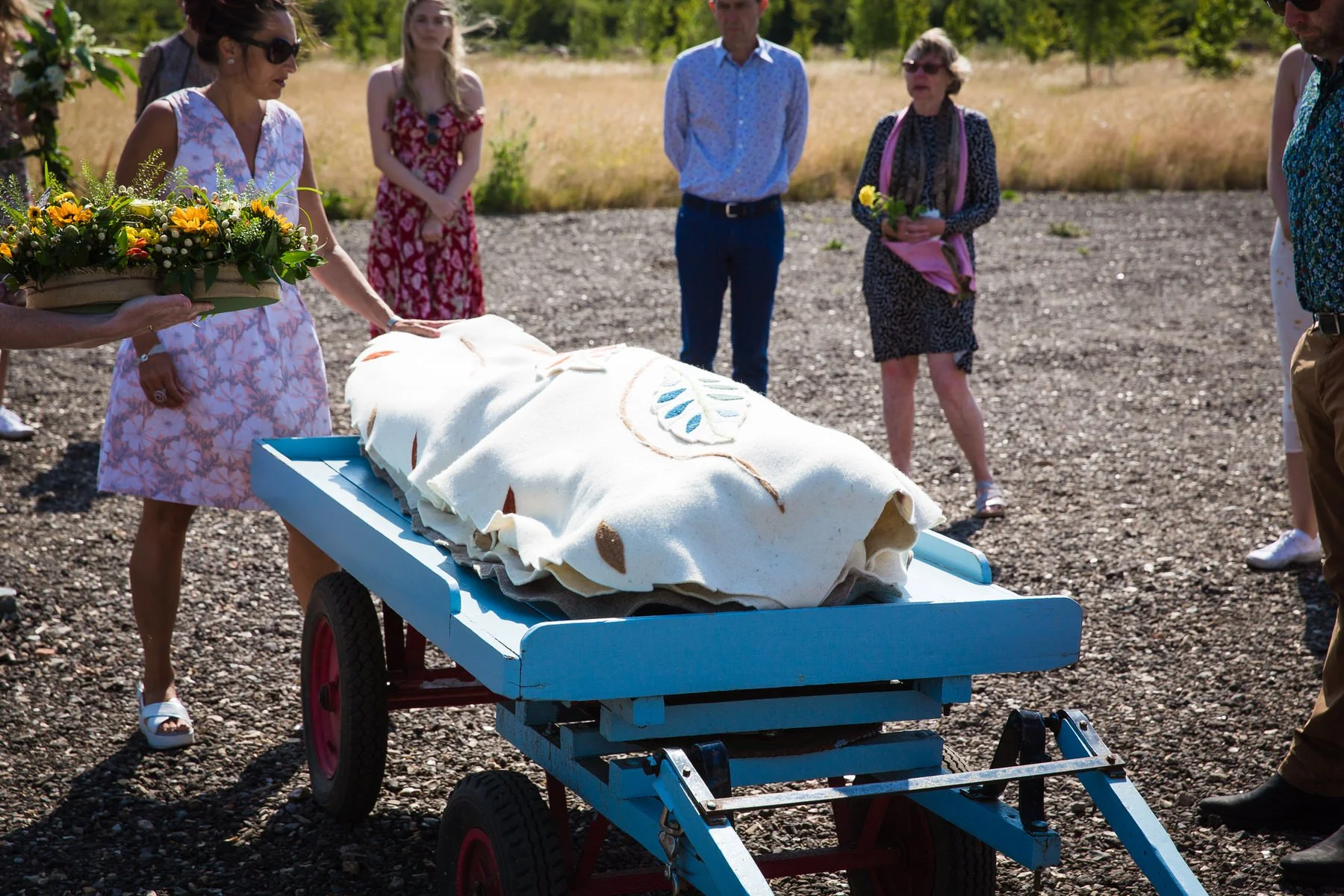
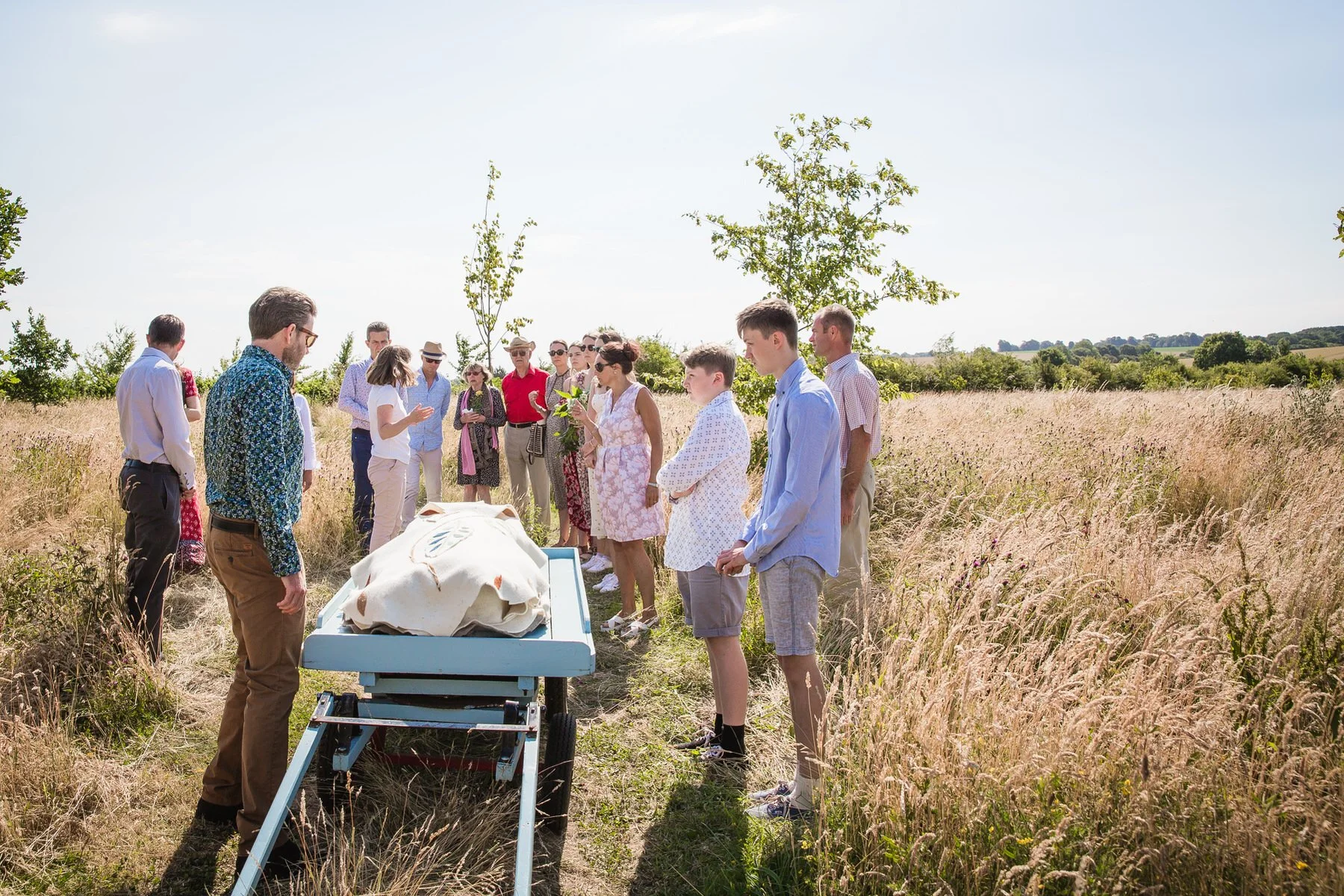
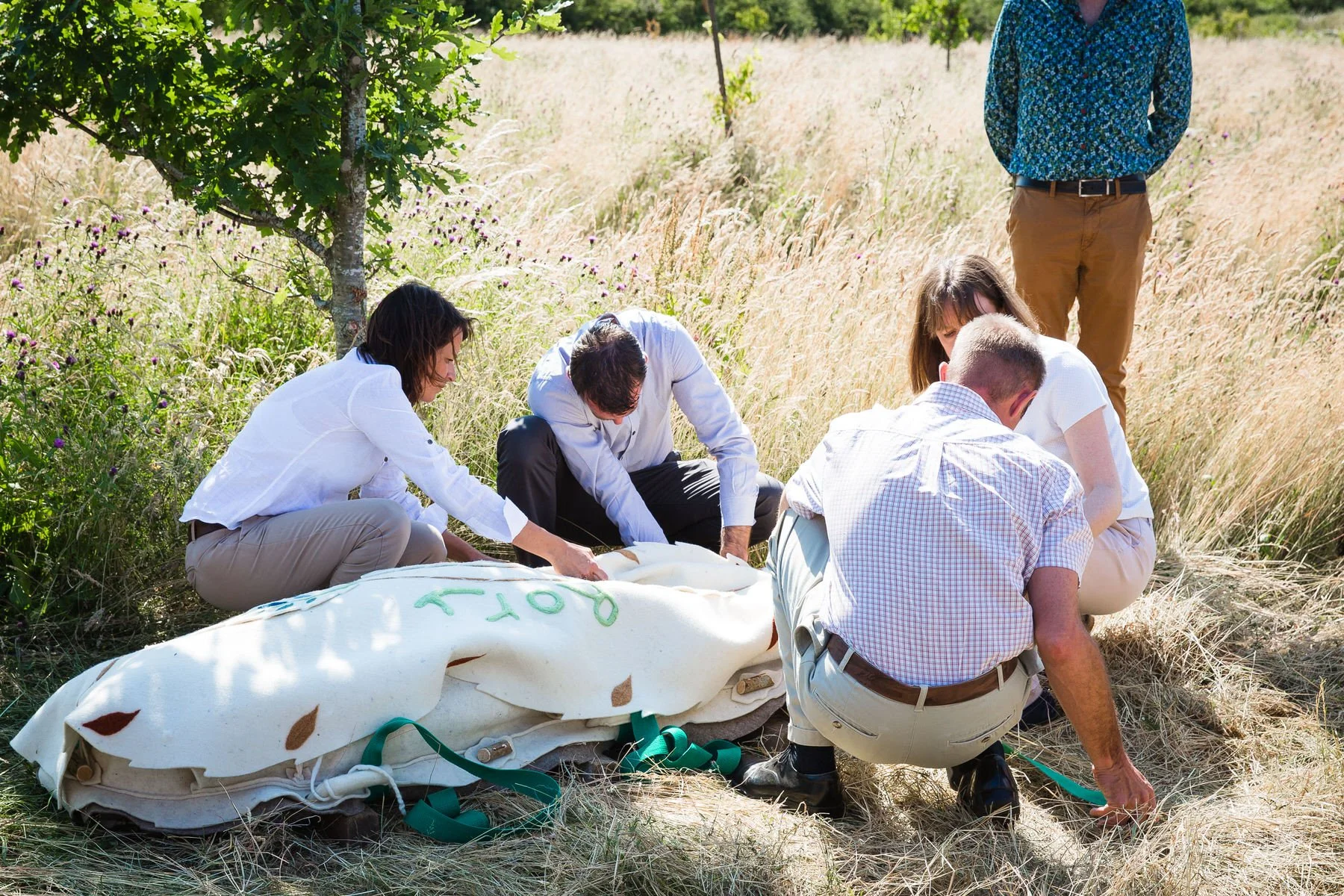
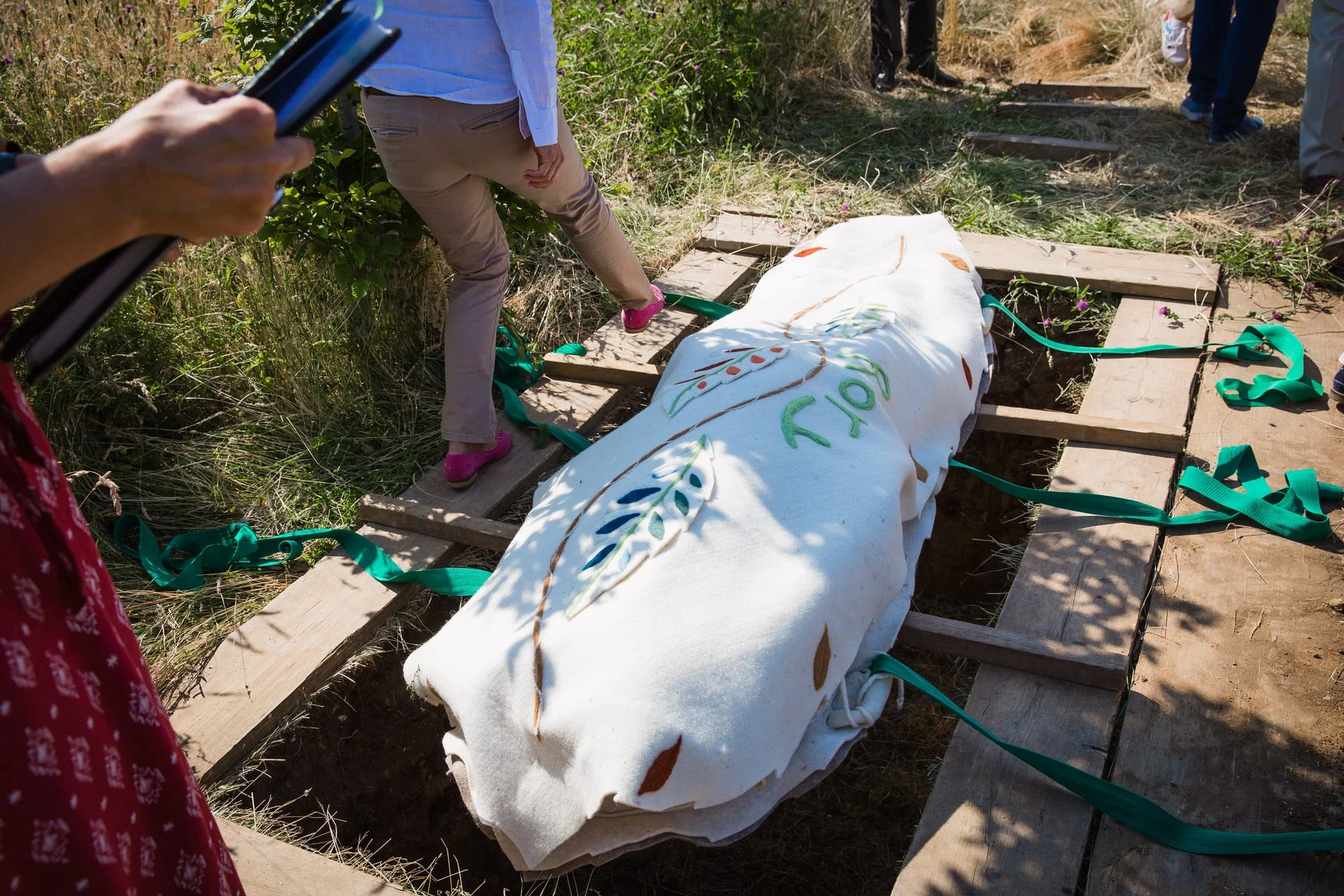
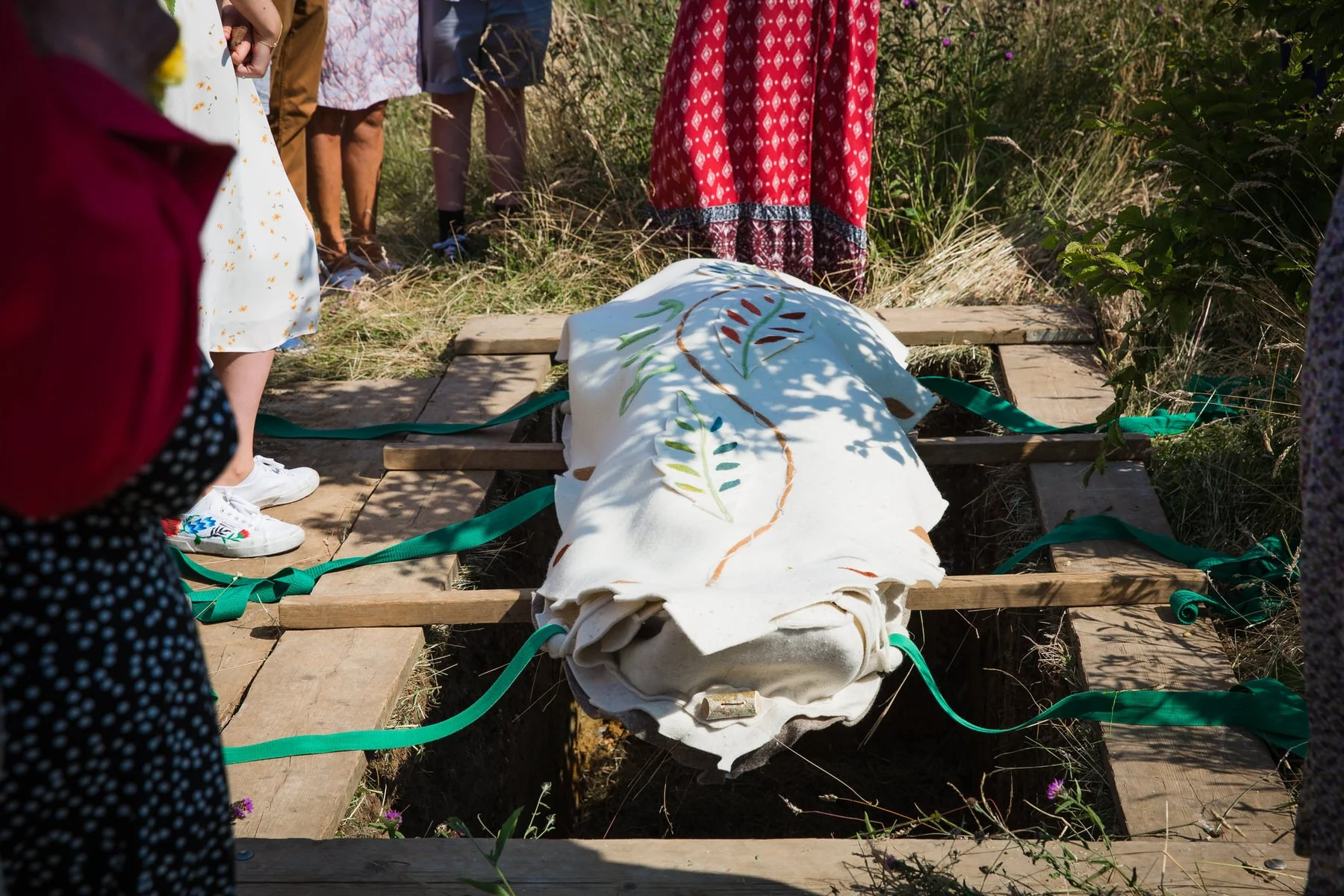
Rory was brought to Clandon Wood wrapped in a woollen shroud, in keeping with the family’s eco and green values. There was no coffin – just the shroud, the cart, and the landscape.
When he arrived:
The family gathered at the pavilion and gently lifted him onto the cart that had been prepared.
Sunflowers, already placed on the cart, framed the shroud.
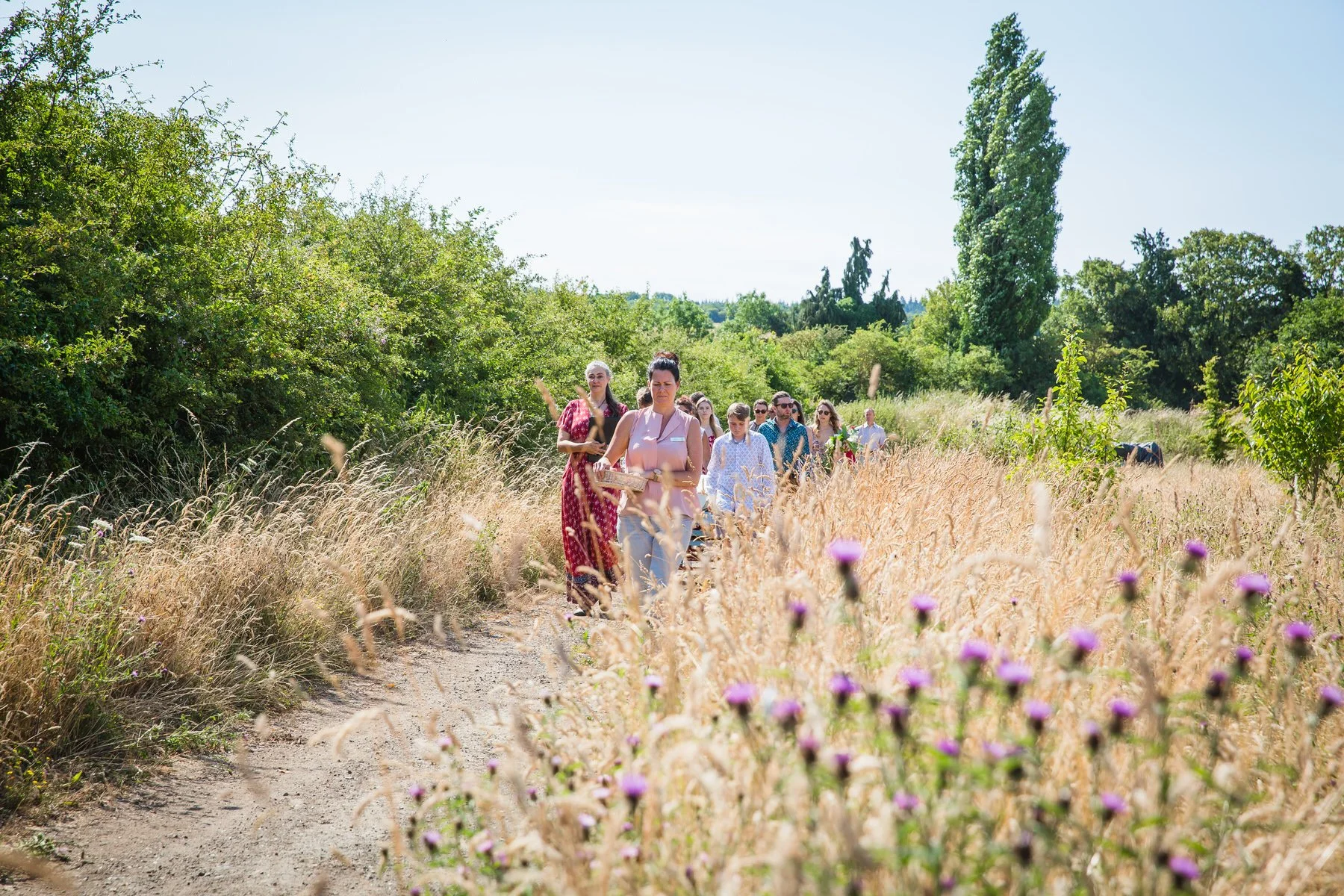
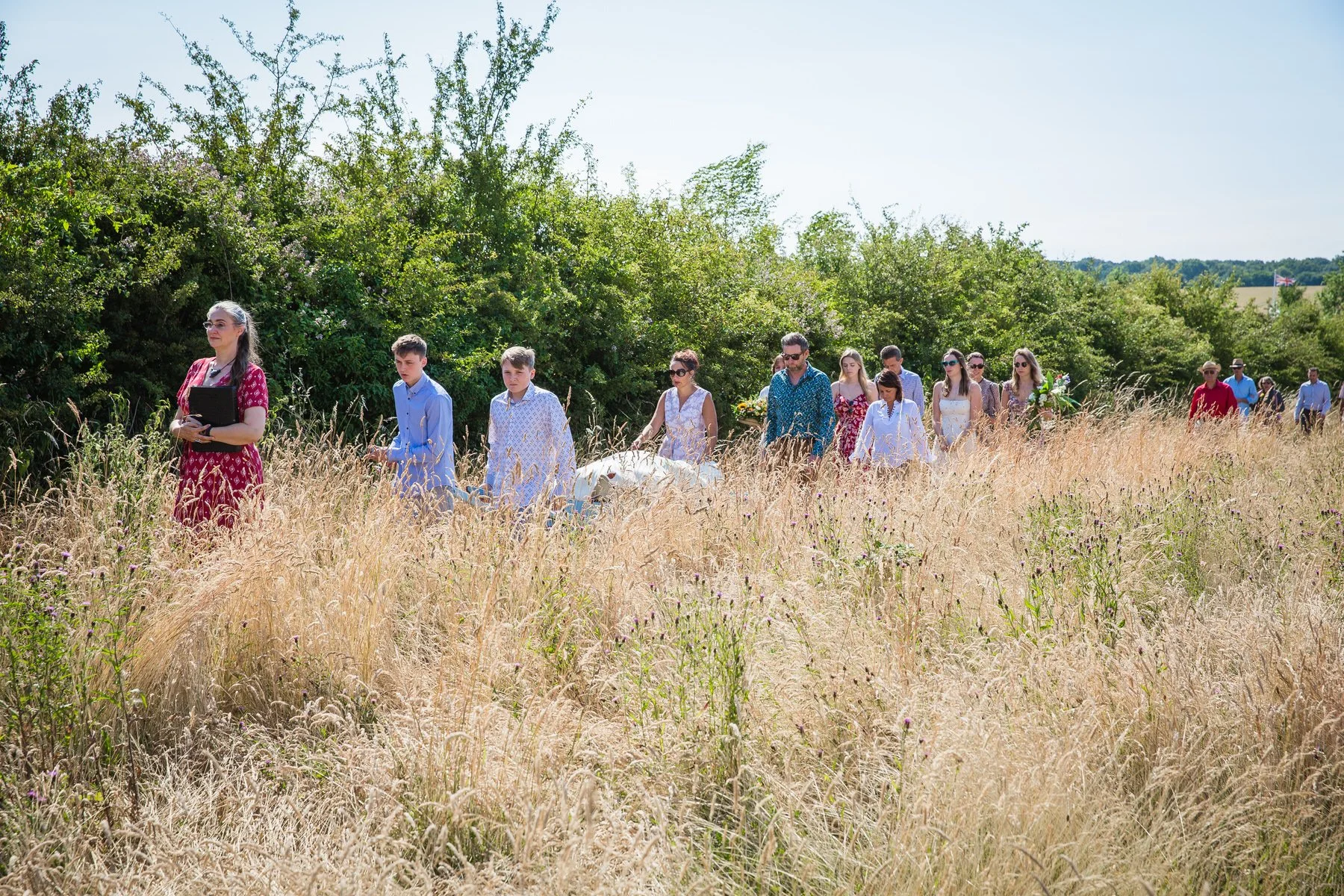
Led by the celebrant, the family began their walk through the fields and flowers towards the grave.
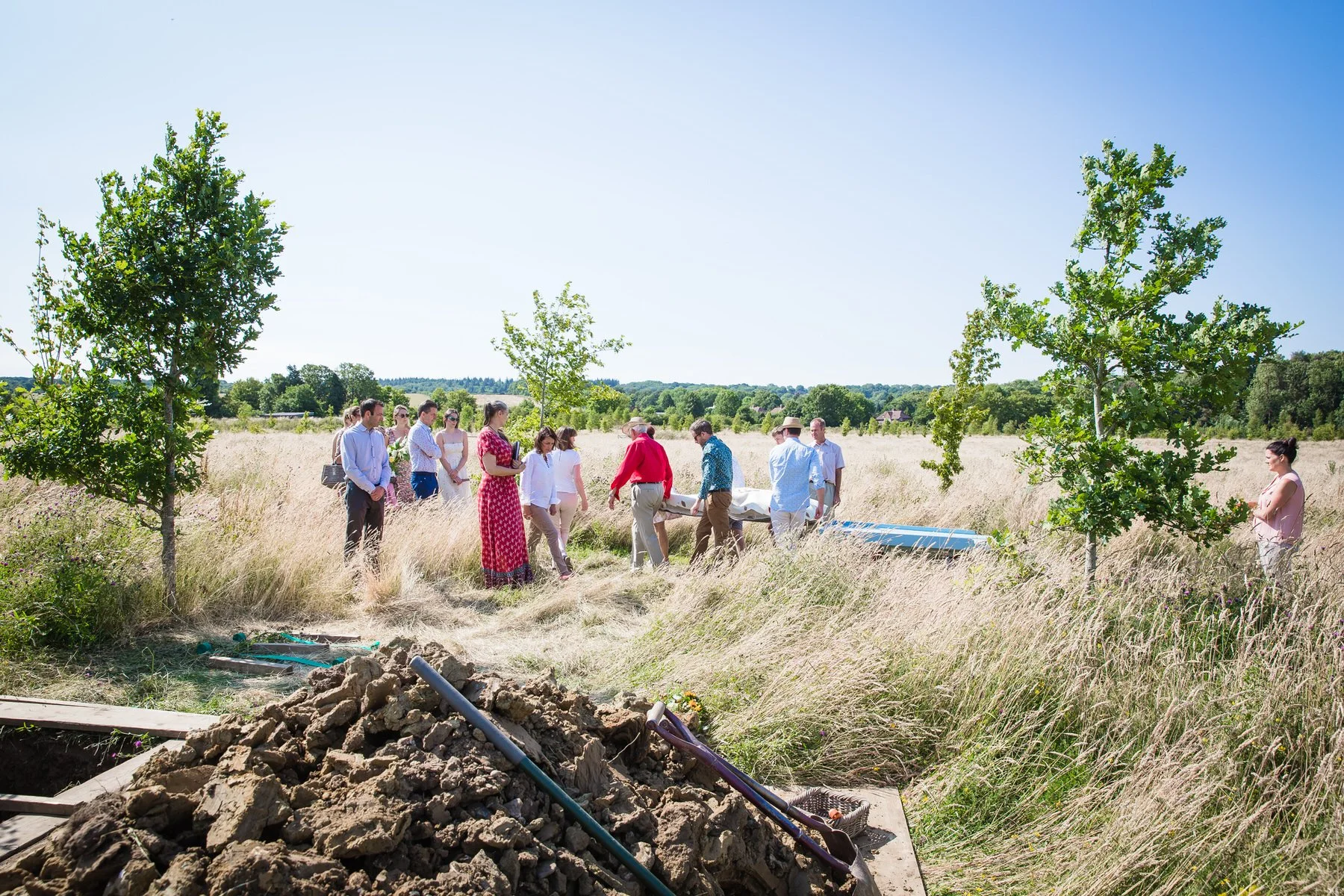
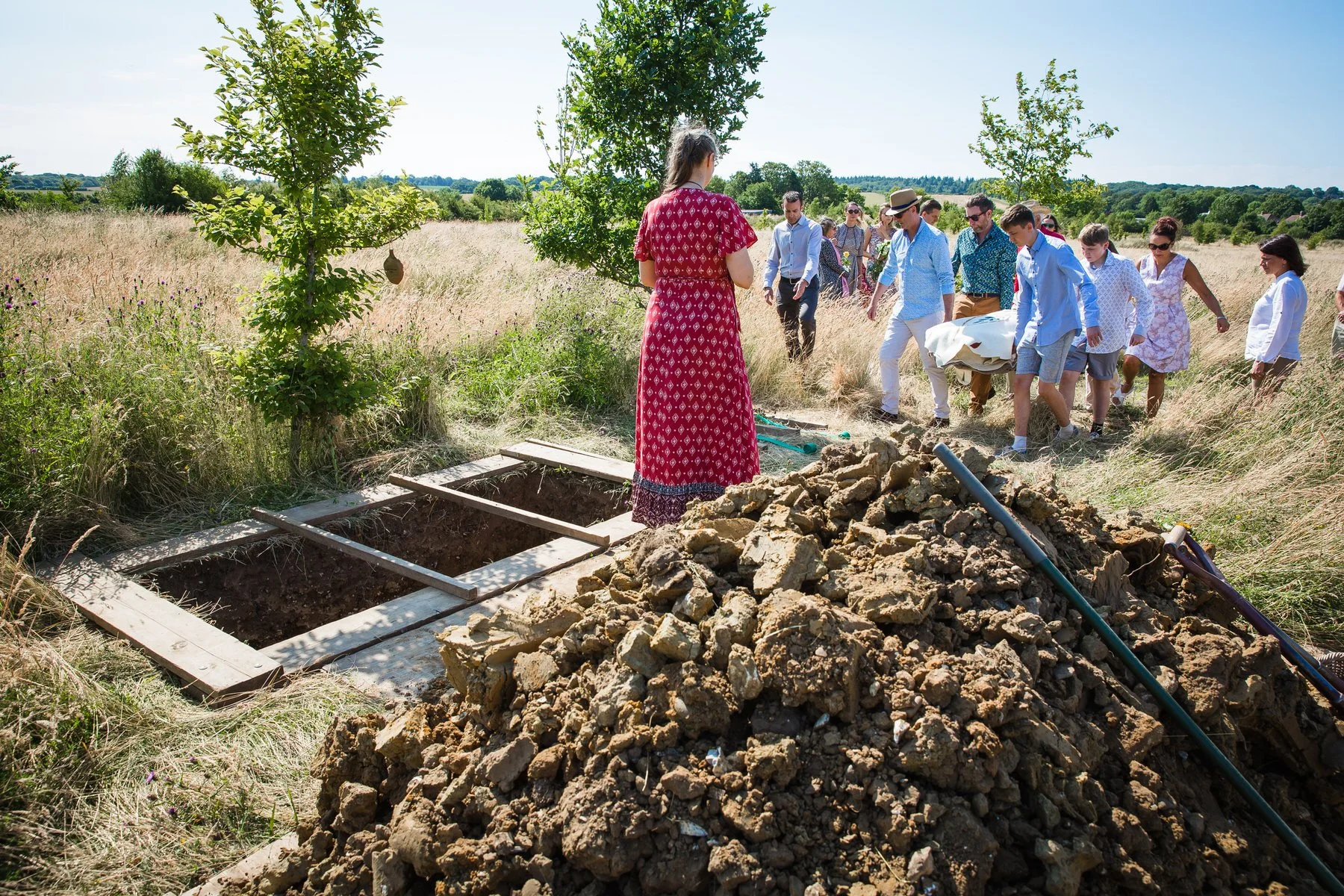
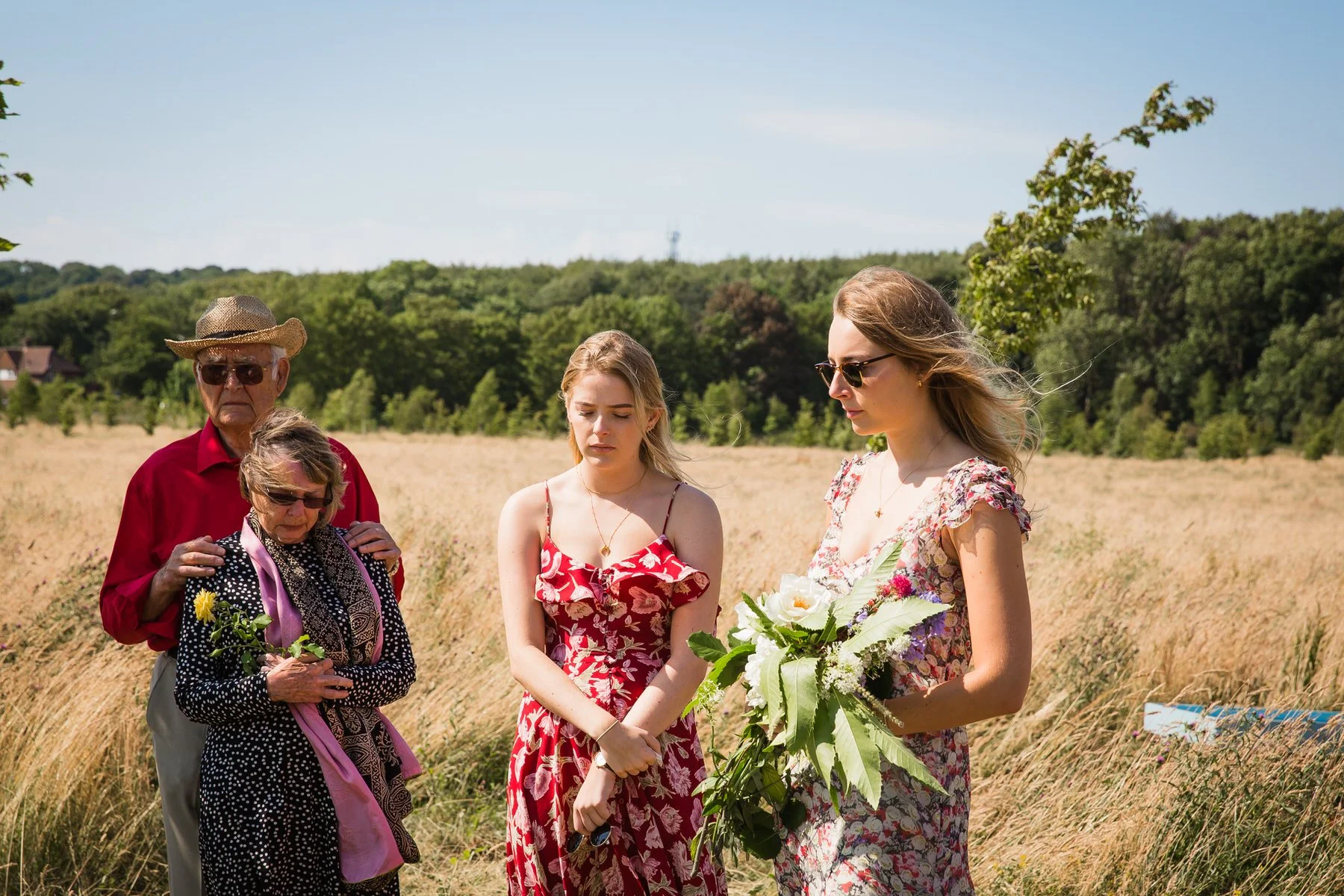
Photographing this part of the day required particular care. To tell the story properly, I needed a mix of wide, mid‑range and close‑up images, rather than everything from one position and one focal length. At times I stayed at a respectful distance, showing the family walking together behind the cart with meadows and sky surrounding them. At other moments I moved closer, capturing reactions, hands on the cart and the small details of the shroud, sunflowers and colours of the day. I would sometimes walk ahead to frame wide views of the family crossing the fields, then step back in again for more intimate, mid‑range shots.
The aim was always to record Rory’s final journey truthfully, without making the moment feel exposed. The walk itself – family following the cart through the bright, hot meadow – became a key visual thread for the whole story.
At the graveside – words, shroud and petals
At the grave, the mood became even more focused and still. Clandon Wood’s natural burial plots are simple, with the meadow allowed to grow back over time so the grave becomes part of the wider landscape rather than standing apart from it.
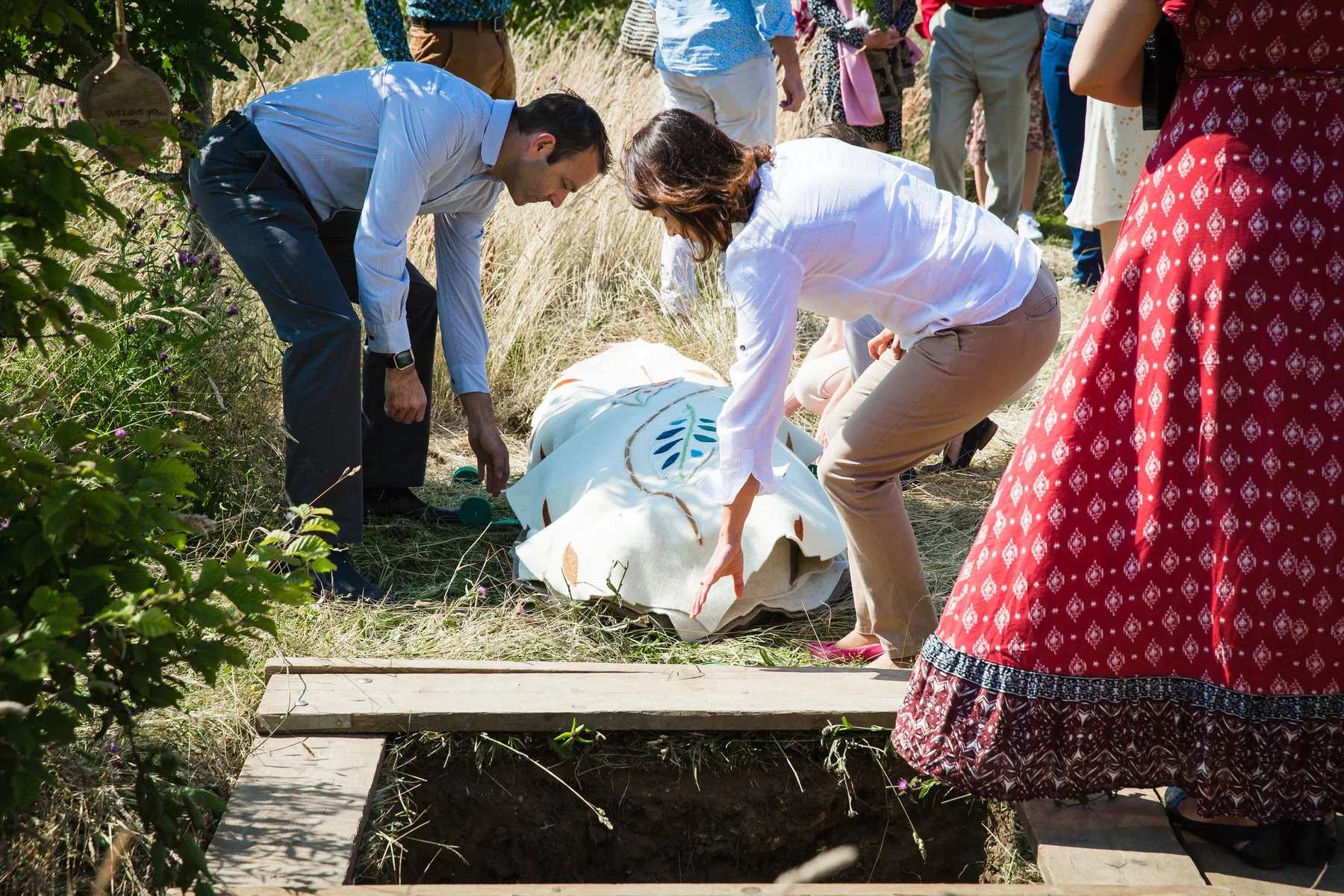
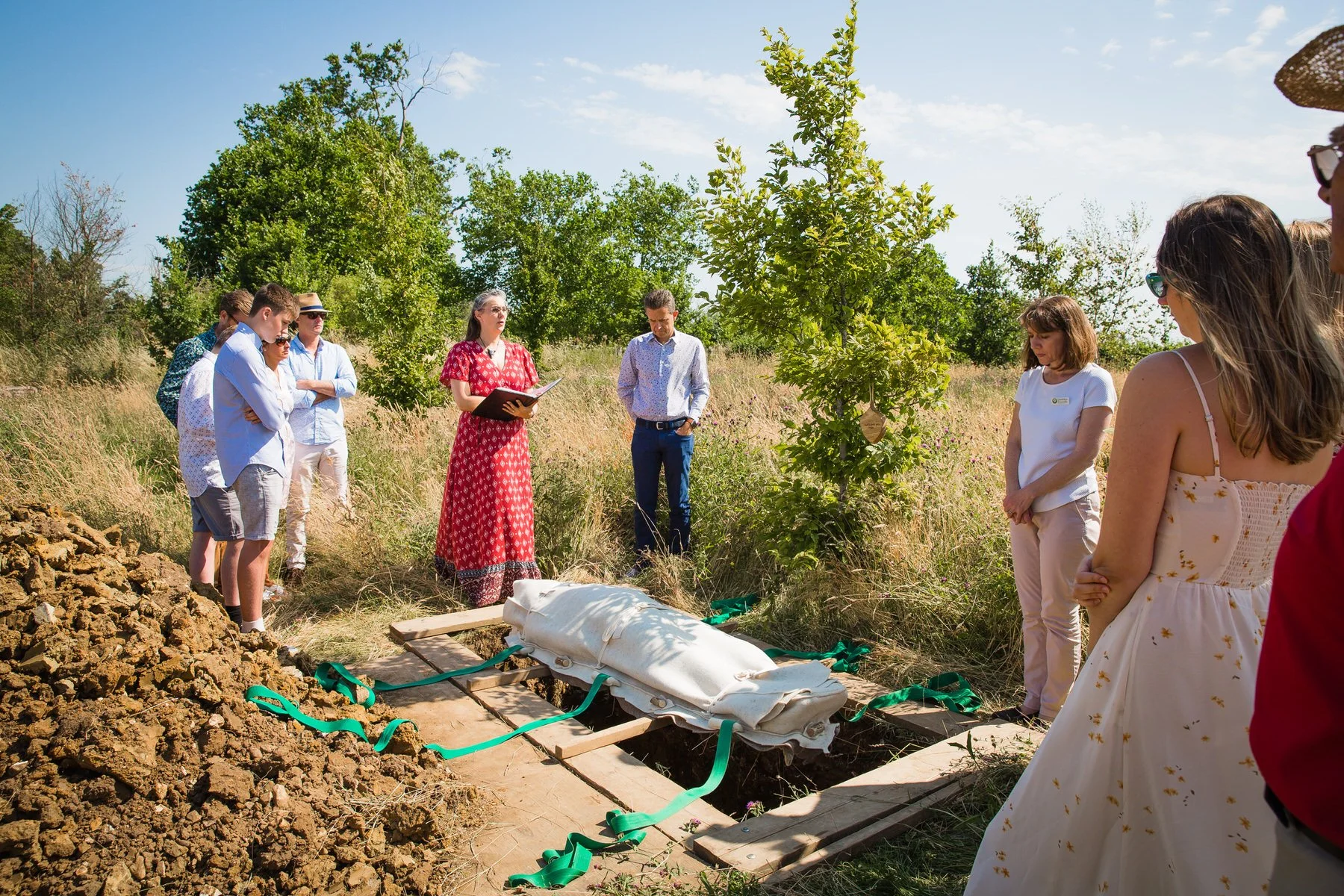
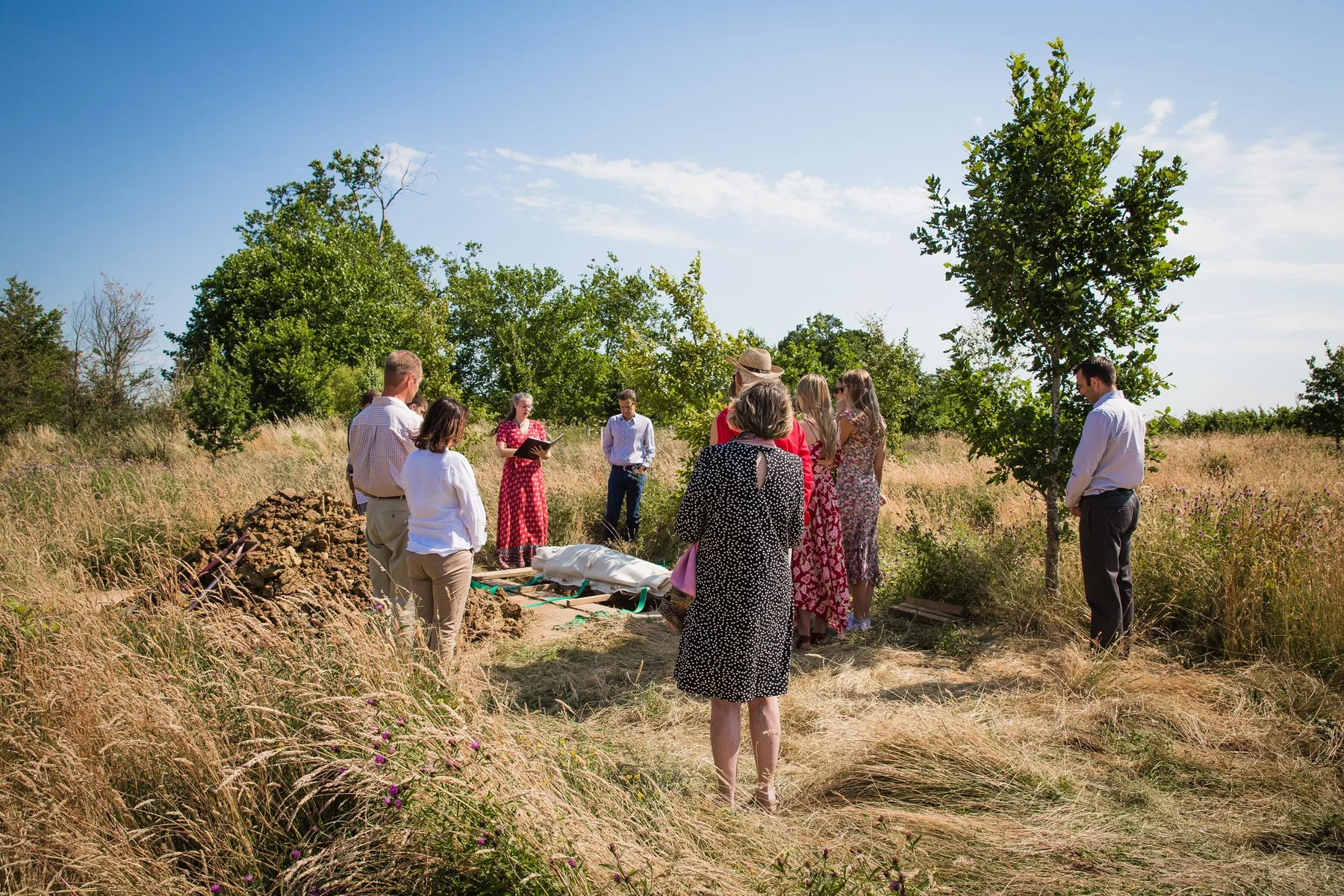
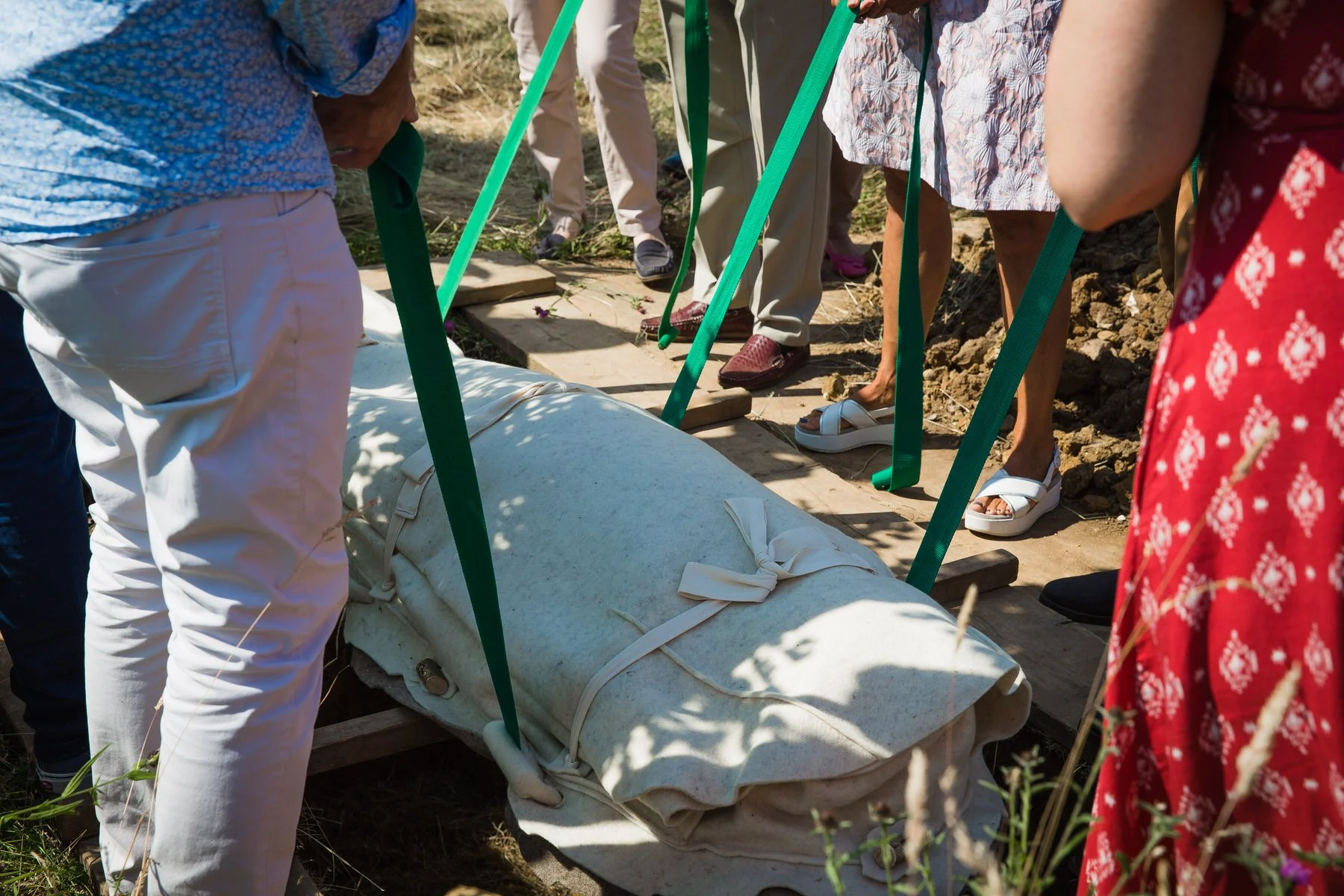
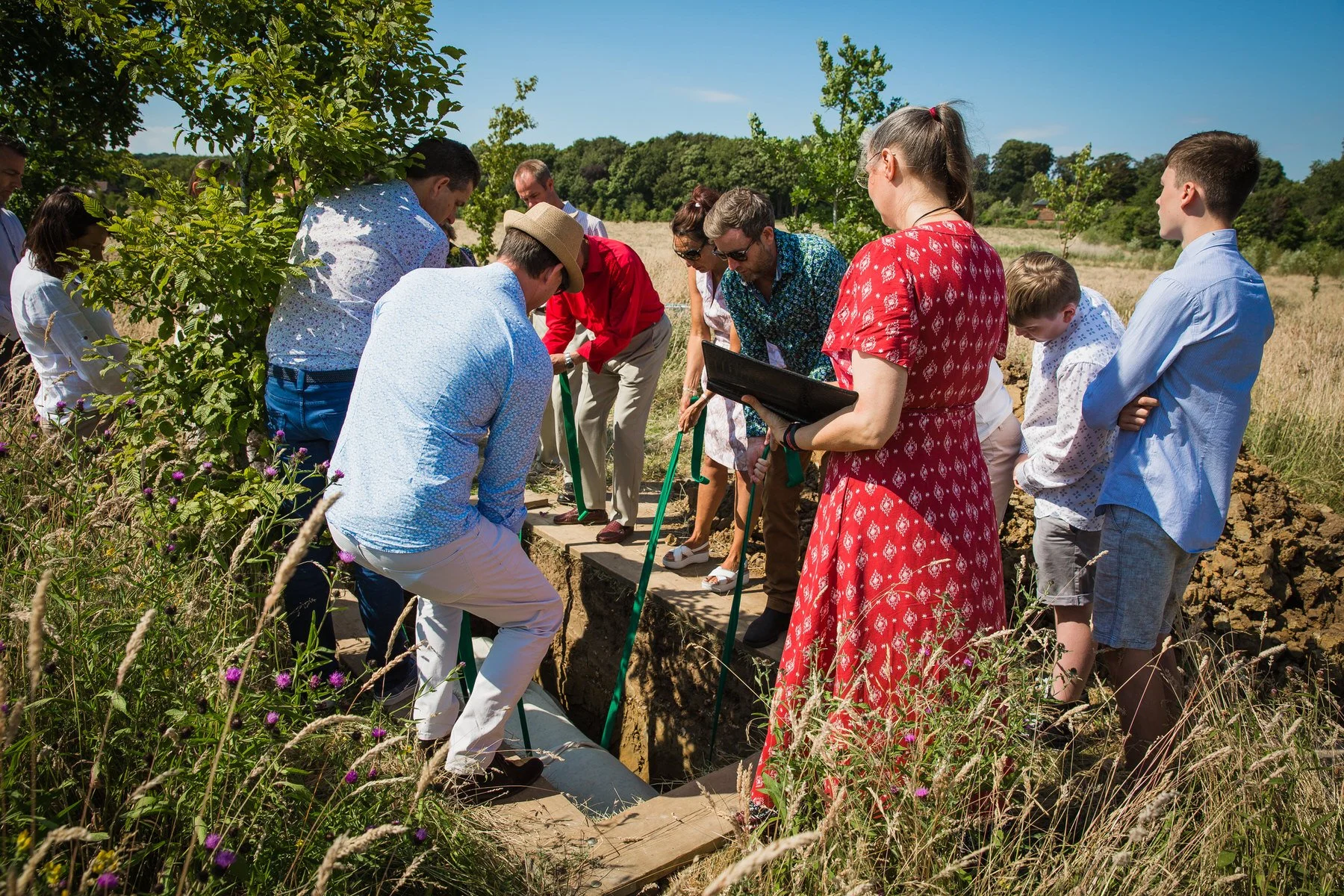
When the family reached the graveside, Rory was first lifted carefully from the cart onto wooden struts beside the grave. This gave everyone a moment to gather around him and take in where they were. After a short pause, the celebrant led a graveside service with words about Rory’s life, reflections on his character and relationships, and a time of silence that allowed people to stand together and absorb the moment.
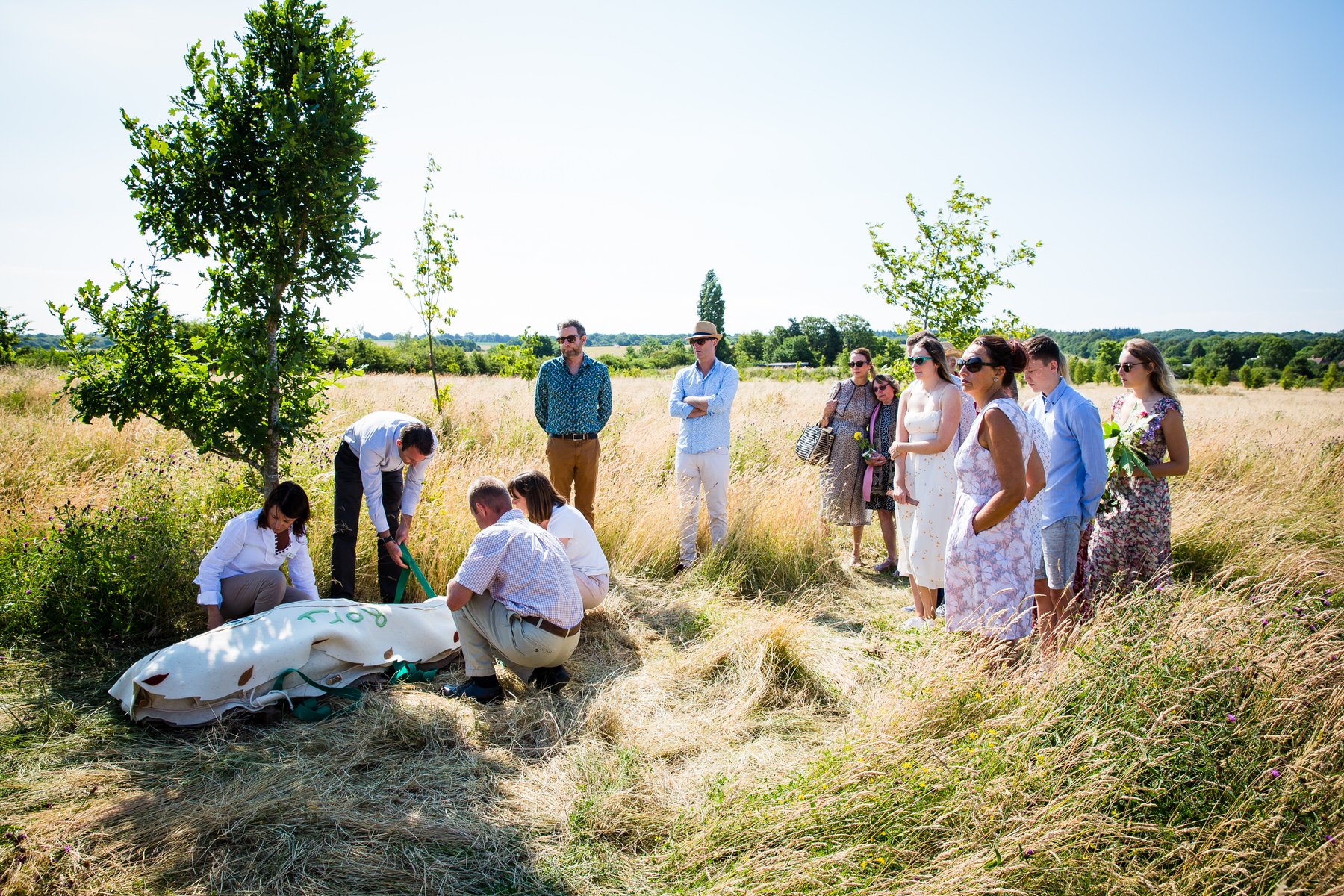
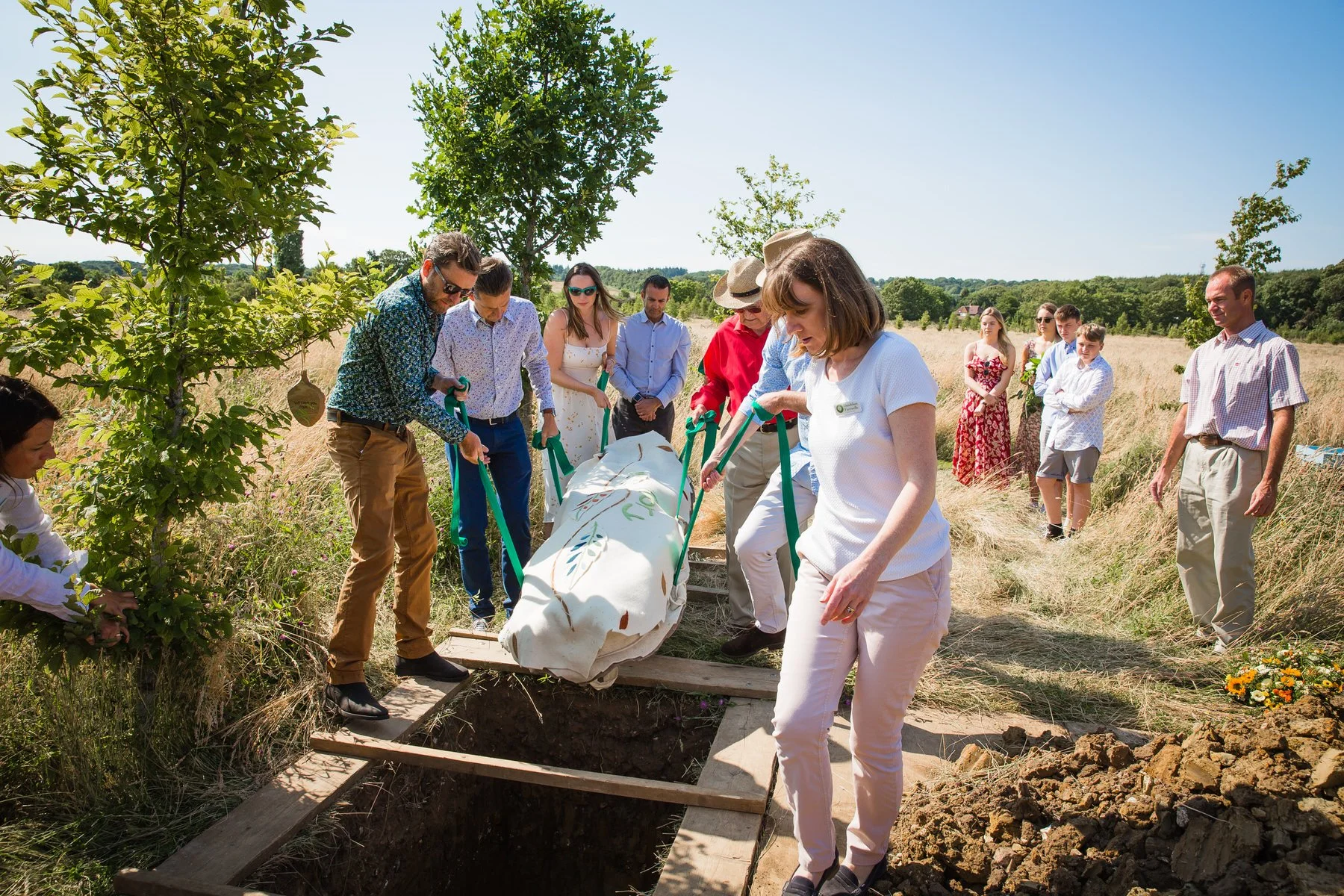
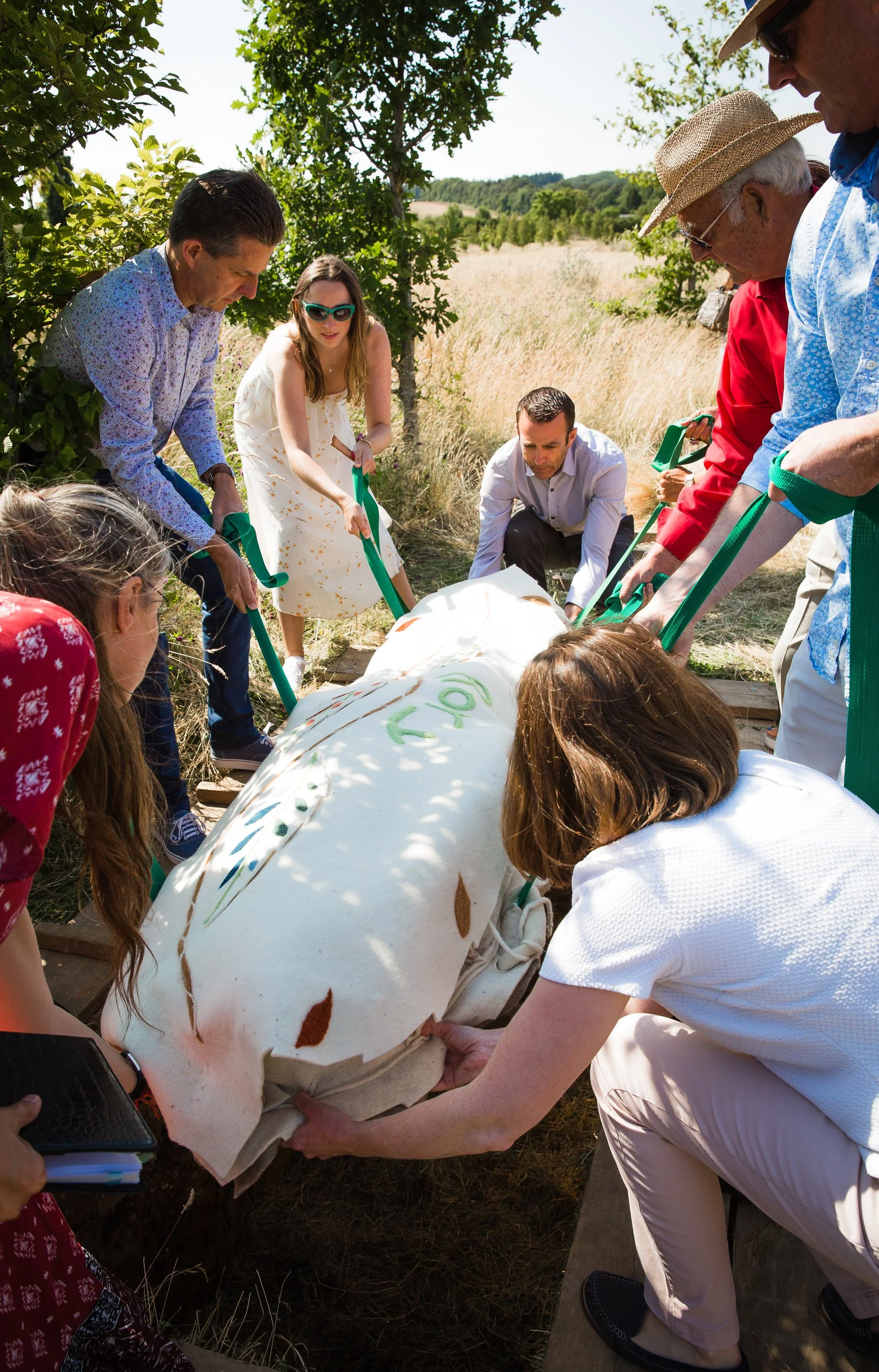
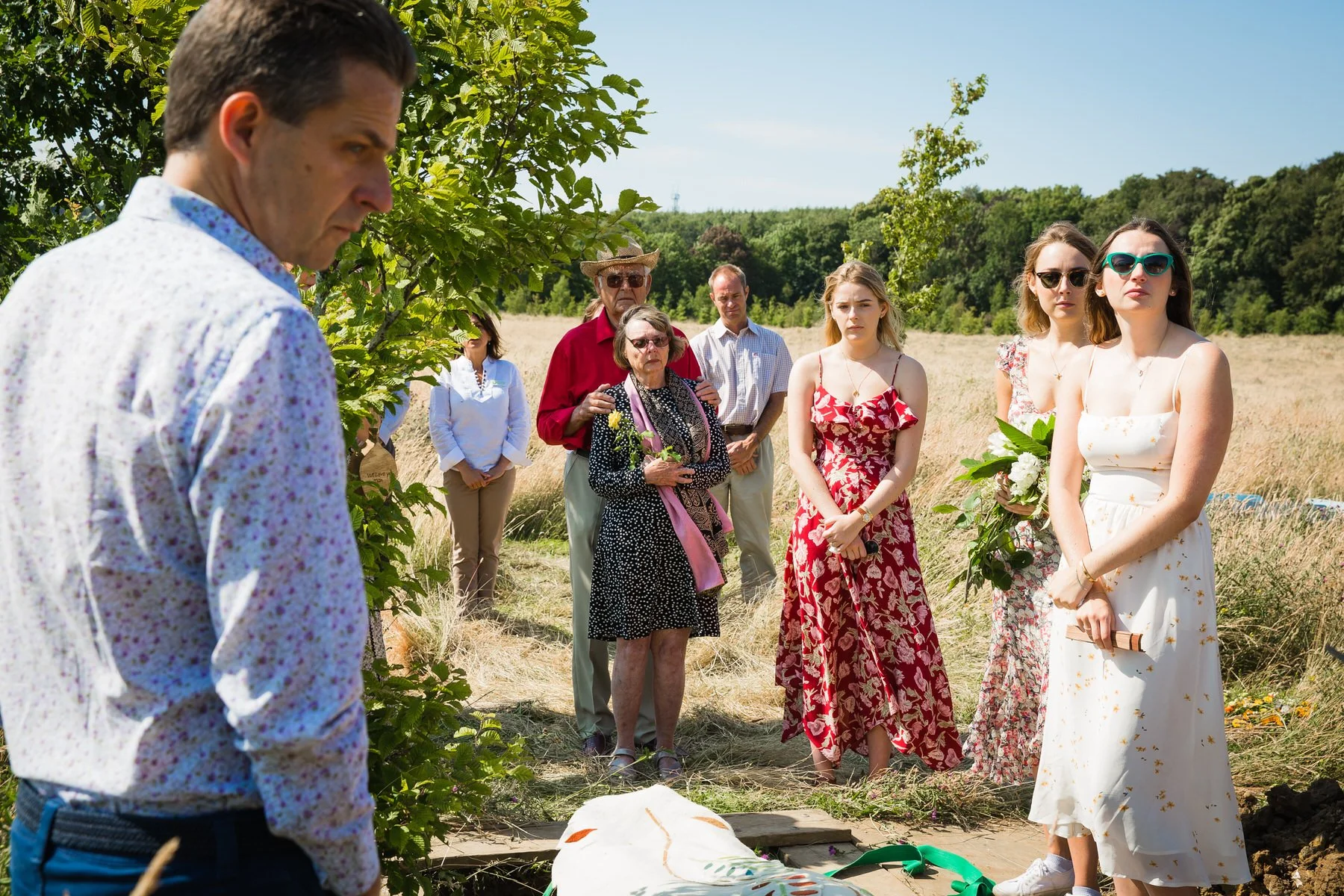
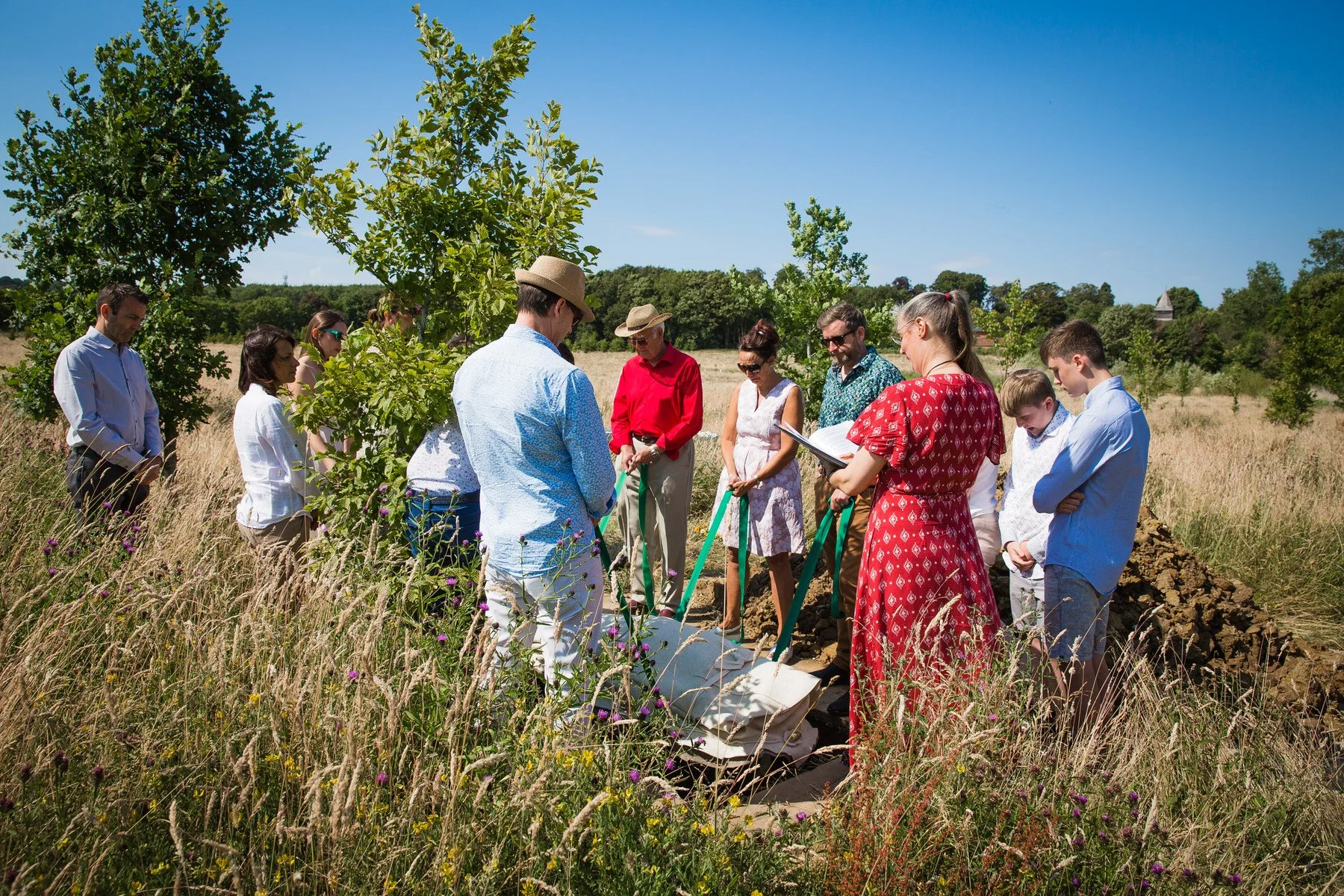
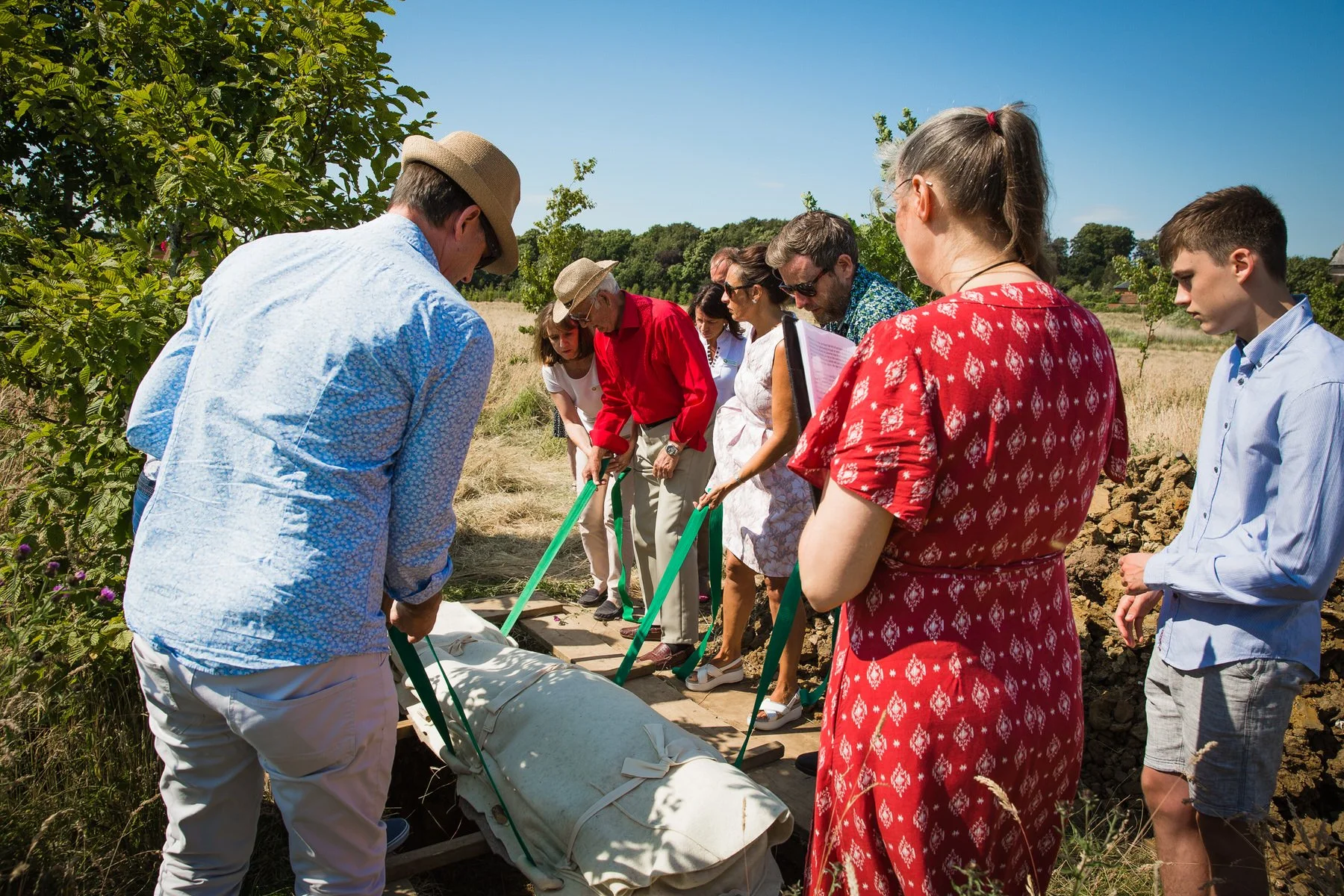
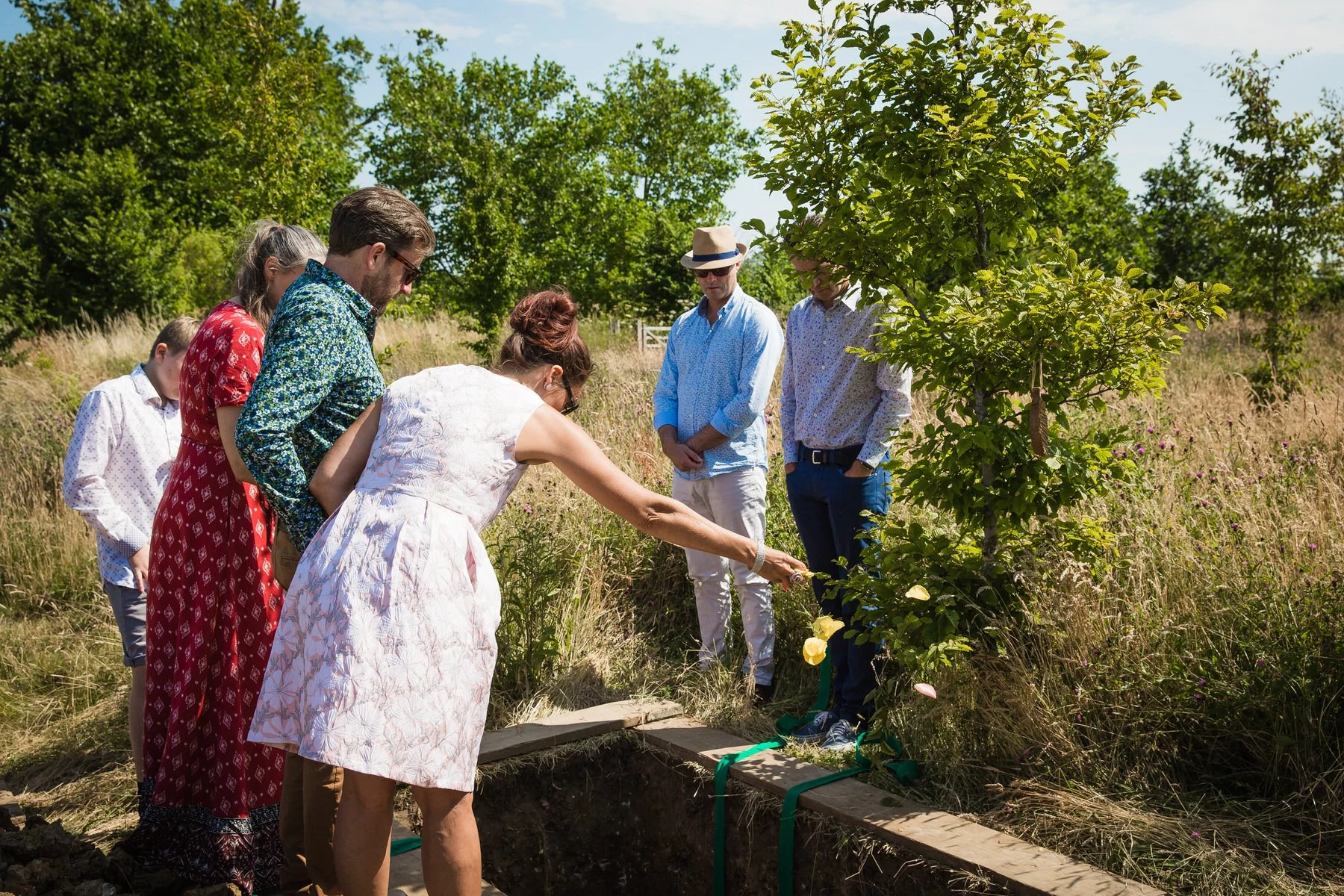
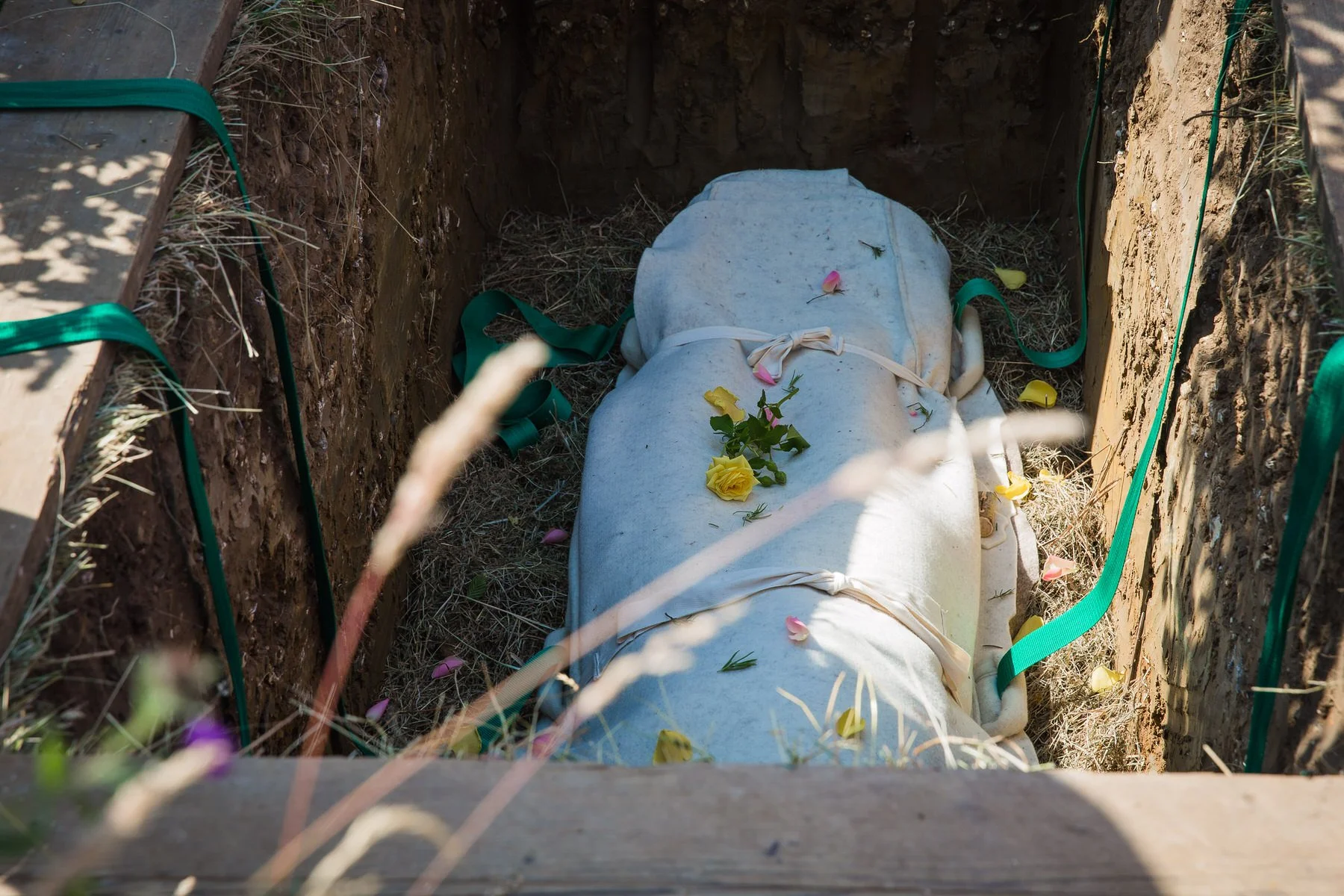
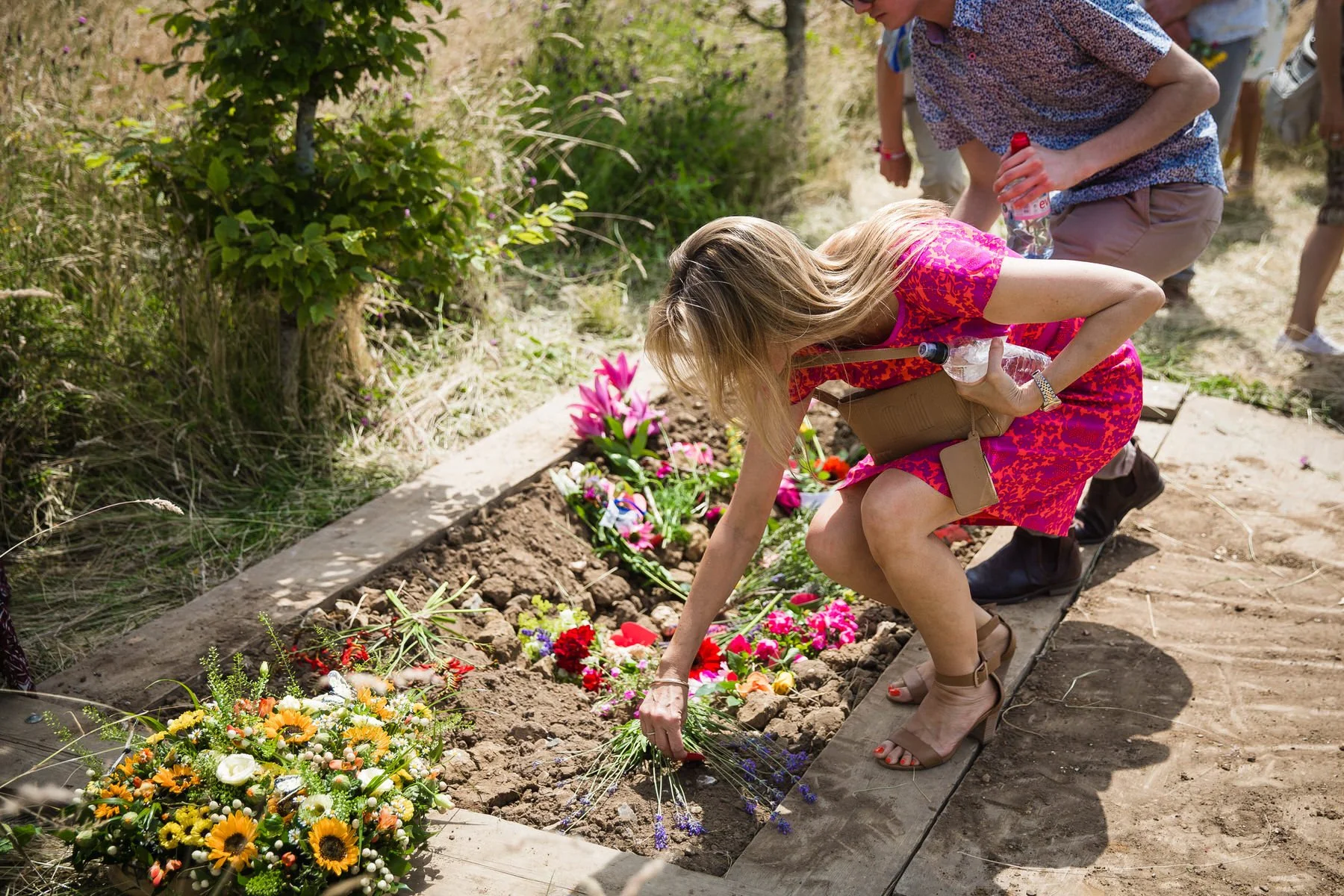
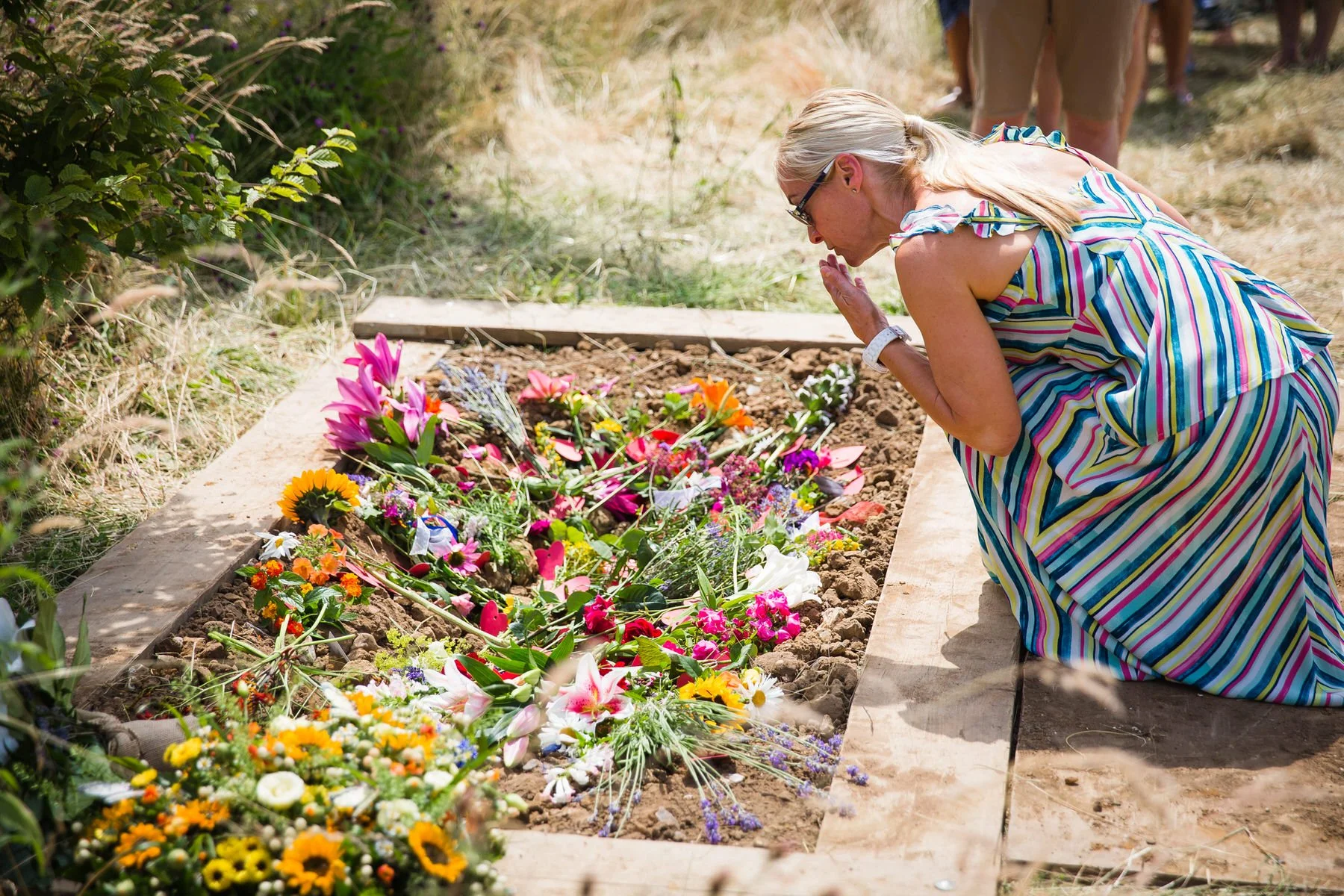
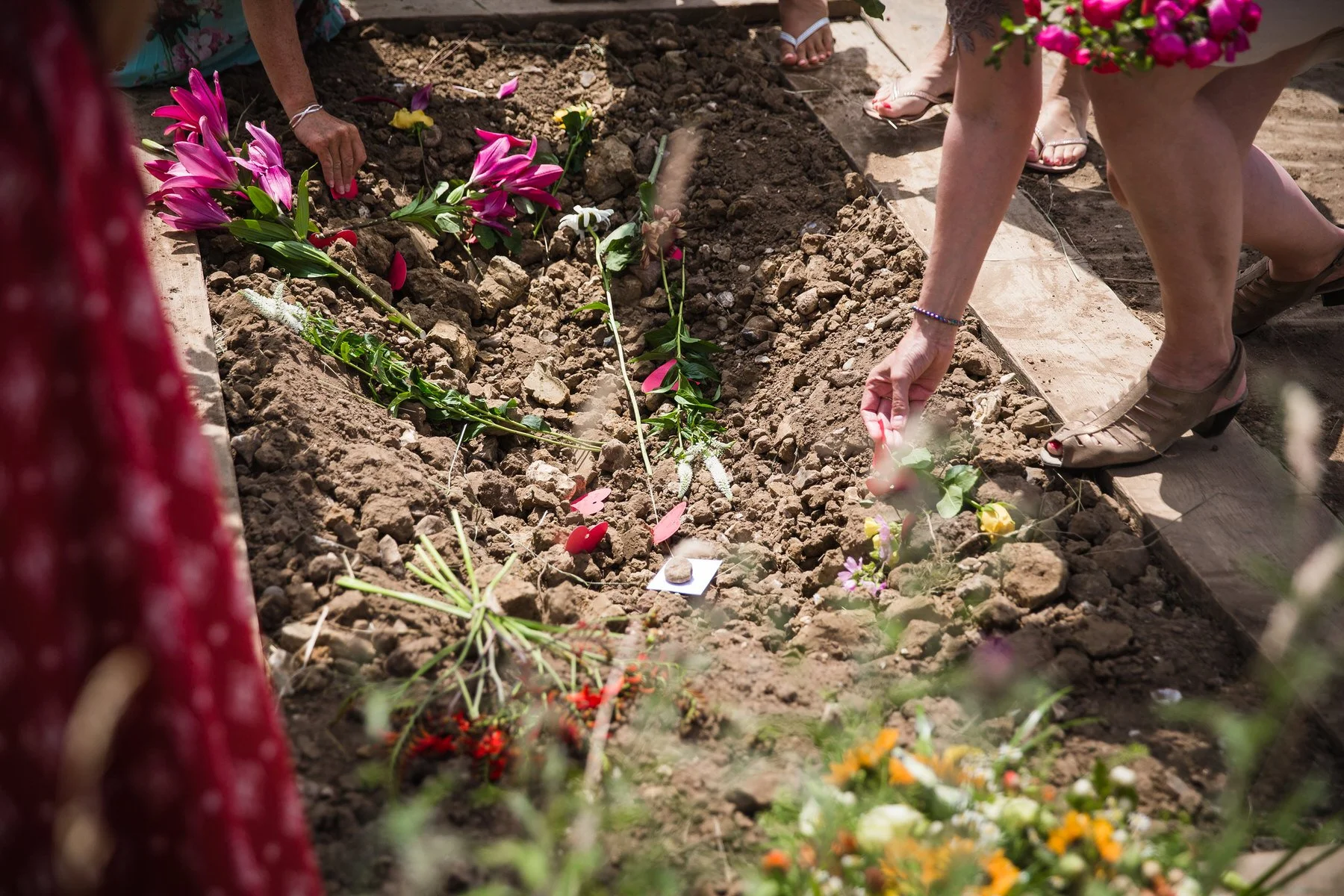
Once the family were ready, the straps were adjusted and Rory’s woollen shroud was gently lowered into the ground while the celebrant continued with thoughts, readings and prayers. Close family stood shoulder to shoulder around the grave, listening, holding one another and watching as he was laid to rest. When the time came, they stepped forward to throw petals and roses into the grave – a bright, physical gesture of love and farewell that softened the difficulty of saying goodbye.
Photographing this part of the day was about telling the full sequence in a way that felt truthful and respectful. That included:
The lift from the cart onto the struts and how the family gathered in close.
The moments during the lowering itself – faces, posture, the way people leaned towards each other.
Petals and flowers falling into the grave, and the expressions of those standing at the edge.
I worked both wide and close throughout: wide frames to show the whole gathering and its place within the meadow, and closer frames that bring you nearer to individual faces, reactions and small gestures between relatives. The aim was to be close enough to record real emotion – tears, embraces, shared looks – without interrupting what was happening. Using different focal lengths meant I could move between broader scene‑setting images and more intimate portraits, so the family would have a complete visual record of this part of the day, rather than just isolated details.
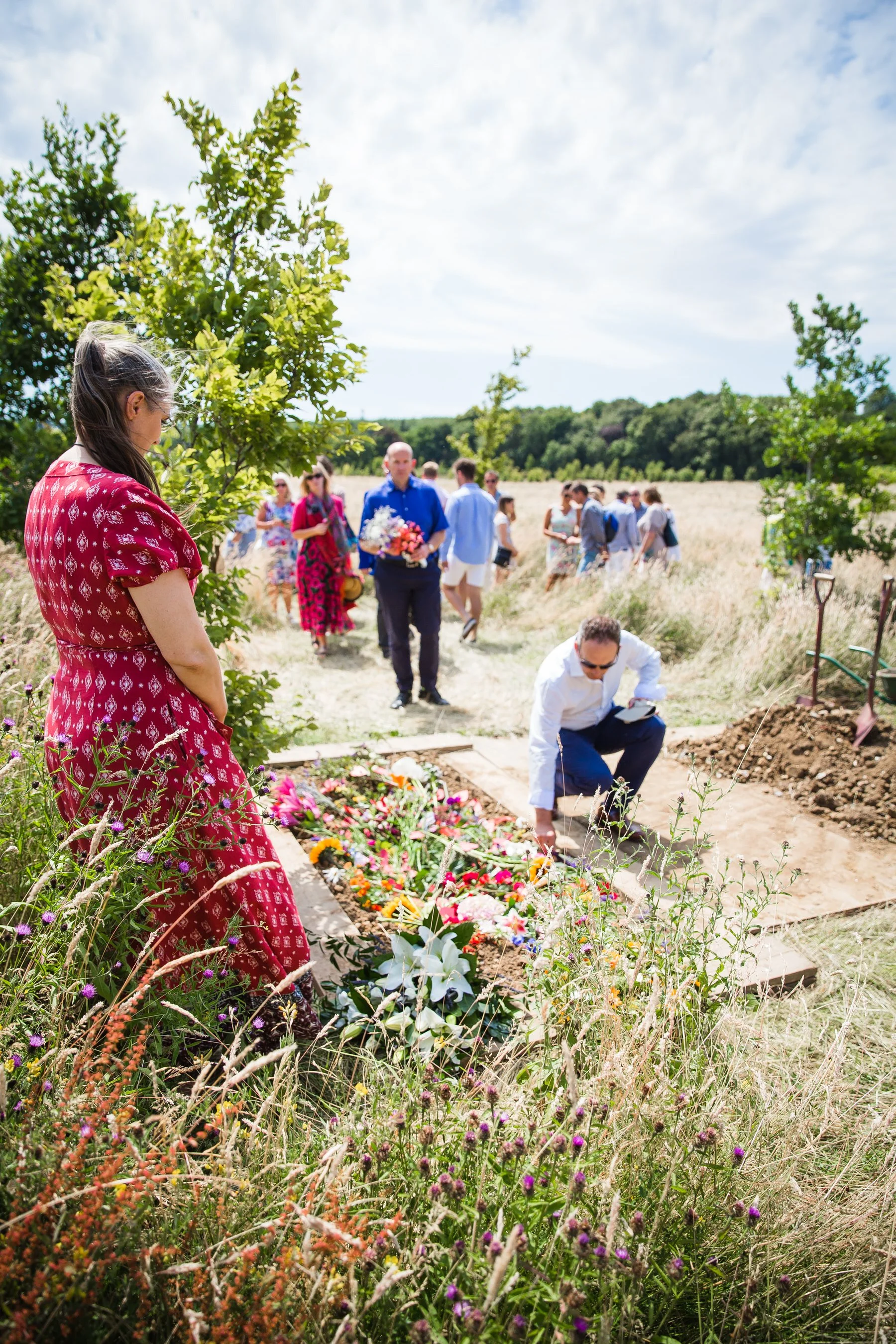
After the family had returned to the pavilion, the gravediggers delicately filled in the grave, preparing it for later when other guests would come to lay flowers and see where Rory now rests within the meadow.
Returning to the pavilion – guests, music and memories
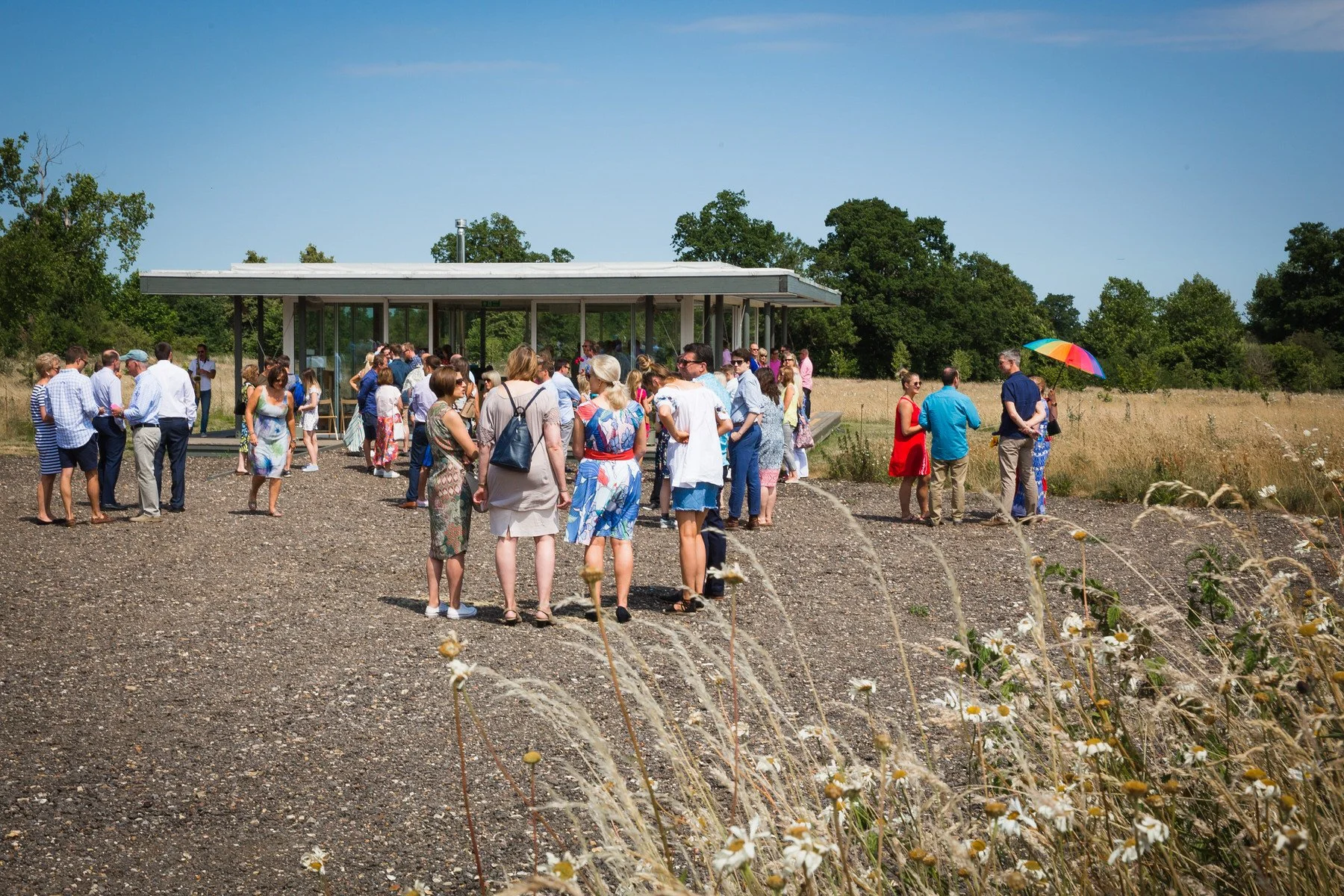
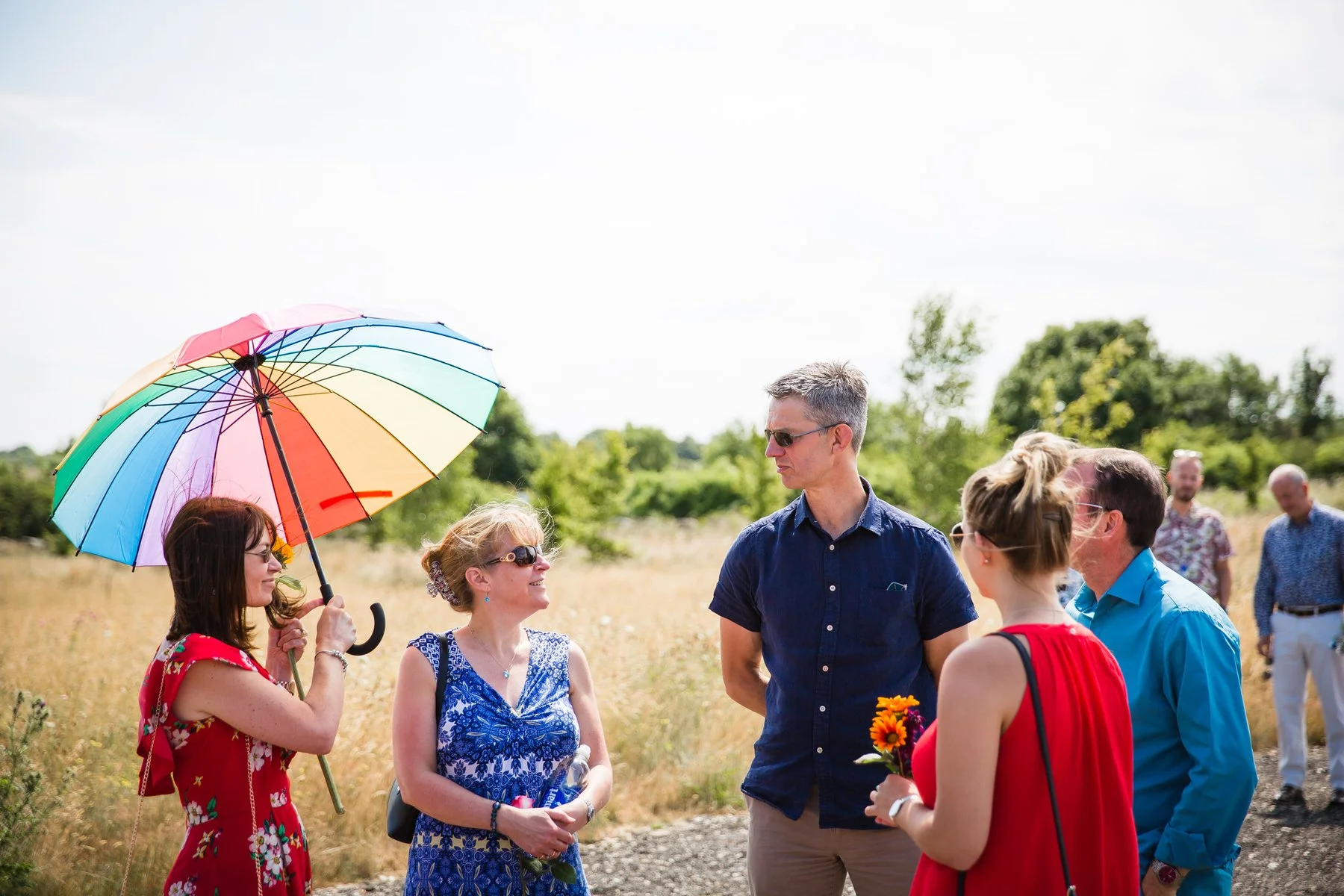
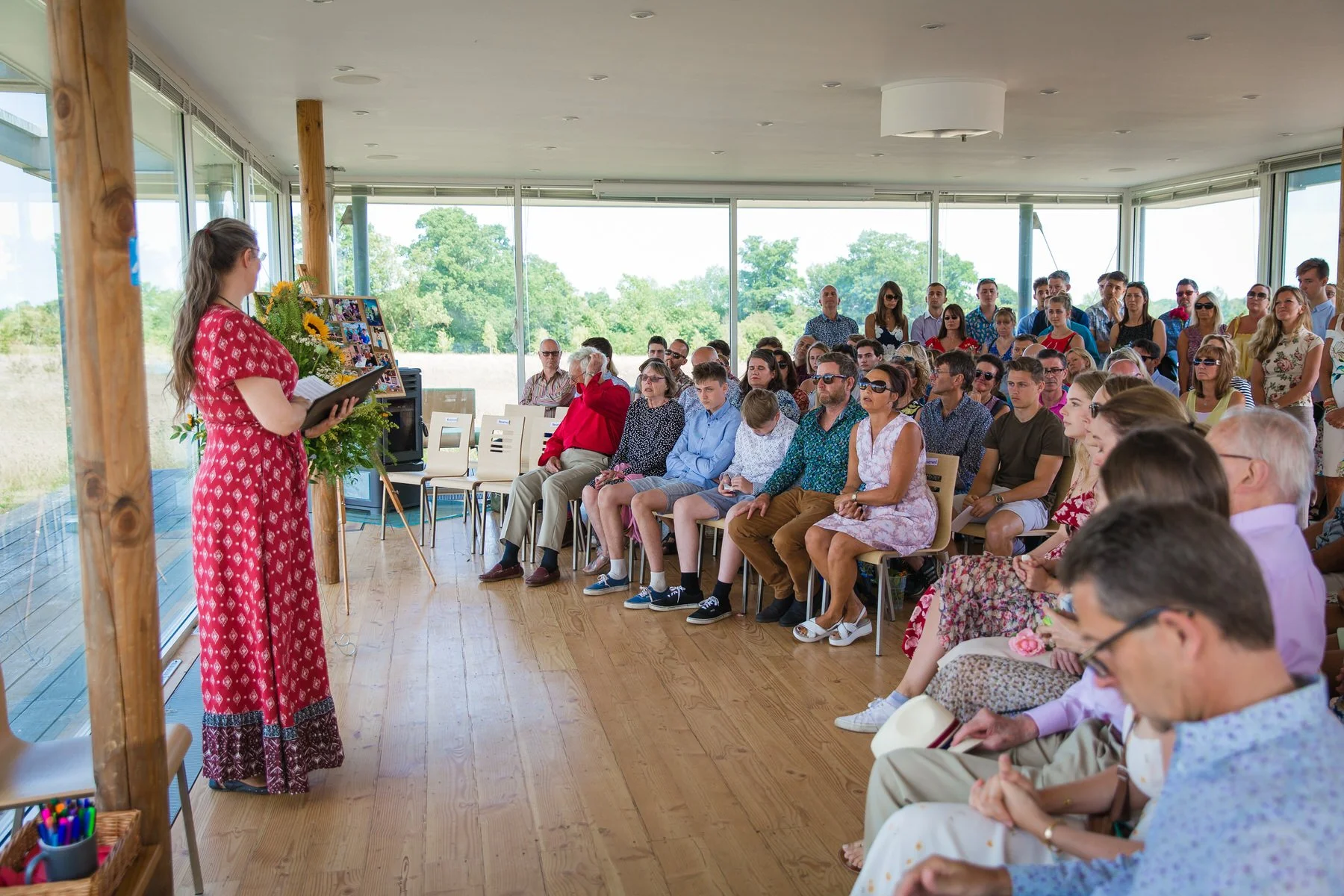
Back at the pavilion, the day shifted into its second chapter. Friends and wider family began to arrive for the main service.
As people gathered:
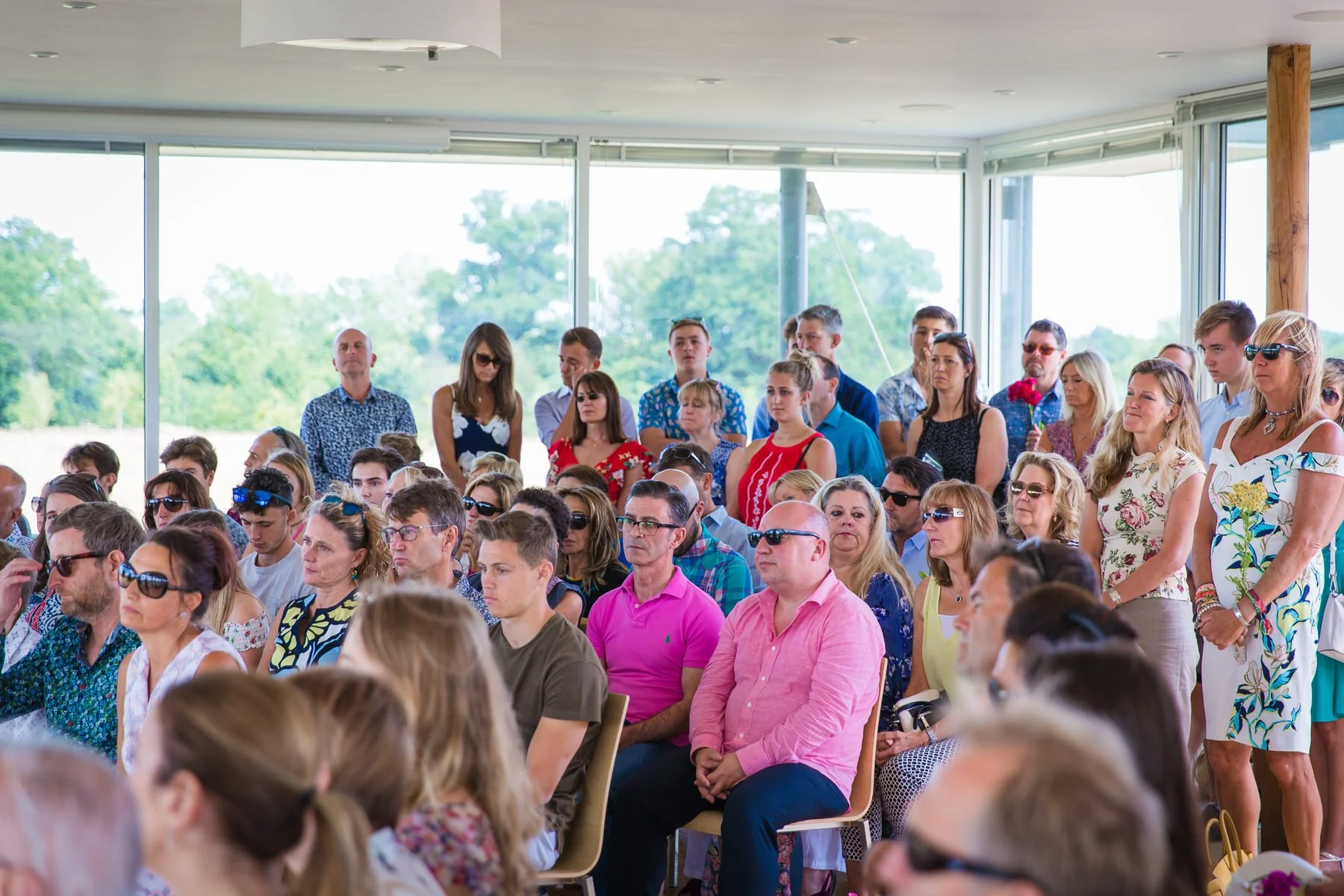
The pavilion filled and soon overflowed, with some guests standing outside and looking in through the glass.
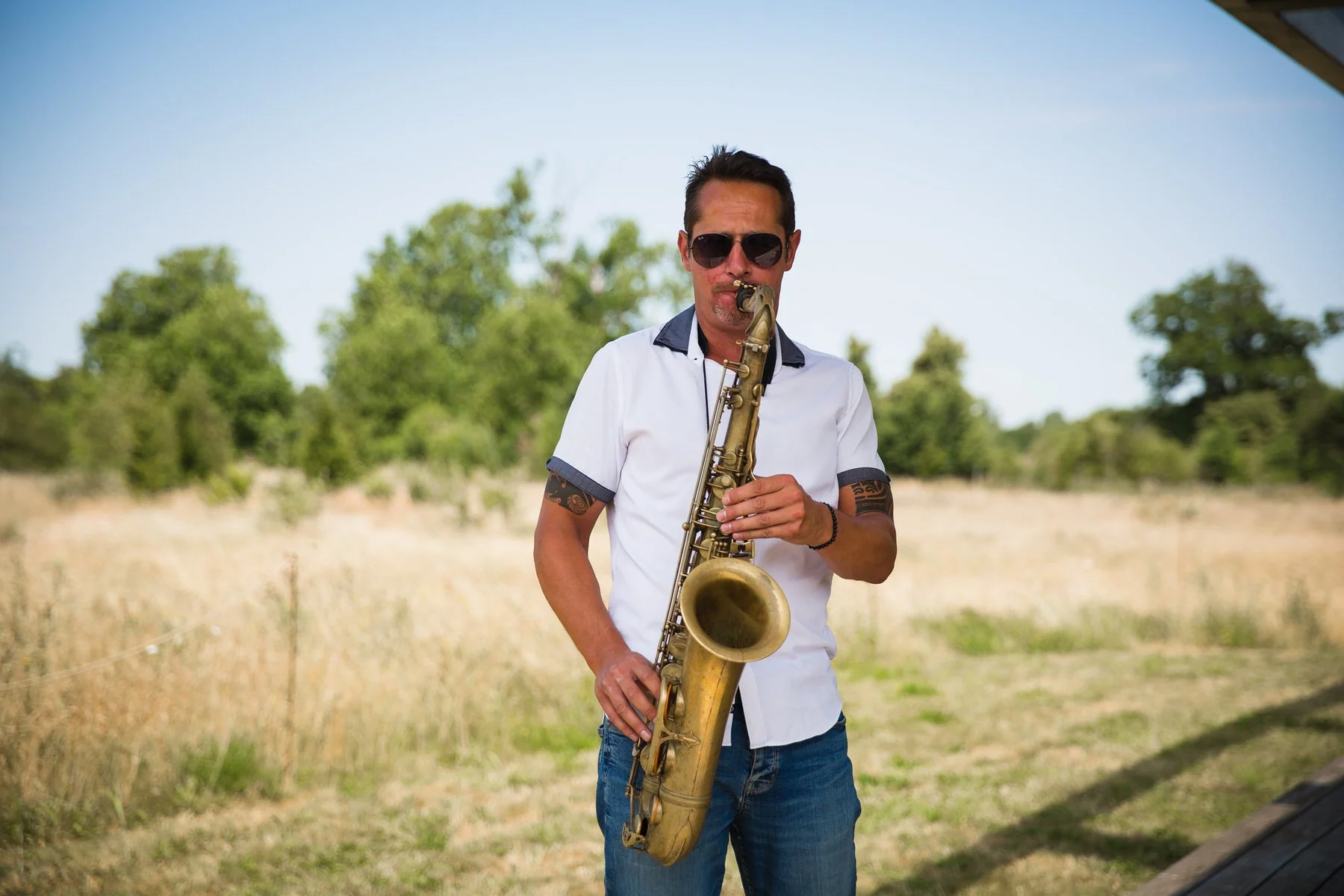
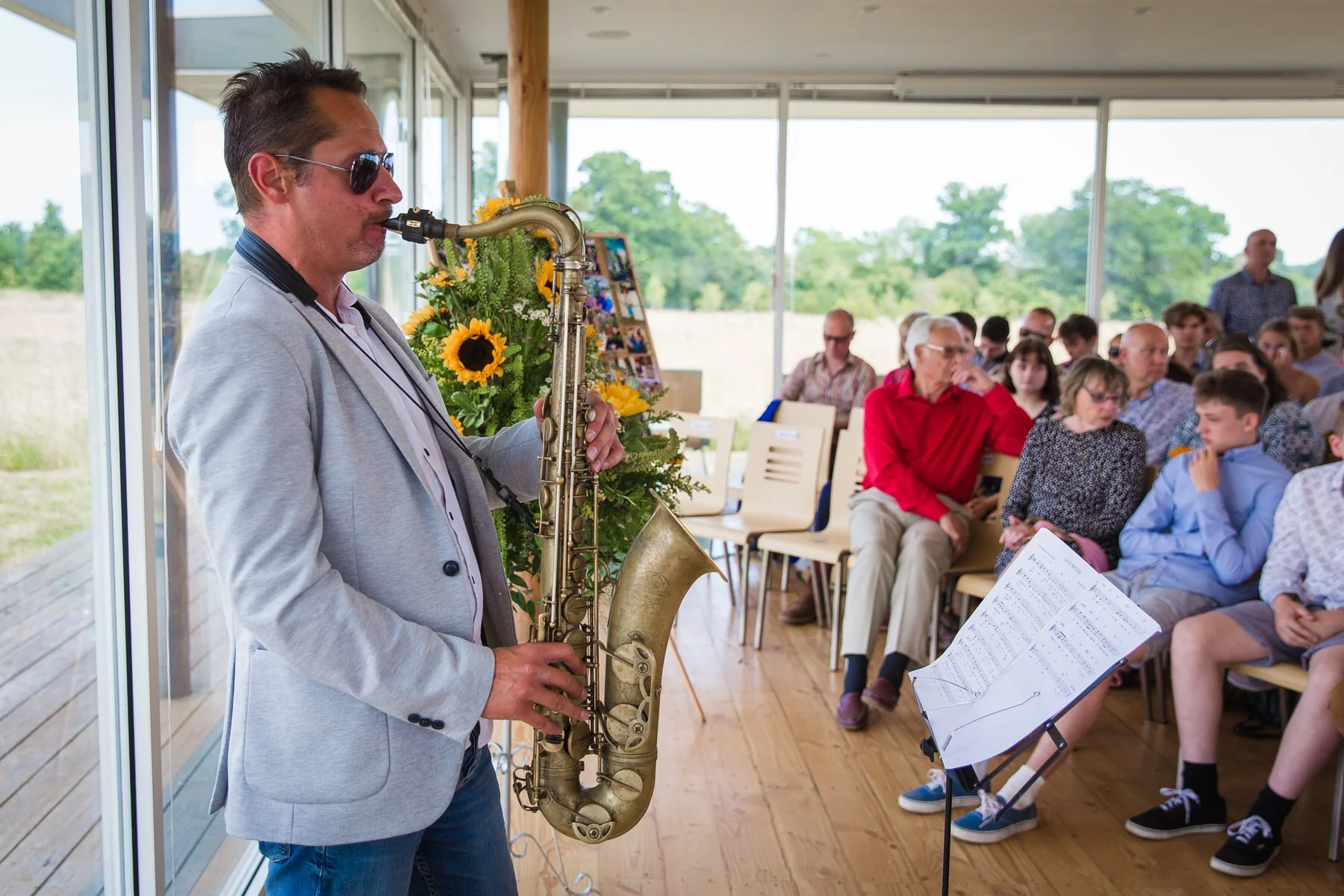
A saxophonist played as people arrived – a warm, expressive sound that set the tone.
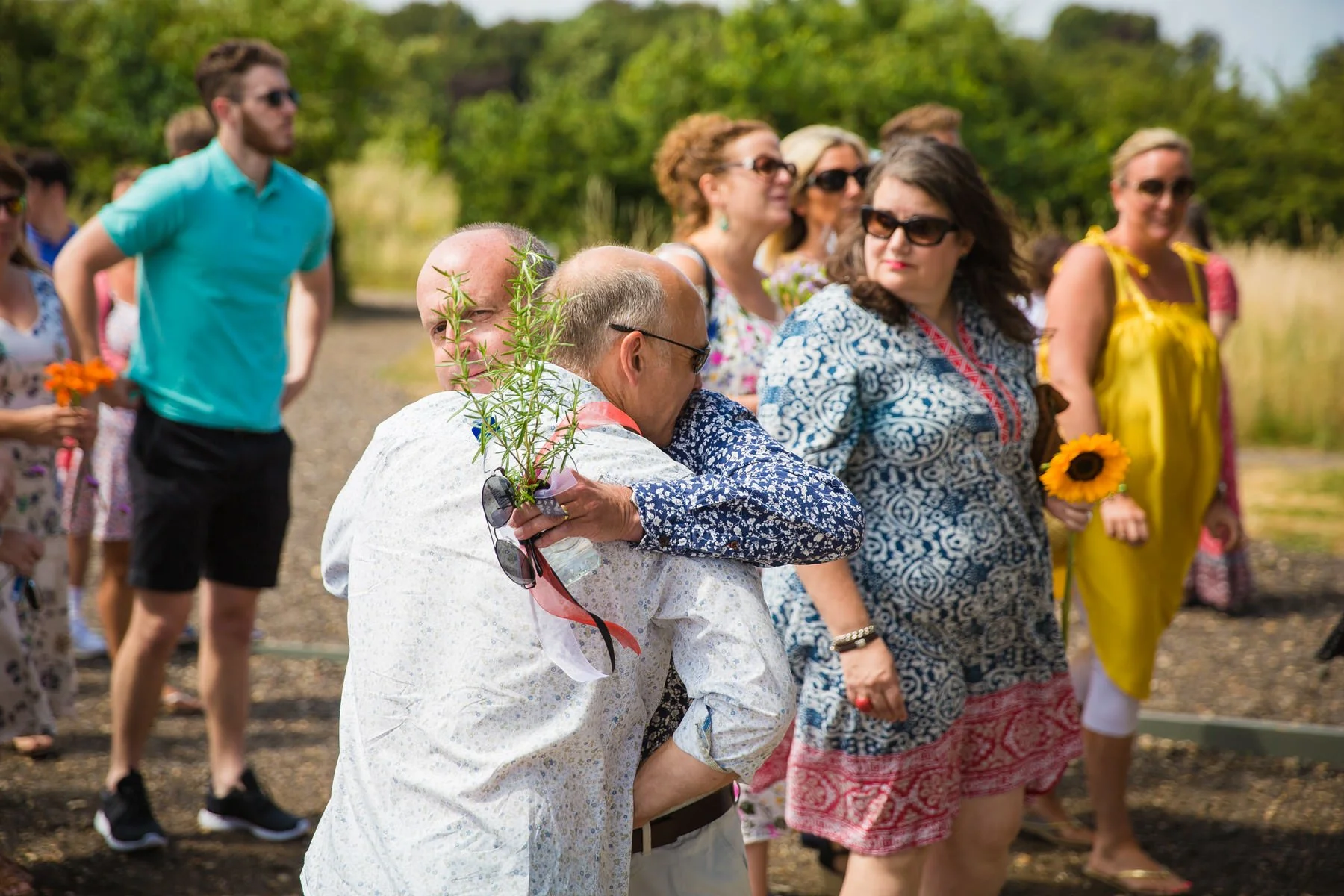
Guests greeted each other, hugged, and took time to look through photo books and memory boards laid out around the room.
This was another rich part of the story to photograph:
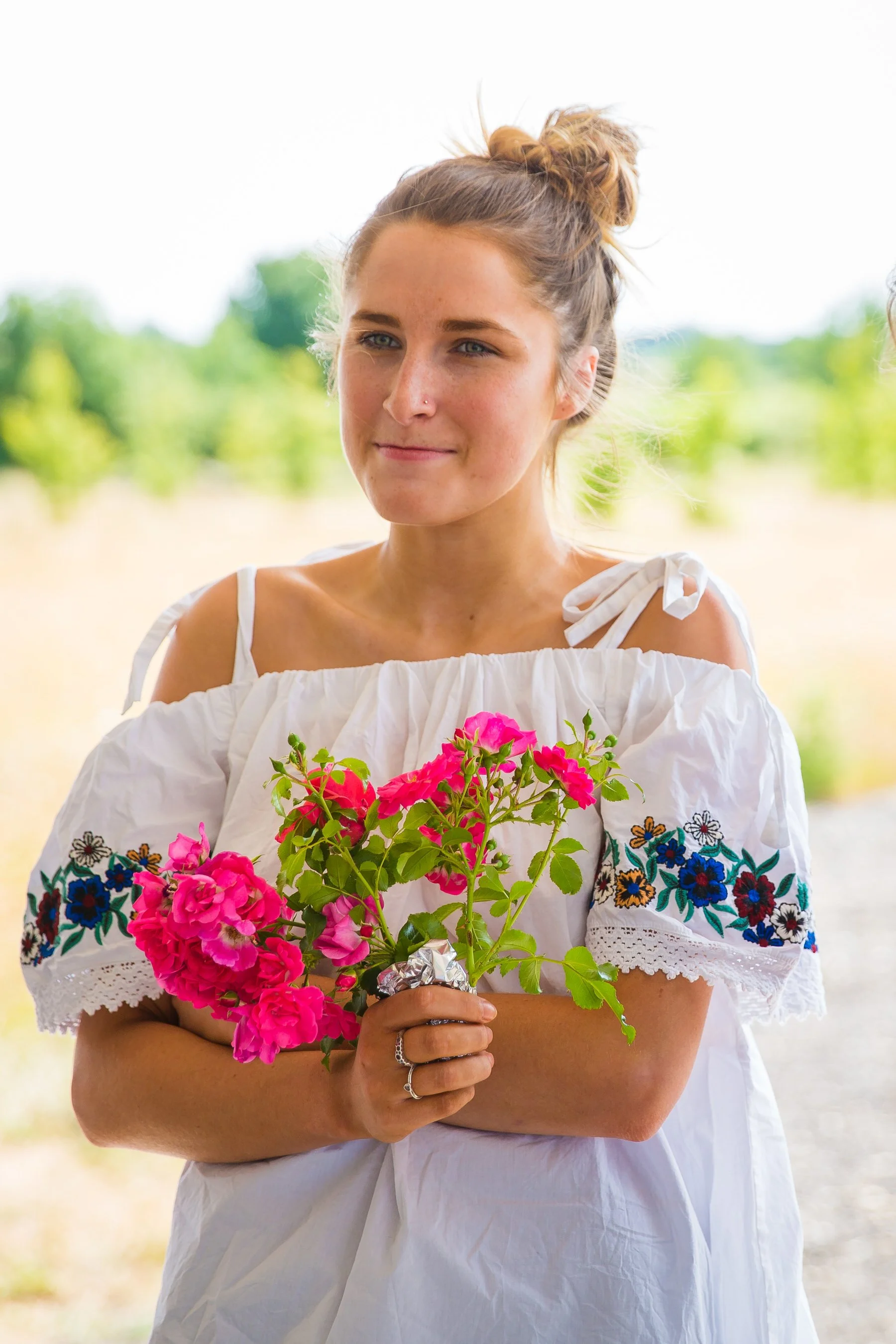
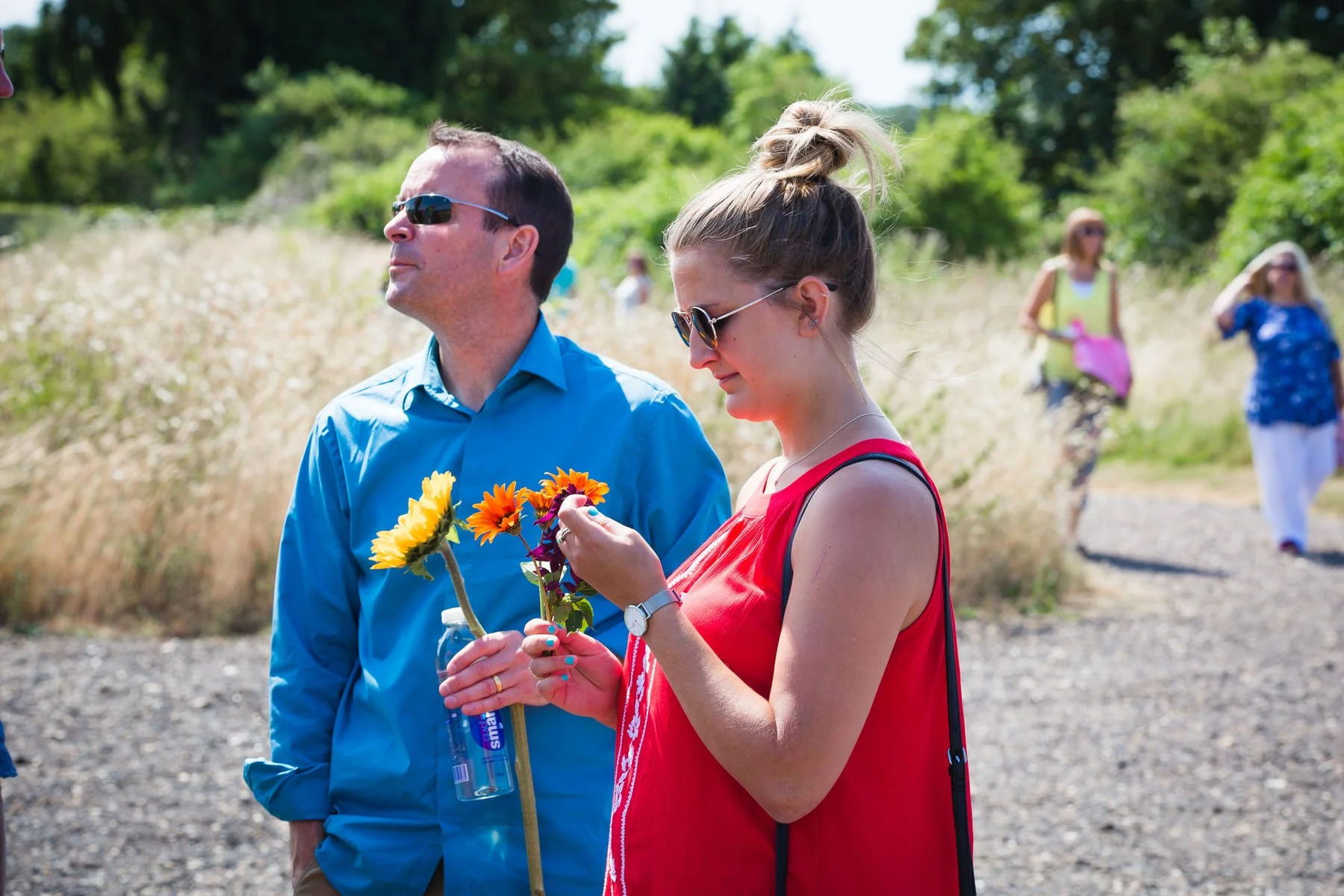
Candid moments of greeting and embrace.
People’s reactions as they looked through old photographs and albums.
Details of the saxophone, music, and the red love‑heart messages that guests would later write for Rory’s grave.
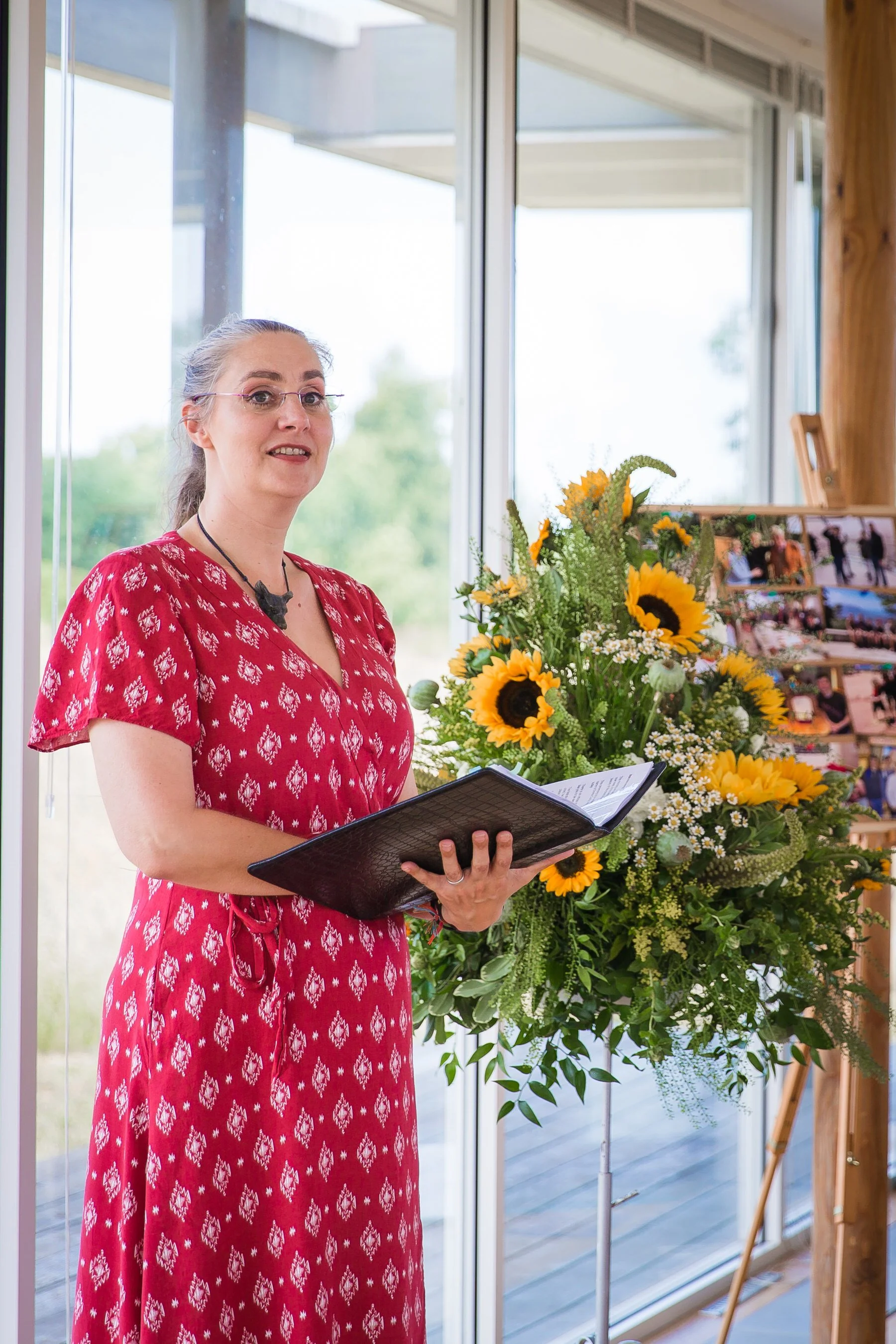
The service itself was full of tributes, stories and memories from Rory’s life, with the saxophonist playing at points during the ceremony. Again, my priority was to document everything without changing the flow: no staging, no direction, just watching and responding.
The second walk to the grave – red hearts and saxophone
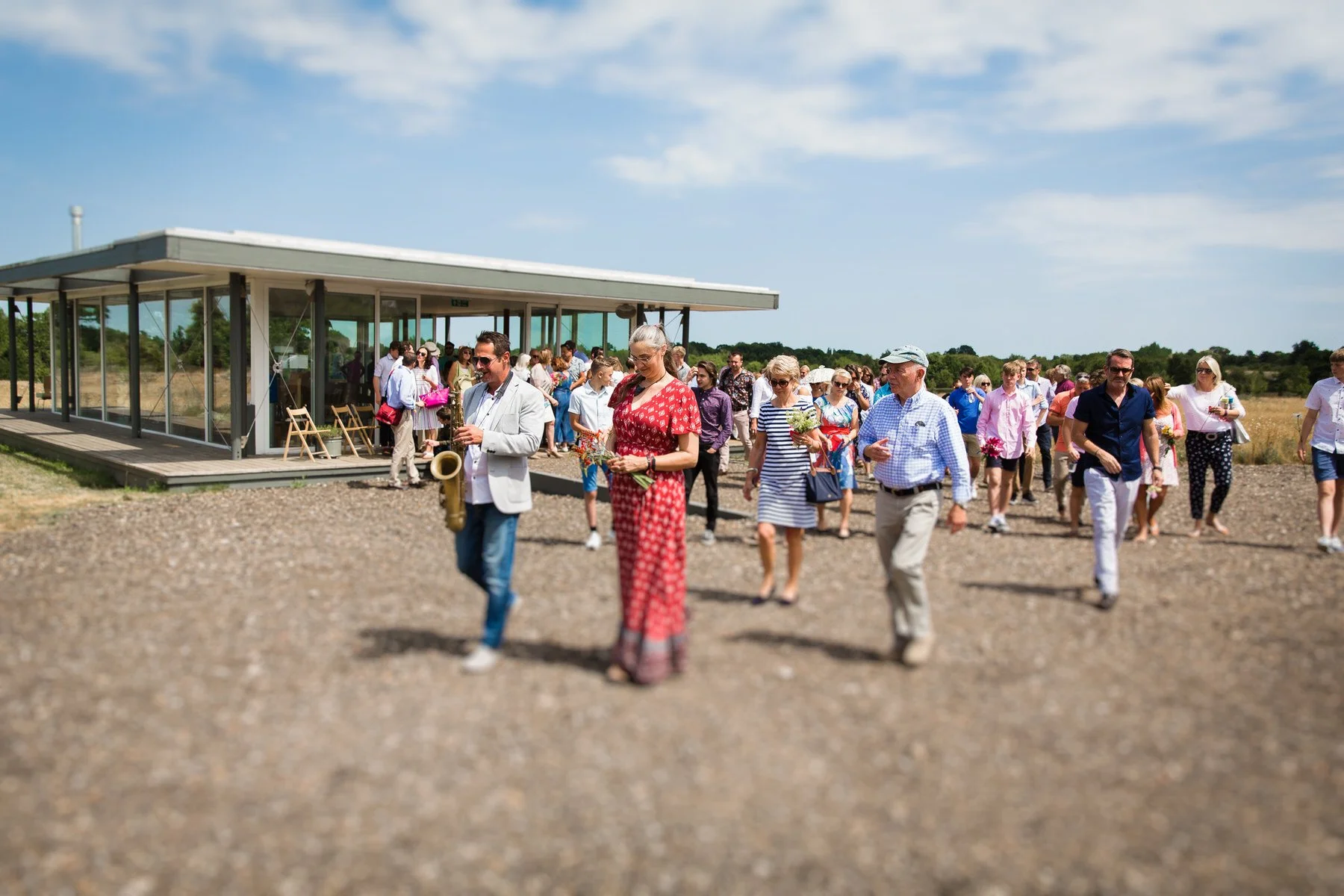
Towards the end of the service, family and friends wrote messages to Rory on red paper hearts. Then, once again, it was time to walk.
This time:
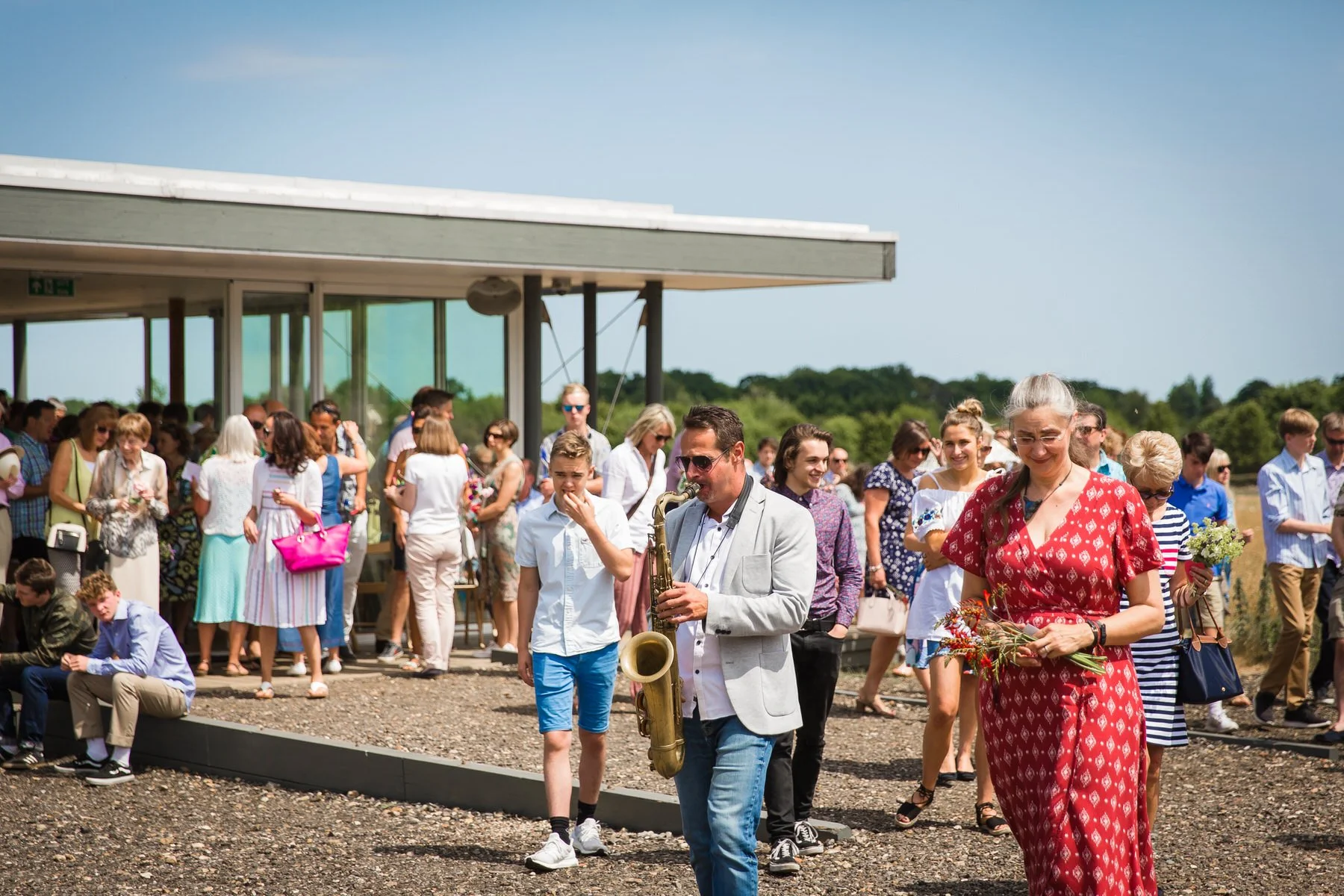
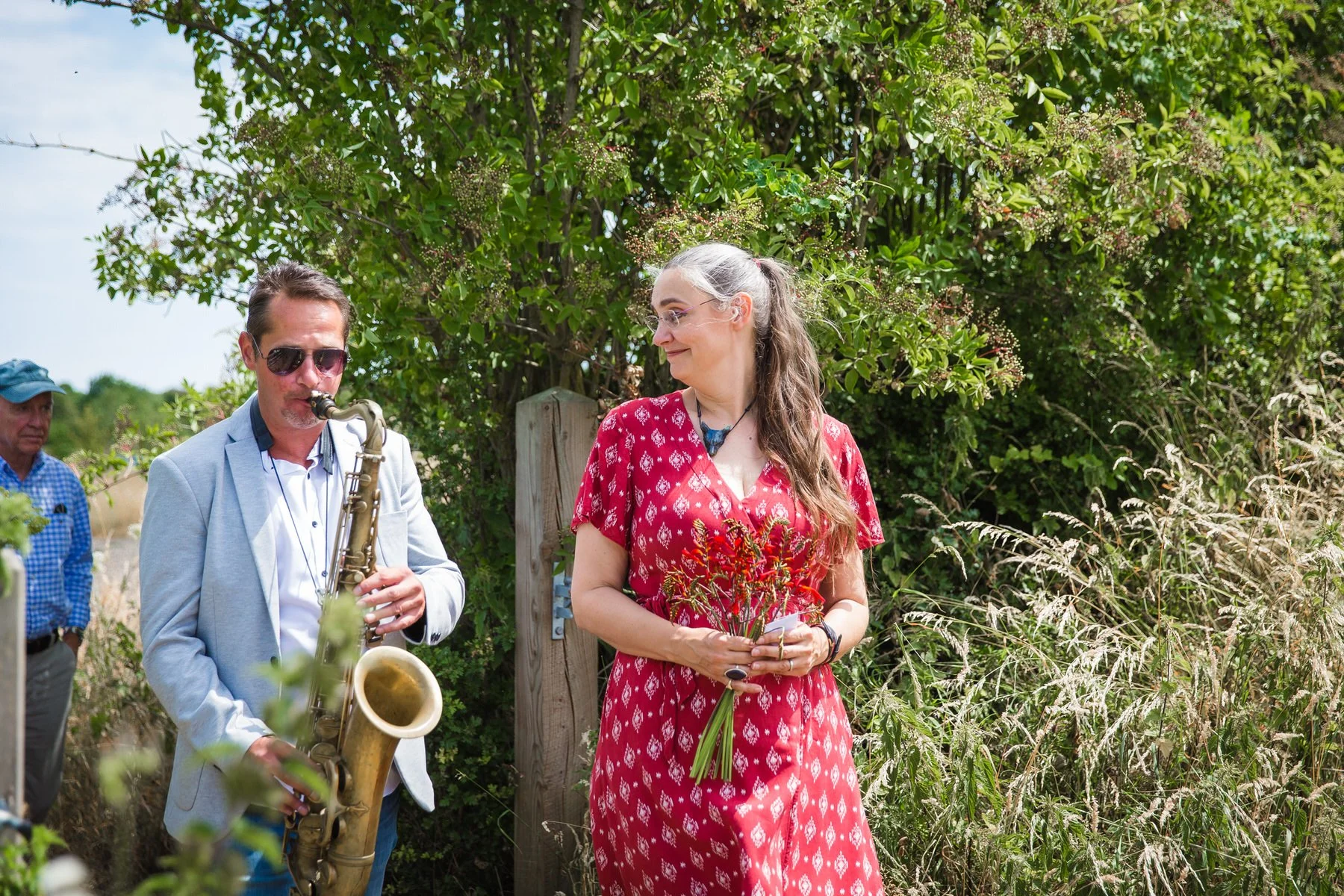
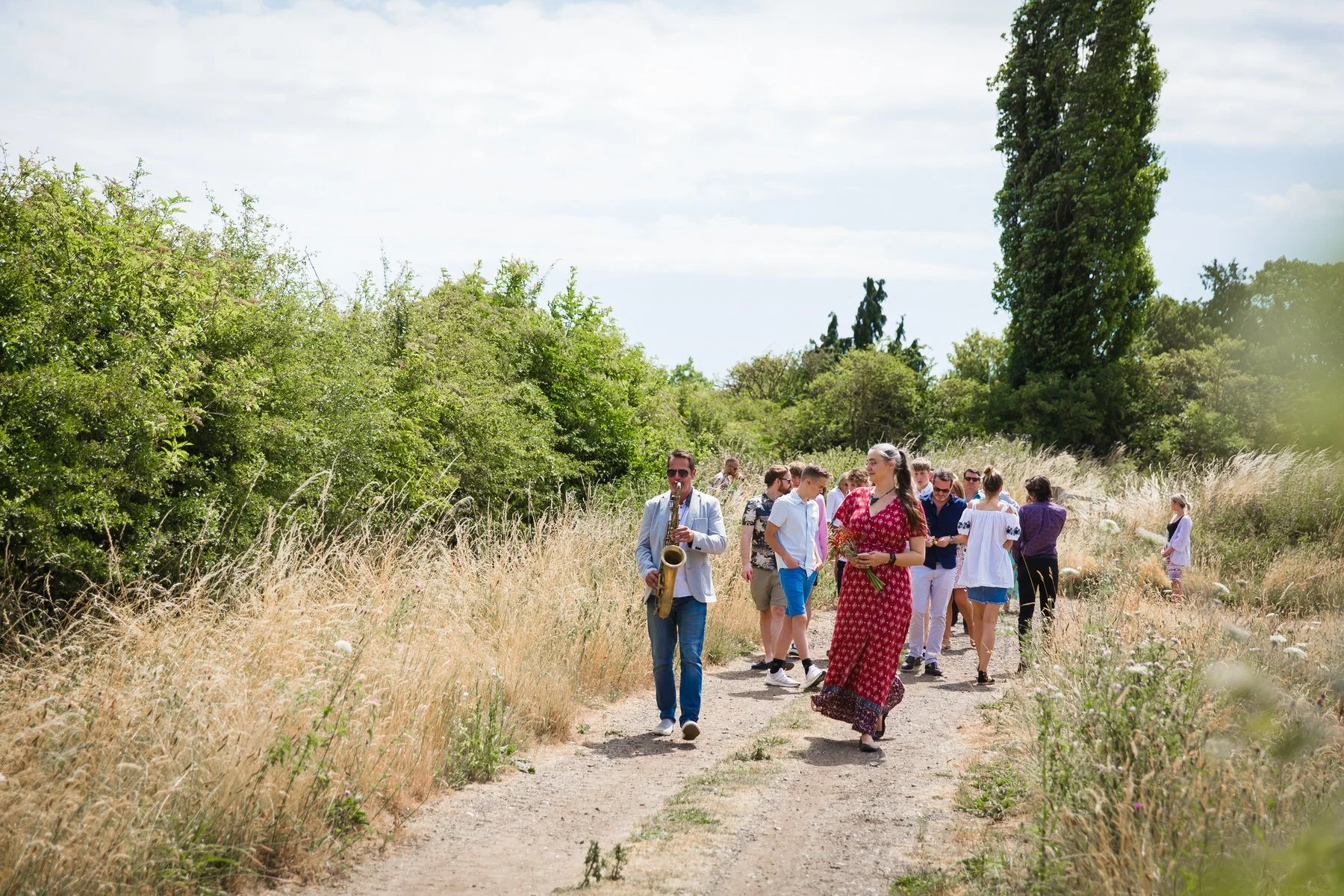
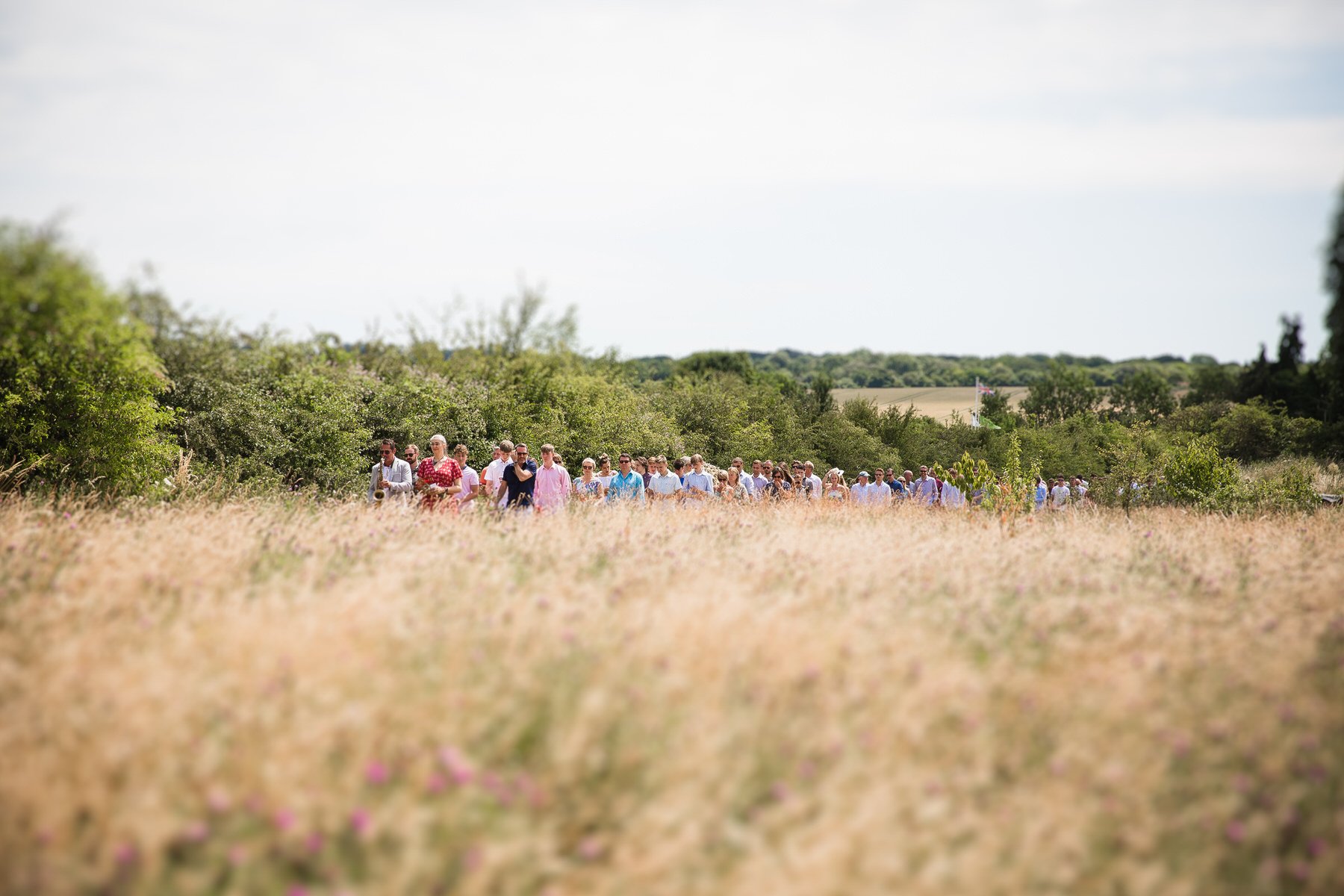
The saxophonist led the way, playing as he walked out of the pavilion and into the meadow.
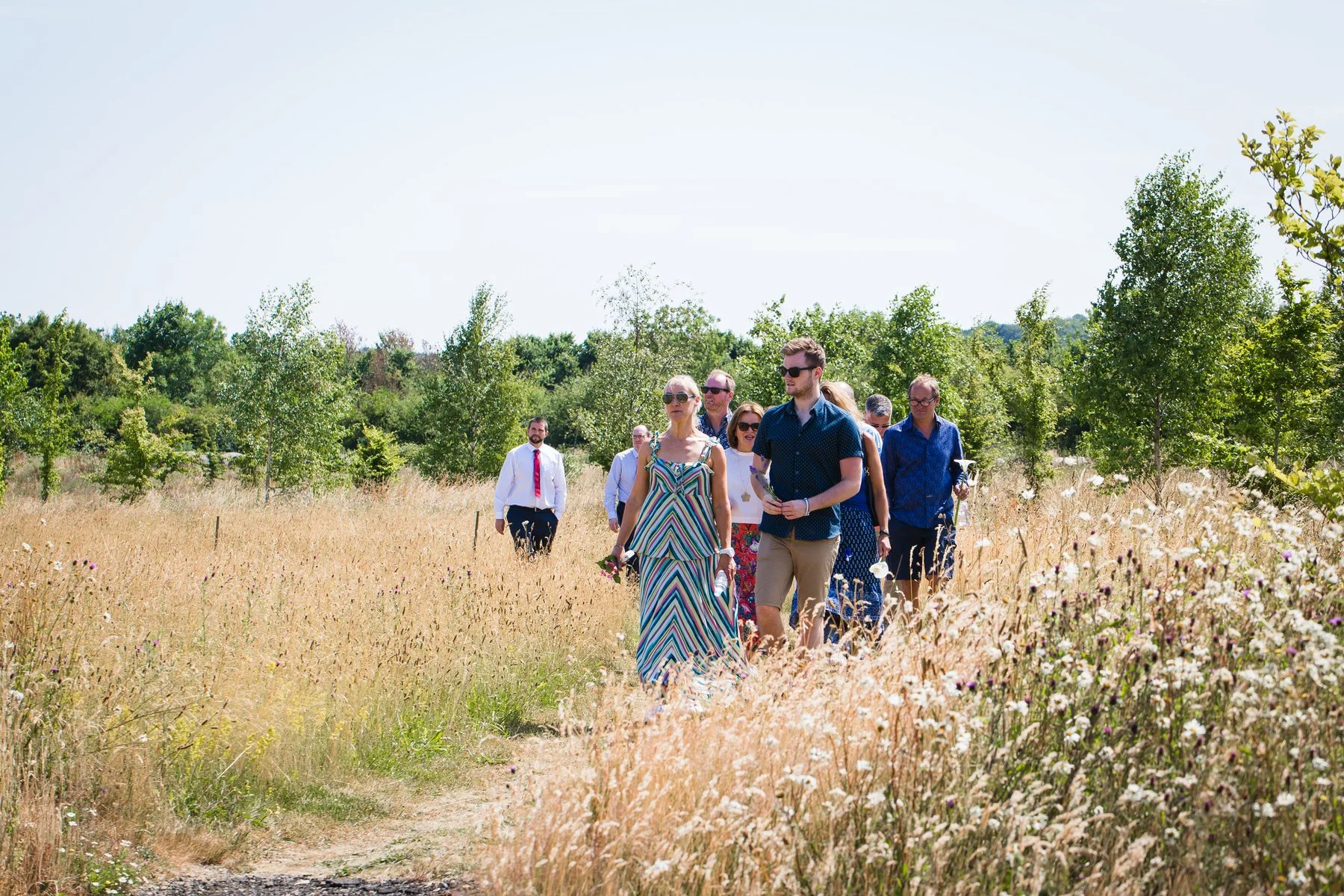
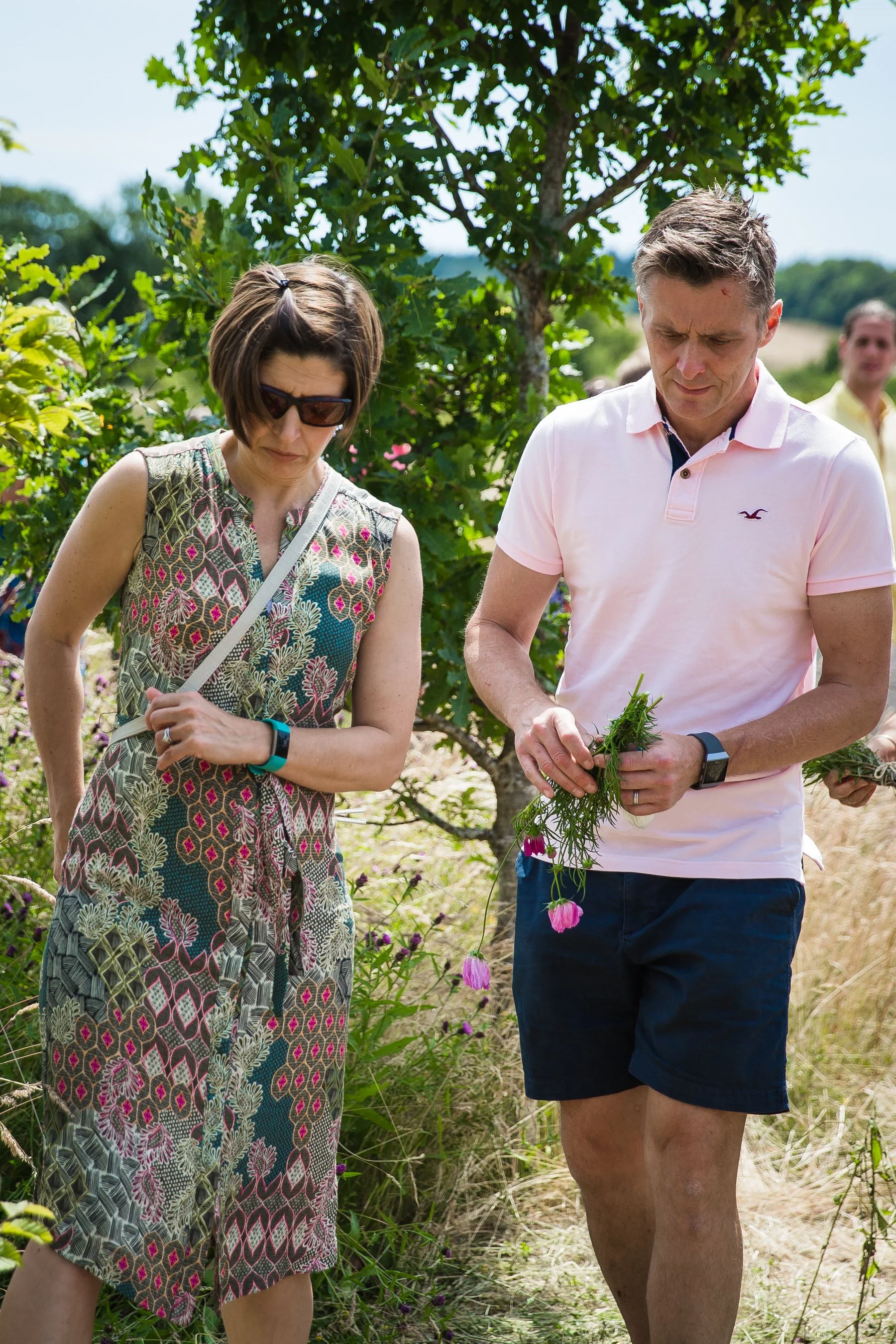
A long line of family and friends followed behind, carrying red hearts and flowers.
The procession moved slowly through the fields towards the grave, surrounded by nature and music.
From a photographic point of view, this was one of the most striking parts of the day:
A long, winding line of people stretching through the meadow.
The instrument and music at the front, pulling everyone forward together.
The red hearts and flowers providing small points of colour against green and gold.
At the grave, guests placed their love‑heart messages and flowers onto Rory’s grave. The celebrant led a short time of words and reflection, and people said their own quiet goodbyes.
My approach – unobtrusive, documentary, never interrupting
Across the whole day – from early preparations, through the private family burial, the pavilion service and the second walk to the grave – my approach remained the same:
Unobtrusive – always in the background, never directing or posing people.
Documentary – capturing what really happened, as it happened, in a truthful, caring way.
Attentive – noticing small gestures as well as big moments: a hand on an arm, a shared smile, a child reaching for a parent.
This way of working comes from years of photographing live events – theatre, performance, weddings, conferences and many hundreds of funerals – where timing, light and discretion are crucial. That experience means I can adapt quickly to changing light, changing plans and the emotional rhythm of the day without ever needing to take over.
Editing – every image carefully worked on
After the funeral, every selected photograph from the day was individually edited. There is no batch processing or one‑click filter; each image is worked on carefully so that:
Skin tones look natural and kind.
The bright sunlight feels real, but not harsh or uncomfortable.
Colours of the landscape – green meadow, blue sky, yellow sunflowers, red hearts – are true to how it felt to be there.
Distractions in the background are softened or removed where possible.
Families trust me with some of their most emotional memories. The editing process is where much of that trust is honoured, turning raw files into a cohesive, gentle, timeless set of images that tell a story of the day.
What families receive from a natural burial photographed this way
For a natural burial at a place like Clandon Wood, families typically receive:
A carefully curated set of high‑resolution images from the day – from early preparations to the final moments at the grave.
A mix of wide scenes (landscape, walks, gatherings) and intimate moments (faces, flowers, embraces, details).
Private online access to the gallery to share with those who could not attend.
The option to create prints, albums or a tribute slideshow if they wish.
Many families later say that:
The photographs helped them remember the day more clearly and gently than they expected.
Images of the environment and other details – the meadow, trees and sky – became as important as images of people.
The pictures were especially valuable for children and younger relatives who were present but may not remember everything.
You can find more practical information about what’s included, packages and how booking works on my main Funeral Photography page.
Considering a photographer for a natural burial?
If you are planning a natural burial or woodland burial – at Clandon Wood or at another site in the UK – and are unsure about whether to include funeral photography, you are not alone. Many families start with the same question.
It may help to know that:
A good funeral photographer will work quietly in the background, not turning the day into a photoshoot.
You can choose the level of coverage that feels right – from a private family burial only, to the full day, or just the main service.
The focus is always on respectful, honest images that reflect your loved one and your family, rather than on anything staged.
If you'd like to talk through what might be appropriate for your situation, you're very welcome to get in touch through my contact page or call me on 07772 509101. I can discuss your plans, the burial ground you've chosen, and how my funeral photography or funeral live streaming could fit in.
For more examples of my work, please visit my funeral photography portfolio.
Live Streaming a Graveside or Outdoor Funeral: What to Expect
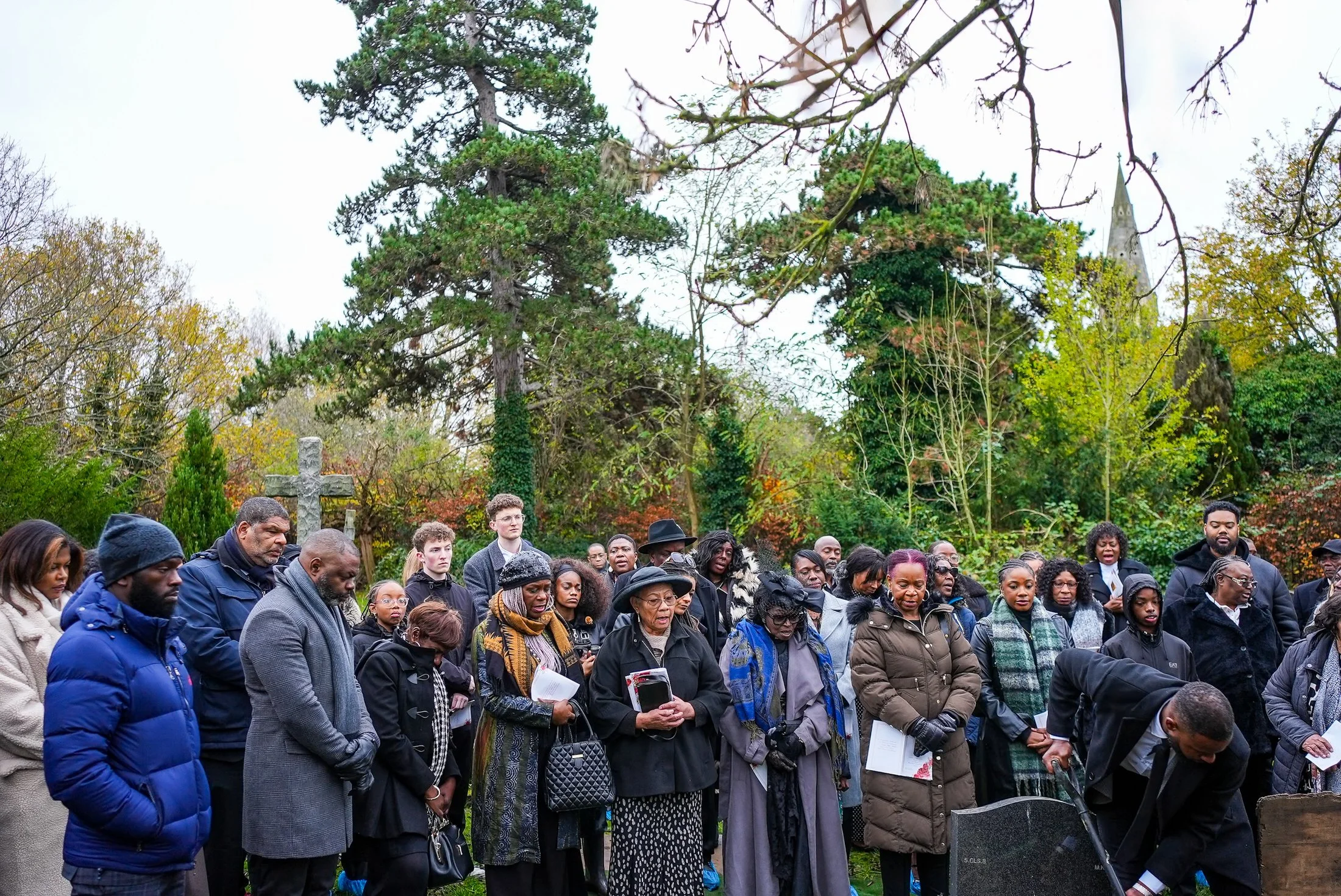
Graveside and outdoor funerals present their own unique challenges for funeral live streaming — and their own unique moments that families want to preserve and share. Over the past ten years, I have streamed hundreds of outdoor services, from quiet churchyard burials to large Caribbean and African celebrations that last several hours and fill an entire cemetery with singing, community and colour.
If you are arranging a graveside or outdoor funeral and want to include funeral live streaming for those who cannot attend in person, this guide explains what to expect, how I manage the day, and why professional equipment and experience make such a difference outdoors.
If you'd like to understand how funeral streaming works in general before reading about the outdoor-specific elements, my full funeral live streaming guide covers everything from booking to the viewing link.
Why Outdoor Funeral Streaming Is Different
Streaming a funeral inside a crematorium or church is relatively straightforward — the environment is controlled, there is usually a fixed order of service, and the acoustic space is predictable. Outdoor services are different in almost every way.
Wind affecting microphones and speech clarity
Light changing rapidly, especially on partly cloudy days
Connectivity cannot rely on venue Wi-Fi
People moving around, with services evolving on the day in ways that are harder to predict
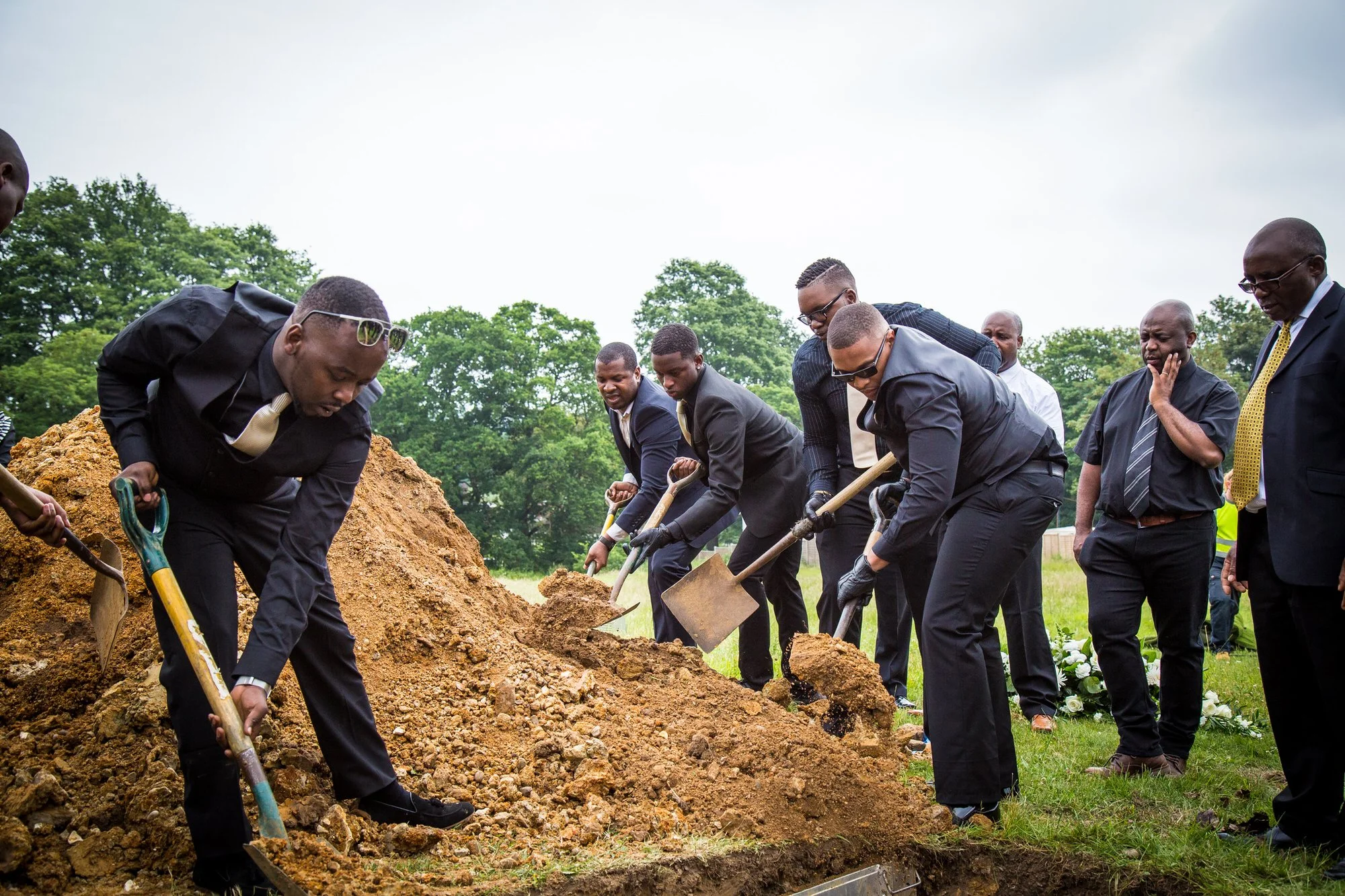
Graveside ceremonies are often deeply emotional, sometimes longer than expected, and frequently involve moments — the lowering of the coffin, the backfilling of the grave, spontaneous singing or drumming — that simply cannot be missed.
This is why experience matters so much for outdoor funeral streaming.
Professional Equipment for Outdoor Funeral Streaming
Before looking at the different types of outdoor service, it is worth explaining what I bring to every graveside funeral. The equipment is chosen specifically for the challenges of working outside.
Bonded 4G/5G internet I never rely on venue Wi-Fi or a single mobile signal. I use a bonded internet solution that combines multiple mobile networks simultaneously, giving a strong and stable connection even in remote or rural cemeteries where signal can be patchy. This is one of the biggest differences between a professional outdoor stream and an attempt made on a smartphone.
Two-camera setup One camera covers the wide scene — the graveside, the gathered family, the coffin being carried from the hearse. The second captures closer detail — the minister or celebrant, the lowering, and the faces of those closest to the person who has died. There is no fumbling with a single camera trying to catch everything.
Professional directional microphones Wind is the enemy of outdoor audio. I use professional shielded microphones, correctly positioned, to capture the words of the minister or celebrant clearly in open air — something a standard microphone cannot do reliably.
Discreet setup Everything is set up and tested before guests arrive, so the equipment is simply there when people come — not being assembled as the hearse pulls in.
For more on what professional funeral streaming includes as standard, you can visit my funeral live streaming page.
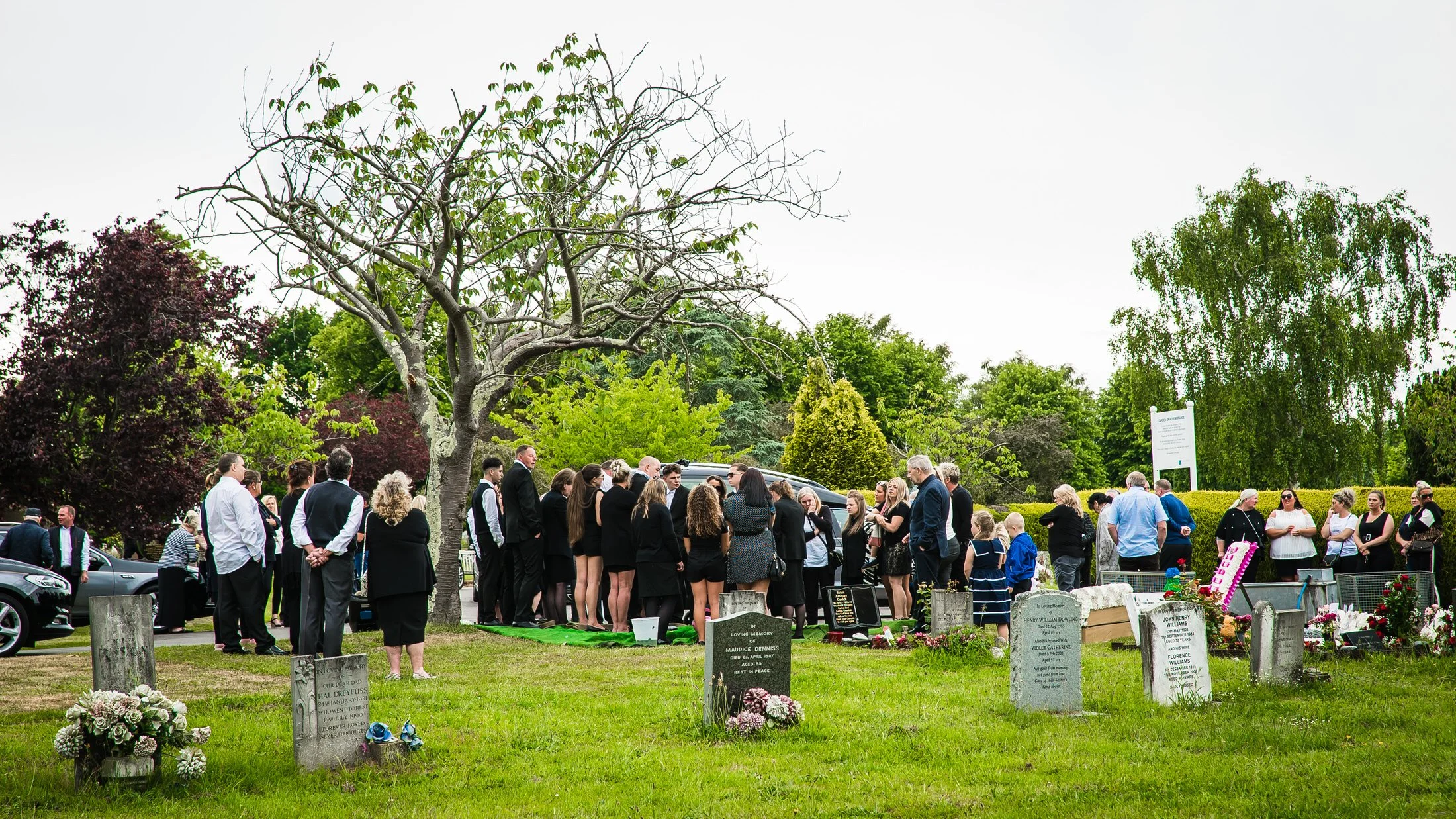
Types of Outdoor Funeral I Stream
Church Followed by a Graveside Committal
The most common type of outdoor service I stream is one that begins inside a church and then moves to a graveside — either in the churchyard directly outside, or at a separate cemetery nearby.
When this is the arrangement, timing is everything. I manage the stream at the church for the full service, then need time to move and set up at the graveside before the family and coffin arrive. In practice, this means allowing an additional 15–20 minutes between the church service ending and the graveside service beginning. This is something families and funeral directors should build into the order of the day when booking.
It helps to let your funeral director know that I will need to travel ahead to the graveside. In most cases I coordinate directly with the funeral director to make sure the timing works smoothly — that is something I am used to doing and it rarely causes complications when it is planned for.
What I typically cover at the graveside:
Guests arriving and gathering at the grave
The coffin being carried from the hearse to the graveside
The minister or celebrant's words of committal
The lowering of the coffin
Any hymns, singing or spoken tributes
Dove releases, where included as part of the farewell
The final farewell and departure
The backfilling and dressing of the grave with flowers and tributes
The recording of the full day — church and graveside — is then available as a single continuous viewing experience for those watching online.
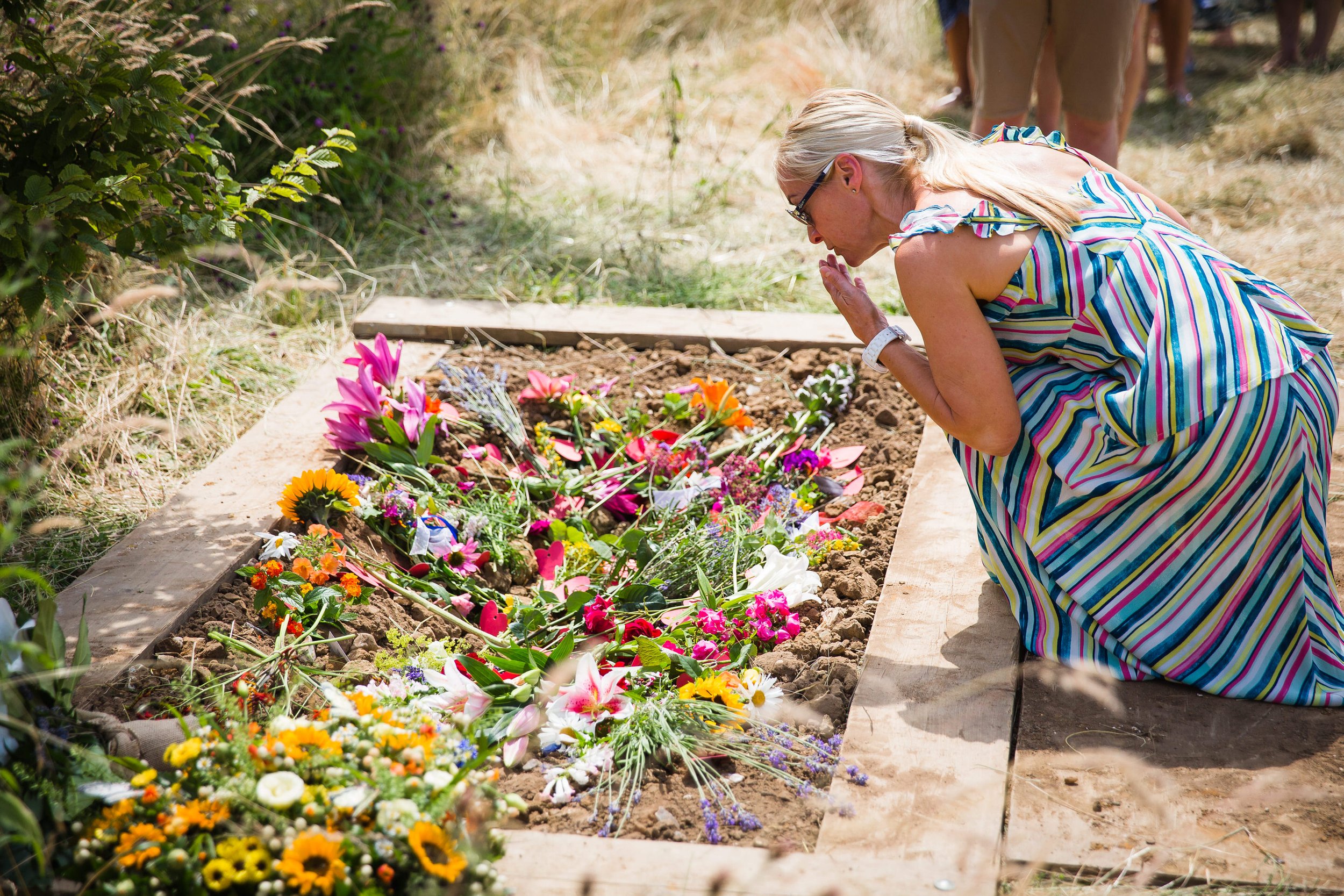
Dedicated Graveside Funeral Service
Some families choose a graveside service with no prior venue — the graveside is the entire service. These are increasingly common, particularly for families who want something more personal and outdoors-focused, or for natural and woodland burials.
For this type of service, I arrive early — well before any guests — and have everything set up and tested before the family arrives. The stream begins around 20 minutes before the service starts, giving online viewers time to connect, check their sound, and settle.
These services vary enormously in length and character. Some are short and simple. Others feel more like a full celebration at the graveside — PA systems, speakers, music, readings, catering, and gatherings that last several hours. I have covered both ends of that spectrum and everything in between.
If your graveside service includes PA equipment or external speakers, it is helpful to mention this at the time of booking so that the audio setup for the stream can be planned accordingly. I can also provide graveside audio-visual support where needed — from microphones and speakers to managing music and tribute playback alongside the live stream.
Caribbean and Jamaican Graveside Funerals
Caribbean funerals — especially Jamaican, Barbadian, Trinidadian and other West Indian services — are among the most meaningful and involved funerals I have the privilege of streaming, and they are also some of the most technically demanding.
These services often follow a church service with a full graveside programme that can last several hours. They are community events in the fullest sense — large gatherings, extended family travelling from across the world, spontaneous singing, traditional drummers, and traditions that vary by family and denomination.
Elements I commonly cover at Caribbean graveside services include:
The procession from the hearse to the graveside, often with family members carrying
Extended graveside tributes and prayers
Congregational and solo singing — often powerful, extended, and the most emotionally significant part of the day for those watching from overseas
The lowering of the coffin
The backfilling of the grave, where close family and friends help fill the grave as an act of love and respect
The dressing of the grave with flowers and tributes
For families with relatives watching from Jamaica, Barbados, Trinidad, or elsewhere in the Caribbean, the live stream is not a secondary extra — it is essential. The quality of the audio during the singing, and the continuity of coverage during a long graveside service, matters enormously to those watching from thousands of miles away.
I have extensive experience with Caribbean funeral traditions and understand the importance of capturing every part of the graveside programme, not just the formal elements. Some of the most moving services I have ever been part of have been Caribbean graveside funerals, and I feel privileged every time I am trusted with one.
You can read one family's experience in the testimonials on my funeral live streaming page, and see a real example in my Caribbean funeral case study from Bedford.
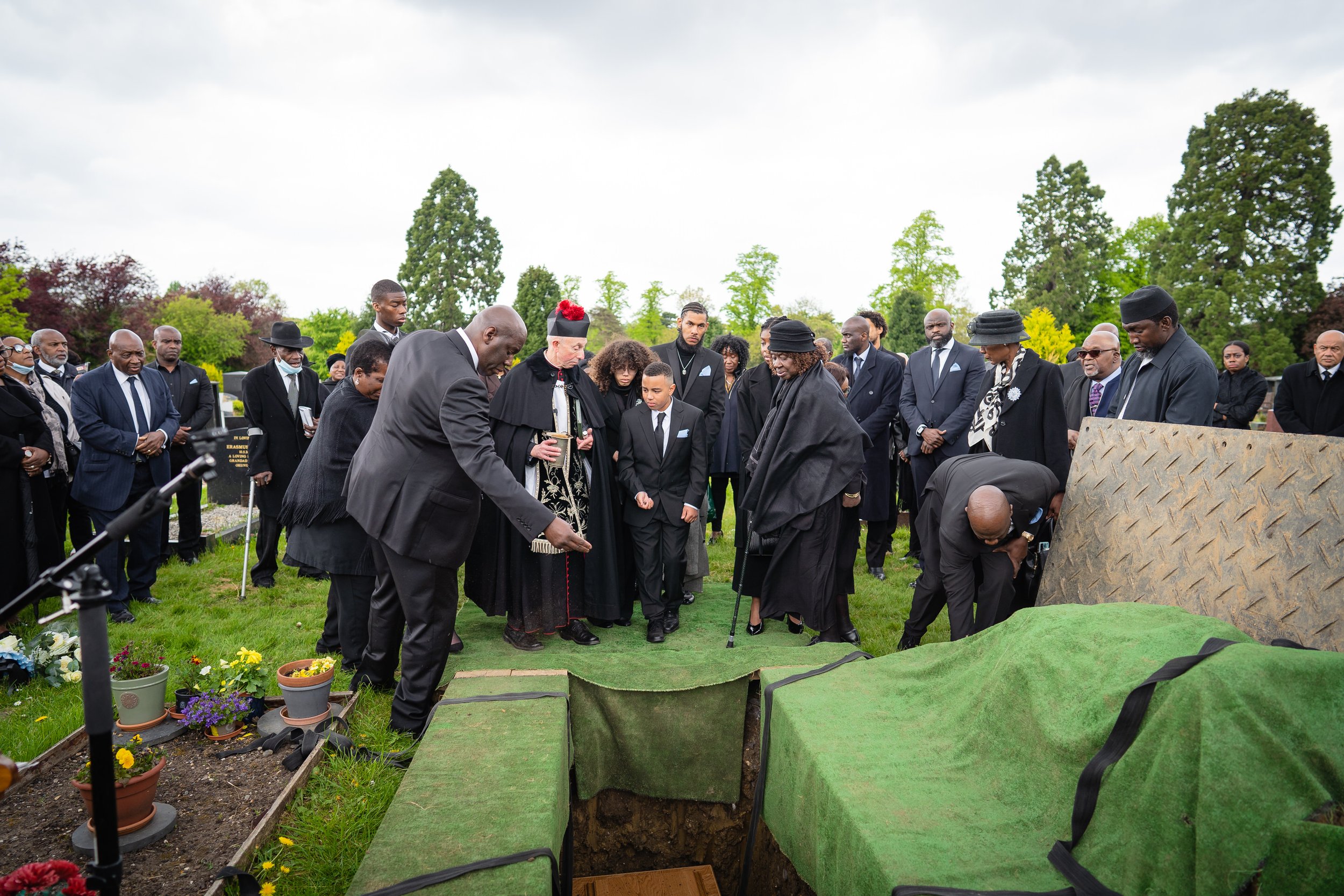
Greek and Orthodox Graveside Traditions
Greek Orthodox funerals follow a specific liturgical structure, with traditions at the graveside that are distinct from a standard Church of England or non-religious service. The graveside element typically follows a church service and includes prayers, incense, and set rituals around the lowering and the final farewell.
For family members watching from Greece or the wider Greek diaspora, having a clear, well-managed stream of these moments is deeply important — not just for the practical reason of being unable to travel, but because the graveside ritual is a significant part of how grief is held and shared within Orthodox tradition.
I approach these services with the same careful preparation as any other, taking time to understand the order of service in advance and ensuring the stream captures the traditions that matter most to the family.
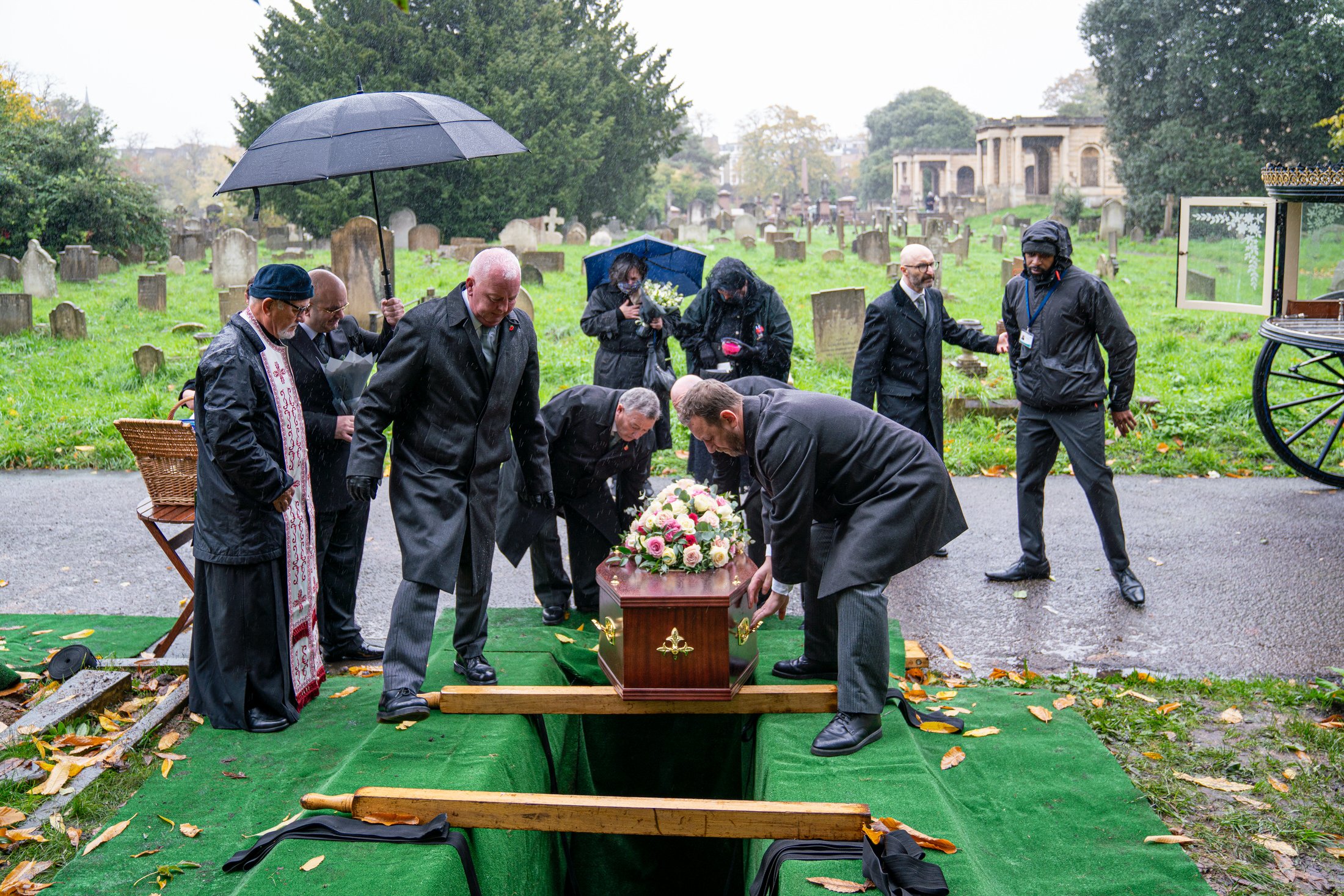
African Graveside Funerals and Celebrations
African funerals in the UK are some of the most vibrant, expressive and community-centred services I have the privilege of live streaming. They often combine deep Christian faith with traditional elements: drums, singing, call-and-response, dancing, and long periods of praise and remembrance at the graveside.
These services usually follow a church service and then continue at the cemetery, but the graveside element can feel like a full celebration in its own right. It is not unusual for the programme to last several hours, with different speakers, choirs, drummers and family groups contributing in turn. For relatives watching from Nigeria, Ghana, Kenya, Zimbabwe, South Africa and across the African diaspora, being able to follow the music, the movement and the atmosphere at the grave is just as important as hearing the words.
At African graveside funerals I typically cover:
The arrival of the hearse and procession to the grave
Drumming and singing as the coffin is carried and positioned
The formal prayers, Bible readings and tributes
Congregational singing, choirs and dancing around the grave
The lowering of the coffin
The backfilling and dressing of the grave with flowers, fabrics and personal items
Any continued singing, drumming and dancing after the burial is complete
From a technical point of view, these services demand clear audio and stable, continuous coverage. Drums and amplified music can easily overwhelm a basic microphone, so I use carefully positioned directional microphones and a two-camera setup to balance the sound and show both the close detail at the grave and the wider movement of the congregation.
You can see how this looks in practice in my African funeral case study from Hertfordshire.

DIY graveside streaming vs professional coverage
It is possible to attempt a DIY graveside stream on a smartphone — but it is not something I recommend, and here is why.
A graveside service is not a controlled environment. Wind, movement, changing light and unreliable mobile signal all work against a single-person, single-device setup. On a breezy or windy day especially, a phone or non-professional microphone will often pick up almost nothing but wind noise. The result is that the one thing families abroad most want to hear — the words, the prayers, the tributes and the singing — can be almost impossible to make out.
Beyond the technical issues, there is the question of who manages it. At a graveside funeral, every person there should be focused on the person who has died — not watching a phone screen and hoping the connection holds. If the stream drops or the sound is unusable, that person often feels responsible, while also managing their own grief.
When I am there, the family do not need to think about the stream at all. I bring equipment and backup options designed for outdoor conditions, I monitor the connection and audio continuously, and I move as the service moves so key moments are never missed. That allows the family to be fully present on one of the most significant days of their lives.
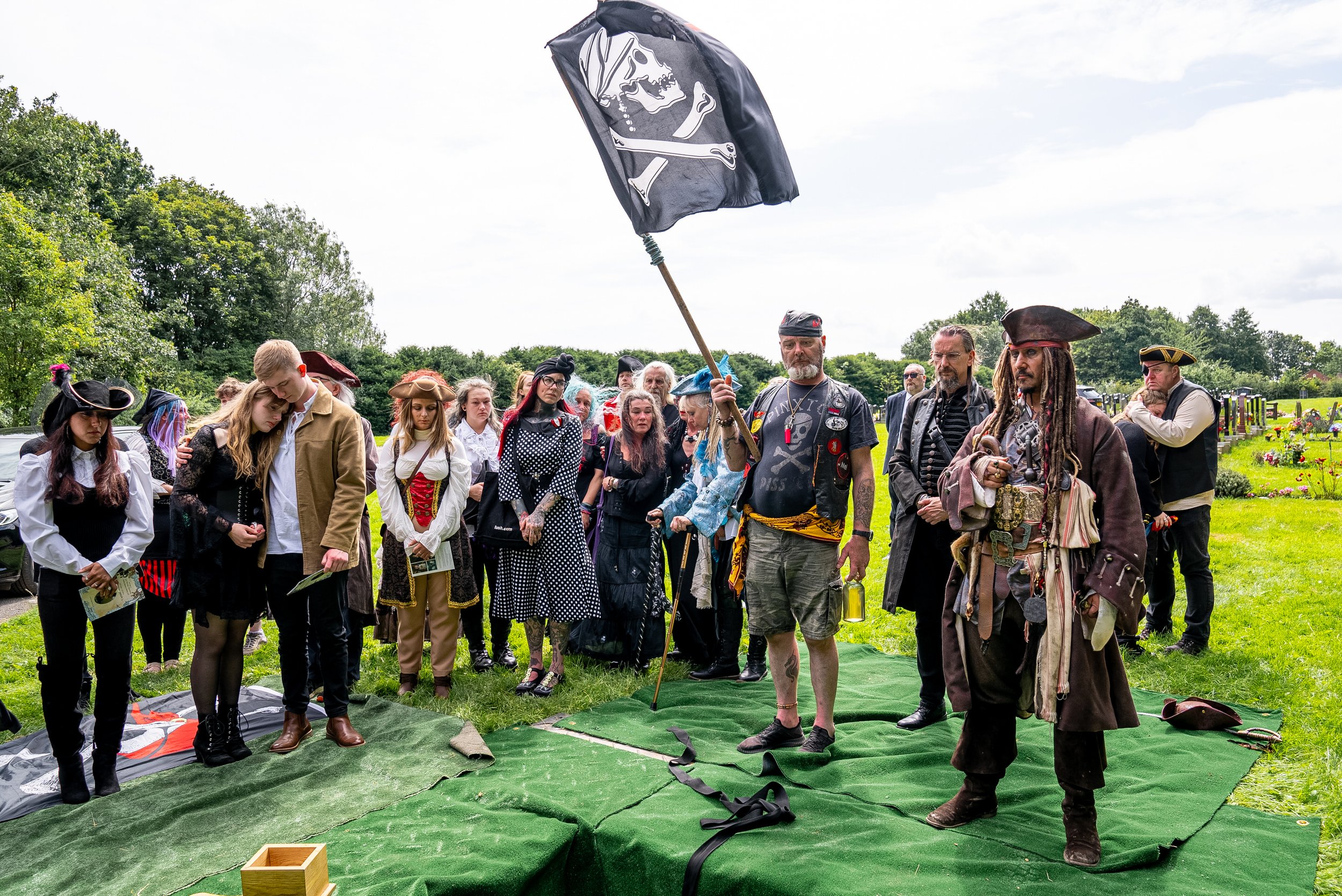
Practical Advice for Families
Book early
Funerals at cemeteries are often arranged at short notice, but the sooner you confirm streaming the better — particularly for longer services that require more detailed planning.
Tell your funeral director
Let them know I will be attending. In most cases I will liaise directly with them about timing, venue access, and any cemetery-specific requirements — but it helps if they know to expect me.
Share the link before the day
Online viewers should receive the private viewing link in advance, with a note to connect around 20 minutes before the service begins. This is especially important for viewers in other time zones.
Think about the recording
Every stream I do is recorded and remains available for private viewing for 12 months, with a high-definition download for the family to keep. For Caribbean and extended graveside services in particular, families often find the recording becomes something they return to again and again. For more on this, see my guide on can you watch a funeral live stream later?

How to Book Graveside or Outdoor Funeral Live Streaming
If you are arranging a graveside or outdoor funeral and would like to discuss live streaming, I am available seven days a week from 9am to 10pm.
Call or text me on 07772 509101, or visit my funeral live streaming page to find out more and get in touch.
With ten years of experience streaming outdoor funerals of every kind — from quiet rural churchyards to large Caribbean, African and Greek celebrations — I understand what these services mean to the families I work with, and I approach every one with the care, reliability, and discretion they deserve.
Related guides:
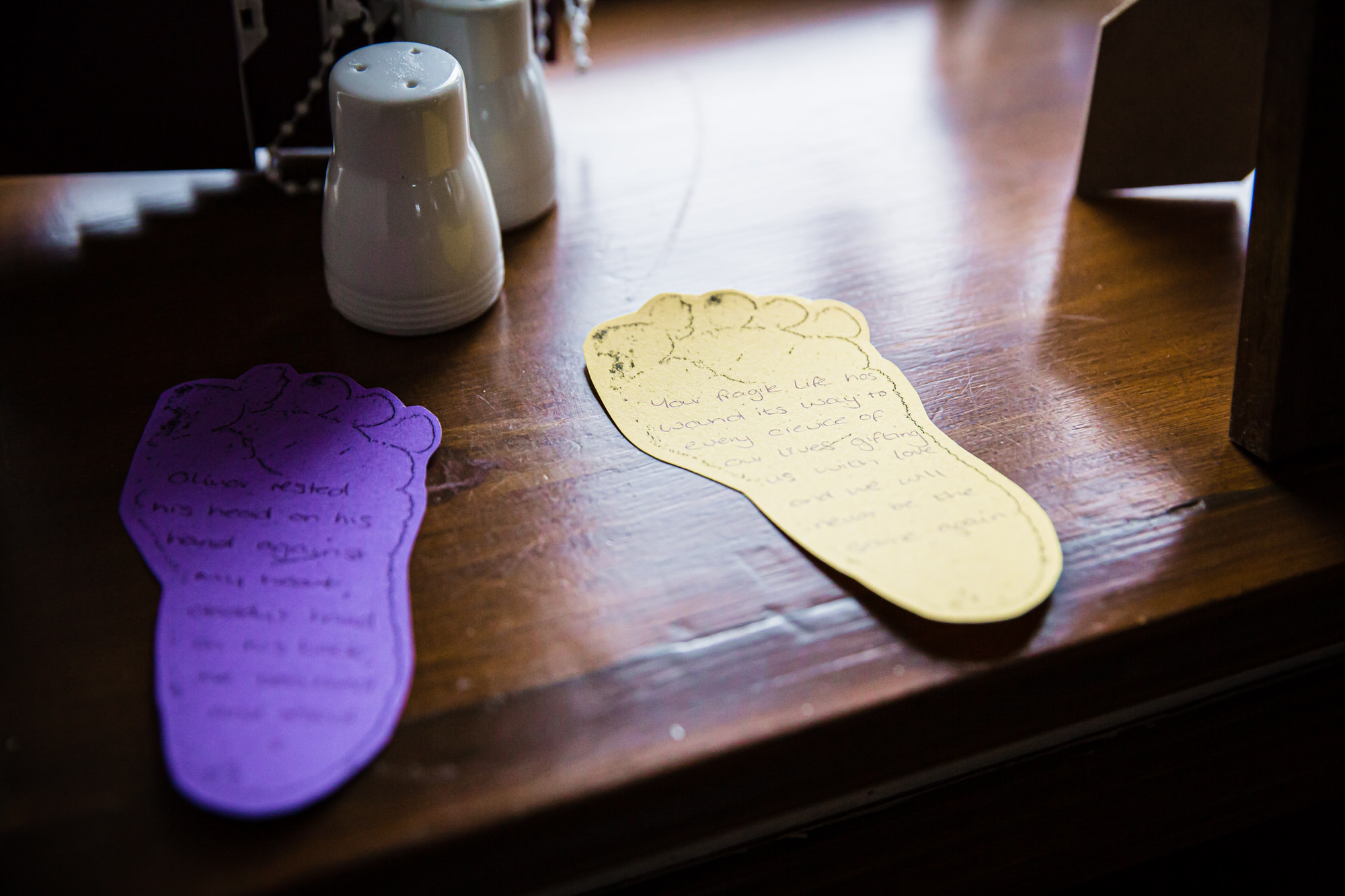
Photographing a Baby's Funeral — A Guide for Bereaved Parents
If you are reading this, you are almost certainly going through something no parent should ever have to face. I want to begin by saying that there is no pressure here, and no right or wrong answer to the question of whether to have photographs at your baby's funeral or memorial. This guide exists simply to help you think it through, in your own time, with as much information as you need.
I'm Shaun, and I've photographed baby, infant and child funerals across the UK for over ten years. It is among the most sensitive work I do, and I approach it differently from any other kind of funeral. This guide explains how, and shares the story of one family — Oliver's family — who were kind enough to allow me to share their experience so that other parents might find some reassurance in it.

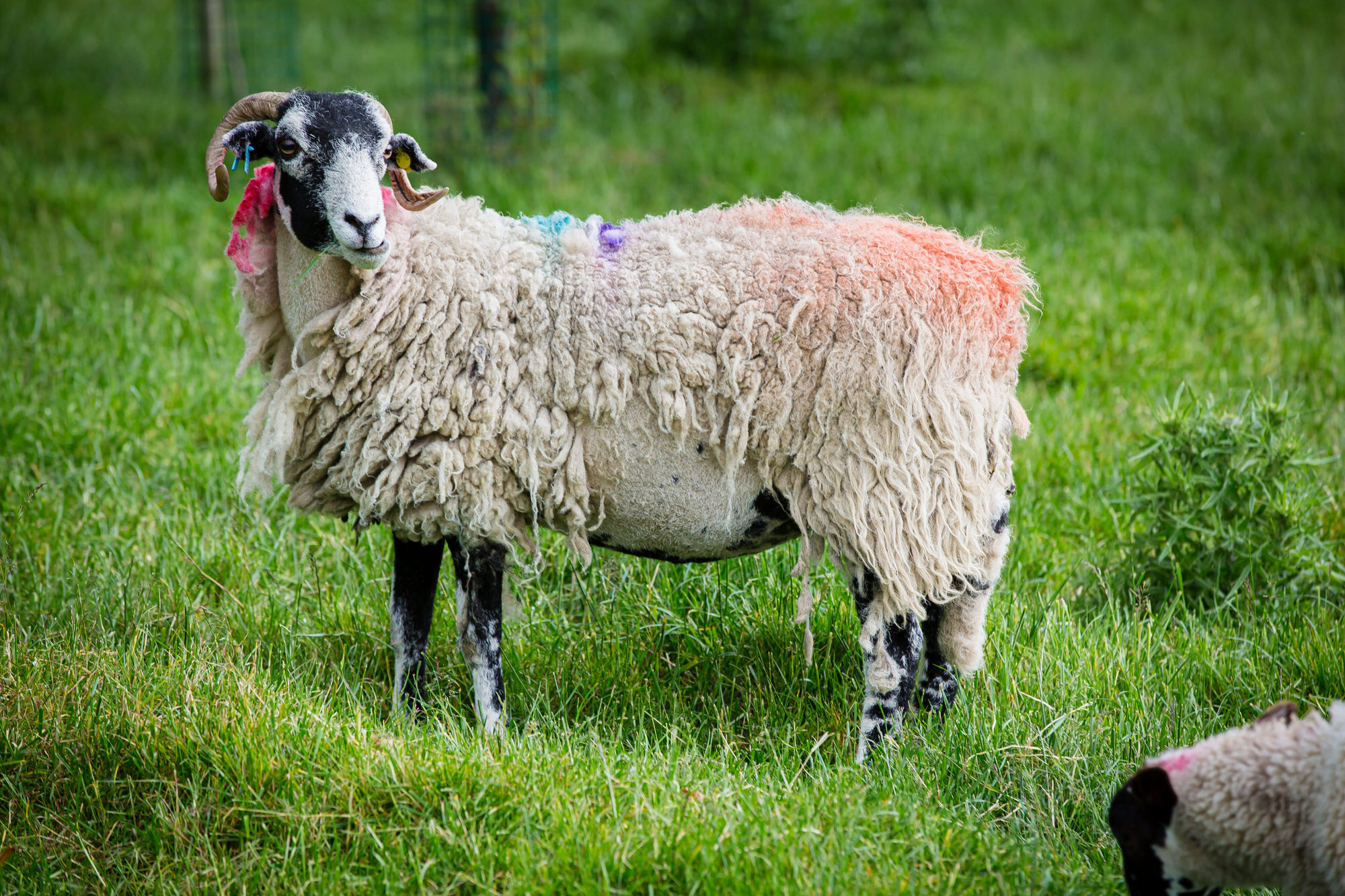
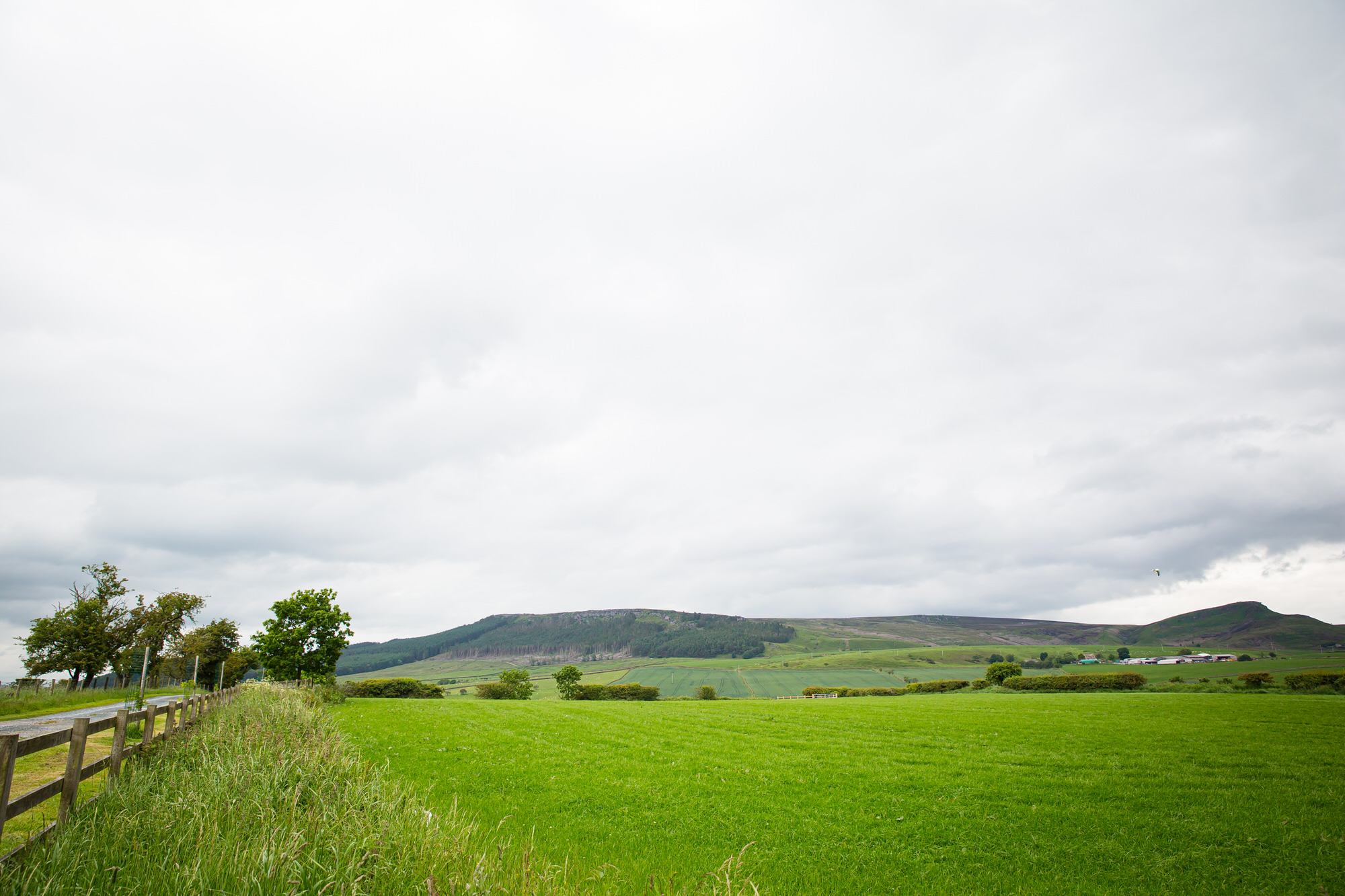




























Should I Have a Photographer at My Baby's Funeral?
This is the question most parents start with, and it is the right question to ask. The honest answer is: only if it feels right for you. There is no obligation, and no standard answer.
What I can tell you is what families have told me afterwards. Almost every family I have photographed in this situation — babies born sleeping, infants who died shortly after birth, young children and teenagers — has said the same thing: they are glad they did it, even though they weren't sure at the time.
The reason they give is usually something like: "The day went by so fast, and I can barely remember it. The photographs gave it back to me."
Grief does something to memory. The emotional weight of the day, the shock of still being in it, the exhaustion of holding everything together — it means that the detail often slips away faster than parents expect. What felt vivid in the moment becomes hazy within days. Funeral photography helps to preserve what memory cannot hold.
They also serve a longer purpose. Many families speak about wanting their child's siblings to have something tangible — images that show the day, the love, the people who came, the place where they said goodbye. Children who were too young to understand at the time, or not yet born, will one day want to know what happened. The photographs become part of how a family tells that story.
How Is Photographing a Baby's Funeral Different?
Baby and infant funeral photography requires a completely different approach from any other kind of service.
I take my lead entirely from the parents.
Before the day, I spend time understanding what they want — which elements they want photographed, which they want to remain private, whether they want images of their baby, who else will be present and how they feel about the camera. Nothing is assumed. Everything is guided by the family.
I move more slowly and more carefully.
At a baby's funeral, there is no moment where I am thinking about the next shot or moving to a different position. I am present, attentive, and responding to what is happening in front of me — not managing a shooting schedule.
I photograph more of the surroundings and gentle details, and less of close-up expressions.
Unless the family has specifically asked for something different, my instinct is to capture the environment, to tell the story of the day — the flowers, the toys, the personal items, the hands of the people gathered — rather than zooming into faces during the most private moments of grief. This produces images that are tender and honest without feeling intrusive.
I lower the camera entirely during the most private moments.
There are times at any funeral where the right thing to do is simply to stand back and let the moment be. At a baby's funeral, this instinct is stronger. I never push to capture something. If it feels too private, I don't photograph it, and I never ask anyone to repeat or recreate a moment.
I am ready not to photograph at all if that's what's needed.
On some days, things change. Parents may feel differently when the moment comes. That is completely understandable and I respect it entirely.
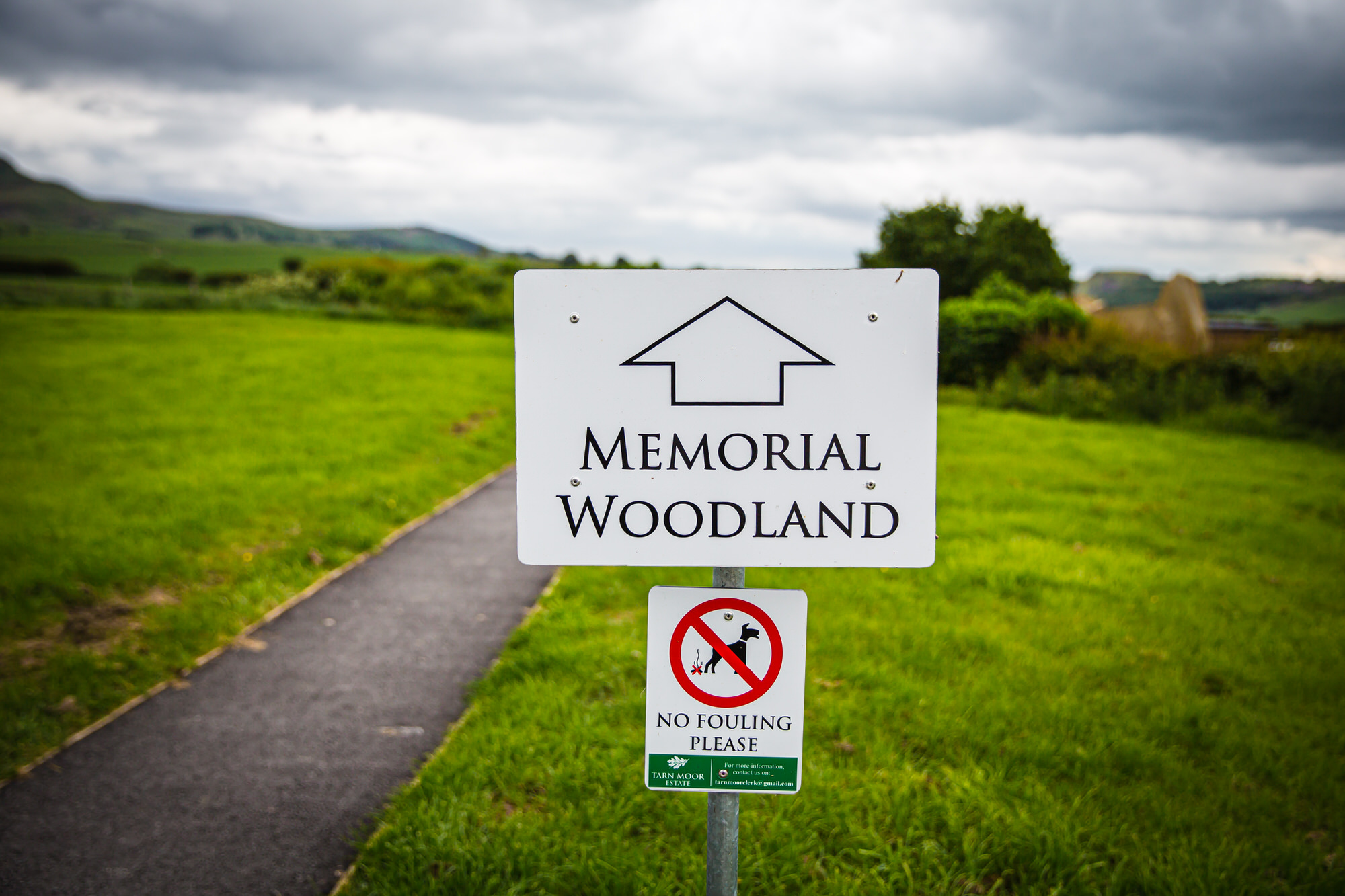
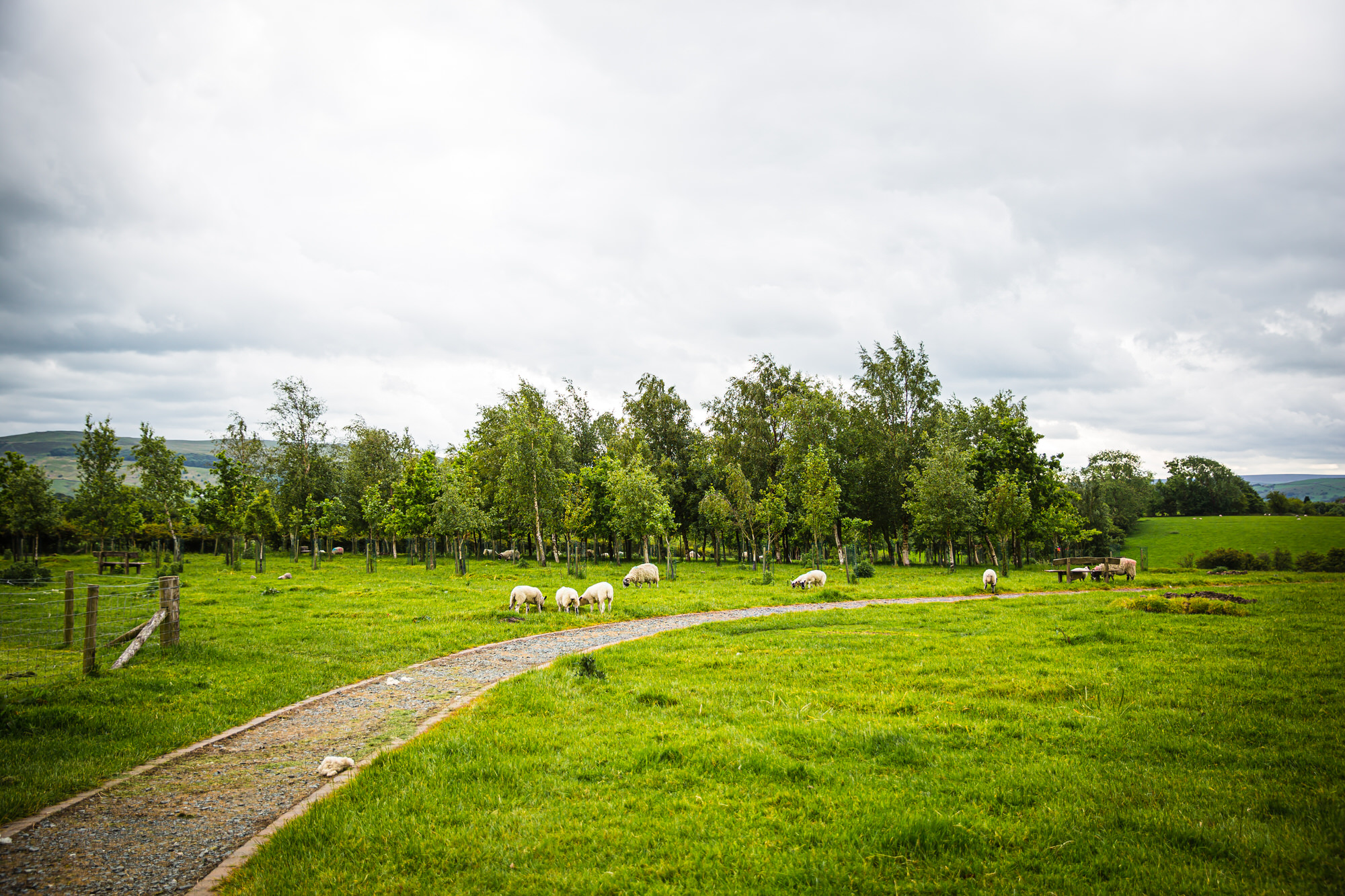
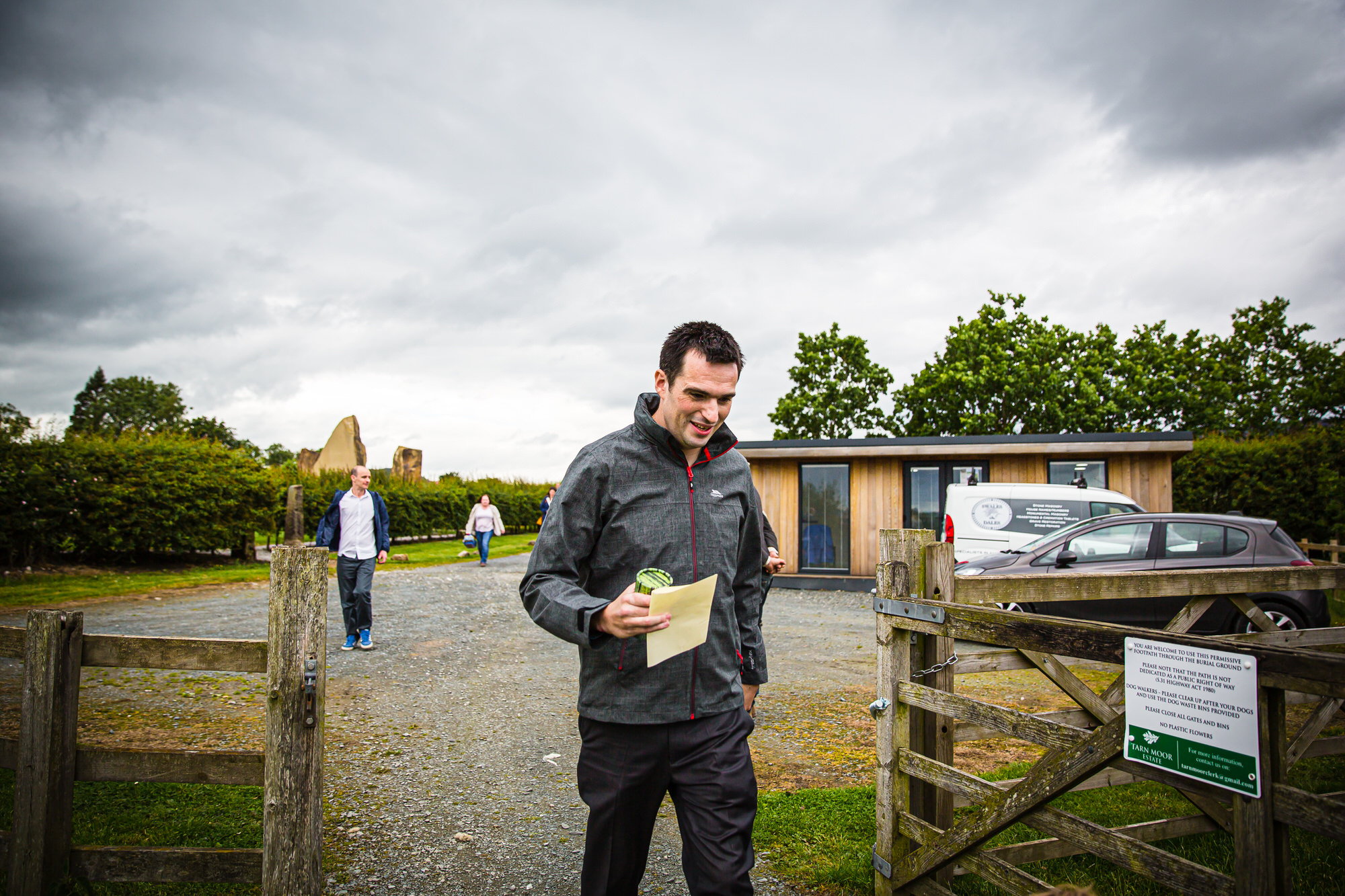
Oliver's Story — Tarn Moor Memorial Woodland, Skipton
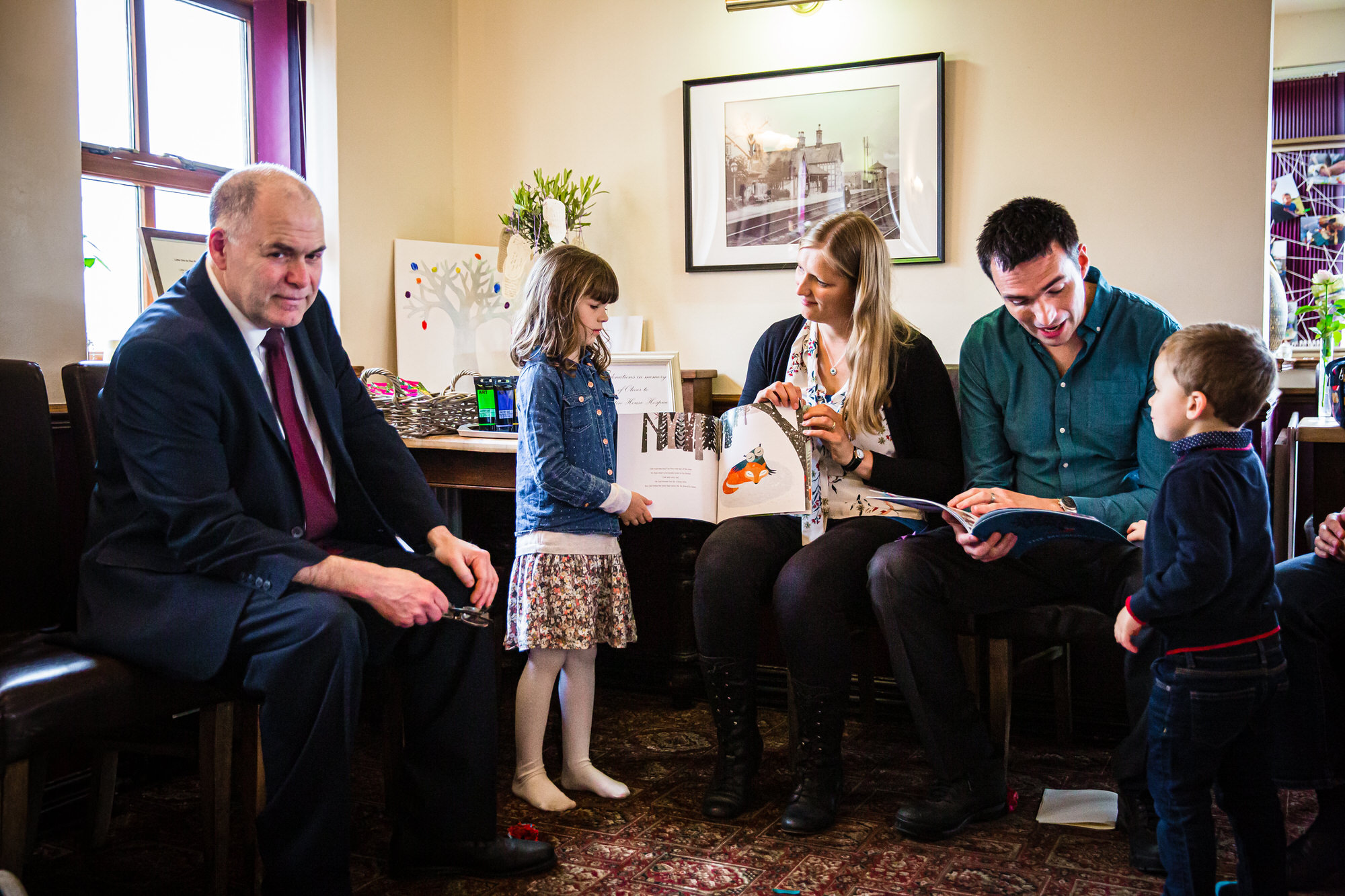
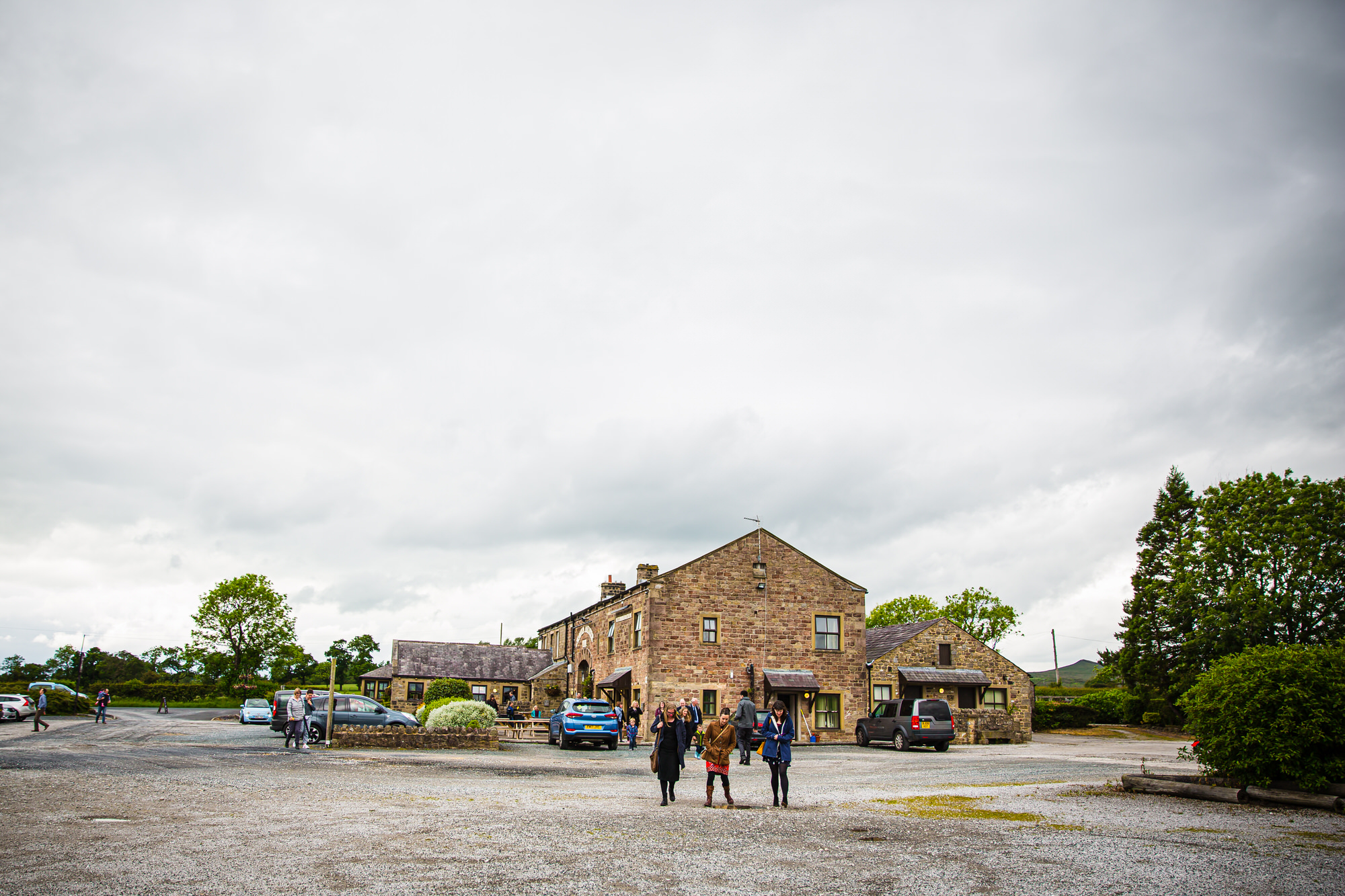
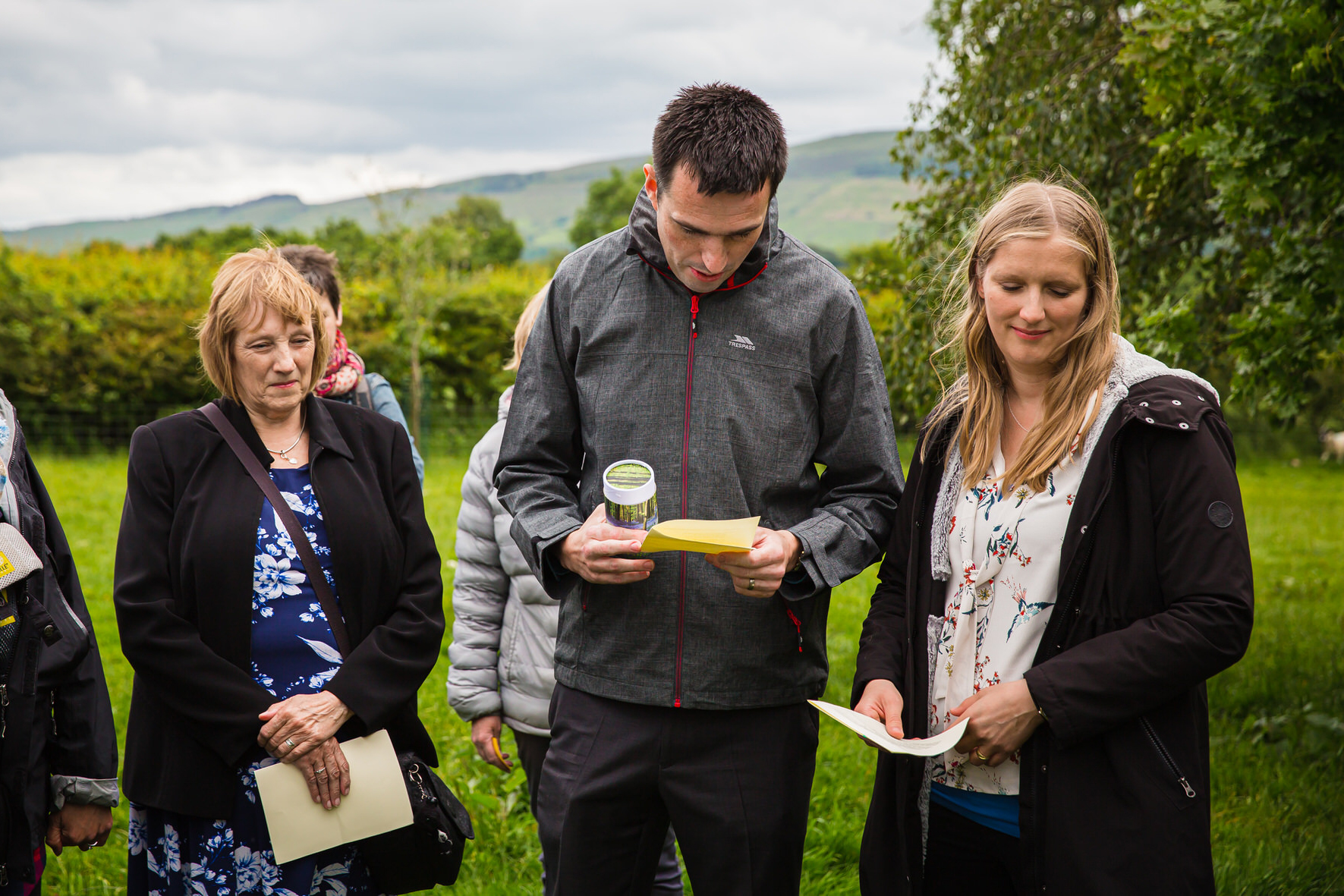
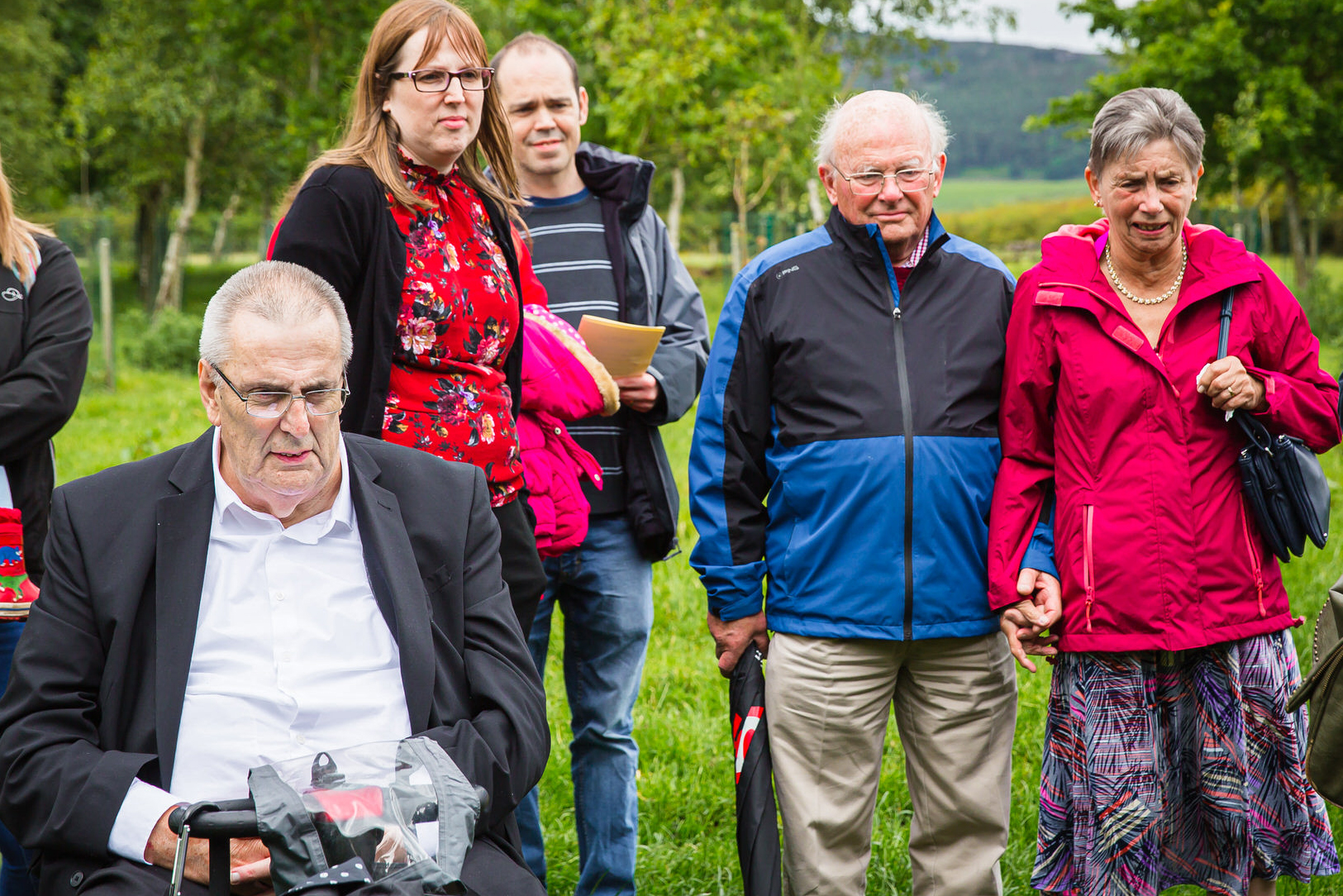
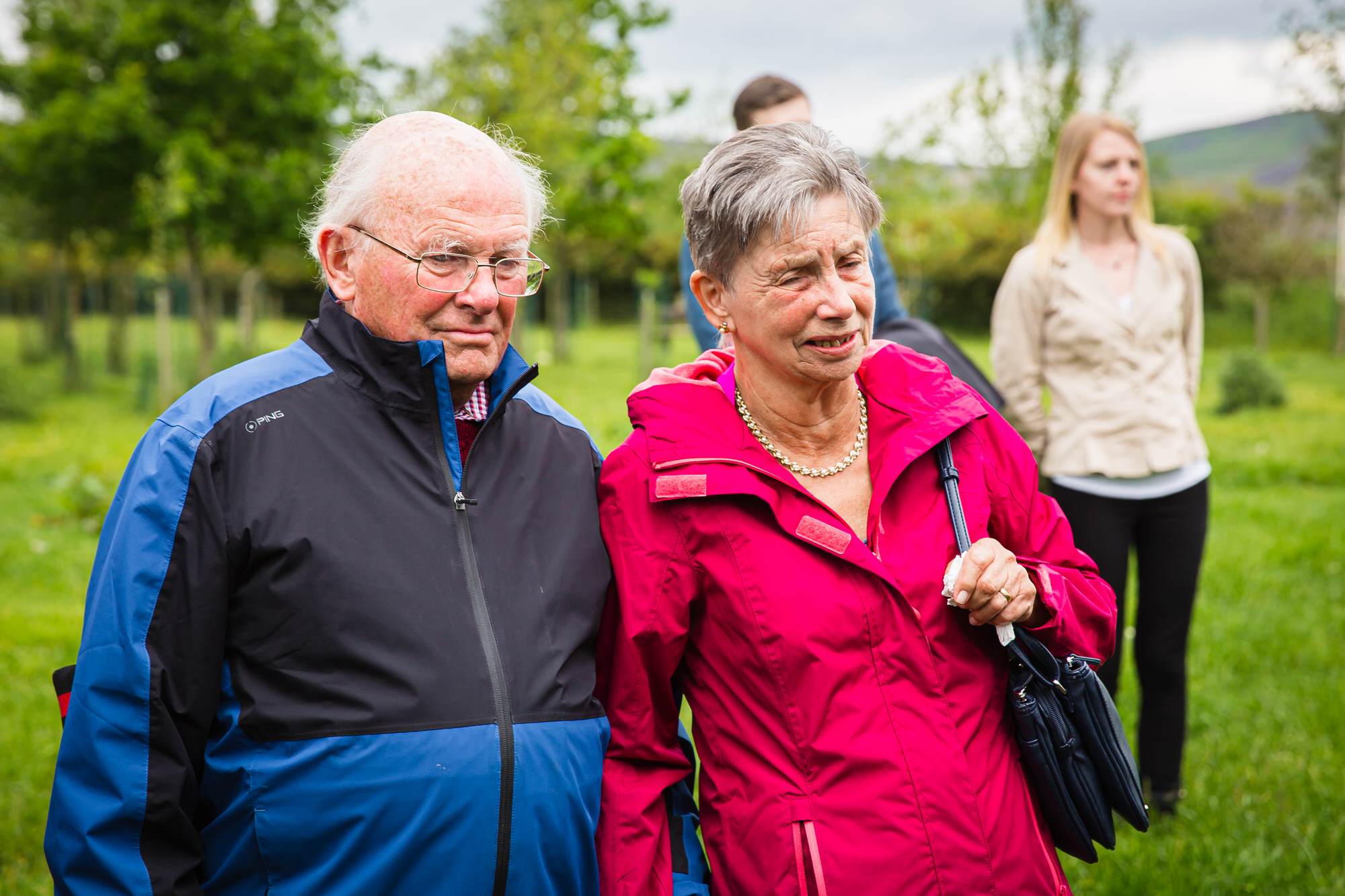
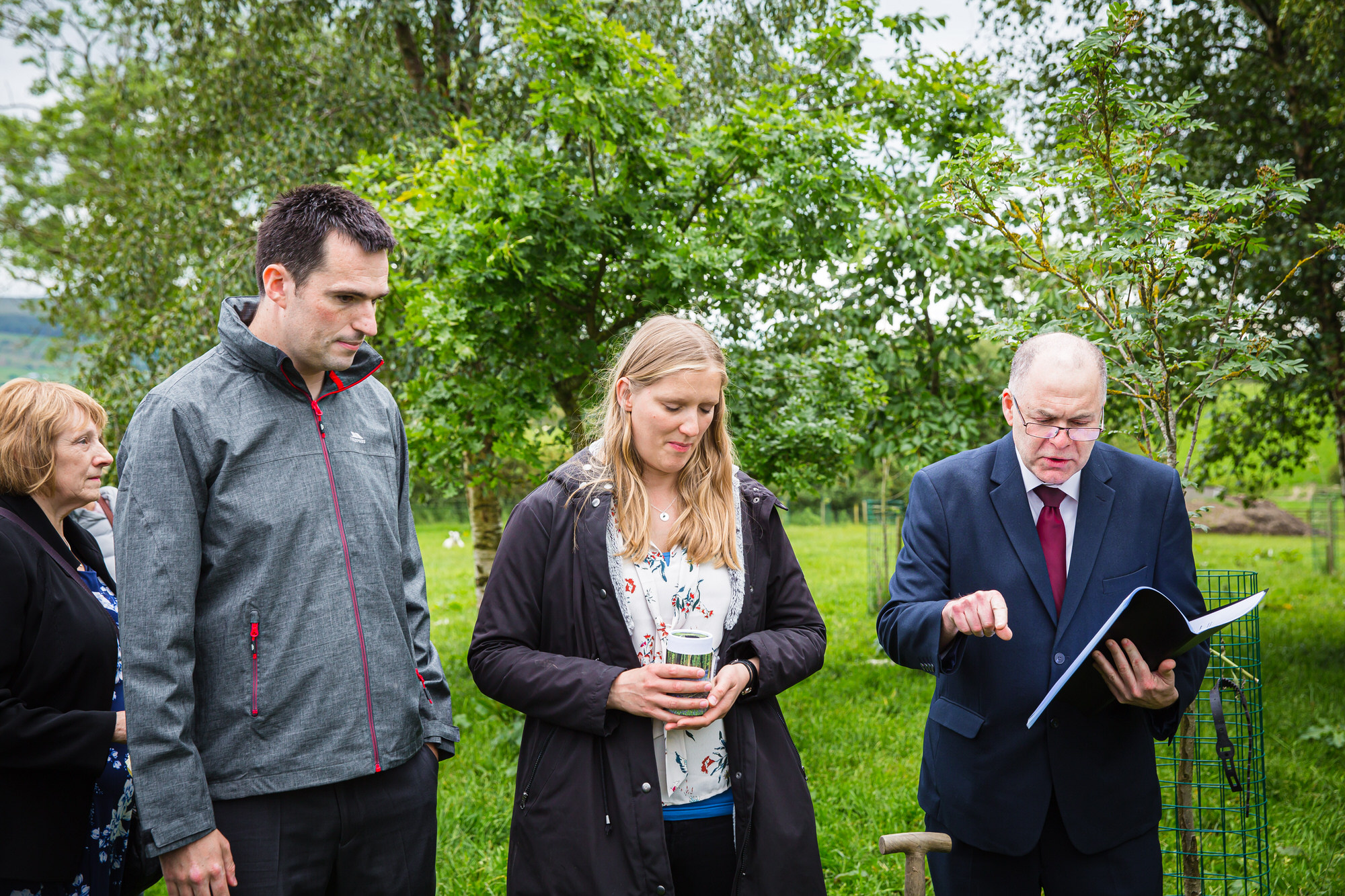
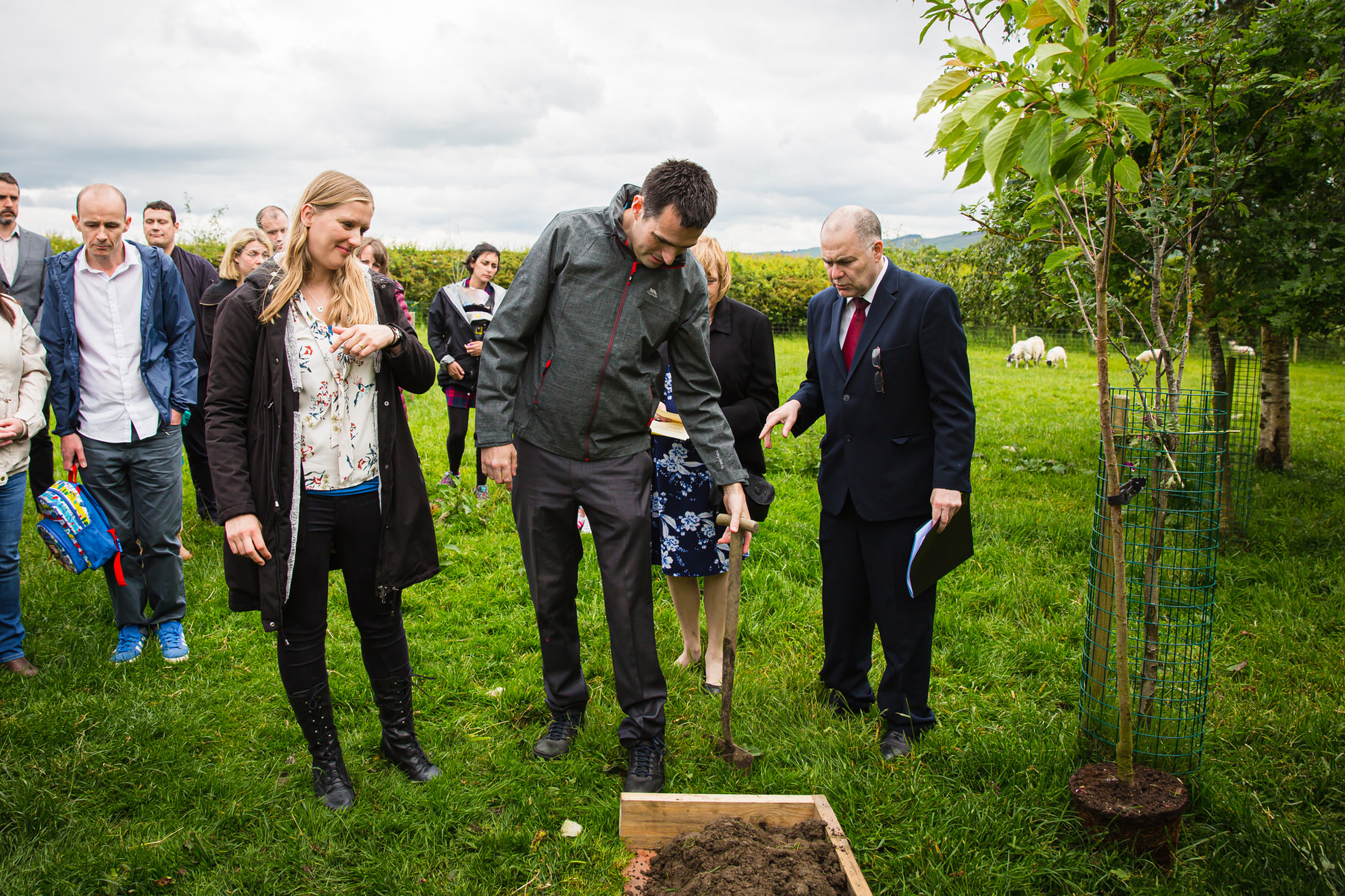
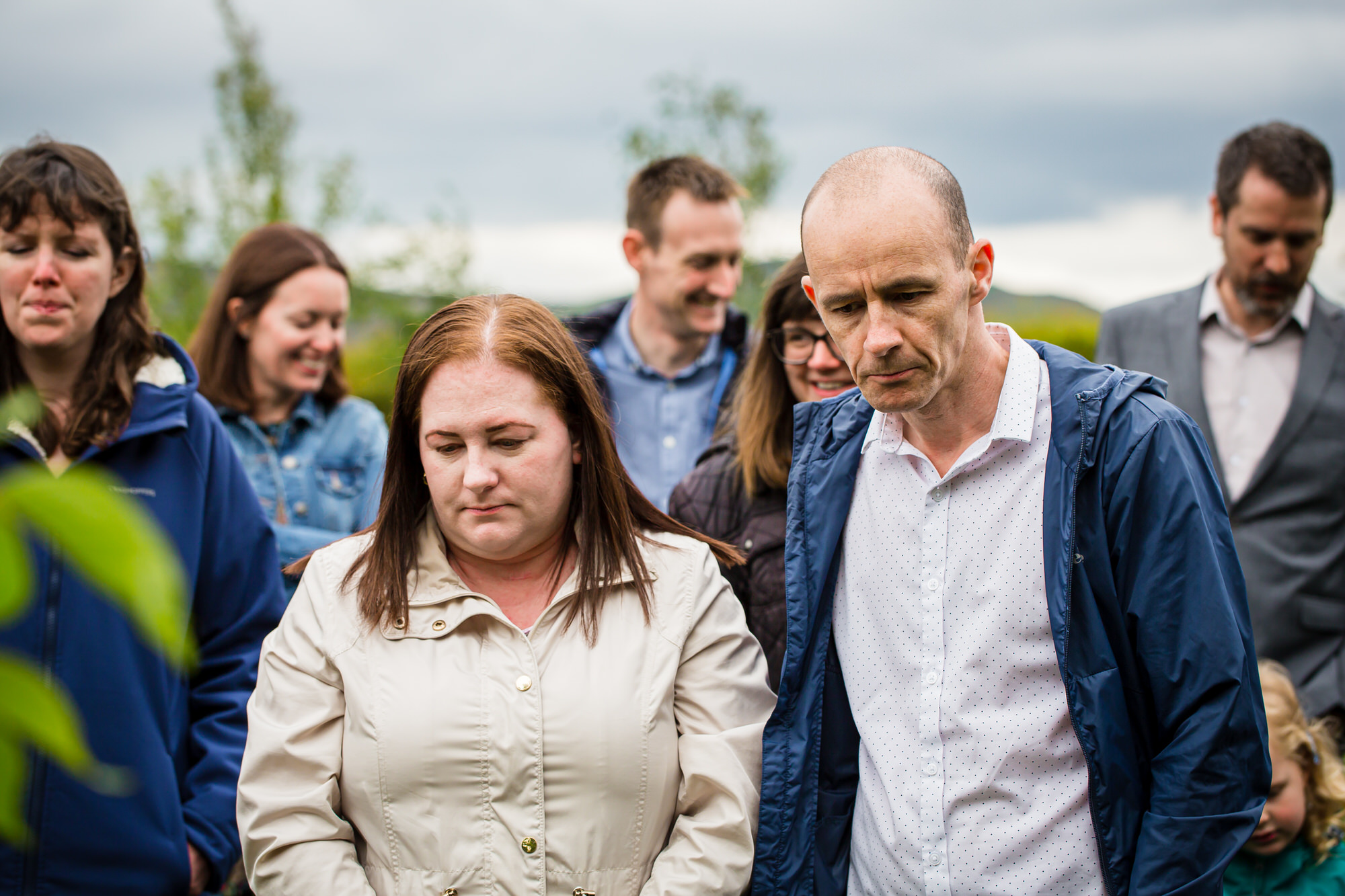
Thank you to Oliver's family for allowing me to share their experience. It was an absolute privilege to travel to Skipton to photograph his ceremony at Tarn Moor Memorial Woodland, and their words have since helped many other families facing the same decision.
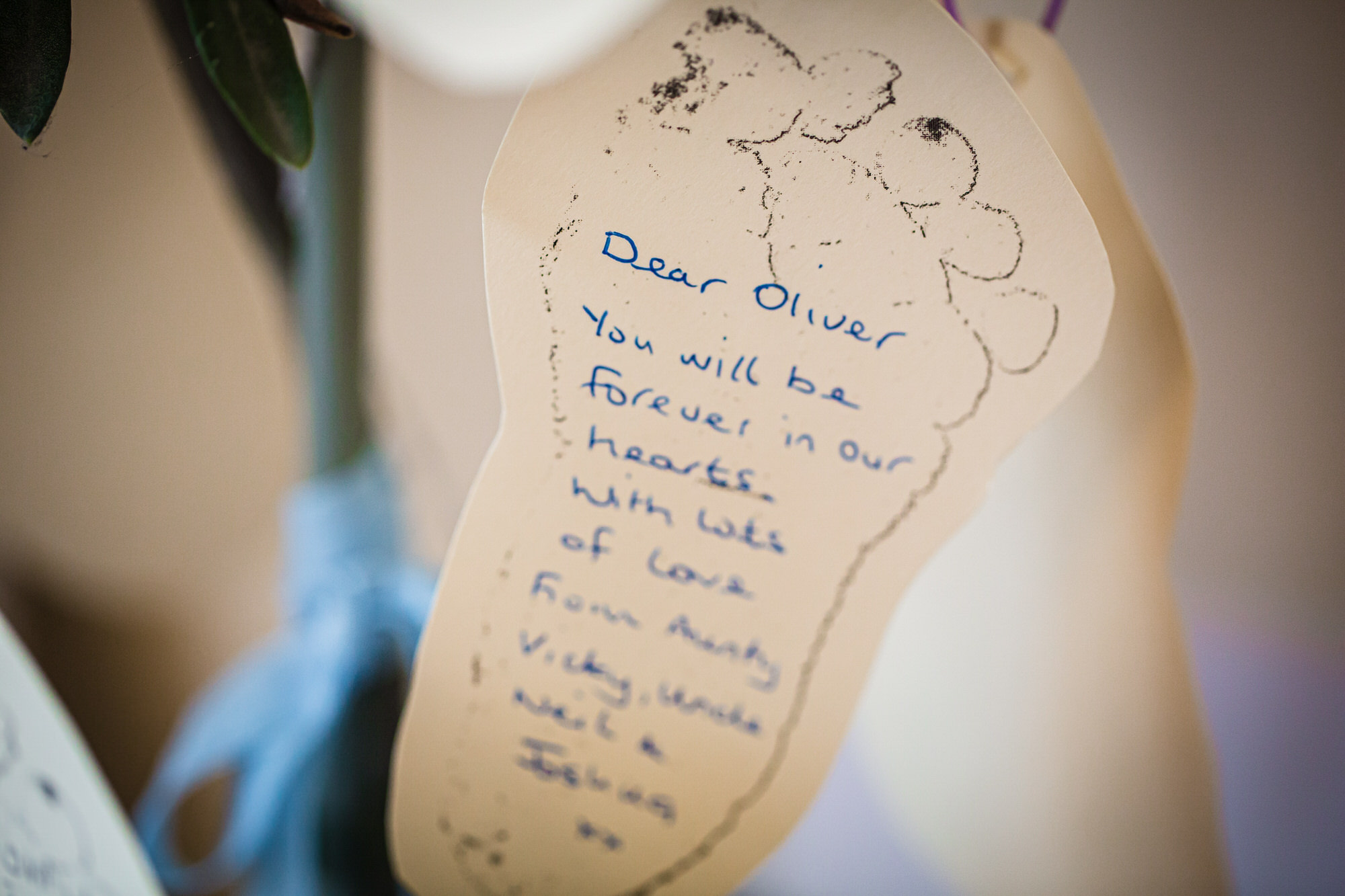
Oliver was born sleeping. His ceremony was designed to give his family and friends space to remember him, to say his name out loud, and to come together around his big brother.
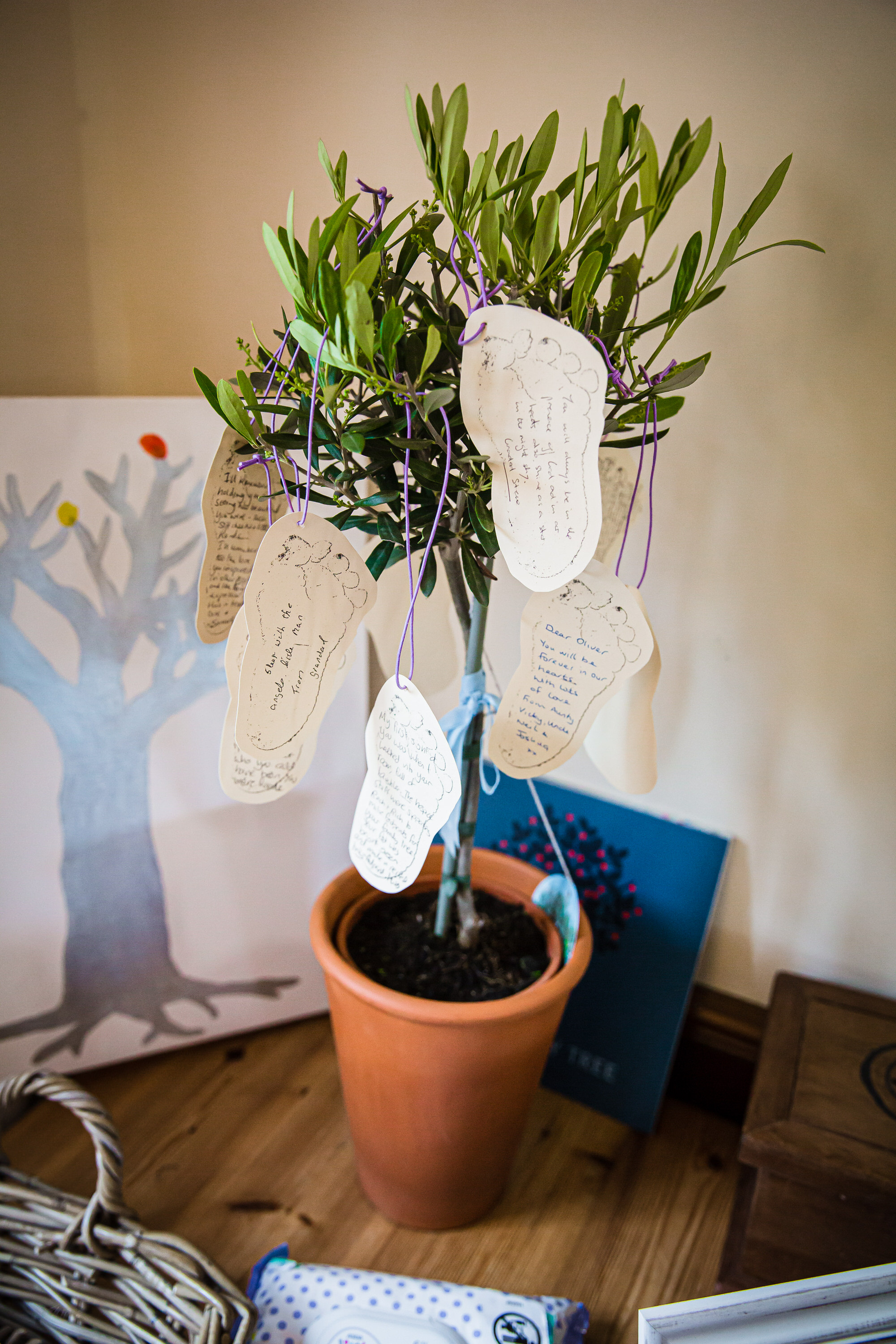
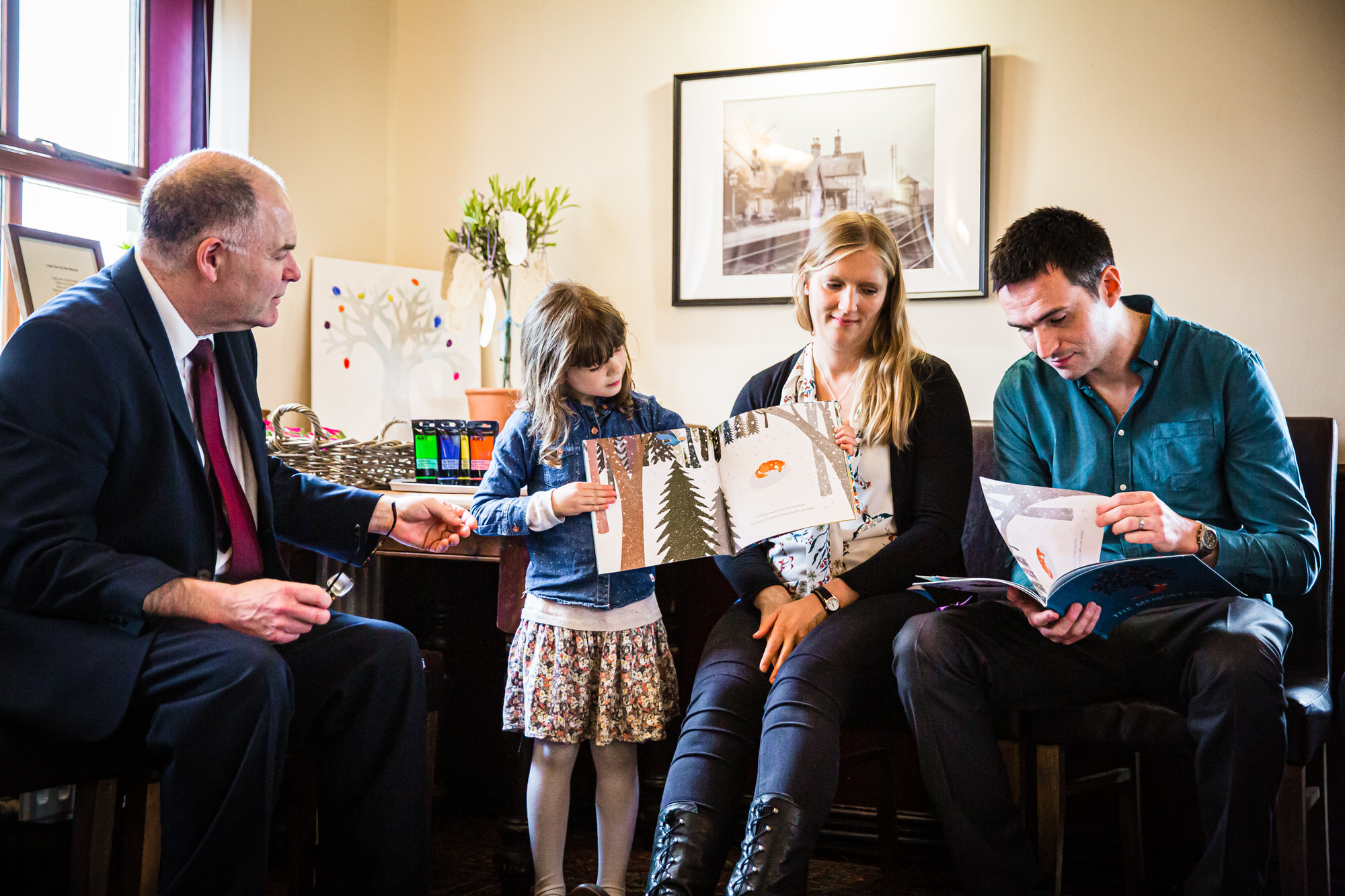
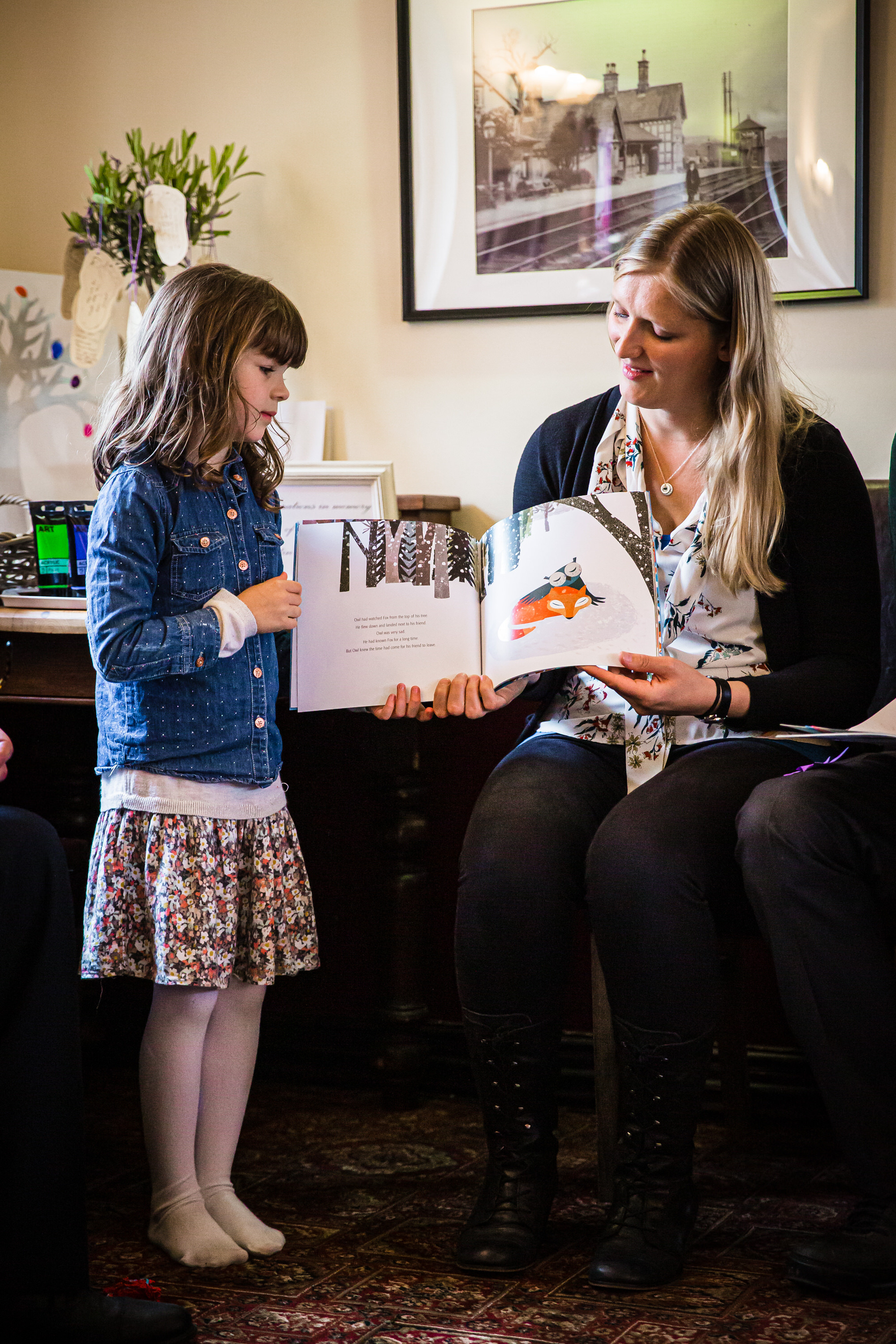
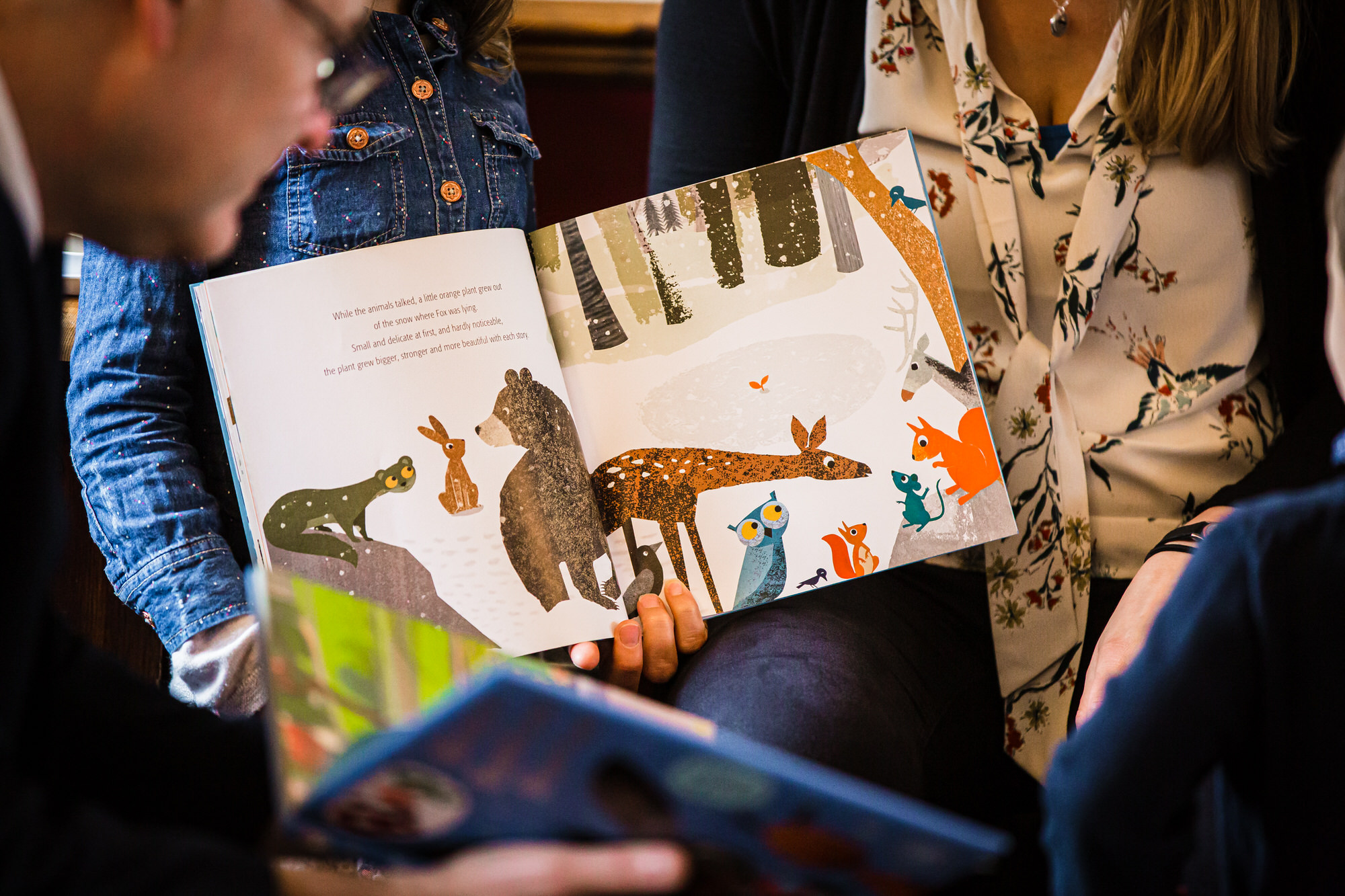
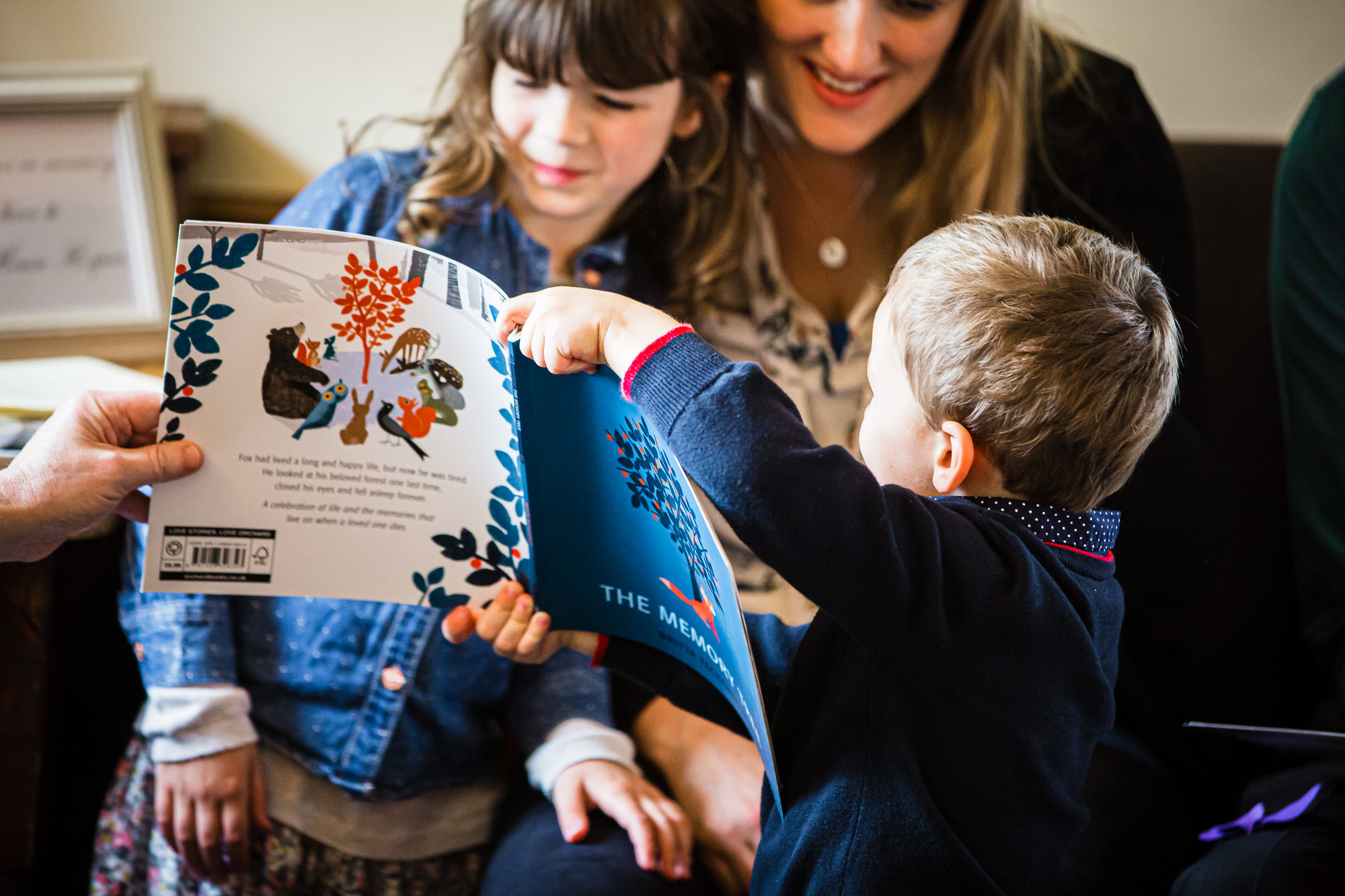
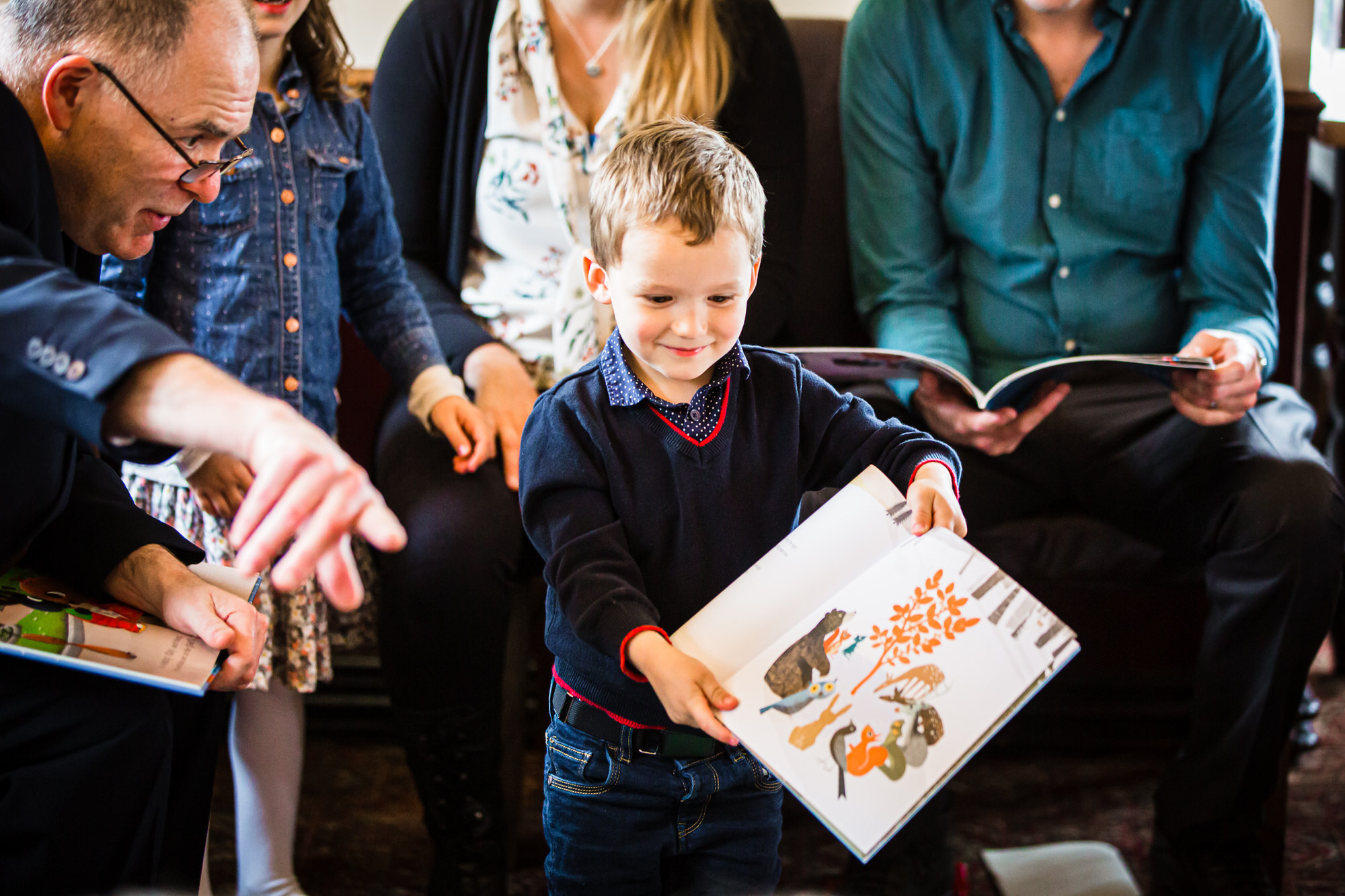
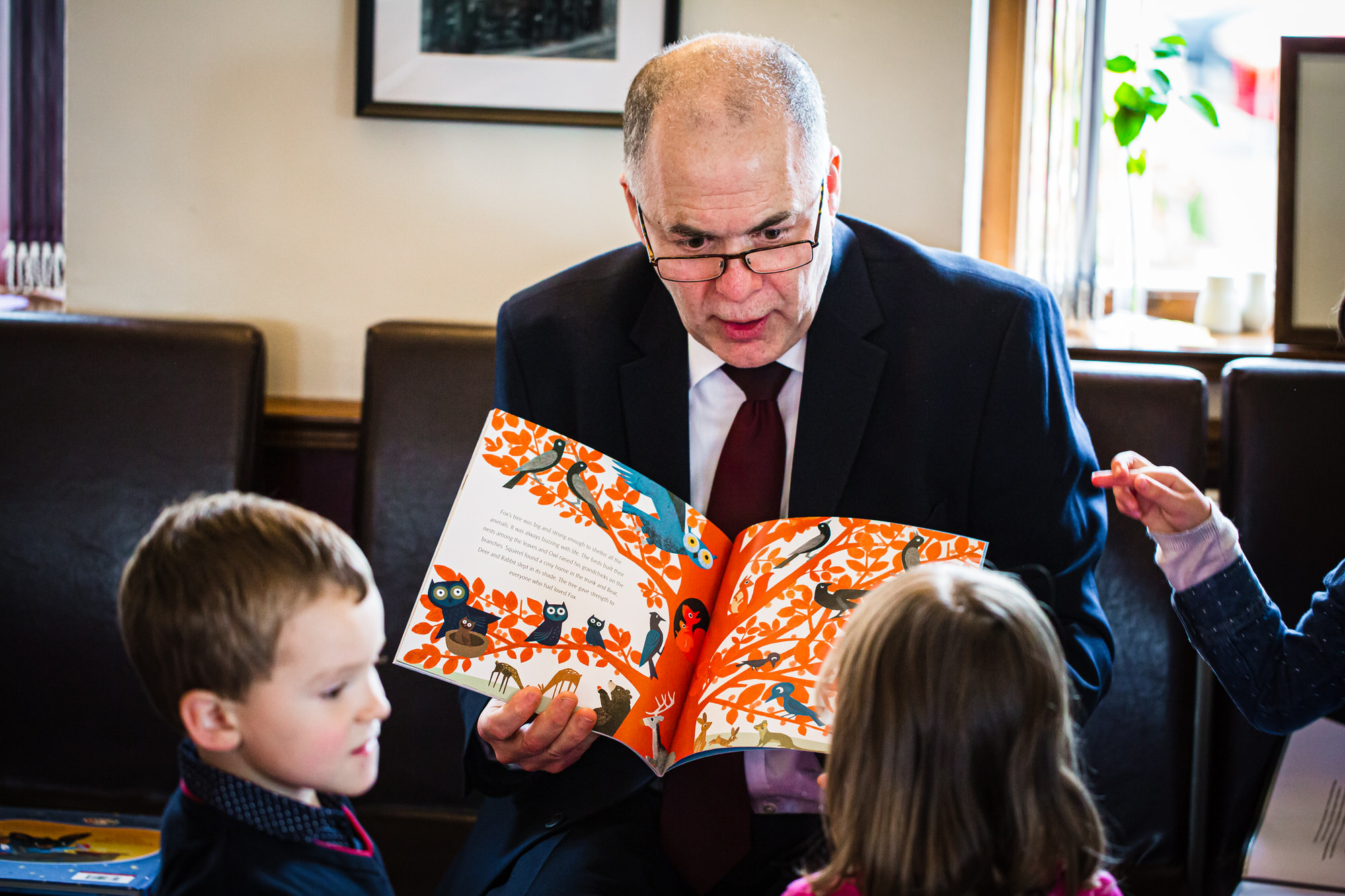
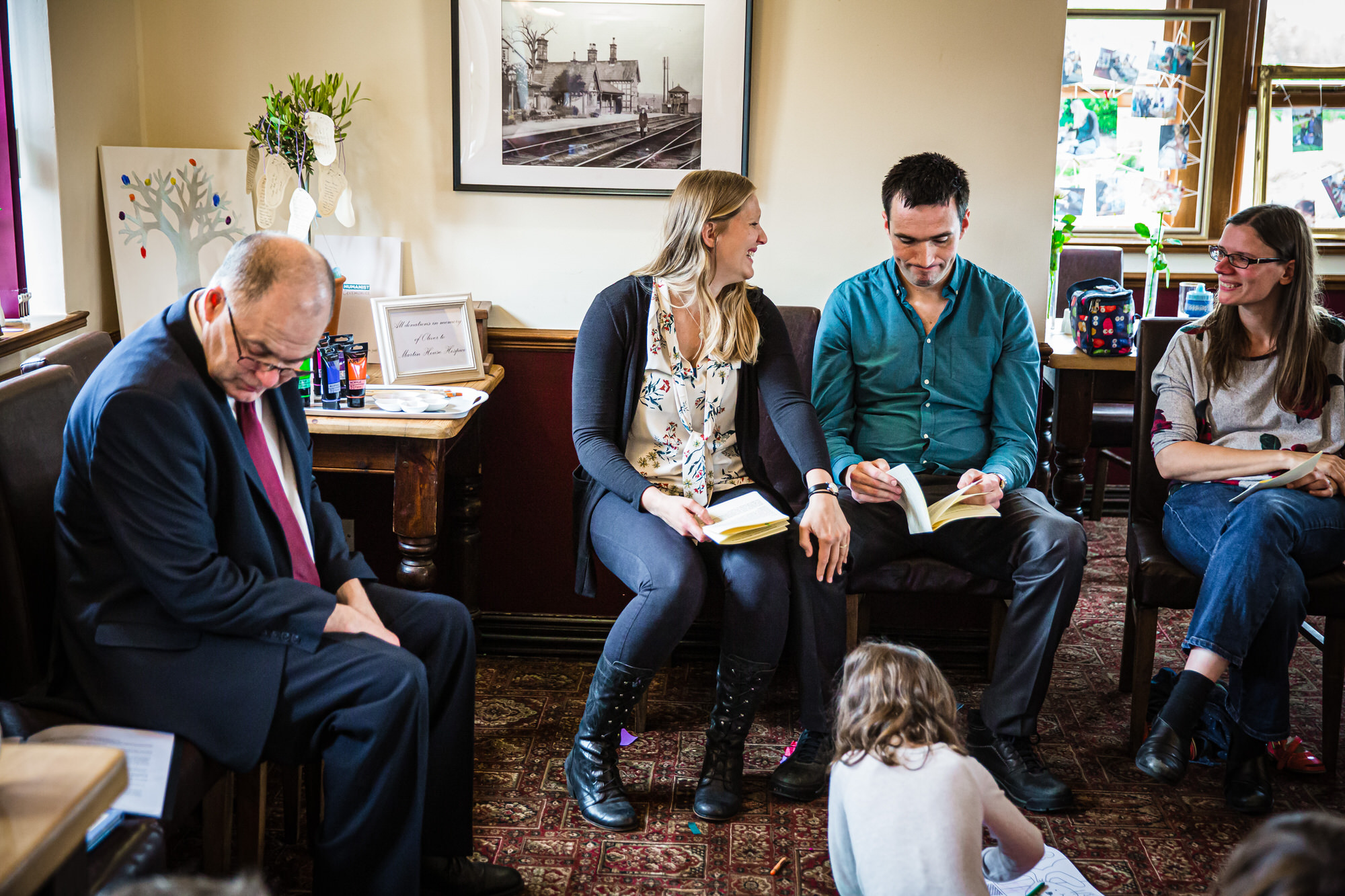
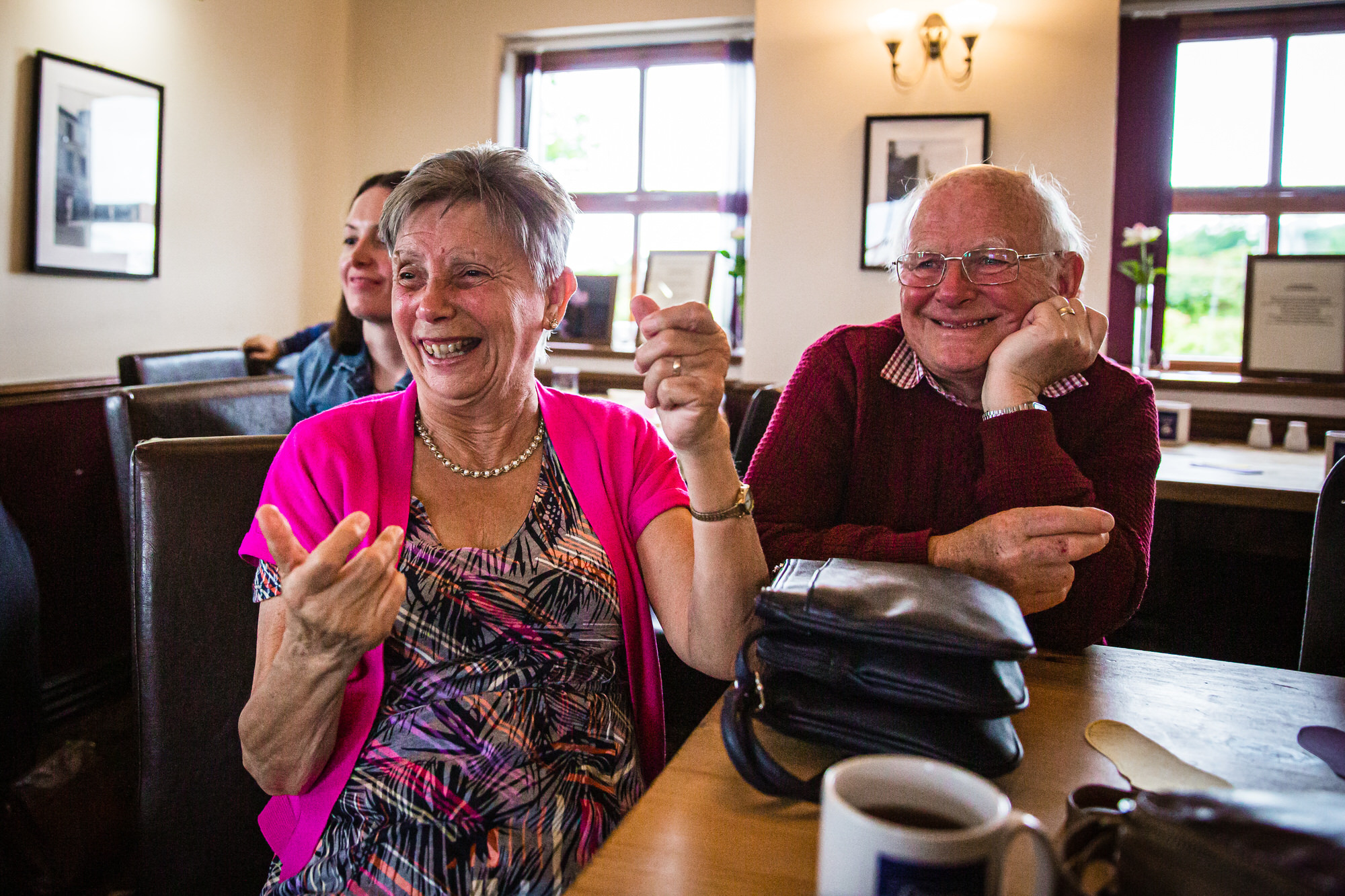
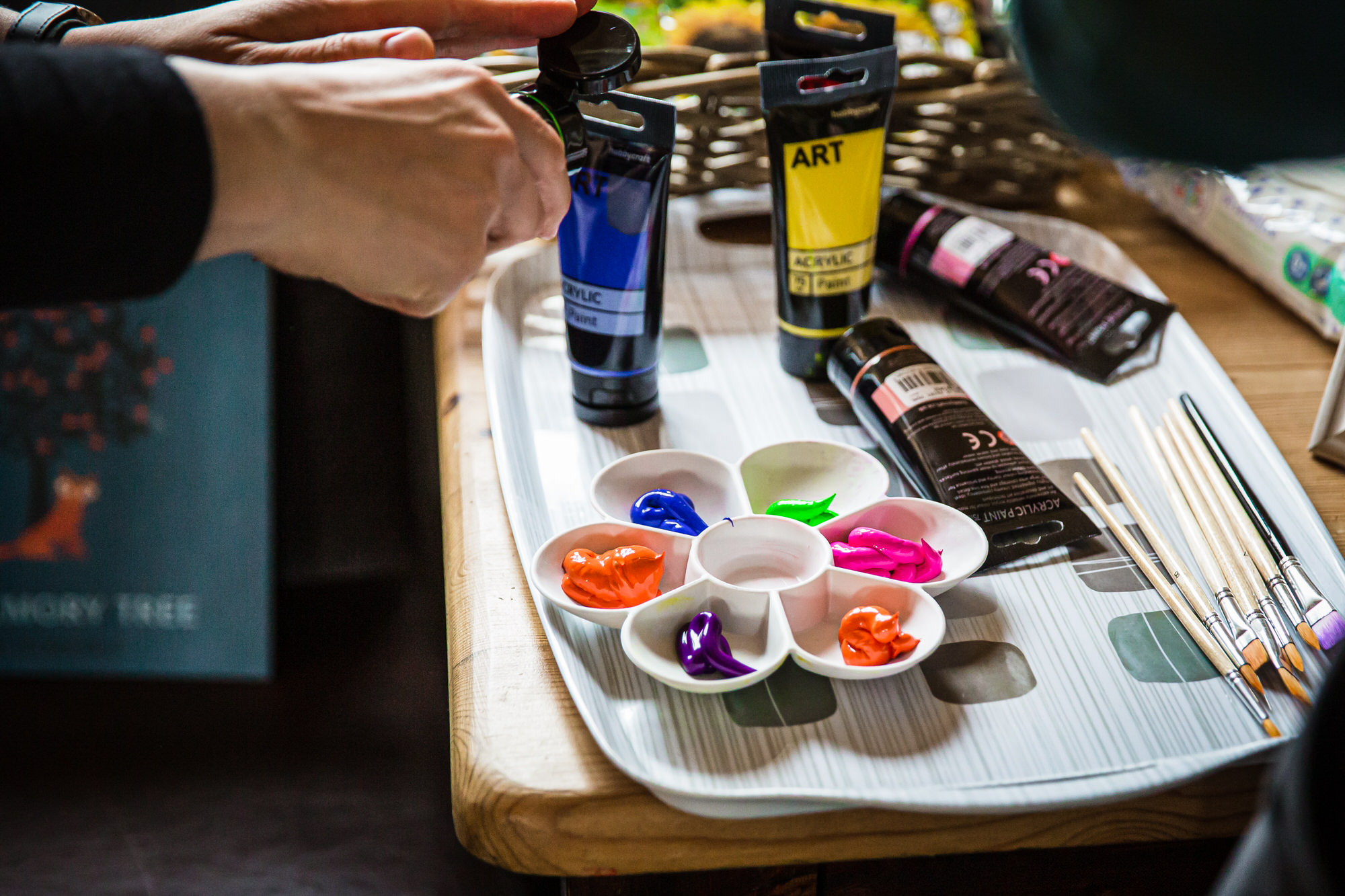
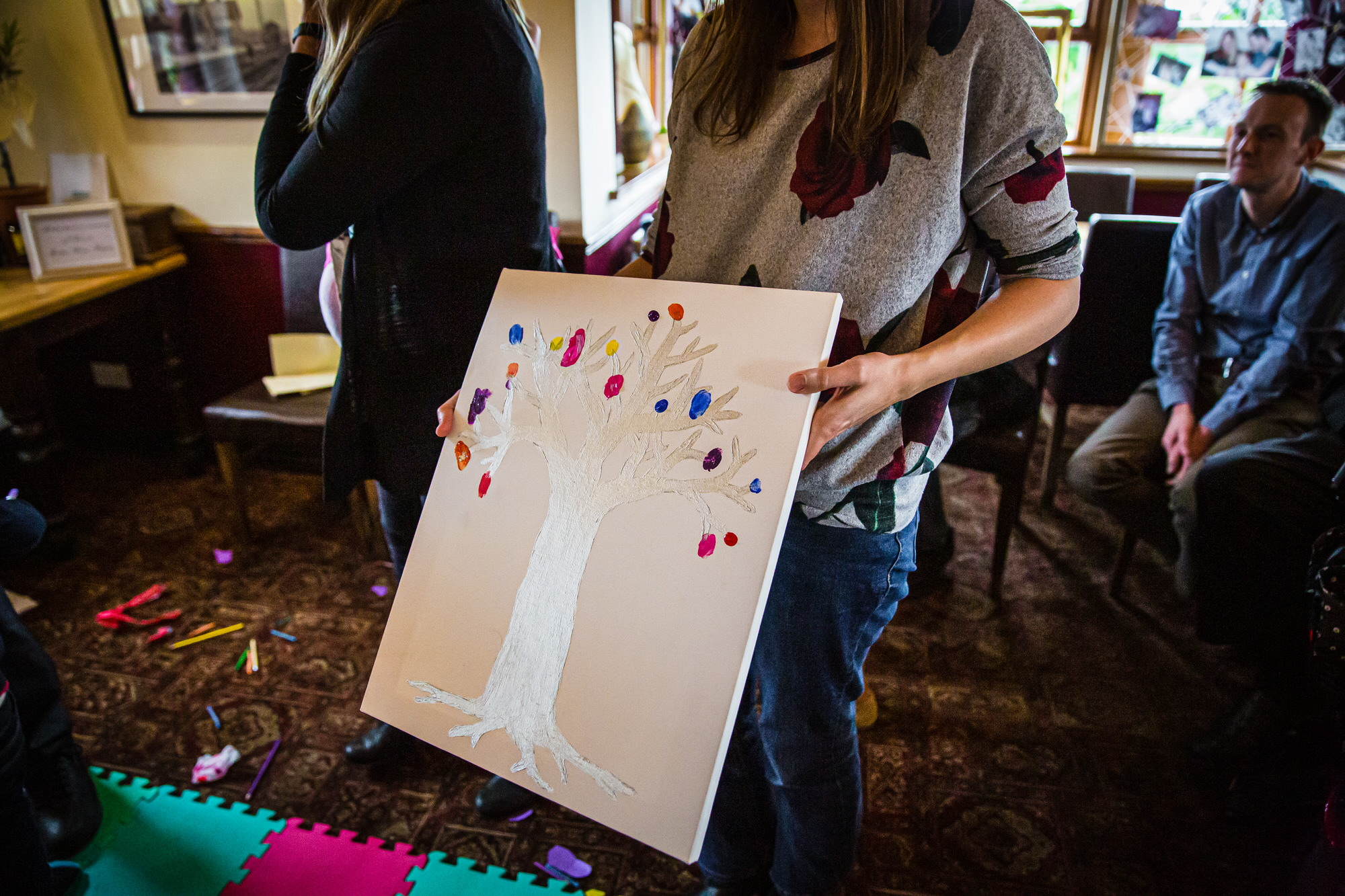
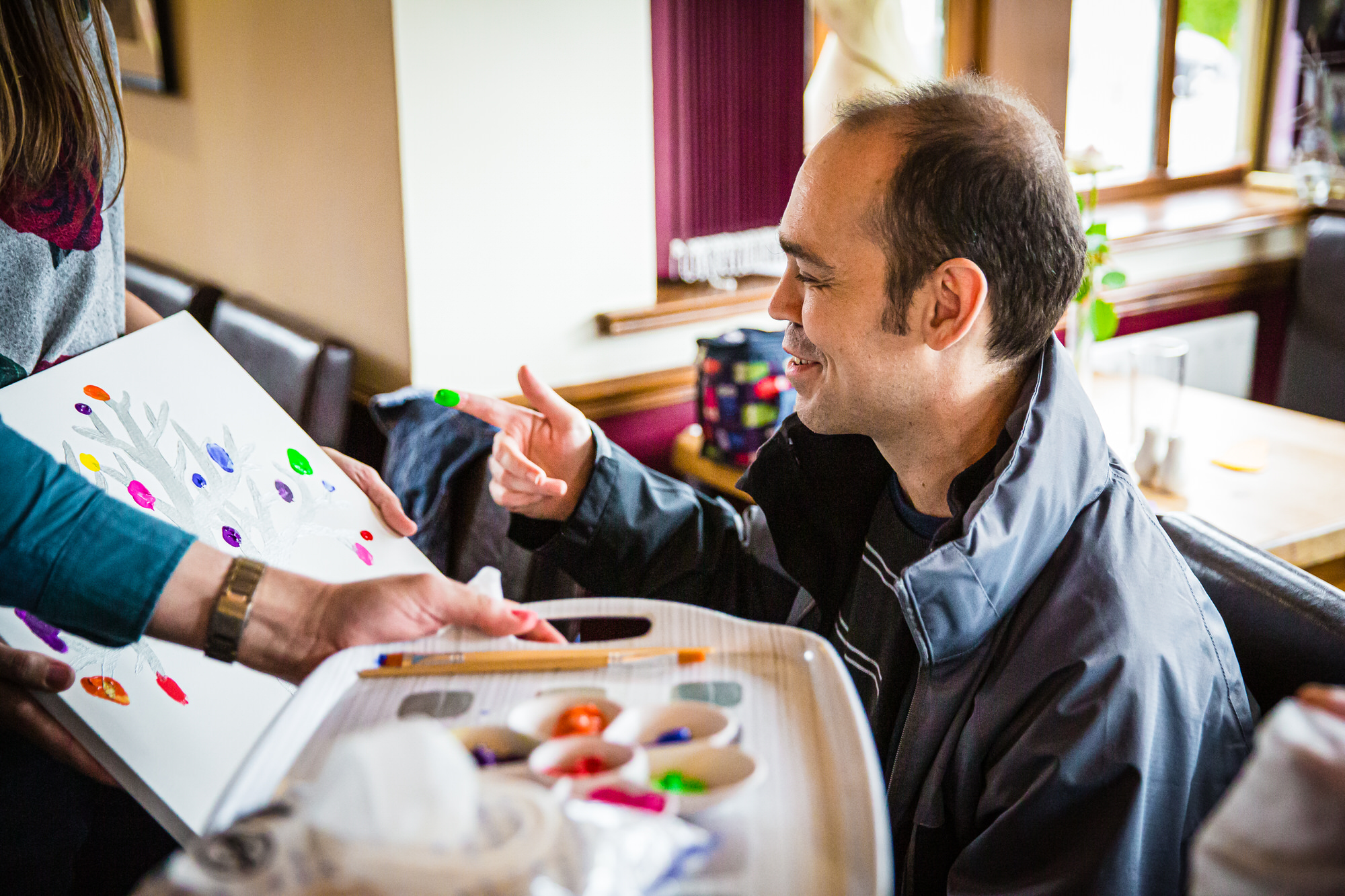
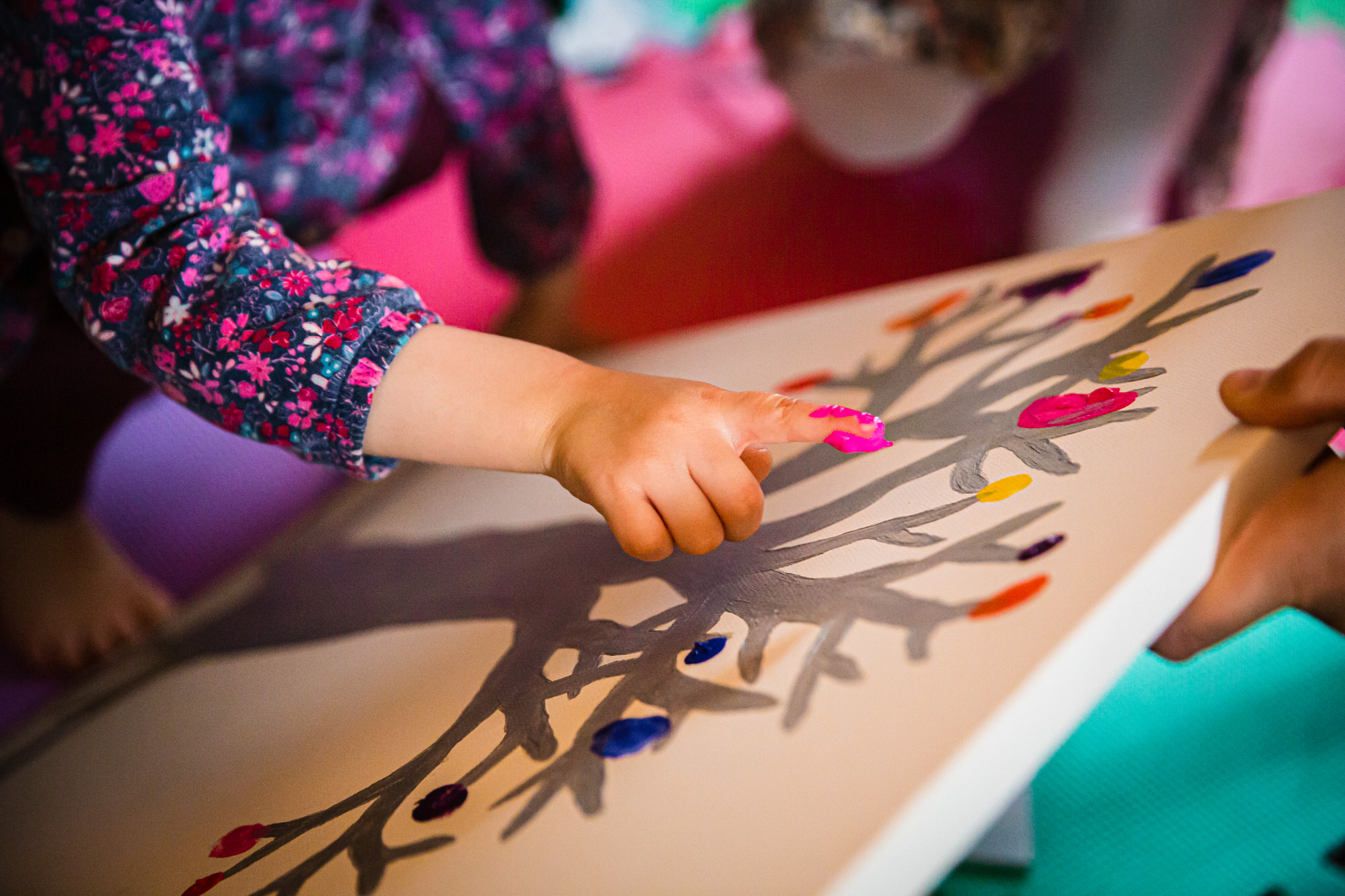
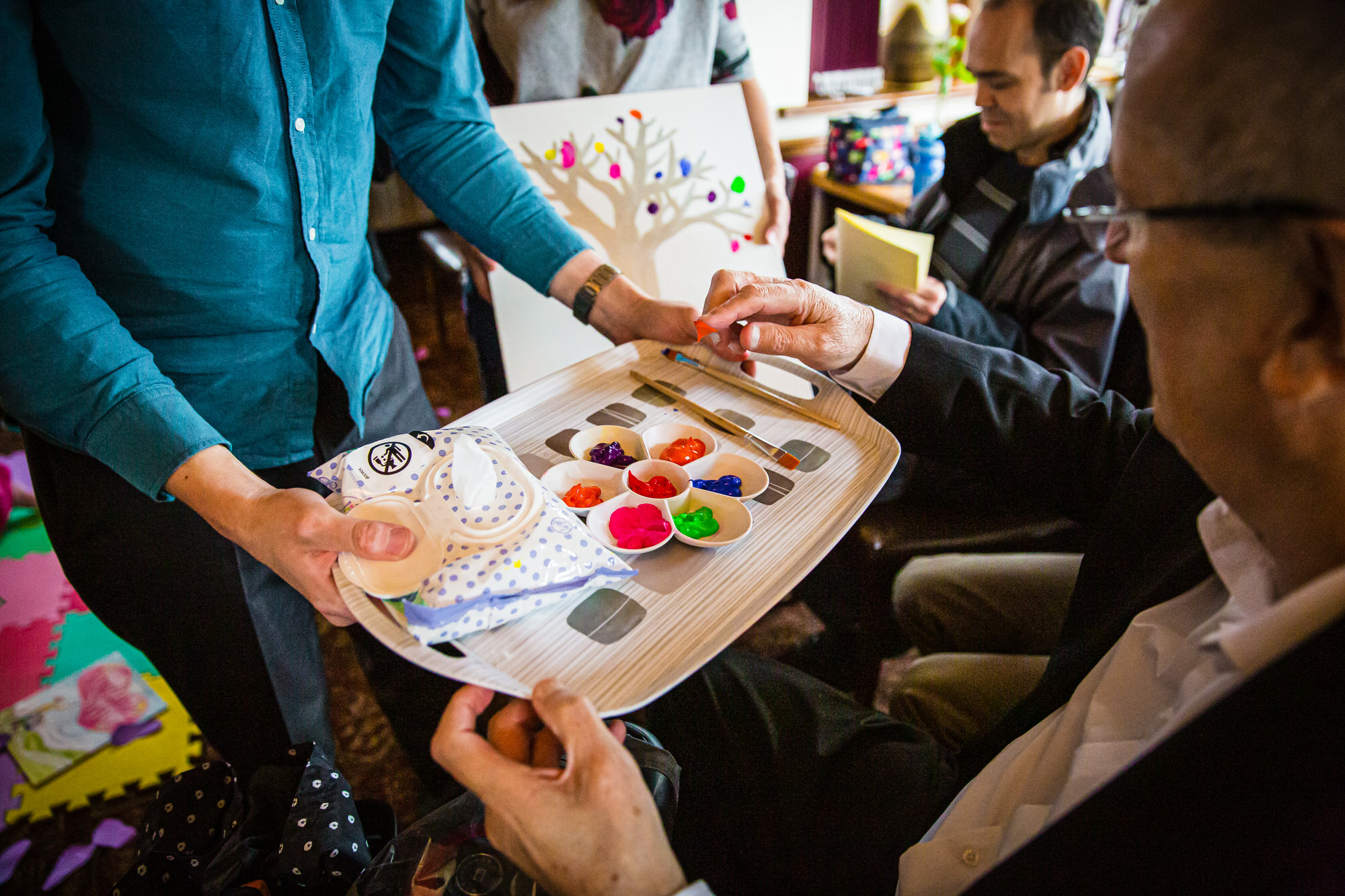
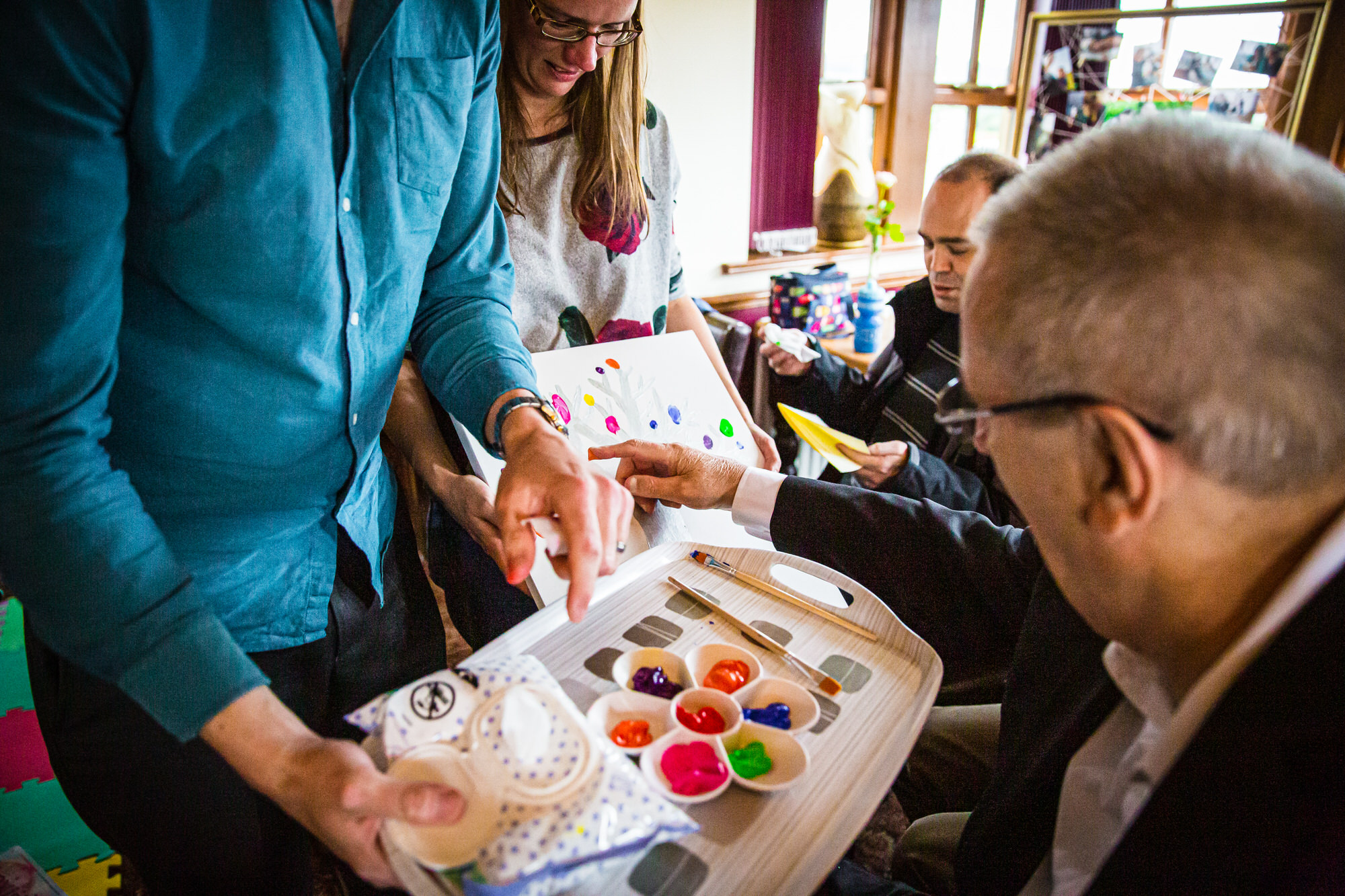
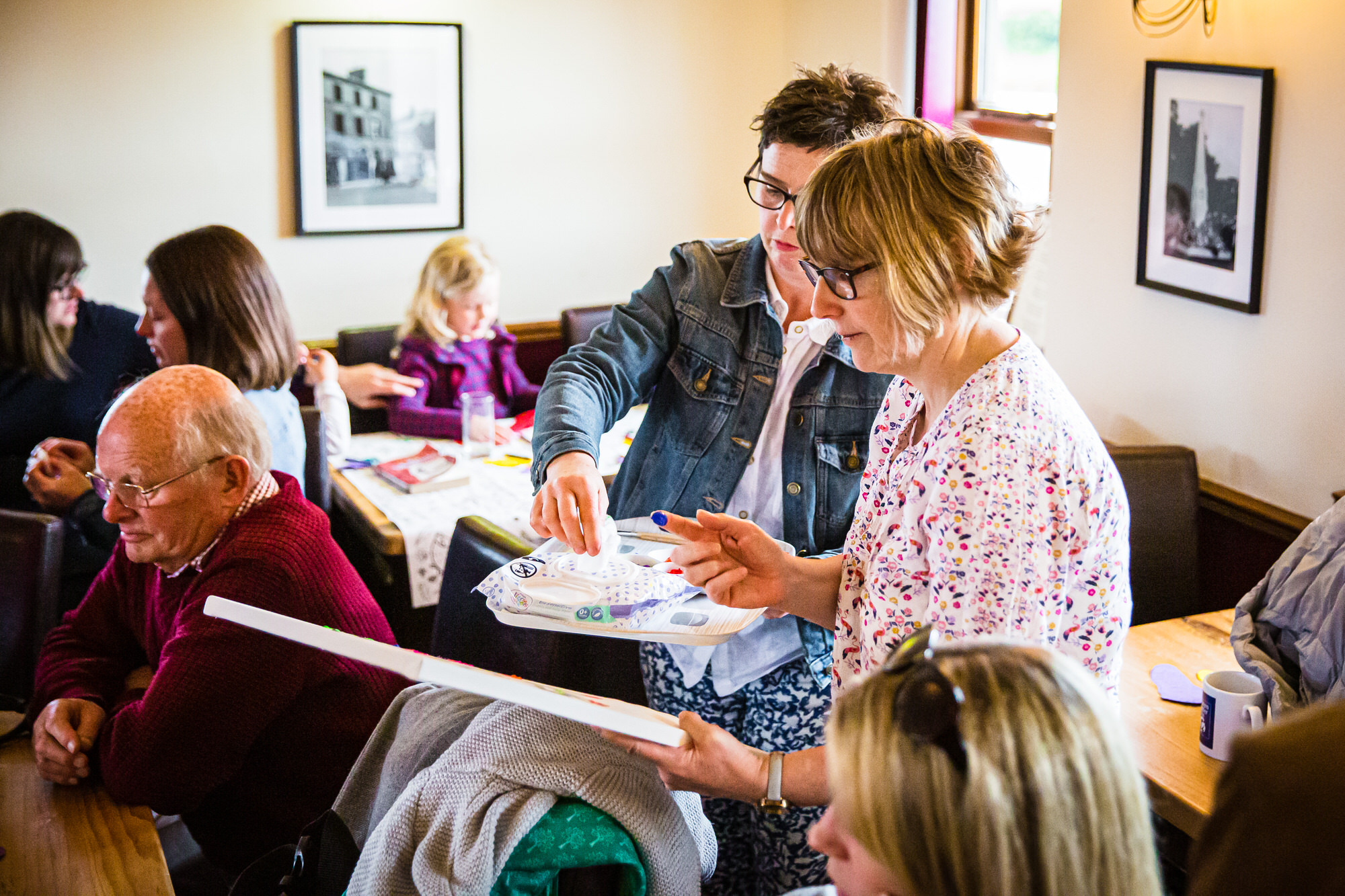
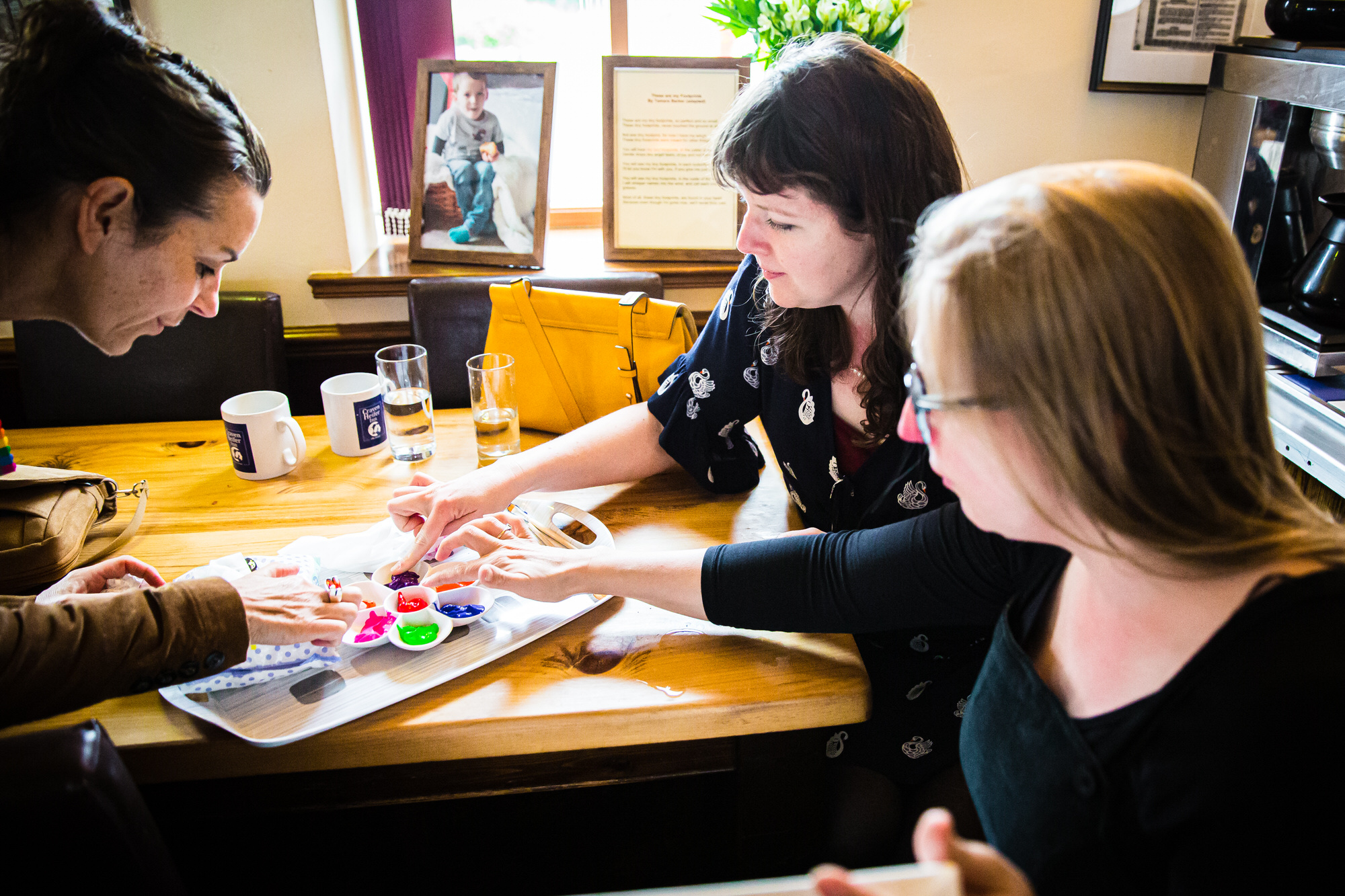
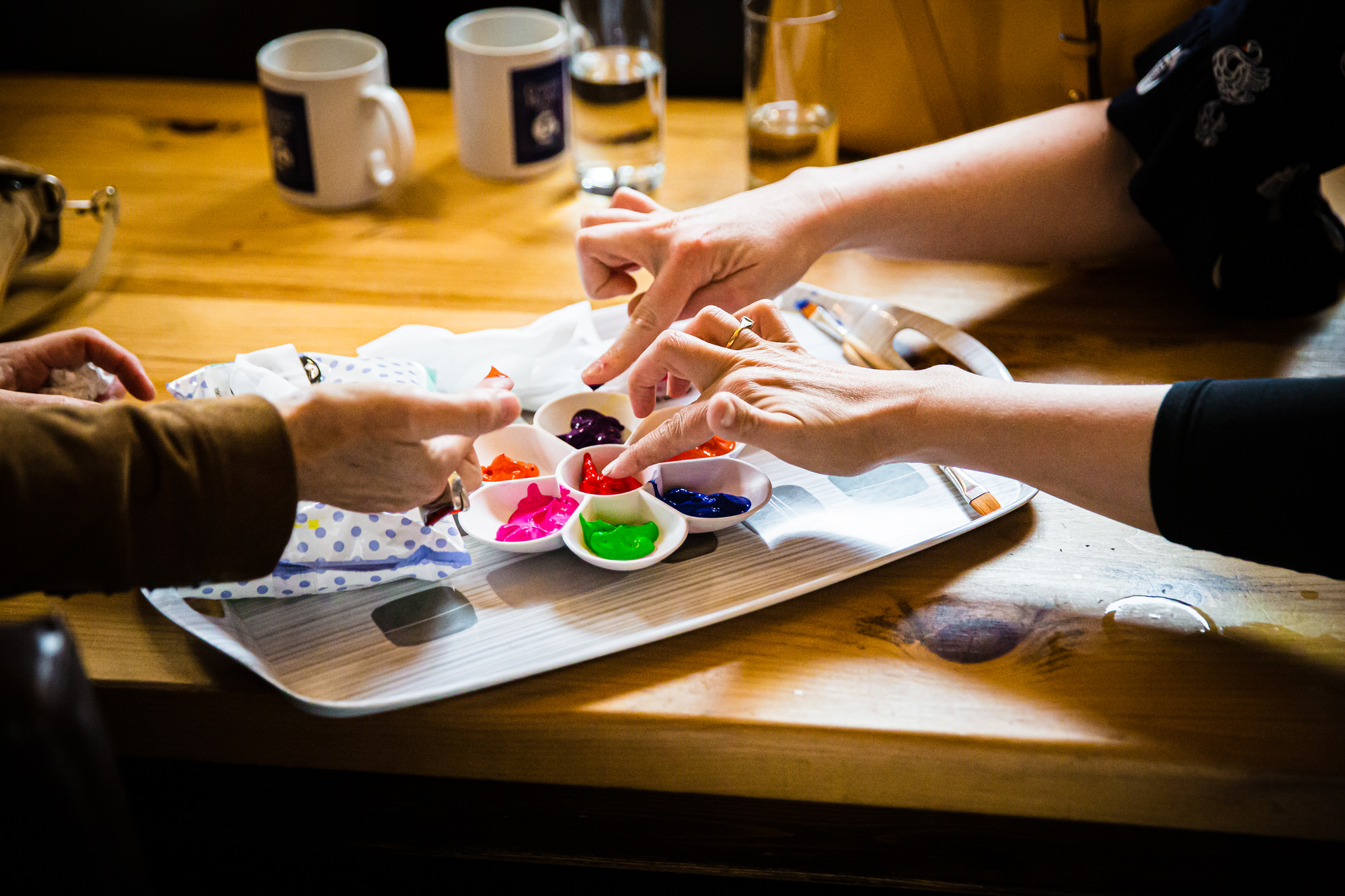
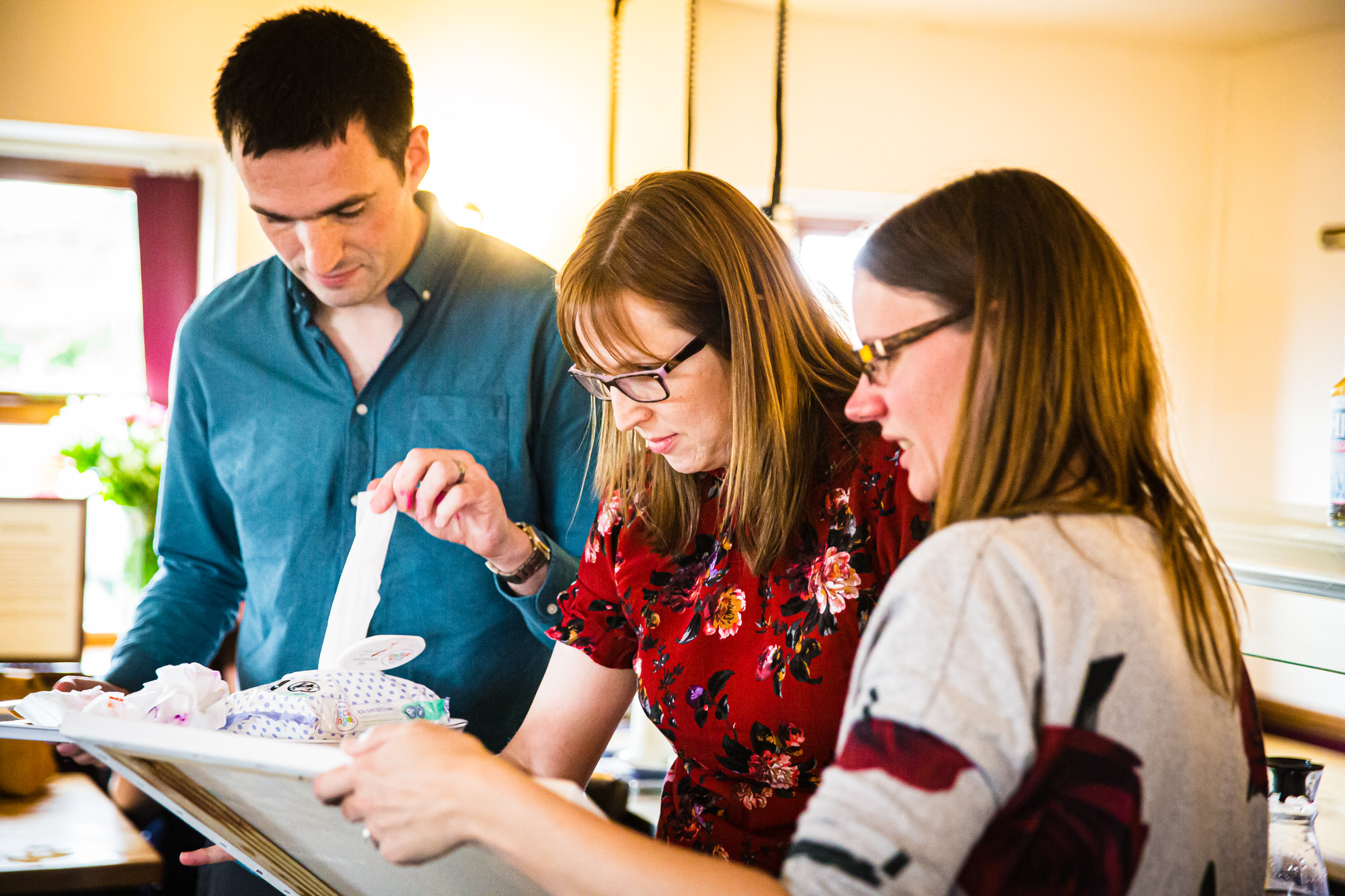
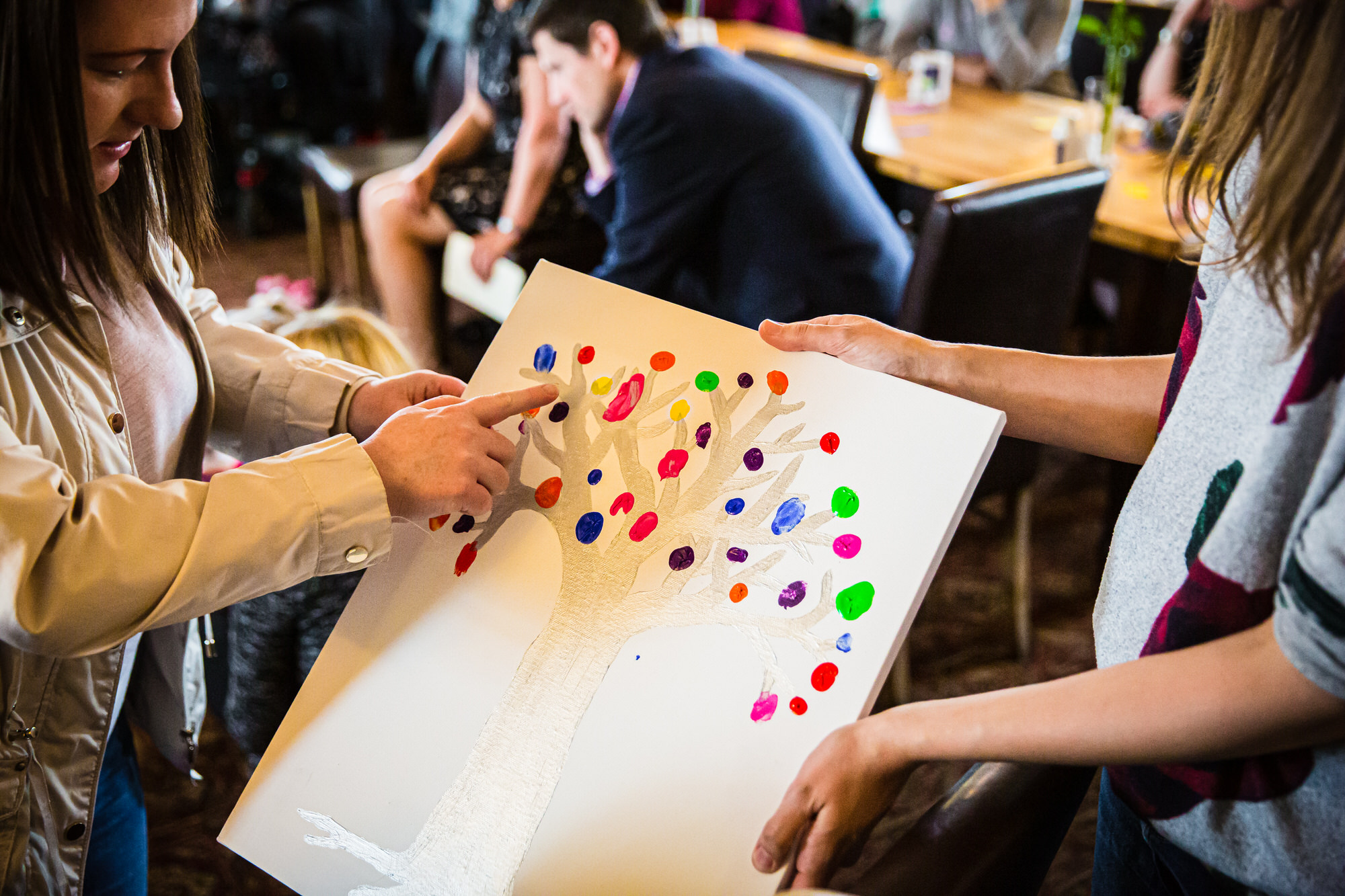
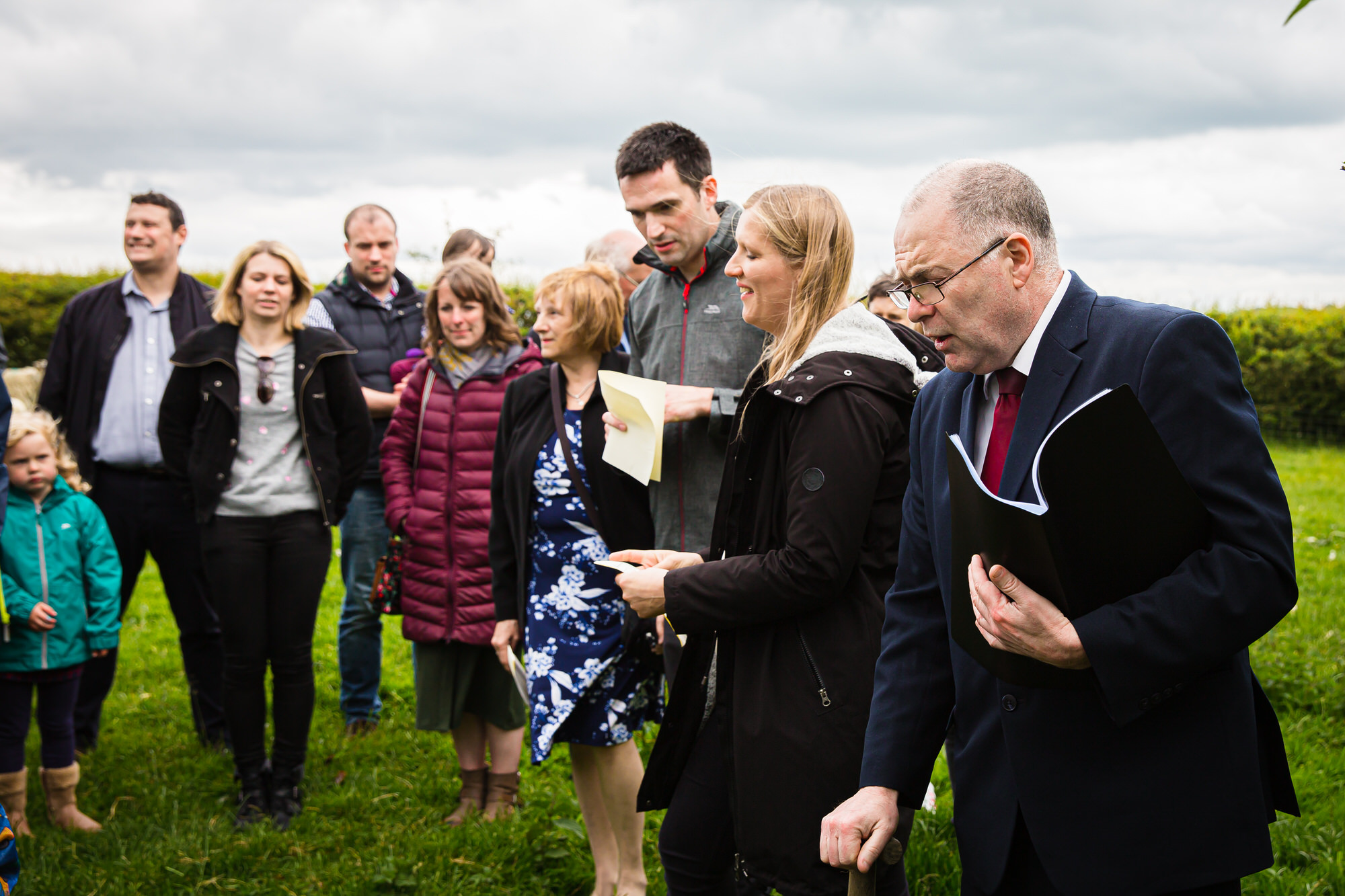
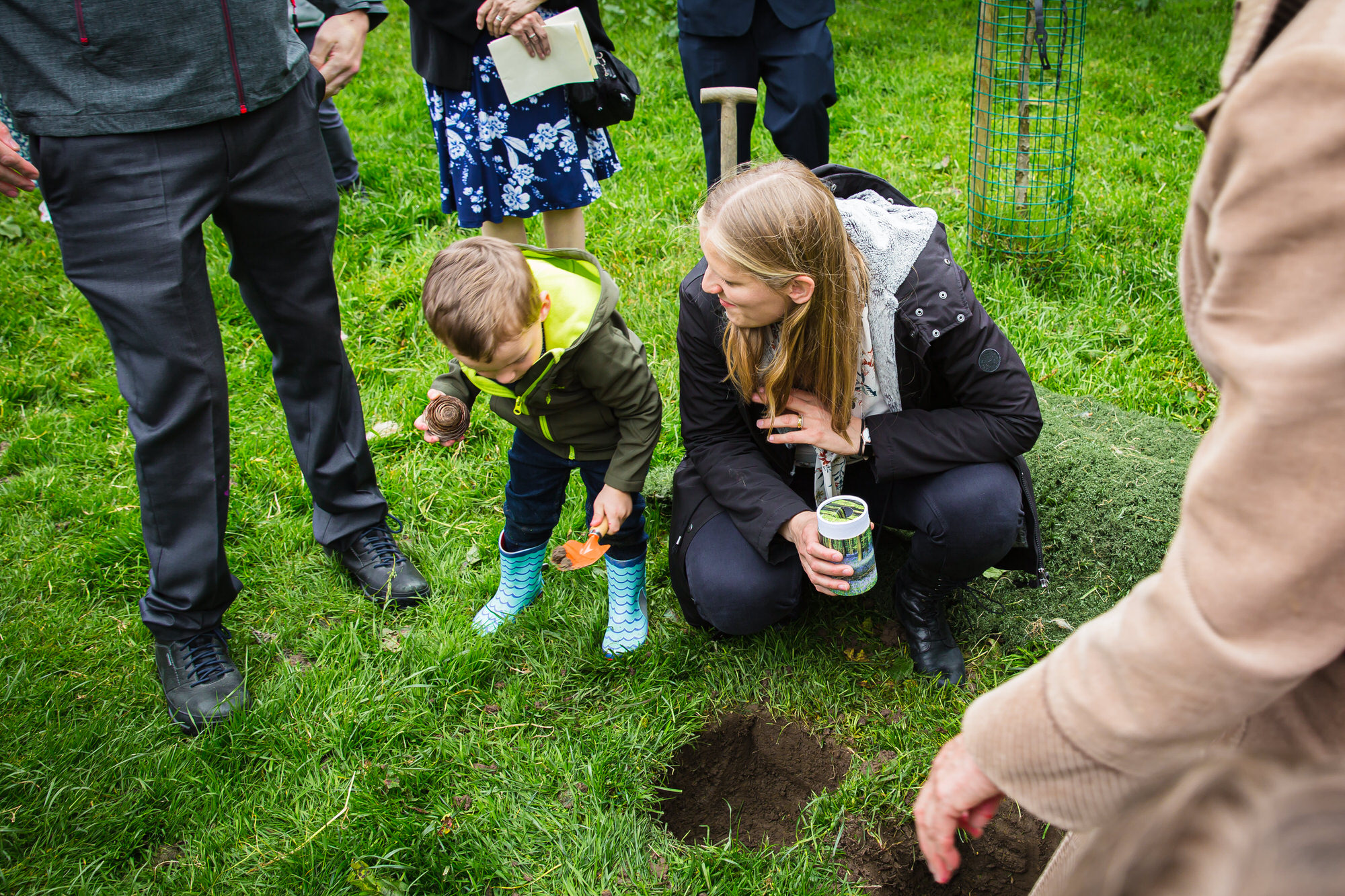
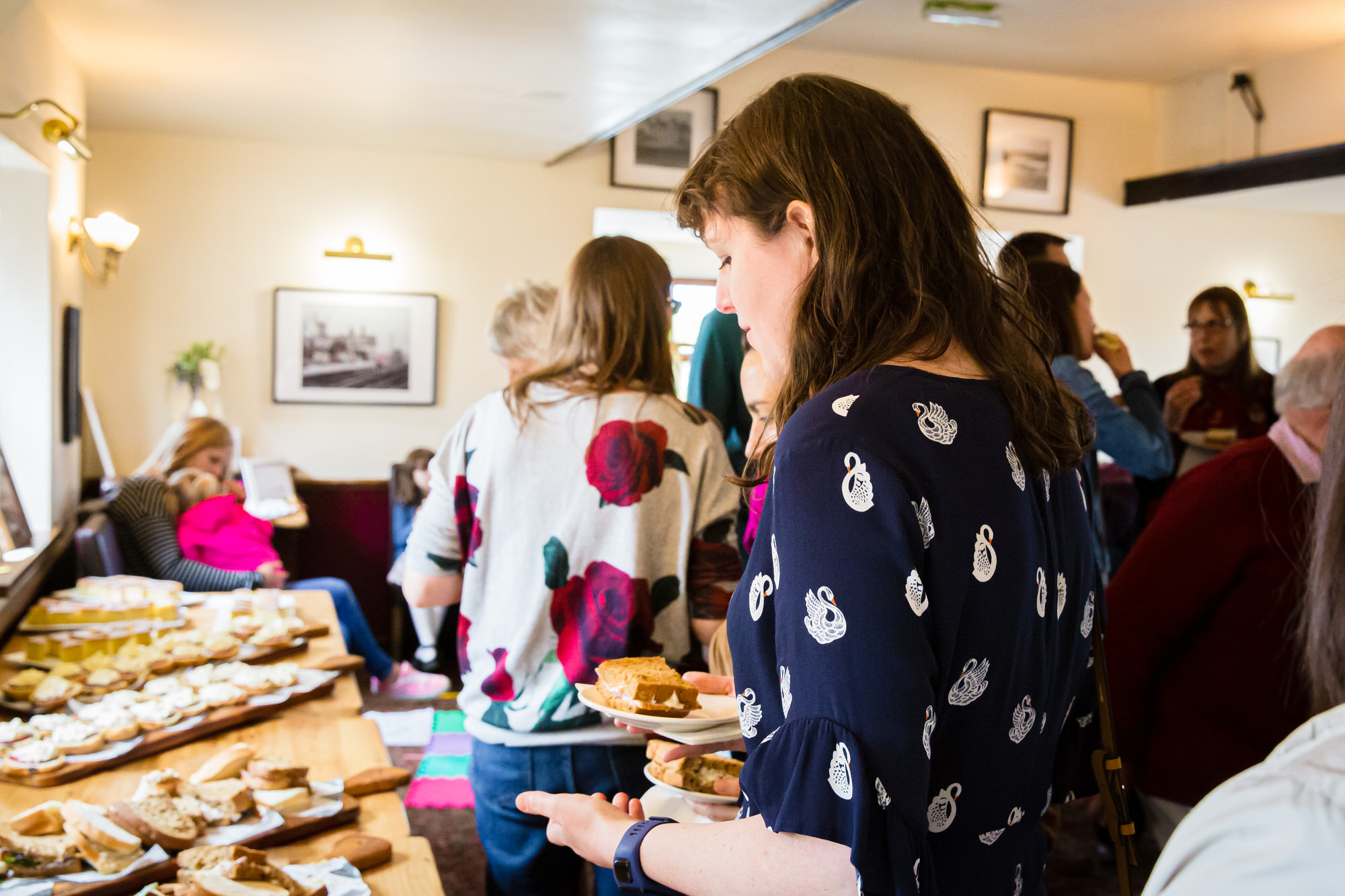
The family created a day that was gentle, child-centred and full of love. There were colouring and painting materials laid out so children could be involved in their own quiet way. Story books and play mats gave younger guests somewhere safe and comfortable to be. Parents shared their memories of Oliver beautifully, and funeral celebrant Rich read a passage from The Memory Tree — a children's book that speaks about loss and remembrance in a way that resonated with everyone in the room.
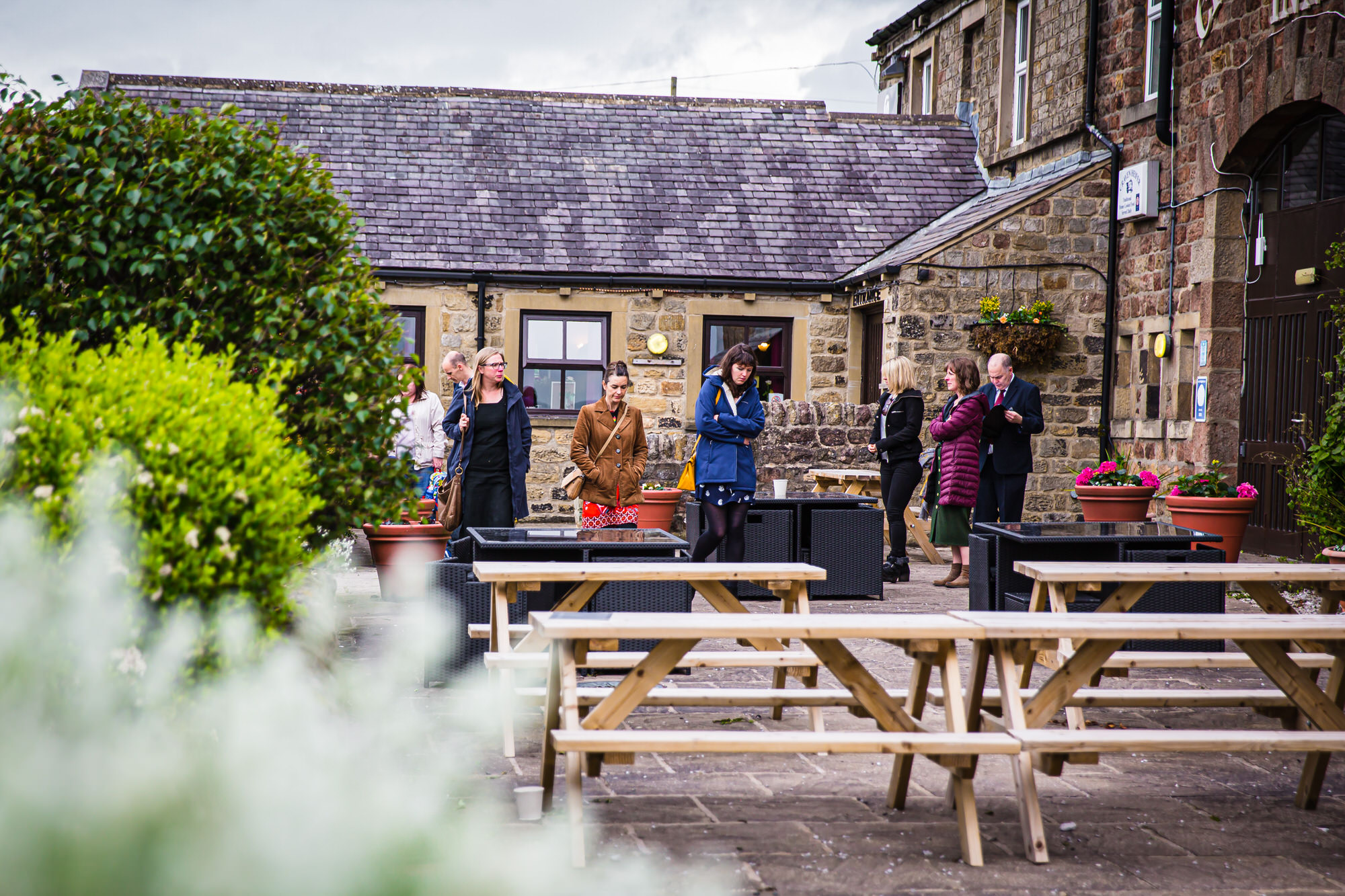
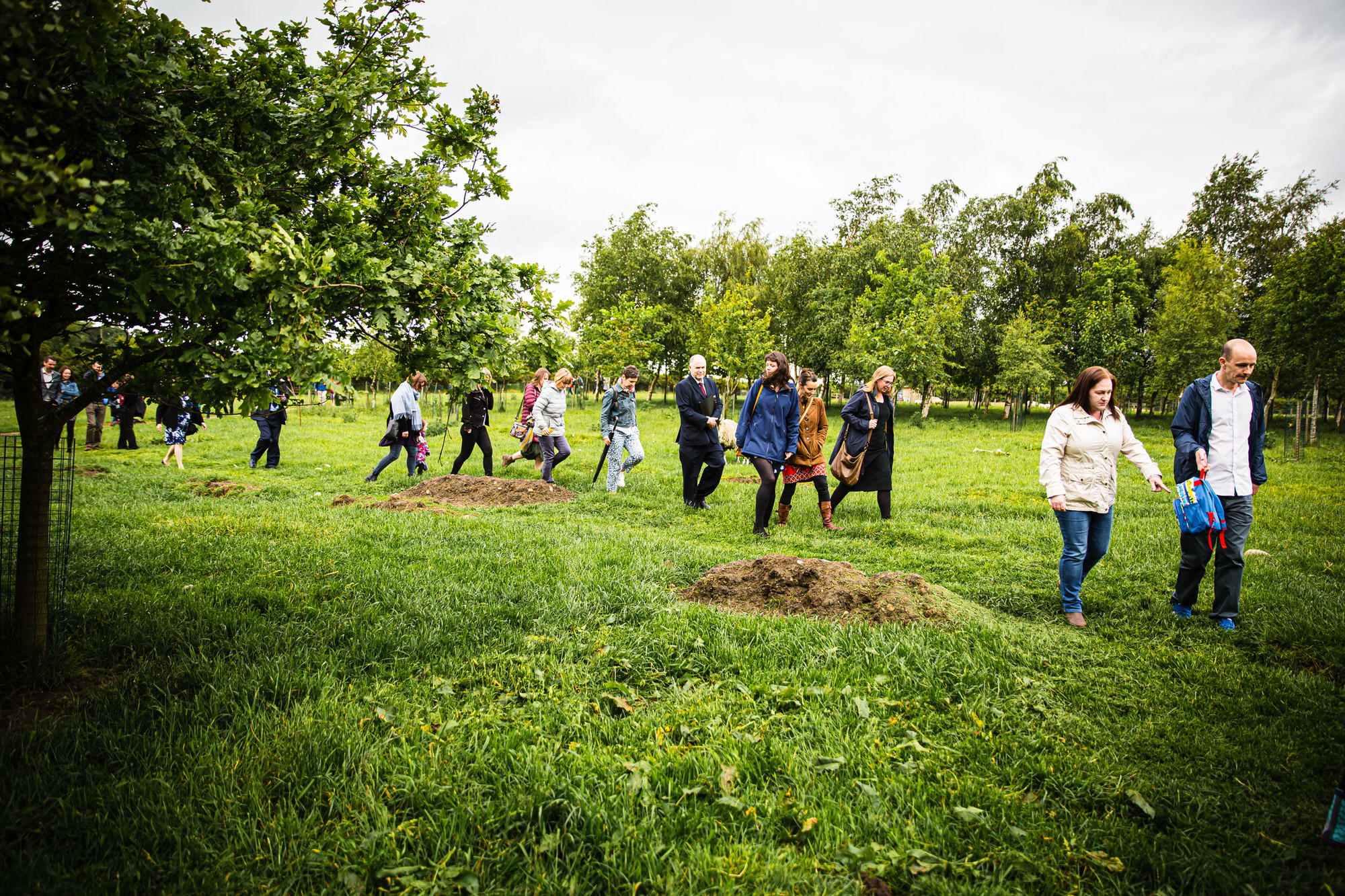
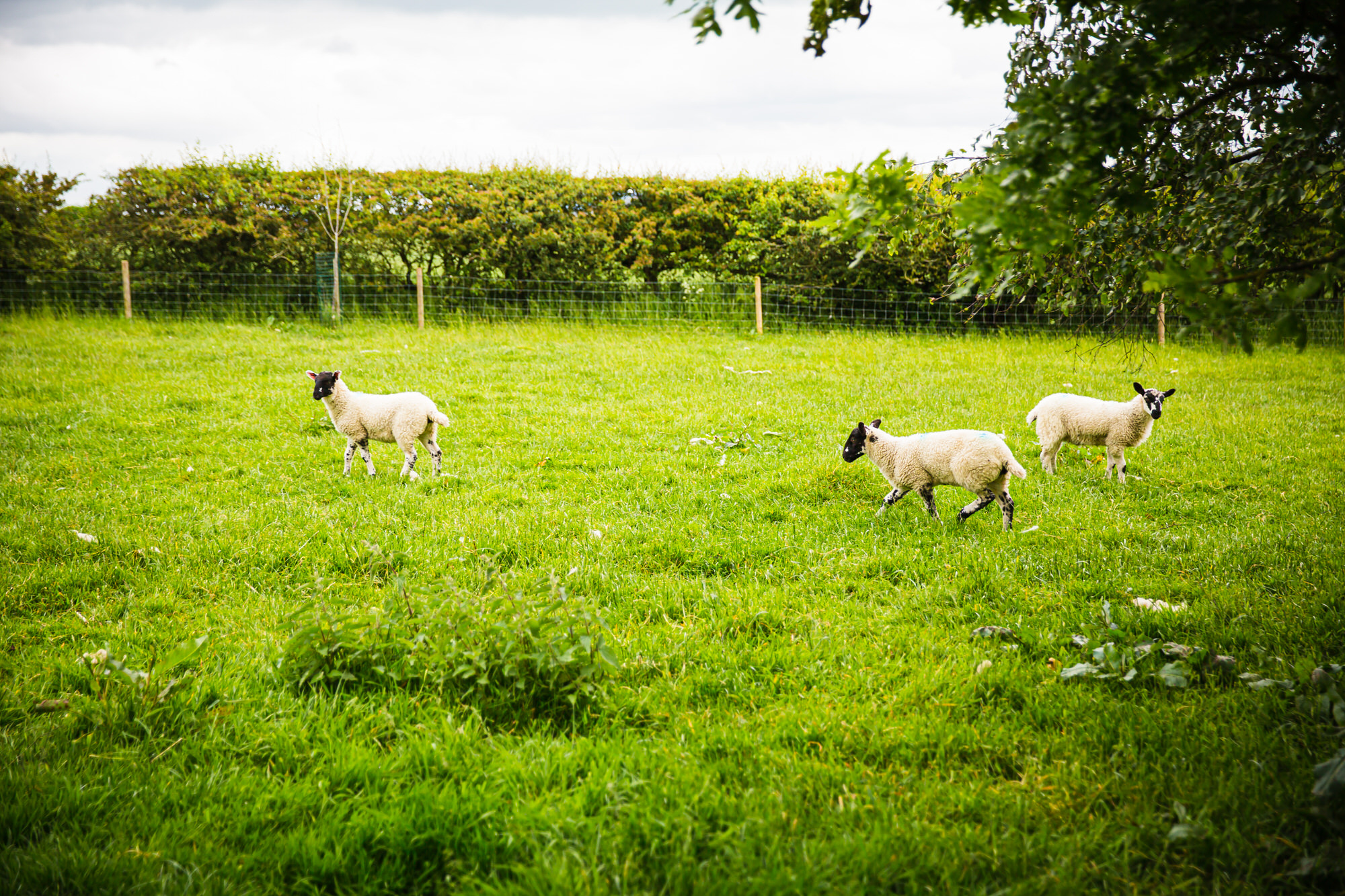
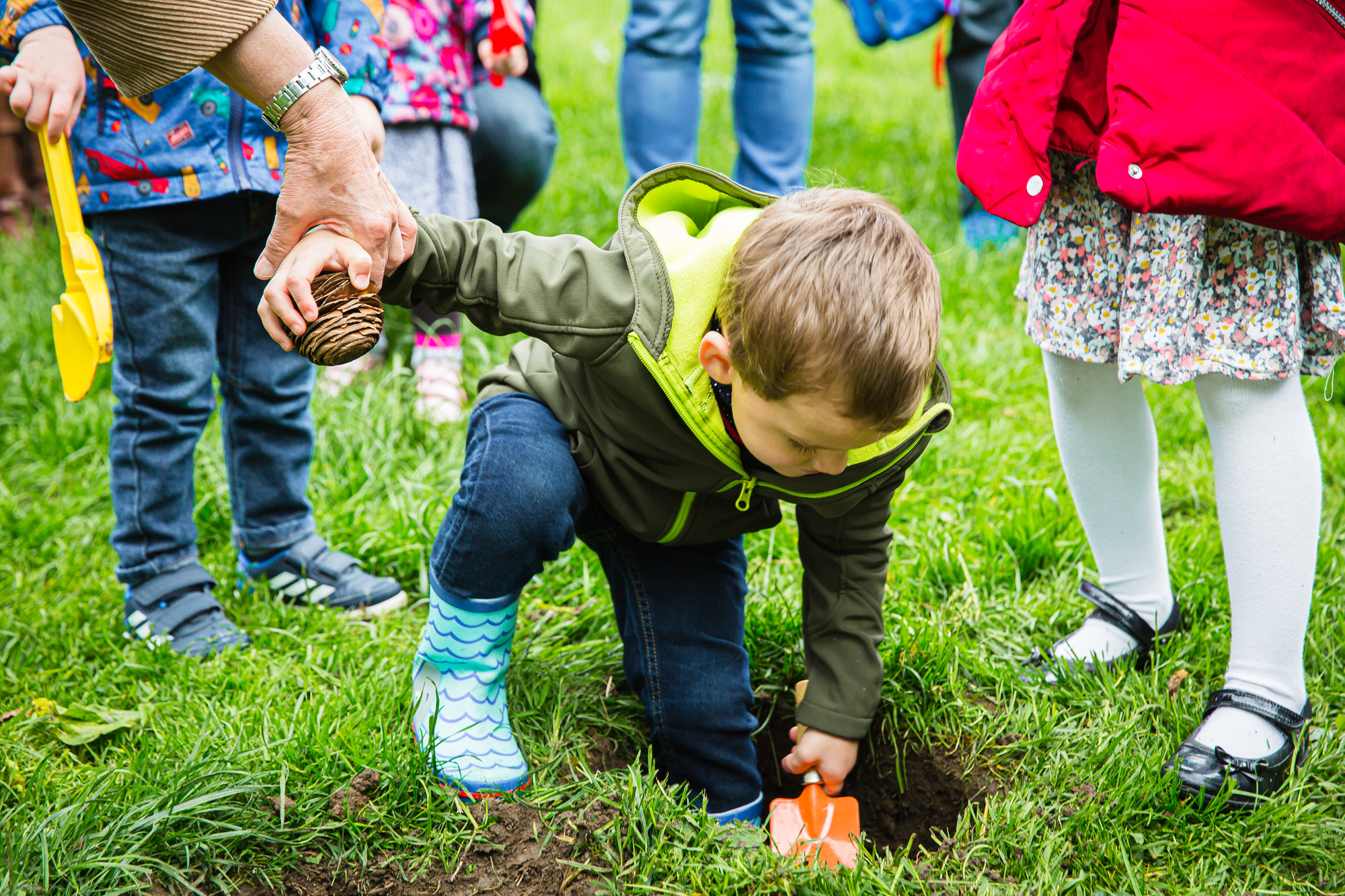
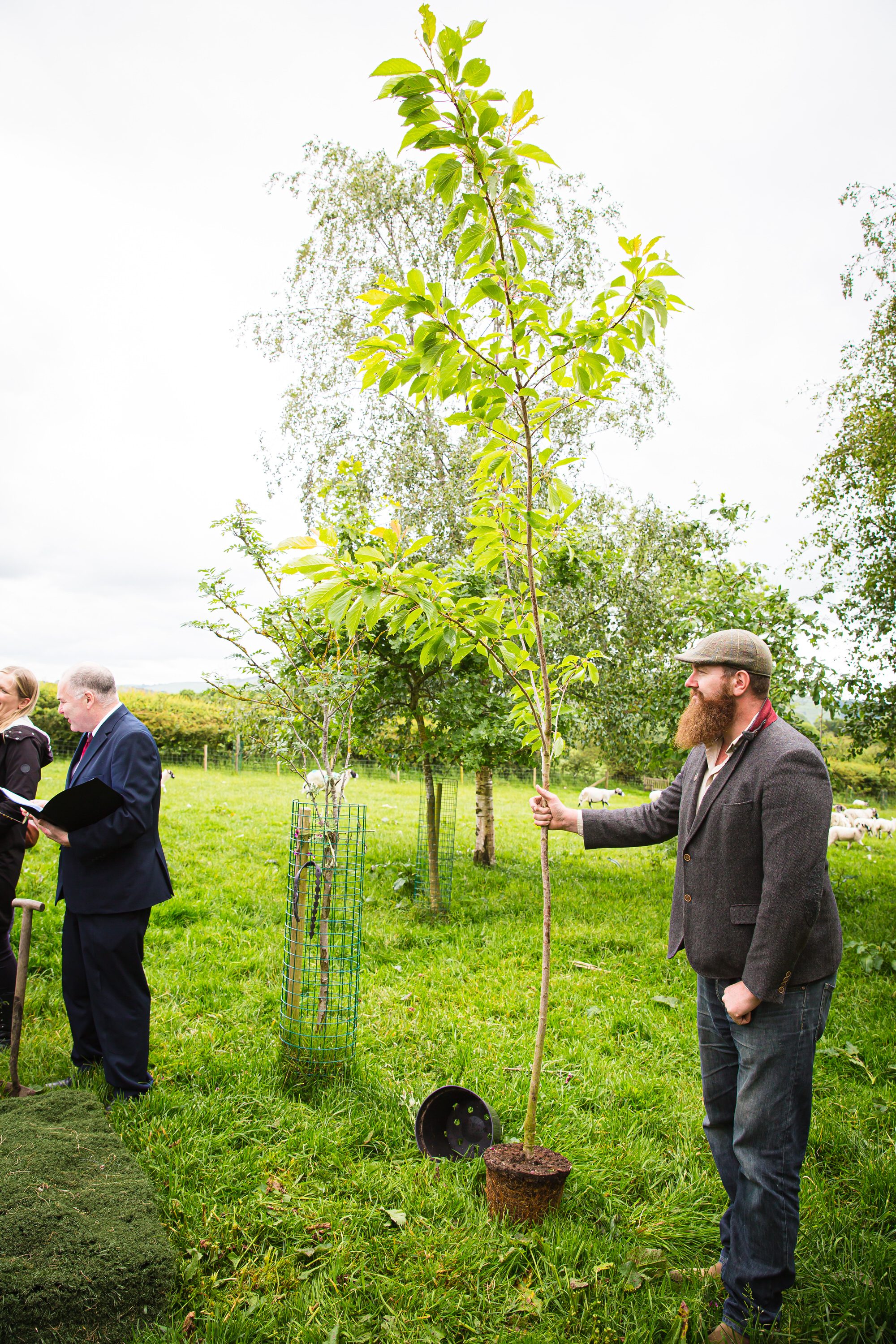
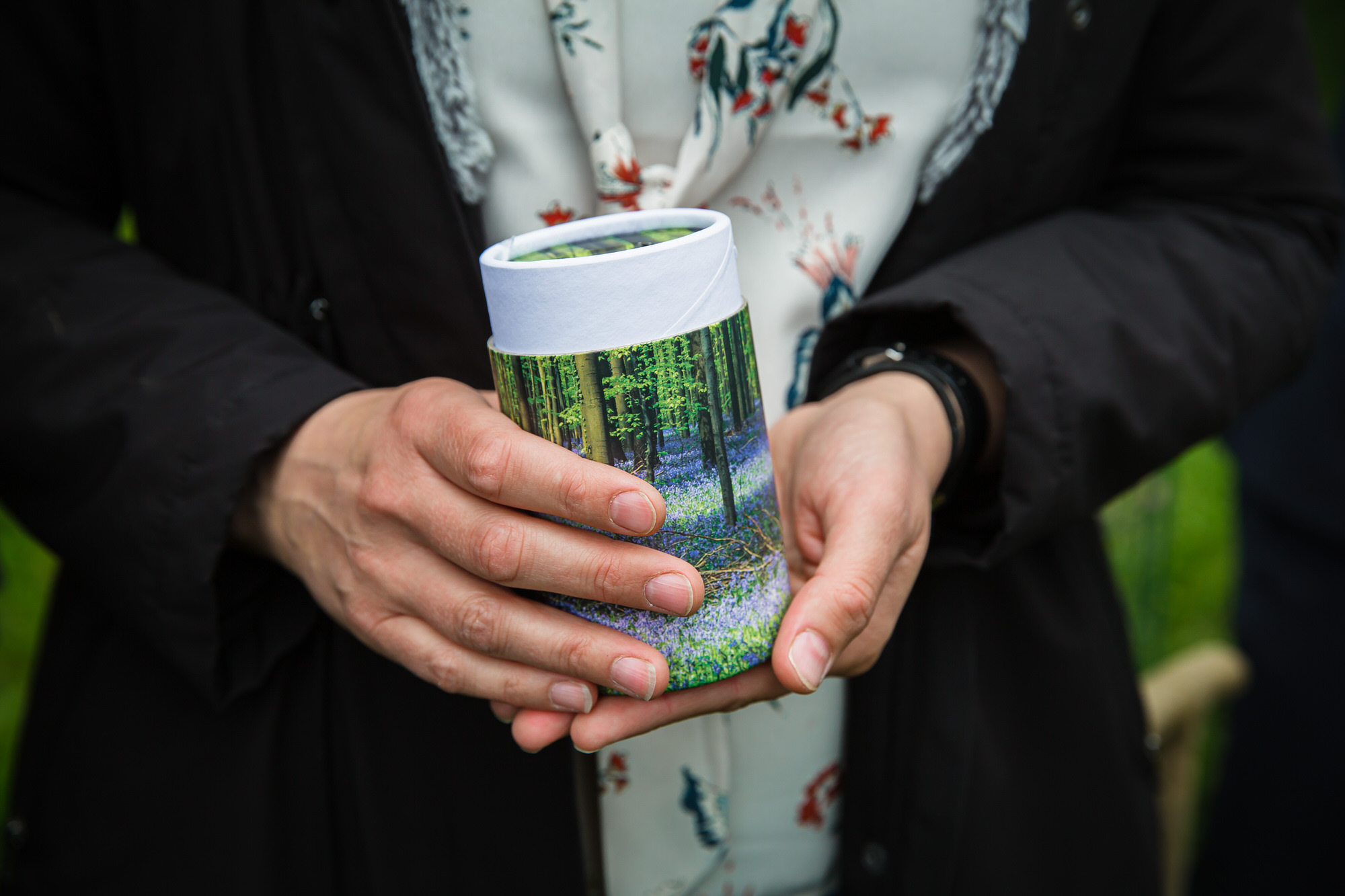
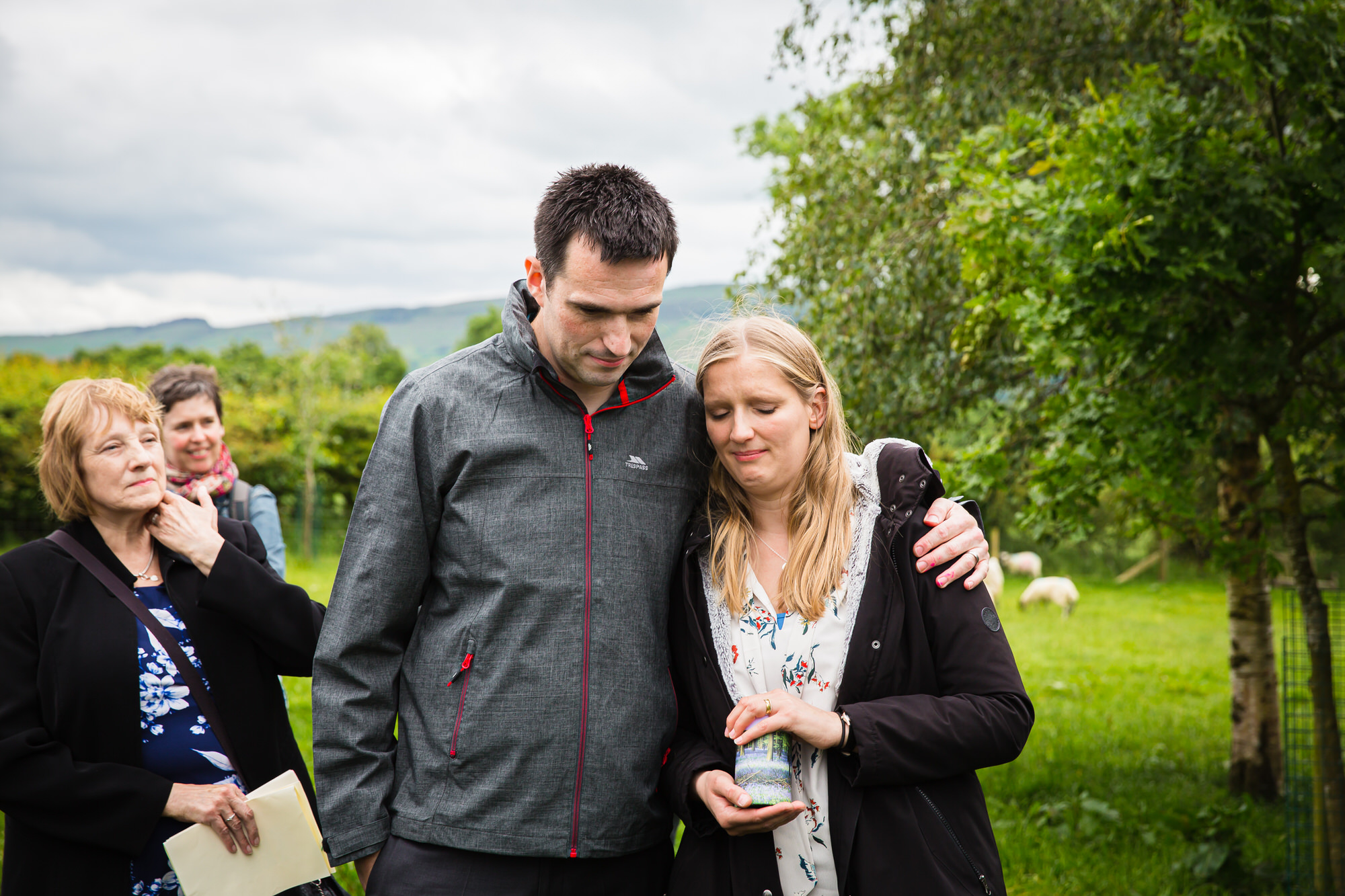
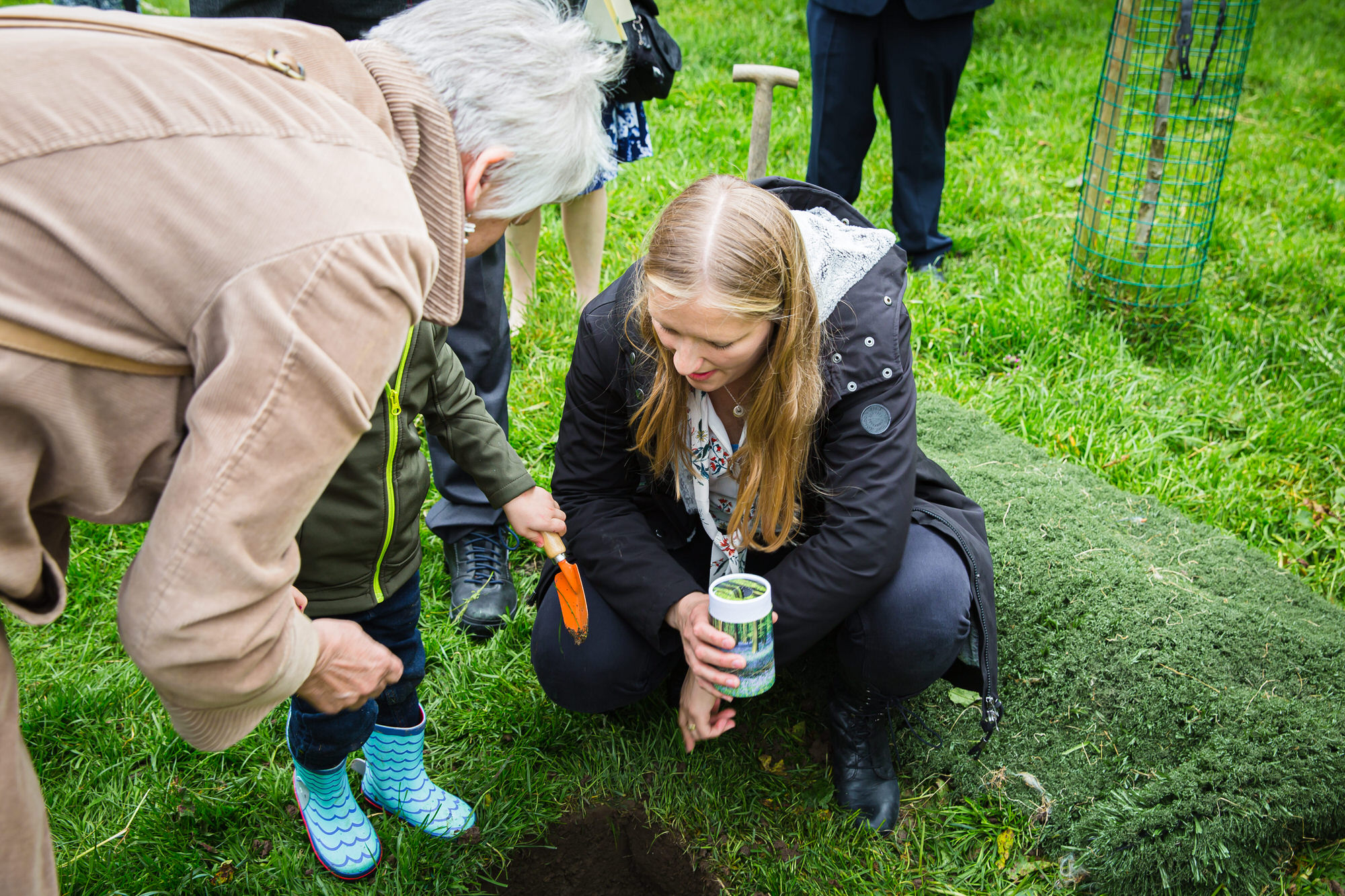
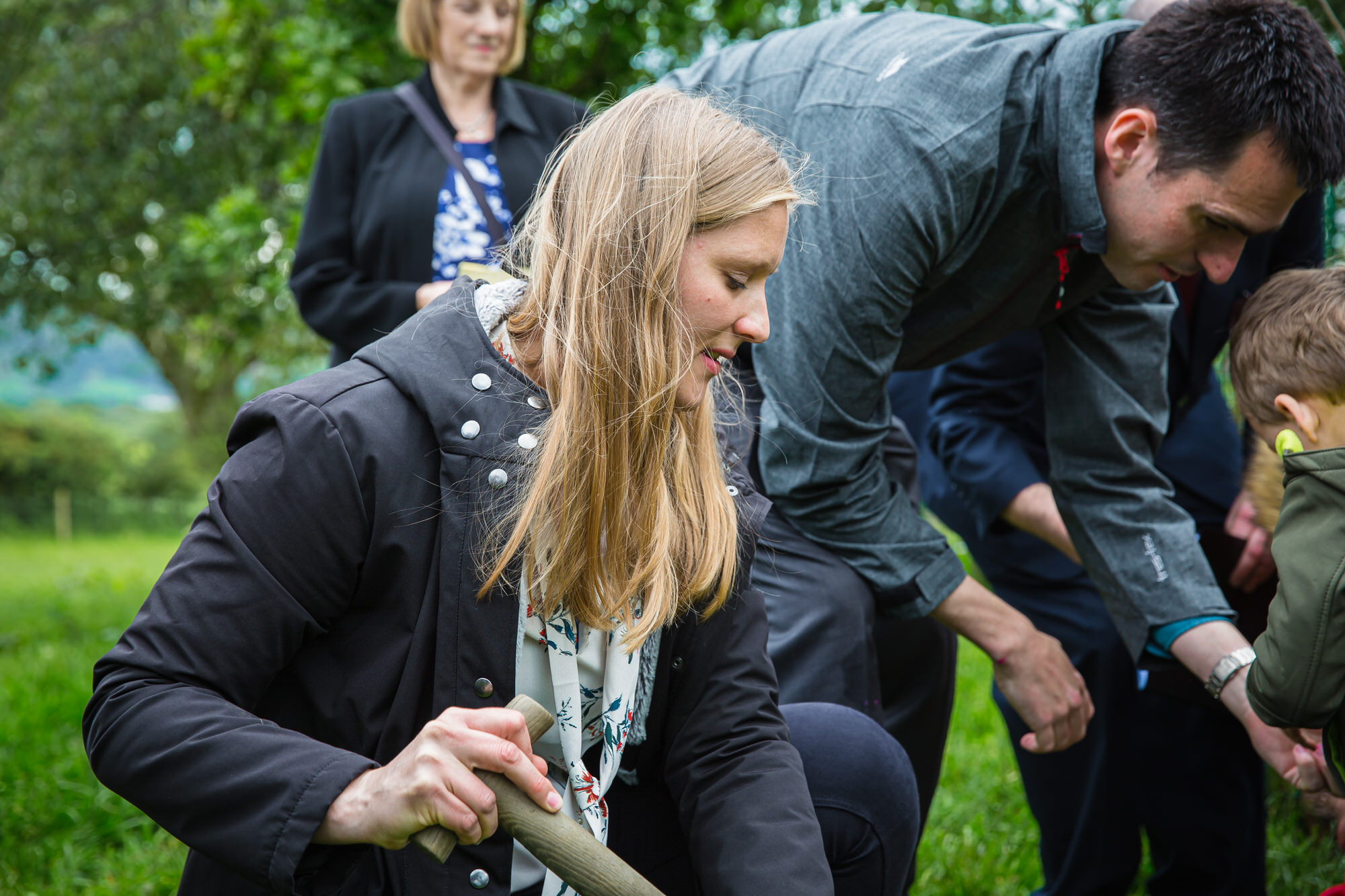
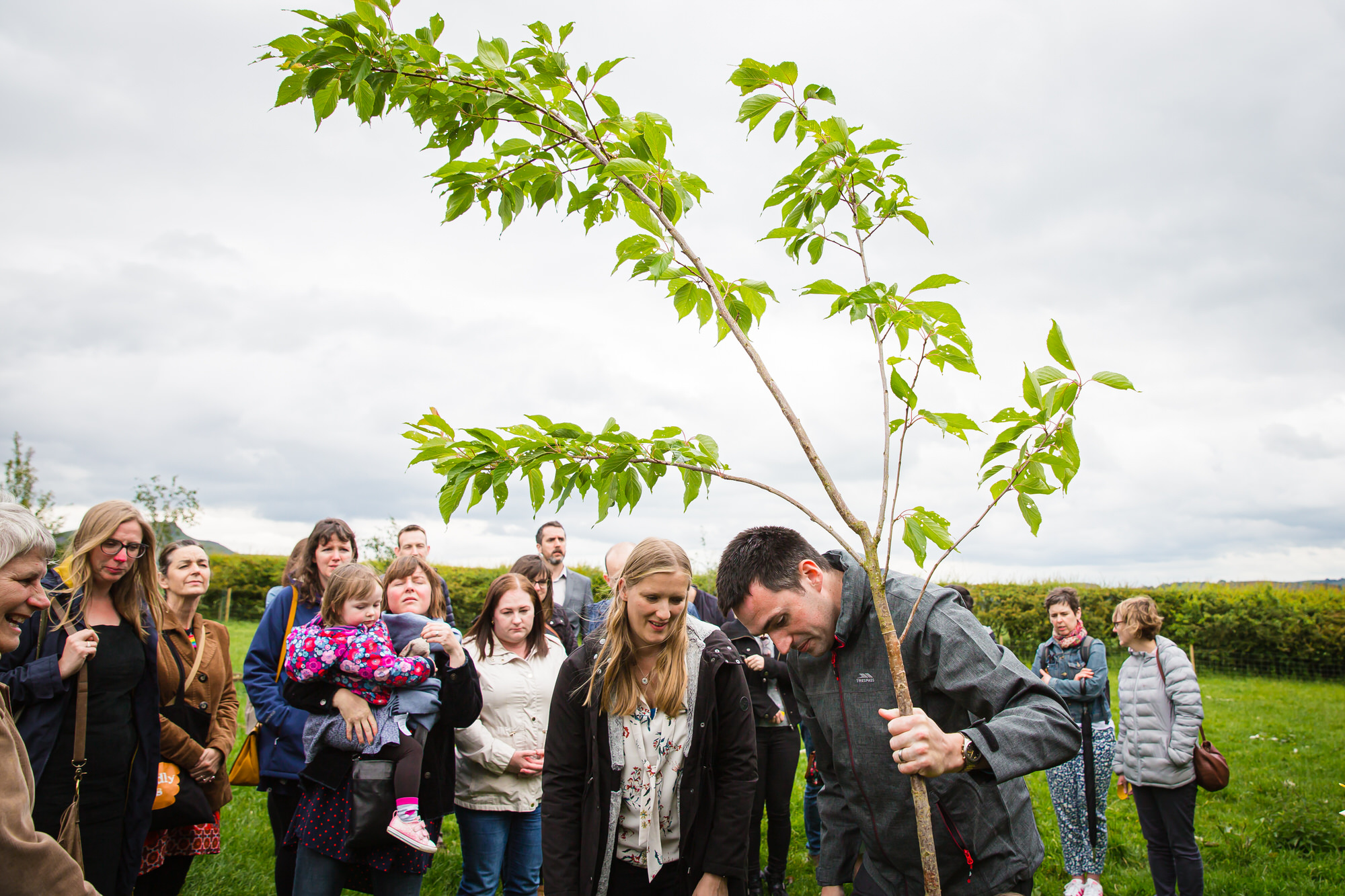
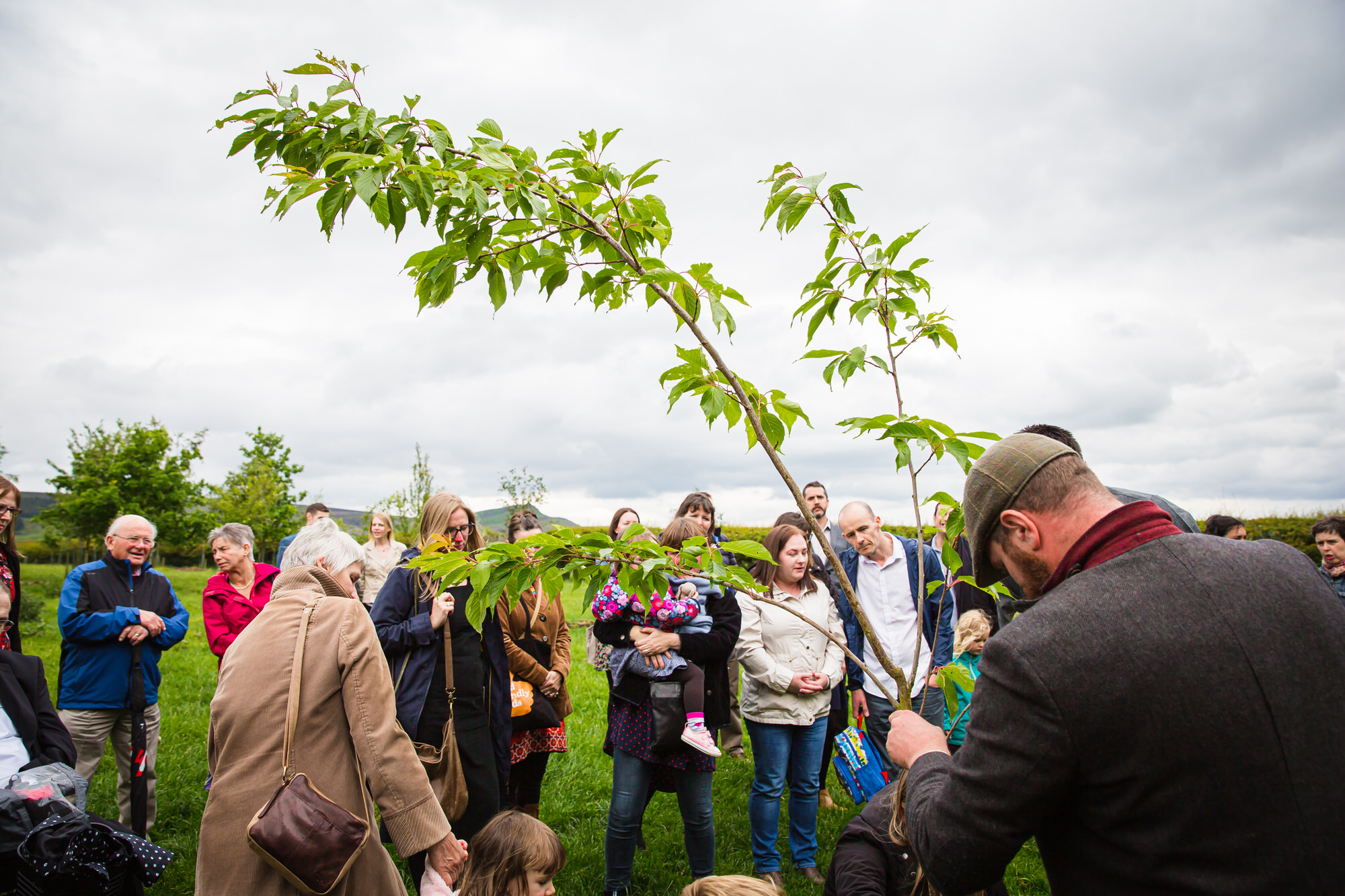
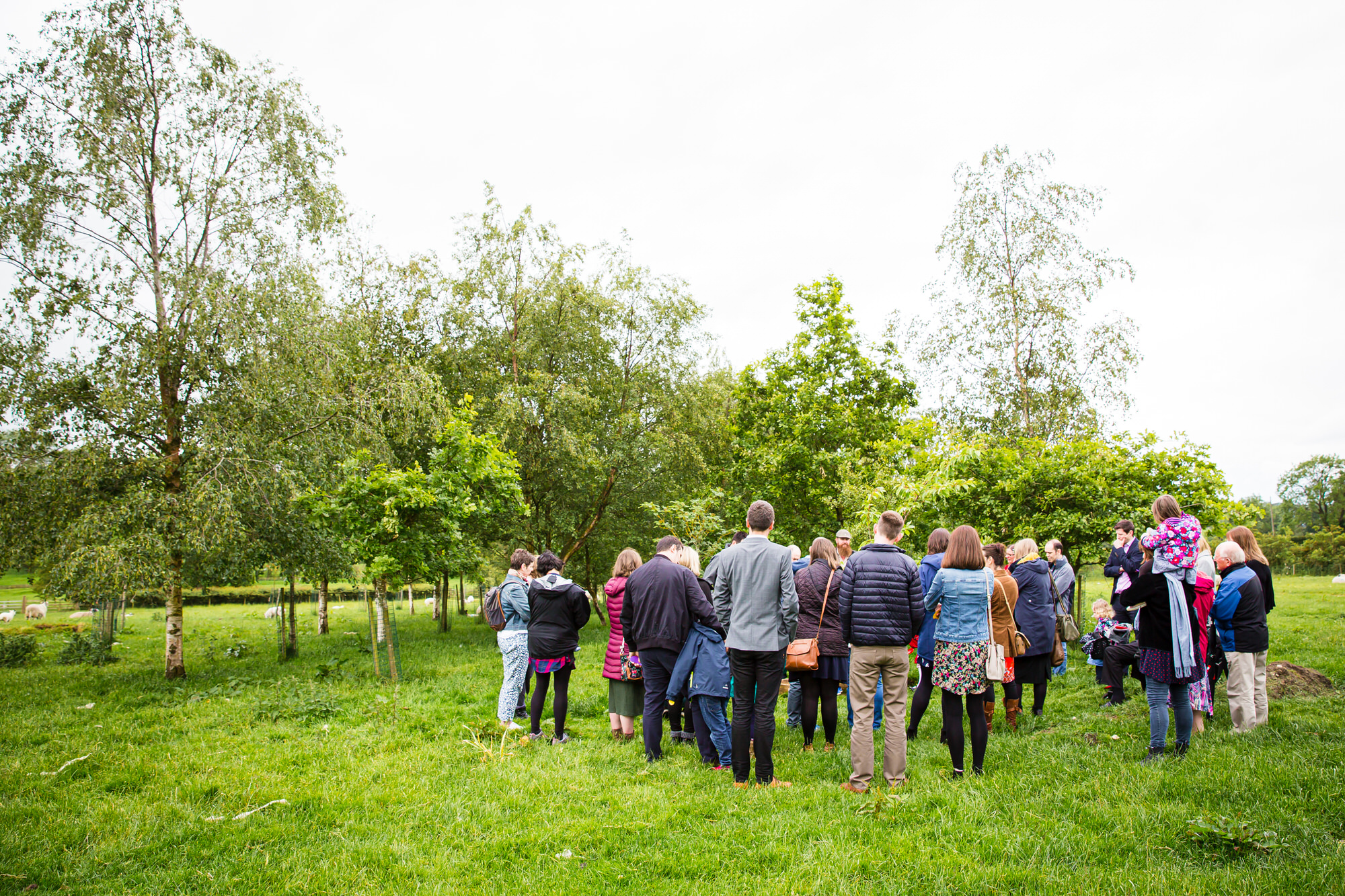
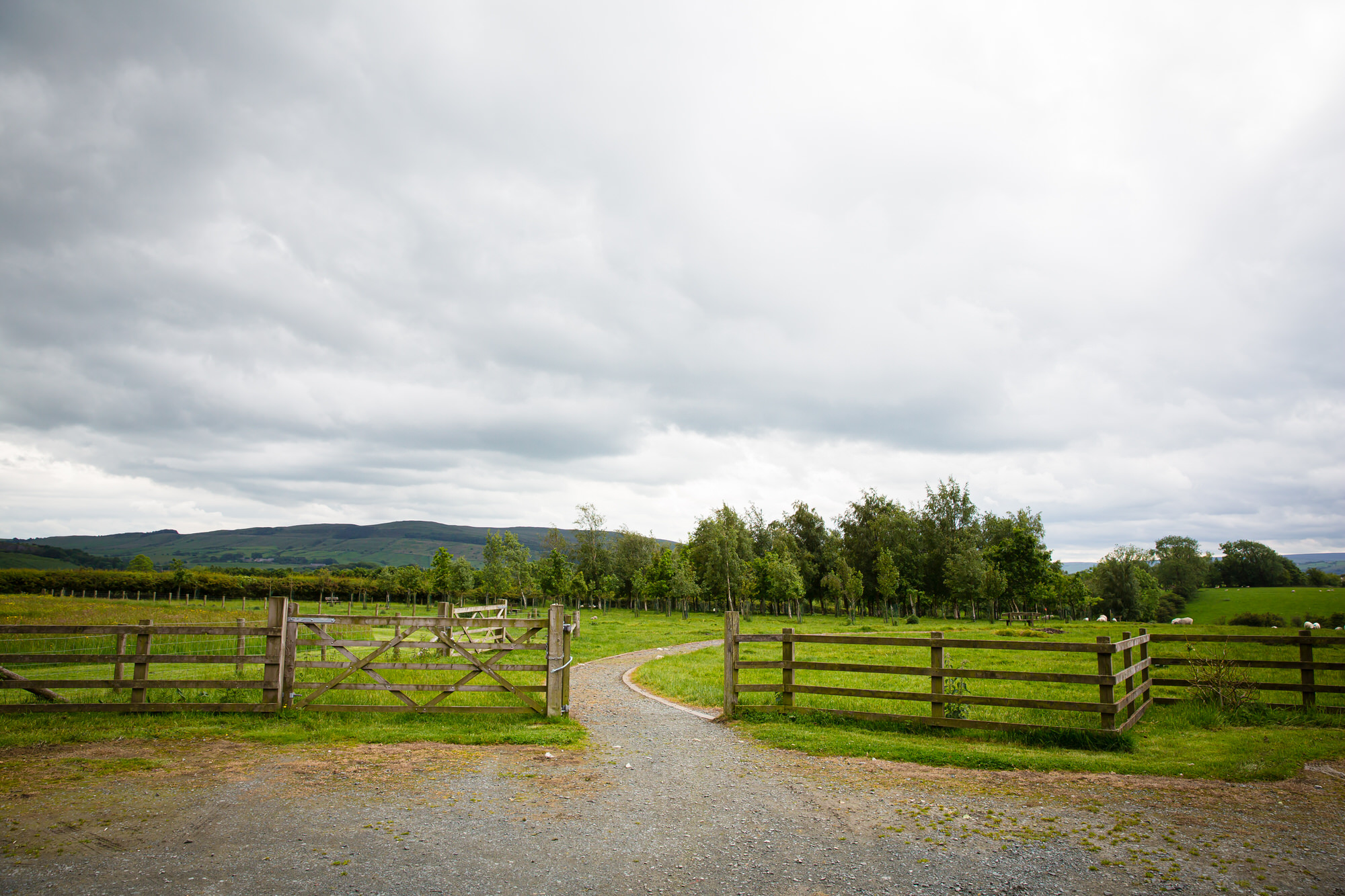
After the indoor ceremony, everyone walked together to Tarn Moor Memorial Woodland — a quiet natural burial and memorial site on the edge of Skipton, with open views, changing light and trees that will grow and change over the years. At Oliver's spot, final words and readings were shared, his ashes were buried, and a tree was planted to mark the place. That tree will be there for the rest of their lives.
I photographed the walk, the gathering at the tree, and the small details that will matter most in years to come — hands holding, arms around shoulders, children close to their parents, the way the light fell through the trees. My aim throughout was to be present without being visible, and to document without intruding.
What Oliver's family said afterwards:
"We were so unsure whether to have a funeral photographer at our baby son's memorial, whether it would feel right or make people feel uncomfortable. However, Shaun was incredibly sensitive and understanding and captured all that we could have hoped for on the day, helping us create further memories of our little boy.
Tangible memories have become so important to us and we wanted to document the day, including the love, laughter and tears; especially for Oliver's big brother, so that he'd have something to look through in the future to help him understand more.
Seeing an example of photos from another family at their child's funeral helped reassure us that the photos would be sensitively captured and encouraged us to book Shaun. If the photos from Oliver's memorial can offer some reassurance to any other families facing the ultimate worst, then that is a good thing.
Our photos were absolutely beautiful, very emotional and we're so glad to have them. Thank you."
Their words say more than I ever could about why this kind of photography matters.
What Kinds of Baby and Infant Funerals Do I Photograph?
I photograph and cover a wide range of services for babies, infants and children, including:
Funerals and memorials for babies born sleeping (stillbirth)
Funerals for newborns and infants who died in hospital or at home
Memorial services held at woodland, natural burial or memorial sites
Services at crematoria, churches or non-religious venues
Funerals for young children and teenagers
Private family gatherings with no formal service structure
Every one of these is approached differently, shaped entirely by the family and what they need from the day.
What Is Typically Photographed at a Baby's Funeral?
This is always guided by the family — there is no standard approach. But to give a sense of what families most often ask for, and what I find tends to matter most in retrospect:
Details and environment — the flowers, the venue, personal items and mementos, any tributes or items laid out for the ceremony, the outdoor setting if the service takes place in a woodland or natural burial ground.
The gathering — people arriving, the community that came together, families and friends supporting one another. For many parents, seeing how many people came, and how much love was in the room, is one of the most important things a photograph can show.
The ceremony itself — readings, music, words from the celebrant or family members, any rituals that are part of the service. I work from a respectful distance throughout.
Siblings and children — often the parents' primary reason for wanting photographs. Images that help a sibling understand, in years to come, that they were there, that the family was together, and that their brother or sister was loved.
The graveside or tree planting — the final moments at the burial place, the laying of flowers, the planting of a tree or the scattering of ashes, where the family has asked for this to be included.
What I typically do not photograph unless specifically asked: very close-up images of the most private moments of grief, or anything that feels too intimate for the camera. I always err on the side of restraint.
Talking to Other Family Members Beforehand
One of the most common concerns parents raise is whether other family members will feel comfortable with a photographer present. This is a thoughtful concern and worth addressing openly.
In my experience, hesitation from extended family almost always comes from imagining a photographer who is visible — moving around, drawing attention, making people feel watched. That is not how I work. I arrive early, set up before anyone comes, and by the time guests arrive I am already in the background. Once the service begins, I am barely noticeable.
Many families have told me that relatives who were uncertain beforehand said afterwards they barely registered I was there — and that they were glad the photographs existed.
If there are specific individuals who do not want to be photographed, I simply note that and work around it. Nobody is ever included in a photograph without their knowledge and consent.
The most helpful thing is usually a brief, honest conversation with close family before the day — explaining that a photographer will be there, that they will work very quietly, and that anyone who prefers not to appear in photographs can let you know.
How Are the Photographs Delivered?
All images are delivered via a secure, private online gallery, accessible only to the family. Every photograph is individually edited — skin tones, light, colour and any background distractions are all carefully adjusted so the final gallery reflects the day as it actually felt.
I do not share baby or child funeral photographs publicly, on social media or in my portfolio without explicit written permission from the family. Oliver's family gave permission for their images and words to be shared in the hope of helping other parents, and I am deeply grateful for that. Many families prefer to keep the images entirely private, and that is completely respected.
Photographs are typically delivered within two weeks of the service.
If You Would Like to Talk
There is no obligation to book, and no pressure in getting in touch. If you are thinking this through and would simply like to ask a question, or talk about what the day might look like, I am available to speak whenever feels right for you.
I can also share a small, carefully chosen collection of baby and child funeral photography examples — shared only with the permission of the families involved — if seeing examples beforehand would help you decide.
Call or text me on 07772 509101 — I'm available seven days a week from 9am to 10pm — or get in touch online. There is no pressure and no obligation. You can simply talk it through.
Related pages and guides:

Natalie’s Tribute Film and Funeral Slideshow - Case Study
We only had a few days notice and we managed to craft this Funeral Slideshow and Tribute Film as the family needed it within a couple of days. So as well as travelling 700 miles within two days and my usually funeral streaming, I had to try and get this finished with some pretty late nights editing until 3am.
There were 150 images taken from Natalie’s life, carefully chaptered with slides and quotes at various sections , so it was pretty complex. Family sent the photos over from South Africa and the Slideshow was used at Natalie’s Funeral just a couple of days later.
A tribute film for Natalie
Natalie’s family contacted me because they wanted more than a simple photo loop on screens at her funeral. They had a large number of photos from every stage of her life, and they hoped to turn them into a carefully structured tribute film and funeral slideshow that would do justice to who she was.
They knew roughly what they wanted – a story that moved through her life with music, titles and a few favourite sayings – but they needed help to shape everything into something that would feel calm, coherent and watchable on an emotional day.
150 images and a lifetime of memories
Deciding how many photos to add a funeral slideshow can be a challenge. In total, there were around 150 images from Natalie’s life: childhood moments, teenage years, university, work, friendships, travels, and life with her family.
The photos arrived in all sorts of formats and qualities – phone pictures, scanned prints, screenshots and professional images. My first step was to:
Sort everything into a rough timeline.
Pick out duplicates or near‑duplicates so the film didn’t feel repetitive.
Check resolution and crop where needed so images would display well on large screens.
From there, we began to think about how best to chapter the slideshow so that it told a clear story, rather than simply playing every photo in order.
Structuring Natalie’s tribute film
Together we agreed on a structure that reflected the main chapters of Natalie’s life. The tribute film was divided into sections, each with its own tone and pace:
Early years – family, school and childhood moments.
Friendships and adventures – teenage years, holidays and shared jokes.
Work and passions – the things that mattered most to her in adult life.
Family and home – quieter, more recent images with children, partners, pets.
Each section began with a simple title slide and, at a few key points, we included short quotes and phrases that the family felt captured Natalie’s personality and outlook. I then created these and added them as part of the funeral Slideshow
This meant that when the tribute film played at the funeral, people could follow the arc of her life in a way that felt natural and grounded, without needing any extra commentary.
Choosing music, quotes and timing
Choosing the best songs for a Tribute Film can be really difficult. Music can make or break a tribute slideshow, especially when it is played in a chapel or crematorium setting. For Natalie’s film, the family chose a small number of meaningful tracks that each suited a particular chapter, rather than trying to fit too many songs into one sequence.
I then:
Matched song choices to the appropriate sections of photos.
Adjusted timings so that important images had room to breathe, rather than flashing past too quickly.
Positioned quotes and text slides at natural musical pauses, so nothing felt rushed or cut off.
The end result was a single flowing film that felt more like a short documentary about Natalie’s life than a simple slideshow.
Designed for the funeral venue
This tribute film was always intended to be shown during Natalie’s funeral, so we designed it with that setting in mind:
The film was created at the correct resolution for the crematorium’s screens.
Text was kept clear, high‑contrast and easy to read at a distance.
Transitions were simple and gentle, avoiding anything flashy or distracting.
I supplied both a standard video file for the venue’s AV system and a backup version for the family, so there was a clear plan in place well before the day.
Working with the family
Putting together a tribute from 150 photos can feel overwhelming when you are grieving. My role is to make the process as straightforward as possible.
For Natalie’s film, that meant:
Giving clear guidance on how to send photos (and which types work best).
Suggesting a simple structure, then refining it with the family’s input.
Sending drafts for them to review at a comfortable pace, with easy ways to swap or remove images.
We made small adjustments as we went – adding a few extra captions, and moving a couple of images between sections – until the film felt “right” to those who knew her best.
How Natalie’s tribute was used
On the day of the funeral, Natalie’s tribute film was played once in full at a natural point in the service. People were able to sit, watch and remember, without needing to look down at orders of service or phones.
After the funeral, the family also received:
A high‑quality digital copy of the finished tribute film to keep.
A version suitable for sharing privately with friends and relatives who could not attend.
For some families, this becomes something they watch again at home, on anniversaries or quieter days, when they feel ready.
Tribute films and funeral slideshows for other families
Natalie’s slideshow is a good example of how a tribute can be expanded to tell a fuller and more detailed story of someone’s life, especially when you have many photos and memories to draw on.
If you are planning a funeral or celebration of life and would like to know How to Create a Tribute Film or funeral slideshow, I can:
Work with anything from a handful of favourite photos to large archives.
Advise on structure, music and text so that the final film feels calm and meaningful.
Prepare files that work properly with UK crematorium and venue AV systems.
You can learn more on my Tribute Videos & Memorial Slideshows page, or contact me directly on 07772 509101 to talk through what you have in mind.
Best Songs for a Funeral Slideshow or Tribute Video
Why Music Matters in a Funeral Slideshow or Tribute Video
The music you choose for a funeral slideshow or tribute video quietly sets the tone for the whole piece. It shapes how the photographs feel, how the story unfolds, and how easy it is for people to sit with their memories while they watch.
For some families, the right song is obvious — a favourite band, an ABBA track they always sang along to in the car, or a piece of classical music they loved at concerts. For others, the choice is much harder, especially when different generations, cultures and faiths are in the same room.
I've created hundreds of funeral slideshows and tribute videos over the past ten years, and music is one of the things families ask me about most. This guide is designed to help you narrow things down calmly — whether you are planning a simple funeral slideshow, a full memorial tribute video, or a funeral film to share privately afterwards.
Start with the Person, Not the Playlist
efore you open any music list, it helps to step back and think about the person you are remembering. Rather than asking "What are the best songs for a funeral slideshow?", a gentler starting point is: "What music feels like them?"
You might think about:
What they actually listened to — favourite artists, albums, radio stations, or concerts
Music that connects to their story — songs from a particular decade, country, language, or faith tradition
The mood you want the tribute to have — quietly reflective, warm and reassuring, or more like a celebration of life
Sometimes the right choice is not a "typical" funeral song at all. One of the most memorable slideshows I've created combined an ABBA song in both English and Spanish — blending the two languages to reflect the person's heritage and the different parts of their family. It was personal, honest, and immediately recognisable to everyone in the room. That's what good music selection does.
The key is that it feels true to the person, not that it ticks a box on a list of popular funeral songs.
Matching the Music to the Type of Tribute
The best song for a funeral slideshow also depends on how the visuals and audio work together. A simple photo tribute needs something different from a full funeral tribute film with recorded messages and readings.
There are broadly three common setups:
Simple slideshow with music only — photos fade in and out with one or two songs playing throughout. This suits many memorial slideshows shown during the service or playing on a loop at a wake or celebration of life.
Slideshow shown as part of a wider service — the slideshow has music only, but live readings, eulogies and prayers happen around it. Here the music needs to sit comfortably within the wider order of service without feeling out of place.
Tribute video with spoken voice — a more detailed funeral tribute film with recorded messages from family and friends, perhaps combined with audio from the service itself. This almost always works best with instrumental music underneath, kept at a gentle level so the words can breathe.
Choosing Between Lyrics and Instrumentals
A simple rule of thumb:
If you are showing images set to music with no spoken words, you can use either instrumental pieces or songs with lyrics — as long as the music genuinely fits the person and the images.
If there is any spoken voice over the photos — whether a live eulogy or a pre-recorded message — use instrumental music only. Songs with lyrics will almost always clash with spoken words and make both harder to follow.
Instrumental pieces work especially well when:
The images carry a lot of emotion on their own
You want the tribute to feel calm and spacious
You are combining live or recorded speech with a memorial video and need every word to be clearly heard
Songs with lyrics can be beautiful when they truly match the situation — particularly in simple slideshows where the images and song together are the whole experience, or in a celebration of life video where the music is meant to feel more like "their" playlist.
How Many Songs Do You Actually Need?
The number of songs depends on the length of the slideshow and how many photos you're using. If you're still deciding on photos, my guide How Many Photos Should a Funeral Slideshow Have? walks through typical numbers and timings in more detail.
In practice, most families fall into one of three situations:
Slideshow during the funeral or celebration of life Usually one main song, around 35–40 images, running for roughly 3–7 minutes. If you have up to around 60 photos a second song can be added, but the aim is for the piece to feel calm and contained within the service.
Tribute piece with spoken words and messages Typically 2–3 instrumental pieces in the 5–10 minute range, with recorded tributes or live speech layered over. Music is there to support the voices, not dominate — so instrumentals at a gentle level work best.
Personal tribute film to keep Occasionally a family wants a much larger memorial video as a lasting keepsake. The largest I've created combined just under 600 images with 12 songs and ran for around 49 minutes. Not something you'd play in full during a service, but a deeply meaningful way for close family to revisit memories together at home. You can read more about this kind of extended tribute in my guide on how to create a funeral tribute film.
Types of Songs Families Often Choose
Every family is different, but over time certain patterns emerge. Most tribute videos and funeral slideshows draw from one or more of these:
Gentle and reflective songs — quieter modern songs or ballads that feel calming rather than heavy, sitting well during a slideshow in the middle of a service
Instrumental or classical pieces — piano, strings or light orchestral works, especially when there is speech, readings or prayers as part of the tribute
Warm and uplifting songs — pieces that acknowledge sadness but lean towards gratitude and love, often chosen for celebration of life videos and receptions
Faith-based music and hymns — traditional hymns, worship songs or devotional pieces that match the person's beliefs and the tone of the service
Personal favourites — anything from ABBA to film soundtracks to reggae or highlife, if that genuinely reflects who they were
Rather than forcing the music into a "funeral song" category, it usually works best to choose something that would make friends and family say "Yes, that feels like them" — even if it wouldn't appear on a standard list of popular funeral music.
To see how different songs and styles change the feel of a tribute, my guide to funeral slideshow examples shows how music, photos, and pacing come together across five different real family approaches.

When One Song Isn't Enough
There are many ways to combine music in a tribute video without it feeling disjointed. For example:
Use one main song for the slideshow during the service, then a different track in a longer keepsake memorial video shared afterwards
Start with a short instrumental section while people settle, then bring in a song with lyrics as the photos move into a more celebratory phase
Use a favourite upbeat song at the very end of a tribute film, over footage of the person laughing, travelling, or doing what they loved
This is where bilingual or culturally specific music choices can be particularly powerful. The ABBA example I mentioned earlier — blending an English version with a Spanish version in a single funeral video — quietly honoured both the woman's heritage and the languages of her family. Similar ideas can work with songs in other languages, regional music, or pieces connected to particular faiths and communities. I've done this with Caribbean gospel, Greek Orthodox chants, and West African highlife music — each time creating something that felt specific and personal rather than generic.
Common Mistakes to Avoid
There are no strict rules, but a few choices tend to create problems in funeral slideshows and tribute videos:
Clashing words — lyrics competing with live readings, eulogies, or recorded messages. Instrumentals are almost always safer under speech
Songs that distract — tracks so famous, humorous, or unusual that people end up listening to the song more than watching the photos
Music that doesn't match the images — very light music under extremely raw images, or very heavy music under simple, gentle family photos
Overly long playlists — using four or five full songs during a service can feel exhausting and push the funeral over time
The aim of a good funeral slideshow, memorial video, or tribute film is not to show off clever editing or dramatic music. It is to create a calm, honest space where people can look at the photographs, listen, and remember.
How I Can Help
If you're creating a funeral slideshow or tribute video and would like help with song choices, structure, or how everything will play on the day, I'm always happy to talk things through before you commit to anything.
I create around 50–60 funeral slideshows each year for families across the UK, starting from £220. Once you get in touch, I'll look at the photos you have, talk through the tone you want, and help you choose music that feels right — whether that's a simple single-track slideshow or a longer, more detailed tribute film.
You can read more about my funeral slideshow and tribute video service, or explore these related guides:
Or call or text me directly on 07772 509101 — I'm available seven days a week from 9am to 10pm and always happy to help.
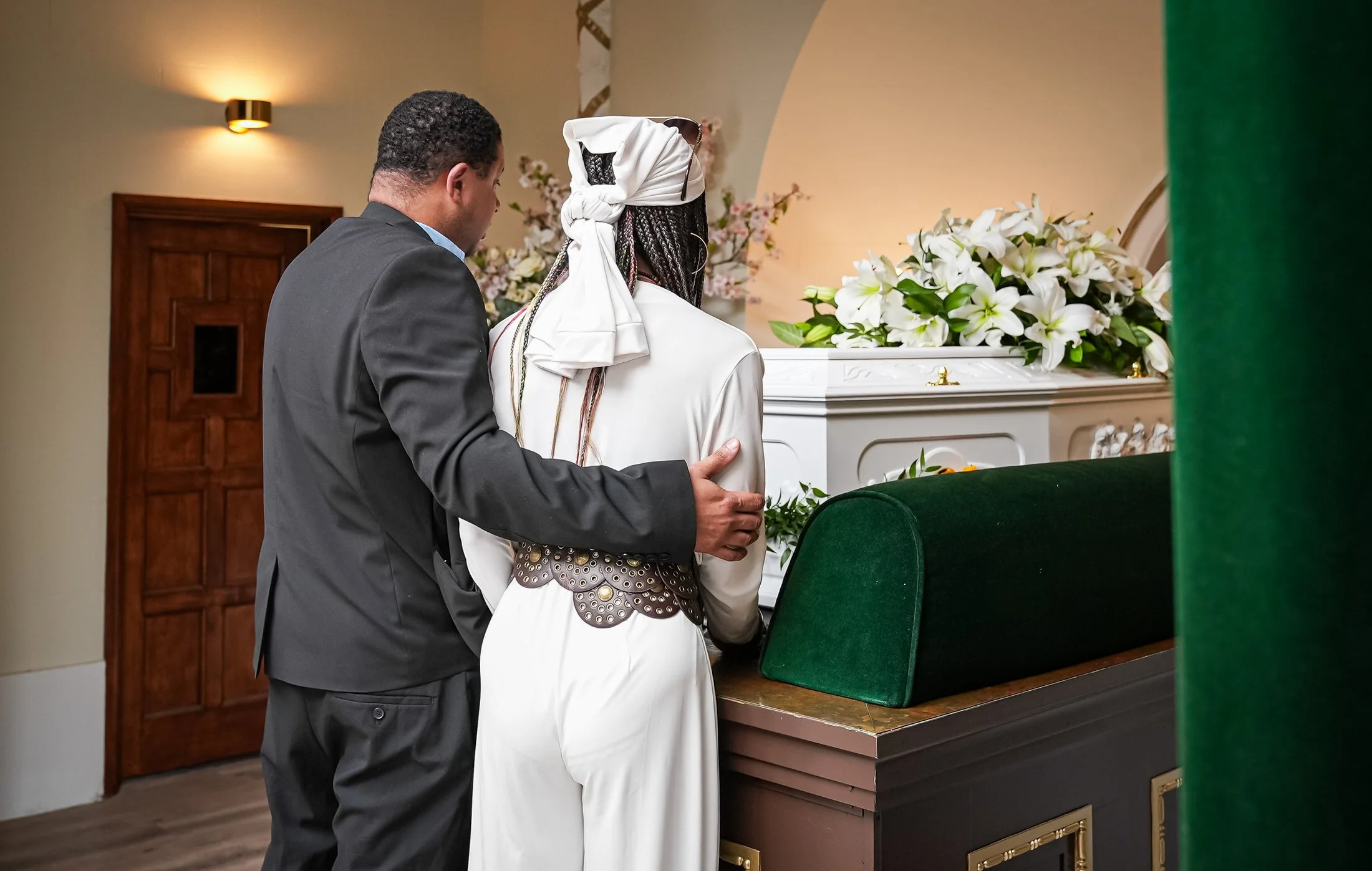
Is Funeral Photography Right for YOur Family?
Some families want the funeral photographed. Others do not. Neither is the wrong choice.
This page looks at both sides — why people book a funeral photographer, why some decide against it, and how to tell which side you are on so you can make an informed decision that is best for you and your family. If you already know you want it, then you can find out more about costs and how to book here: Funeral Photography. For the practical detail of the day, use the Funeral Photography Guide.
Why Families Want Funeral Photography
Grief makes the funeral hard to see while you are standing in it. You notice the person in front of you, or the next hymn, and miss the rest. Families book photography because they want that day kept — not as a performance, as a record they can come back to when they are ready.
That matters more when the gathering will not happen again in the same way. People travel. Old friends appear. A church is full that will never be full like that for that person again. The photographs hold who came, how the room felt, what the flowers looked like, and the smaller things that disappear as soon as the day is over.
You know you will not take the service in at the time
Relatives could not travel and will want to see the day
The funeral is for a baby, a child or someone young
It is a celebration of a long life and you want that atmosphere kept
You would rather a professional do it than leave it to freinds and phones
You may not look at the pictures for months, and that is fine
I have had families get in touch years later to say they had only just opened the gallery, and that having the photographs mattered more than they expected.
Why some Families Do Not Want Funeral Photography
Some families feel a funeral should not be recorded at all. That can come from the person who died, from someone close, or from a sense that a camera would change the room. If that is the feeling in the immediate family, it is a good reason not to book.
I have quoted families who wanted photography, talked the day through, and then heard back after they sat down with everyone else where one or two people were not comfortable with the idea, so they decided not to go ahead. That is fine. It is a family decision. The booking should only go forward when the people closest to it are agreed.
The funeral feels private and they do not want it recorded
Someone close does not want to be in pictures
Existing photos are enough for a tribute
The immediate family are not agreed
Do not book a photographer to please someone outside the family.
When It Is Usually Worth Booking
It is usually worth it when you want the day’s details captured by a professional. The photographer’s job is to use their experience to read the service and alter their approach accordingly — a celebration of life is not photographed in the same way as a baby funeral, a Caribbean service or a committal at a natural burial ground.
Families who book tend to want more than “some pictures of the funeral”. They want a record of who came, how the room felt, and the details they will not hold onto while they are in it.
You want a full record of the day, even if you do not look at it for a long time
You want to remember the details — the coffin, the flowers, the venue, the cars, and who was there
You want a record of the close connections between family and friends
The funeral includes faith or cultural rituals you want kept
It is a celebration of a long life, and you want that atmosphere as well as the service
The funeral is for a baby, a child or someone young, including for siblings later
You want photographs for an album, an anniversary, or a tribute slideshow
When It Usually Is Not
It is usually not worth it when the people closest to the person who died do not want a photographer there. Existing pictures can still make a tribute. Nothing important is lost by waiting, or by deciding no.
The immediate family do not want it
You only feel you “should”
You would rather have a slideshow from photographs you already have

An Example — Clandon Woods Burial Ground, Surrey
One of the funerals I photographed was at a burial Ground in Surrey, for a young man who had taken his life. It was a very sad day, and also one of the most beautiful funerals I have photographed.
The closest family buried him first, before anyone else arrived. He was laid in a meadow, with only a handful of close relatives there. After that they went back to the pavilion for a full service. When it ended, a saxophonist led everyone back to the grave, which had already been filled by the gravediggers. Family and friends all laid flowers and said their goodbyes. Then the day moved on to a reception at a local pub.
All of that was photographed — the private burial, the service, the walk back to the meadow, the flowers, the pub. The pictures were shared with the family afterwards. What they show is how natural the day was: a small goodbye first, then a larger celebration of the life he lived.
Talking It Through
If one person wants photography and another does not, have that conversation before the day. I have photographed funerals before where it has been agreed that one of the family members was left out of the pictures and not captured. I am always happy to accommodate your instructions and work around your ideas.
If you want to see the work first, use the portfolio.
Funeral photography starts from £750.
Call or text 07772 509101, or use the contact page.
How Many Photos Should a Funeral Slideshow Have?
When you are putting together a funeral slideshow, it is very easy to worry about getting the number of photos wrong. You might feel guilty about leaving certain images out, or anxious about including everything and ending up with something too long for the service. I've created funeral slideshows for families across the UK for over ten years, and this question comes up almost every time. The reassuring answer is that there is a sensible range to aim for — and within that range, there is plenty of room for your judgement and what feels right for your family.
For most funerals, a good starting point is around 35–40 photos for a main slideshow, with each image on screen for roughly 4–6 seconds. That usually gives you a tribute of 3–7 minutes — long enough to feel meaningful without overwhelming the order of service. You can go shorter or longer depending on where the slideshow will be used and how much time the celebrant or officiant has set aside.
Start With Where the Slideshow Will Be Played
Before you decide on a precise number of photos, it helps to think about where and when the slideshow will be shown. The right number of photos for a service slideshow is very different from the right number for a wake, and different again for a separate celebration of life event.
During the main funeral service: There may only be a natural gap of 3–5 minutes — for example, after the eulogy or before the final hymn. In that case, around 30–40 photos usually works well, depending on the length of the music.
At the wake or reception: There is usually more time, and the slideshow can play in the background or on a loop. Here, 60–100 photos can work well, especially if people are coming and going and will only catch part of the loop at any one time.
At a separate celebration of life: The tone is typically more relaxed and timing more flexible, so you might use the upper end of the range — or combine a main slideshow with a longer tribute film that people can watch in full afterwards. You can read more about how slideshows work alongside other services in my celebration of life services guide.
If you are not sure how much time will be available in the service, it is worth checking with your celebrant, minister, or funeral director before finalising anything.
A Simple Rule of Thumb: Seconds Per Photo
Most families find it helpful to think in terms of seconds per photo, then work backwards from the length of the slot or song they have available.
A gentle pace typically means:
4–6 seconds per photo for a main slideshow
Slightly longer (up to 8 seconds) for images with a lot of detail or emotional weight
Slightly shorter (3–4 seconds) if you have many similar images in a row and want to keep the rhythm moving
Once you know roughly how long you have, the maths is straightforward:
3 minutes at 5 seconds per photo ≈ 36 photos
5 minutes at 5 seconds per photo ≈ 60 photos
7 minutes at 5 seconds per photo ≈ 84 photos
This isn't an exact science — I can stretch or compress a little during editing — but it gives a helpful guide when you're choosing which pictures to include.
Typical Ranges That Work Well
In practice, a few ranges work especially well for the families I support:
Short, focused slideshow for the service: Around 30–40 photos, 3–4 minutes long, usually set to one important piece of music. This is the most common format for a church, crematorium, or chapel service where time is limited.
Standard tribute slideshow: Around 40–60 photos, 3–7 minutes long, often spread across one or two tracks. This works well both during the service and for sharing online with relatives who couldn't be there.
Longer background slideshow at the wake: Around 60–100+ photos, 6–10 minutes, played on a loop at a reception or celebration of life gathering. People can dip in and out without feeling they've missed anything important.
You don't need to count every second. As long as you're in roughly the right range for the slot you have, I can fine-tune the timing during editing so the slideshow feels calm, unhurried, and right for the day.
What if You Have Too Many Photos?
This is the most common situation — starting with hundreds of images and feeling overwhelmed at the idea of choosing. The aim isn't to include every photograph, but to select enough that together they feel like a true and rounded picture of the person's life.
Some ways to gently narrow things down:
Look for duplicates and near-duplicates and keep just one from each cluster
Make sure each major stage of life is represented — childhood, early adulthood, family life, later years — without crowding any one period too heavily
Prioritise images where the person's face and expression are clear over distant or blurry shots
Choose group photos that show key relationships — partners, children, grandchildren, close friends — even if that means leaving out a few others
If there are still too many, one approach I use regularly is creating a shorter main slideshow for the service and a longer version for the wake or for viewing at home, where there's more time and flexibility. These can often be built from the same pool of photos, so you're not having to choose between one and the other.
When families work with me on a funeral slideshow, I help with this selection process and advise on what's realistic for the time available — so you're not left making difficult decisions alone at an already hard time.
What if You Don't Have Many Photos?
Some families have the opposite problem — only a handful of pictures, perhaps because of age, distance, or circumstances. A slideshow can still be deeply meaningful even with relatively few images.
In that case, I might:
Use fewer photos and keep them on screen longer, so each one has time to breathe and be properly seen
Gently repeat a small number of images in different parts of the slideshow, particularly if they show different aspects of the person
Include simple text slides — favourite sayings, nicknames, dates, place names — between photographs
Weave in photographs of special objects or places — a favourite chair, a motorbike, a garden, an instrument, a walking route
I can also help digitise printed photographs and pull in pictures from relatives' phones, so there's more to work with than families initially expect.
Balancing Quality and Quantity
While it's useful to have a rough target number, the most important thing is that each image you include adds something to the story. It is better to have 30–40 strong, well-chosen photographs that people can really absorb than 150 that rush past too quickly for anyone to take them in.
When I create slideshows for families, I focus on:
Choosing images that show personality, relationships, and stages of life
Avoiding too many very similar shots in a row
Giving emotionally significant photographs a little more time on screen
Keeping the overall length appropriate for the slot and venue
If you're unsure, you can send me more than you think you need and I'll suggest a final selection and order that fits the time available.
How the Slideshow Can Be Shared More Widely
One thing families sometimes don't think about in advance is how the slideshow will be seen by people who aren't in the room.
If I'm also providing funeral live streaming for relatives watching from abroad or at home, I can integrate the slideshow directly into the stream. That means people watching remotely see the tribute clearly — full screen, with the music — rather than catching a glimpse of a distant screen in the background of a camera shot. For families with relatives overseas, this matters a great deal. The slideshow is often one of the most emotional parts of the day, and it should be shared properly with everyone watching, not just those in the room.
Similarly, if I'm providing AV support at the venue — screens, sound, projection — I manage the playback on the day so the family doesn't have to think about it. The right file format, the right moment, the right volume. That's one less thing for anyone to worry about.
How I Can Help
If you'd like to understand more about how slideshows are structured and what different styles look like, my guide to funeral slideshow examples shows five different real approaches — from short, focused service tributes to extended films lasting nearly an hour.
For music choices, my guide on best songs for a funeral slideshow walks through the most common approaches families take and how to match music to the mood and format of the tribute. And if you're thinking about something more detailed than a slideshow, my guide on how to create a funeral tribute film covers extended options including voice recordings and video clips.
If you'd rather not think about photo numbers, timings, and music at a difficult time, I can look after all of that for you. You simply send me the photos you feel are important — whether they're digital or printed — tell me roughly how long you have in the service, and I'll build a calm, respectful slideshow that fits.
My funeral slideshows page covers everything that's included and how the process works, with pricing from £220.
Call or text me on 07772 509101 — I'm available seven days a week from 9am to 10pm — or get in touch online and I'll get back to you promptly.
Related guides:
“My dear friend George Richmond, the Director of Photography for the Marvel movie Deadpool, took on the responsibility of selecting a videographer for my husband's funeral. He chose you out of everyone he looked at, and I am immensely grateful for that decision.
Your work is truly remarkable - from the beautiful opening shots to the impeccable sound quality and the finer details throughout. The way you captured the vibrant blue sky was touching, especially since my husband had such an affection for blue skies. My heartfelt thanks for everything you've done.”
— Lady M ⭐️⭐️⭐️⭐️⭐️