The Importance of Live Streaming Funerals

Funeral live streaming has become an important way for families to stay connected when they cannot all be in the same place. In today’s world, it is common for relatives and close friends to live in different cities, countries and continents, and for travel to be difficult because of distance, cost, health or personal circumstances. Live streaming bridges that gap, allowing people to take part in the service in real time, wherever they are.

At UK Funeral Video Services, we have live streamed, filmed and photographed over 2,500 funerals across the UK, working with families from a wide range of cultural and religious backgrounds. We regularly support Caribbean, African, Jewish, Greek, Chinese, Hindu, Sikh and other Asian and European funerals, where family and friends are spread around the world. Over time we have refined a way of working that is discreet, reliable and respectful, so that people watching online can see and hear the service clearly without the technology distracting from what really matters.

f you are considering whether to live stream a funeral, this guide explains why it can be so valuable, how it connects families, and how it fits alongside our funeral live streaming services and other funeral media options.

Bridging Distance and Circumstances

One of the most important reasons families choose live streaming is simply that people they love cannot be there in person, however much they may wish to be. Modern families are often spread across the UK and globally; there may be relatives in the Caribbean, Africa, Europe, Asia or North America, or close family who are elderly, unwell, in hospital or caring for others. For many of them, travelling at short notice is not realistic.

Live streaming allows those people to:

  • see the service as it happens rather than hearing about it afterwards

  • hear the tributes, prayers, readings, music and eulogies word for word

  • watch key moments such as the arrival of the coffin, the commendation, the committal and the final farewell

Whether the service is in a church, synagogue, mosque, gurdwara, temple, chapel, crematorium or more informal venue, a well‑run live stream ensures that nobody is excluded purely because of distance or circumstance. Instead of feeling left on the outside, relatives and friends abroad can be present in a quiet but real way, sharing in the same moments at the same time.

If you would like to see what is included in a typical service, our funeral live streaming services page explains how we approach this in more detail.

Connecting Families Across Cultures and Traditions

Different communities mark a funeral in different ways, but the desire to be present and show respect is universal. We have supported services where:

  • a Caribbean family has wanted relatives to see and hear the full service in church and then watch the grave being backfilled and the flowers laid

  • an African family has had relatives joining from several countries, watching live from homes, churches and community spaces

  • a Jewish funeral has needed to be organised quickly, with family abroad who could not travel in time but were able to join live from the first prayers to the final Kaddish

  • Greek Orthodox, Hindu, Sikh and other Asian funerals have brought together relatives across multiple continents, with people watching on phones, tablets and televisions in different time zones

Live streaming allows the important elements of each tradition to be shared: the hymns and choruses, the chanting and readings, the incense, the rituals at the graveside, the dressing of the grave with flowers, and the specific prayers or cultural customs that matter to that family.

It also makes it possible for those watching from abroad to feel more connected afterwards. Many families tell us that relatives who watched remotely felt able to talk about the funeral in detail afterwards, because they had seen what took place, rather than imagining it from a distance.

Being Present at the Church, Crematorium and Graveside

A key advantage of professional funeral live streaming is that it is not limited to a single fixed camera in one location. With planning, it can follow the journey of the funeral in a way that reflects what the family wants to share.

For example, a live stream might:

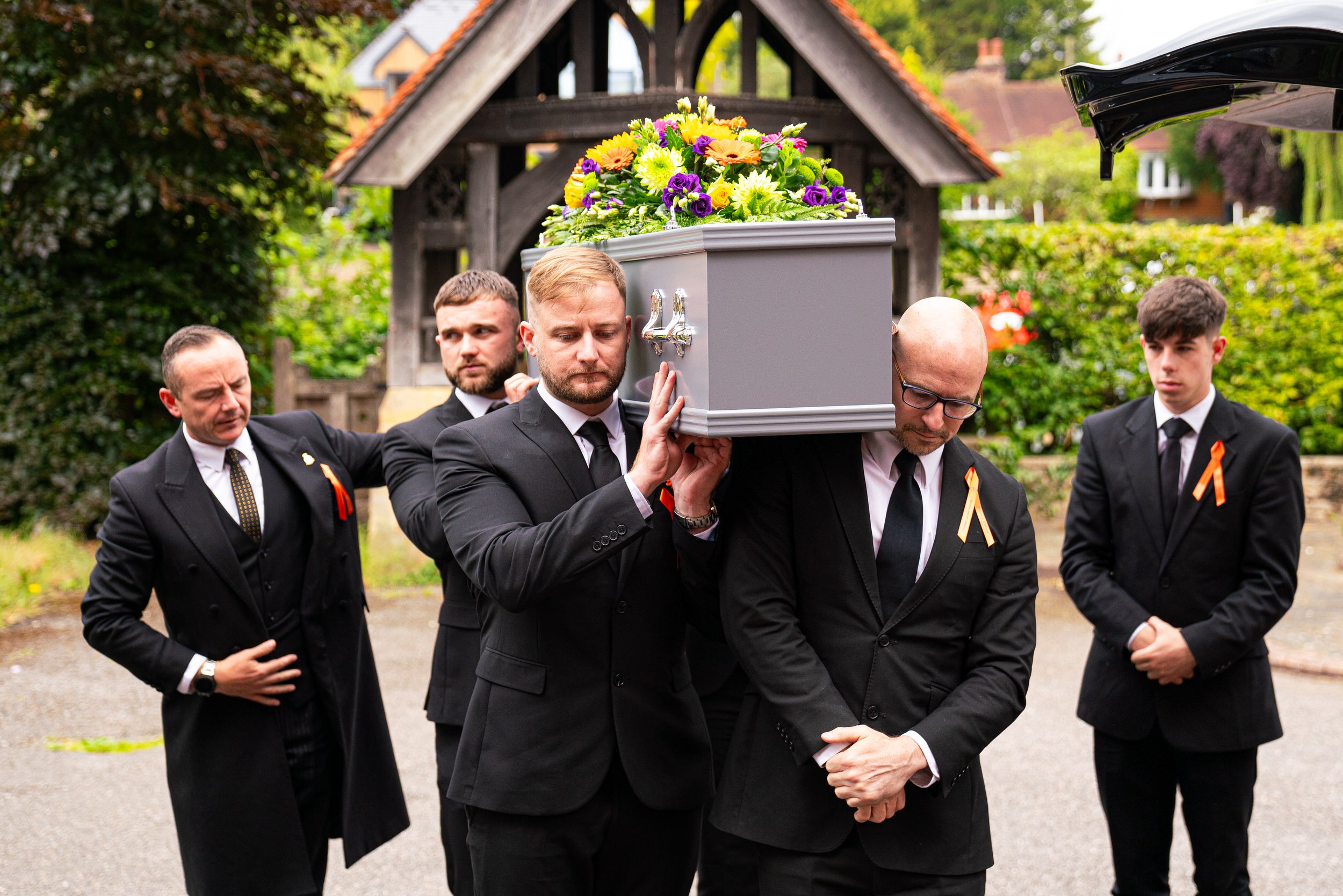
  • begin outside the church as the hearse arrives and the coffin is carried in

  • follow the service inside, capturing the tributes, readings, sermons and music with clear sound

  • continue at the crematorium chapel or graveside, so that those watching online can see and hear the final prayers and the committal

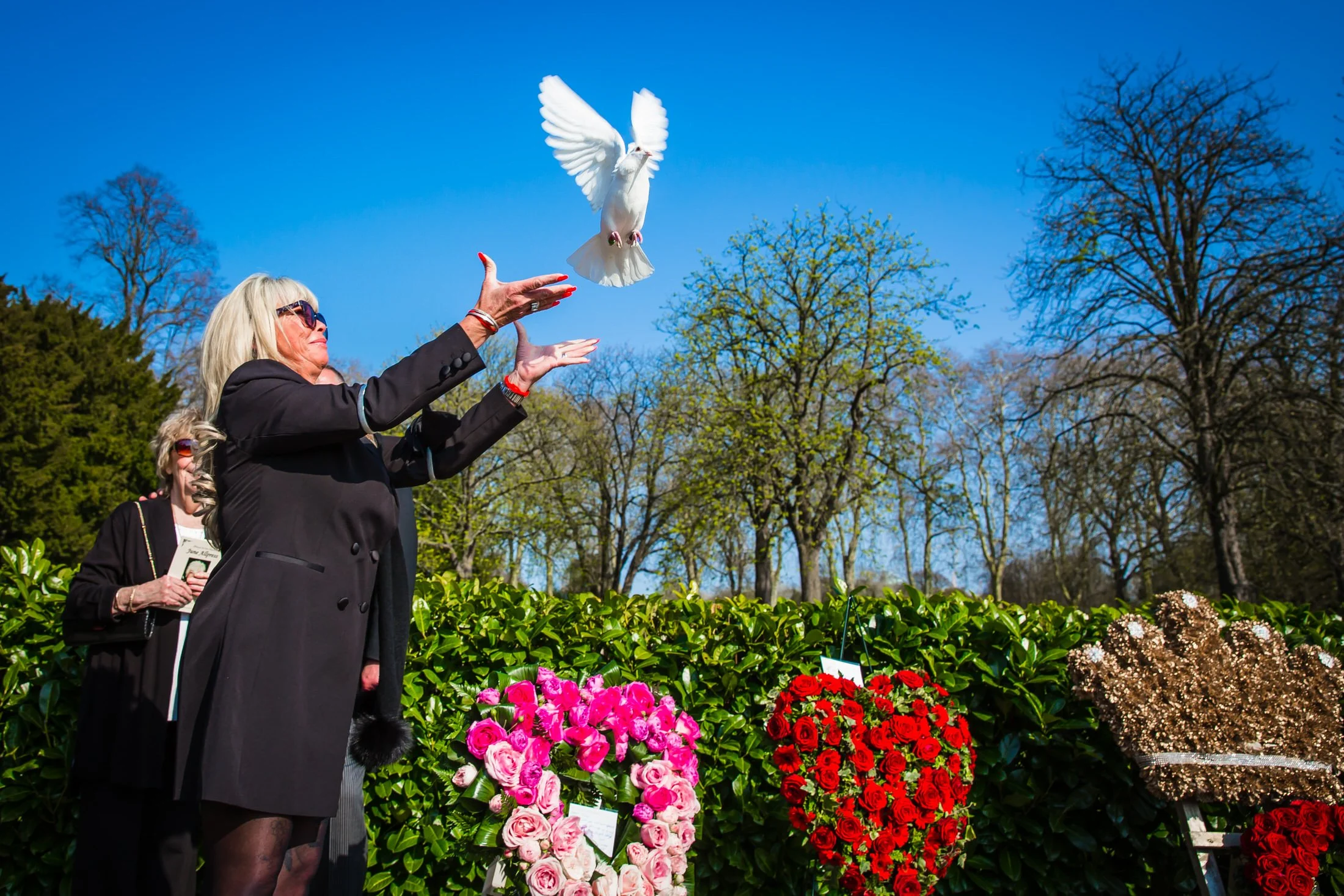
  • show the grave being backfilled and the flowers being placed, which can be especially important for Caribbean and African families where the graveside is a central part of the farewell

Not every family wants or needs all of these elements streamed, and some prefer the graveside to remain private. But where it matters to the family, live streaming can help relatives abroad feel that they have truly been there for the whole of the farewell, not just the first part.

Our guide on how funeral live streaming works explains how we plan this in practical terms, from arrival times and camera positions to audio and internet connections.

Allowing Shared Grief and Support, Even When Apart

Grief can feel isolating when you are far away from the funeral, particularly if you are the only one in your country or city. Live streaming cannot remove that distance entirely, but it does give people a way to be part of the collective moment, to hear familiar voices, and to see the faces of family and community around the coffin.

For many people watching online, it matters greatly to:

  • hear the way people talk about the person who has died

  • listen to the chosen hymns, songs or pieces of music

  • see who is there, how the venue has been arranged, how the coffin is dressed and how the flowers look

  • witness the closing moments of the service and the final goodbye

Afterwards, those who have watched live can talk with others who were there about what they saw and heard, share memories, and feel that they have said their own goodbye rather than feeling they missed it entirely. In some families, people arrange to watch together in one home or community space, creating a small group who can support one another while watching the live stream.

Preserving the Service for Later

Although the main purpose of live streaming is the live moment, the recording that is made at the same time often becomes very important to families. Not everyone can watch live because of work patterns, time zones or personal circumstances, and some people prefer to watch later when they feel ready.

A professional service will:

  • record the stream in full

  • make it available for replay after the service

  • allow the family to download a copy to keep

  • keep the recording online for a set period (for example, up to 12 months)

This means:

  • people in different time zones can watch at a time that works for them

  • the family can revisit the service later if they wish to

  • the recording can be shared with children or relatives who were too young or unable to attend

We explore this in more detail in our guide “Can you watch a funeral live stream later?”, which explains how replays and downloads work in practice.

Live streaming can also sit alongside more detailed funeral videography and funeral photography, which focus on creating a crafted film and still images of the day. Some families choose to have both: a live stream for those who cannot attend, and a separate cinematic film or a set of photographs as a lasting record for the future.

Why Professional Live Streaming Makes a Difference

There is a big difference between a professional live stream and a simple phone recording. On an emotional day, it is a heavy responsibility to ask a family member to manage a stream themselves while also trying to take part in the funeral. It is easy for something to go wrong: the sound may be unclear, the signal may drop, the camera may be blocked by people standing or moving, and the recording may fail.

A professional funeral live streaming Company focuses on:

  • clear, balanced audio so that every tribute, prayer and piece of music can be heard

  • multiple camera angles to show both the speakers and the wider scene

  • stable, bonded internet connections with backup options, particularly in older buildings or outdoor locations

  • discreet positioning of equipment and operators so the service is not disrupted

  • simultaneous recording across several devices so there is a reliable copy afterwards

At UK Funeral Video Services, we have refined our approach over hundreds of services in churches, crematoria, cemeteries, synagogues, gurdwaras, temples, chapels and non‑religious venues. The aim is always the same: to let the technology quietly support the service, not dominate it.

If you would like to understand more about the technical and practical side, our guide “How funeral live streaming works” explains the process in more detail, from the first enquiry through to the recording and replay.

Example: A Funeral with Family in the Caribbean

For example, one family we worked with had close relatives spread between London and the Caribbean. They wanted those abroad to be able to see the full church service, hear the choir and family tributes, and also witness the burial and the grave being dressed with flowers. Through live streaming, relatives watched from homes and churches overseas, joining in the hymns and prayers as the service unfolded.

Caribbean family funeral with church service and graveside live stream

Example: A Multi‑Faith Family Across Several Countries

Another family had relatives in the UK, Nigeria, Europe and Asia, with a service that combined different religious and cultural elements. Live streaming allowed everyone to be present for the whole ceremony, including traditional prayers, readings in different languages and music that was meaningful to the family. People watched from several countries at once, some on their own and some gathered together in small groups.

Multi‑country funeral live stream for a multi‑faith family spread across the UK, Nigeria, Europe and America

How Live Streaming Fits Alongside Other Funeral Media

Live streaming does not have to stand alone. It often works best as part of a wider approach to how the funeral is remembered and shared.

Some families choose:

live streaming for those who cannot attend

These options can complement each other. The live stream ensures that nobody misses the service on the day, while a film, photographs or tribute slideshow provide something tangible to keep, share and revisit in the future.

Is Live Streaming Always the Right Choice?

Live streaming will not be right for every funeral, and it is important to decide based on what feels appropriate for your family and for the person who has died. Some families feel strongly that the service should be private and prefer not to have cameras present at all; others may choose only a recording without a live stream, or a small, invitation‑only stream.

Questions that can help you decide include:

  • Are there important people who simply cannot attend in person?

  • Would live streaming help those people feel included, or might it feel uncomfortable?

  • Are there particular parts of the service you would want, or not want, streamed?

  • How do you feel about the service being recorded and kept?

We are always open and honest about when live streaming makes sense and when it might not. Our role is to explain the options and help you choose what feels respectful and appropriate, not to push you towards something that does not sit comfortably.

Next Steps

If you are considering live streaming a funeral or celebration of life, you do not need to have all the answers before you get in touch. We can talk through what you are planning, who may need to watch from afar, and what level of coverage would feel right.

You can:

For some families, live streaming becomes an important part of how they say goodbye and how they stay connected, even when they are scattered across different cities and countries. When it is done thoughtfully, it can offer comfort, inclusion and a sense that, despite the distance, everyone was able to be there together.

Shaun Foulds

I’m a Videographer and Photographer travelling the UK Streaming Funerals and Photographing Weddings. I huge contrast between the two but as a storyteller I’m passionate about capturing all the moments life throws at us. 

https://www.ukfuneralvideoservices.com
Previous
Previous

Live Streaming a Greek Orthodox Funeral

Next
Next

Is It Respectful to Live Stream a Funeral?