How to Photograph a Natural Burial – Clandon Wood, Surrey
Natural burials are some of the most beautiful and meaningful funerals to photograph. Instead of rows of headstones and traffic, there are meadows, trees, birdsong and open sky. Families choose these places because they want something simpler, greener and closer to nature – and the photography should reflect that.
This guide is built around one of the most memorable funerals I have ever photographed, at Clandon Wood Natural Burial Ground in Surrey . It was a bright, hot summer’s day, with a woollen shroud, a simple cart, sunflowers, saxophone and a long line of friends and family walking through the meadows. It’s a powerful example of how a thoughtful, documentary approach can quietly honour a natural burial from start to finish.
If you are considering funeral photography for a natural or woodland burial, this guide will help you understand what’s possible and how I work, so you can decide if Funeral Photography feels right for your family.
Why this natural burial at Clandon Wood stands out
Clandon Wood is designed as both a nature reserve and a natural burial ground – wildflower meadows, young woodland, lakes and open views. On this particular day, the sun was high, the sky was clear and the meadows were glowing.
This funeral stood out because:
It was a fully eco‑focused natural burial, with a woollen shroud rather than a coffin.
The day was structured in two parts: a small, private burial for close family, and a larger service in the glass pavilion later on.
The journey to and from the grave involved a simple cart, sunflowers and long walks through the fields, led by a celebrant and, later, a saxophonist.
For photography, it meant there were multiple “chapters” to the story: quiet time with immediate family, the walk to the grave, the burial itself, the return to the pavilion, the gathering of the wider community, and a second walk back to the grave with everyone together.

What makes natural burial photography different?
Photographing a natural burial is very different to photographing a traditional churchyard or crematorium:
The setting is a living landscape, not just a plot. At Clandon Wood, the burial ground is managed as a nature reserve, with wildflowers, trees and water attracting wildlife.
Funerals often have a more spacious rhythm. Families may have time for a private graveside service before a larger gathering, and there is less pressure from fixed chapel slots.
Eco choices are central: simple coffins or woollen shrouds, minimal memorials and an emphasis on returning the body to the earth.
For photography, this means:
You can tell a wider story – including the environment, the walks, and the transitions between spaces.
Light and weather play a much bigger role and need to be handled carefully to keep images gentle.
Respect for the environment and for people’s privacy is as important as technical skill.
Clandon Wood – arrival and preparation in the pavilion
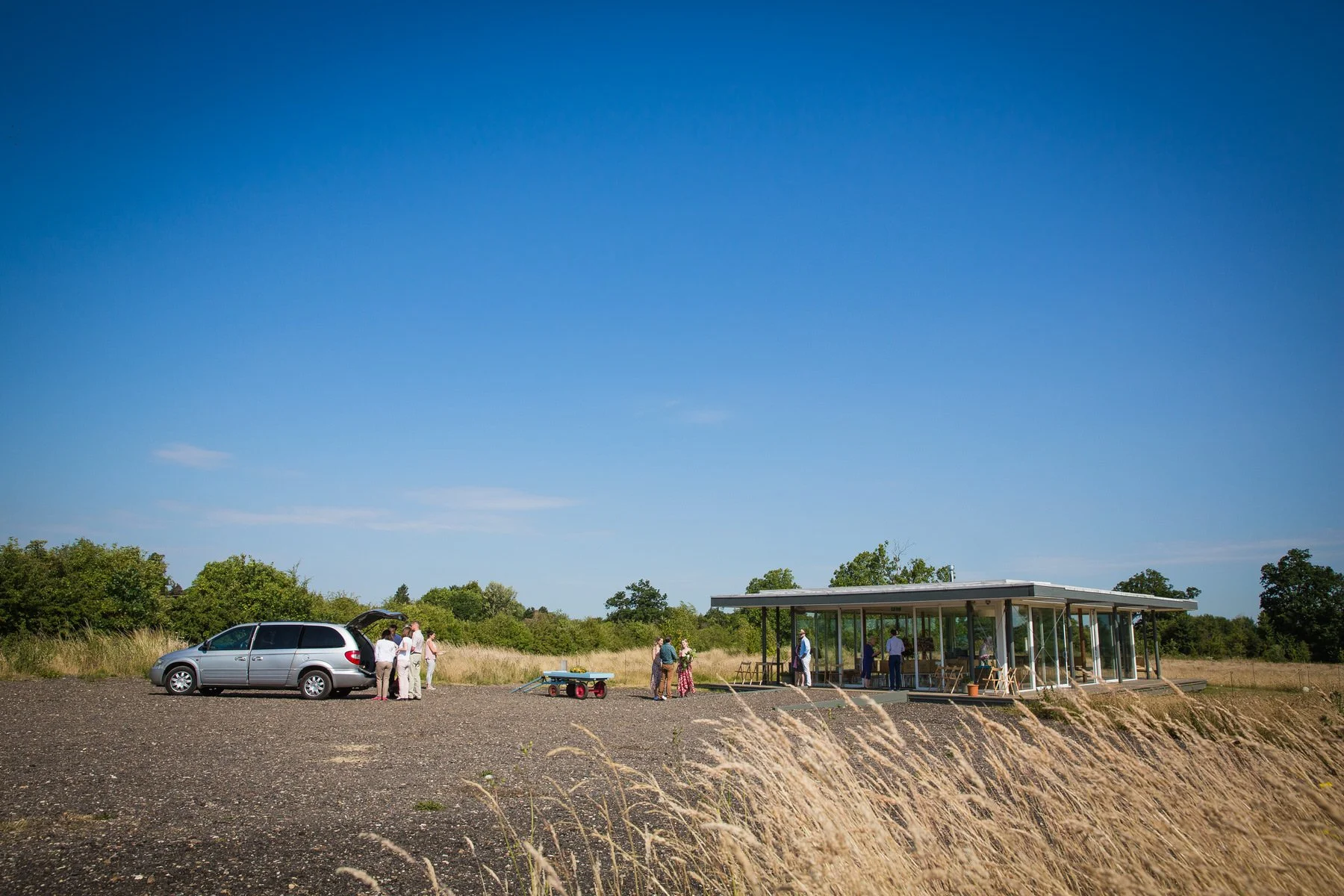
The day began with very close family arriving at the glass pavilion well before the main service. The first focus wasn’t the crowd; it was the memories.
Inside the pavilion, the family:
Laid out a memory table with photos, picture boards and small details from Rory’s life.
Arranged memory books and albums for people to look through later.
Prepared the space so that when others arrived, they would immediately sense who he was and what mattered to him.
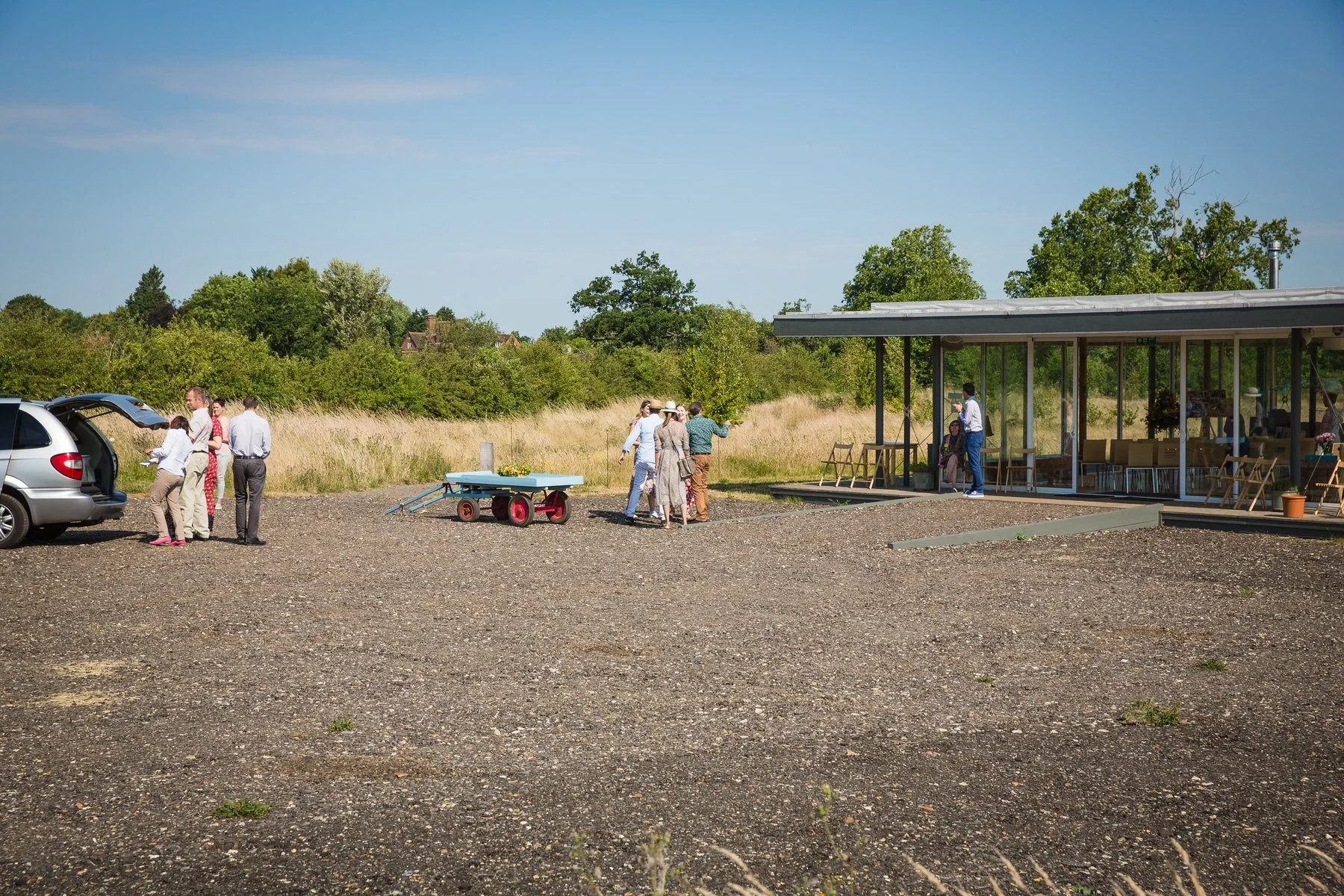
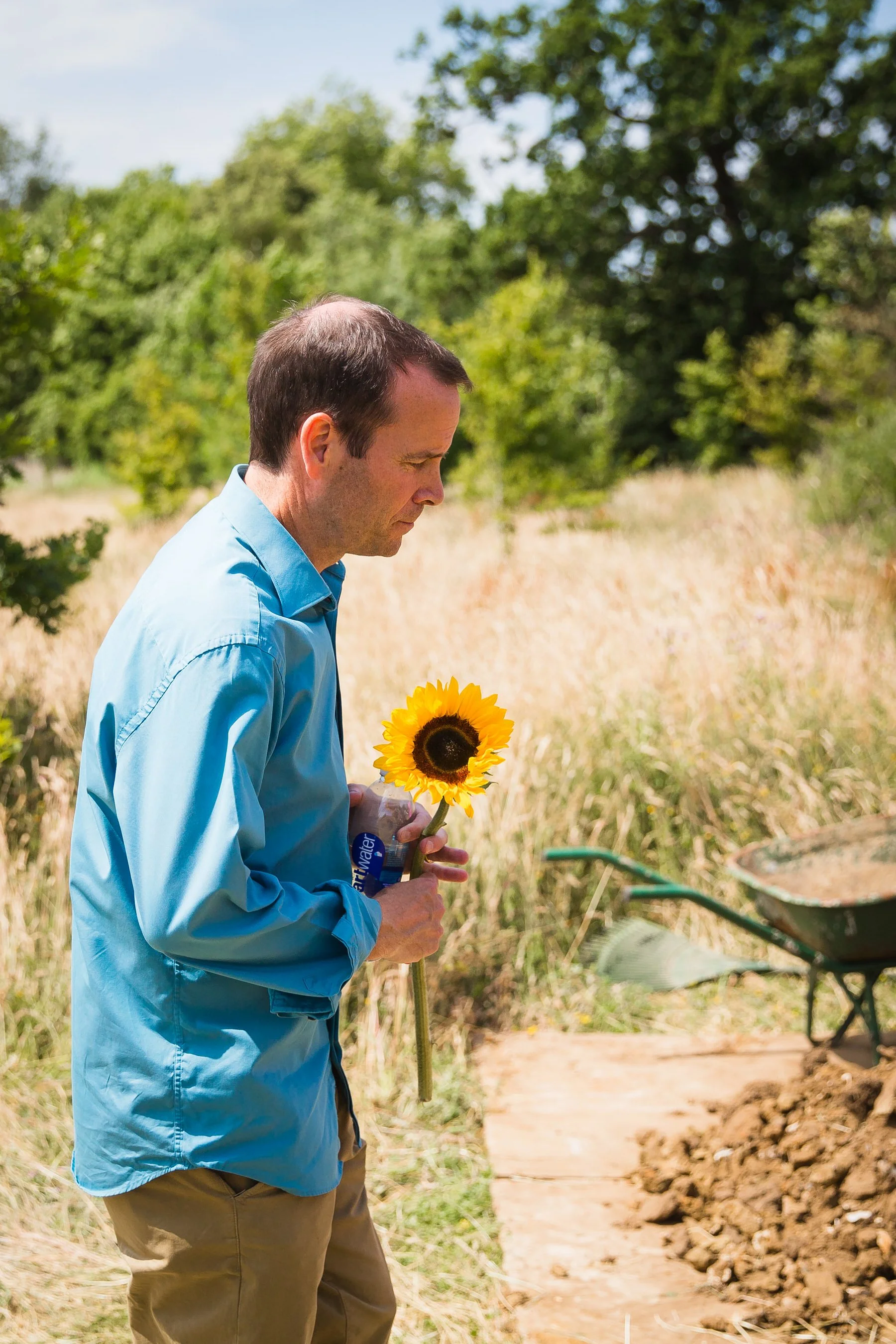
Outside, an old cart had been prepared for Rory’s final journey to the grave. Beautiful sunflowers were placed on the cart, ready for when his shroud would arrive.
Photographically, this early stage was about:
Details – memory boards, books, flowers, the cart.
Quiet interactions between close family as they set everything out.
The way the pavilion and surrounding countryside framed these moments.
This was the calm before the public part of the day, and the photographs from this time are some of the most personal: small gestures, private preparations, and a sense of anticipation.
Photographing the ceremony in the glass pavilion
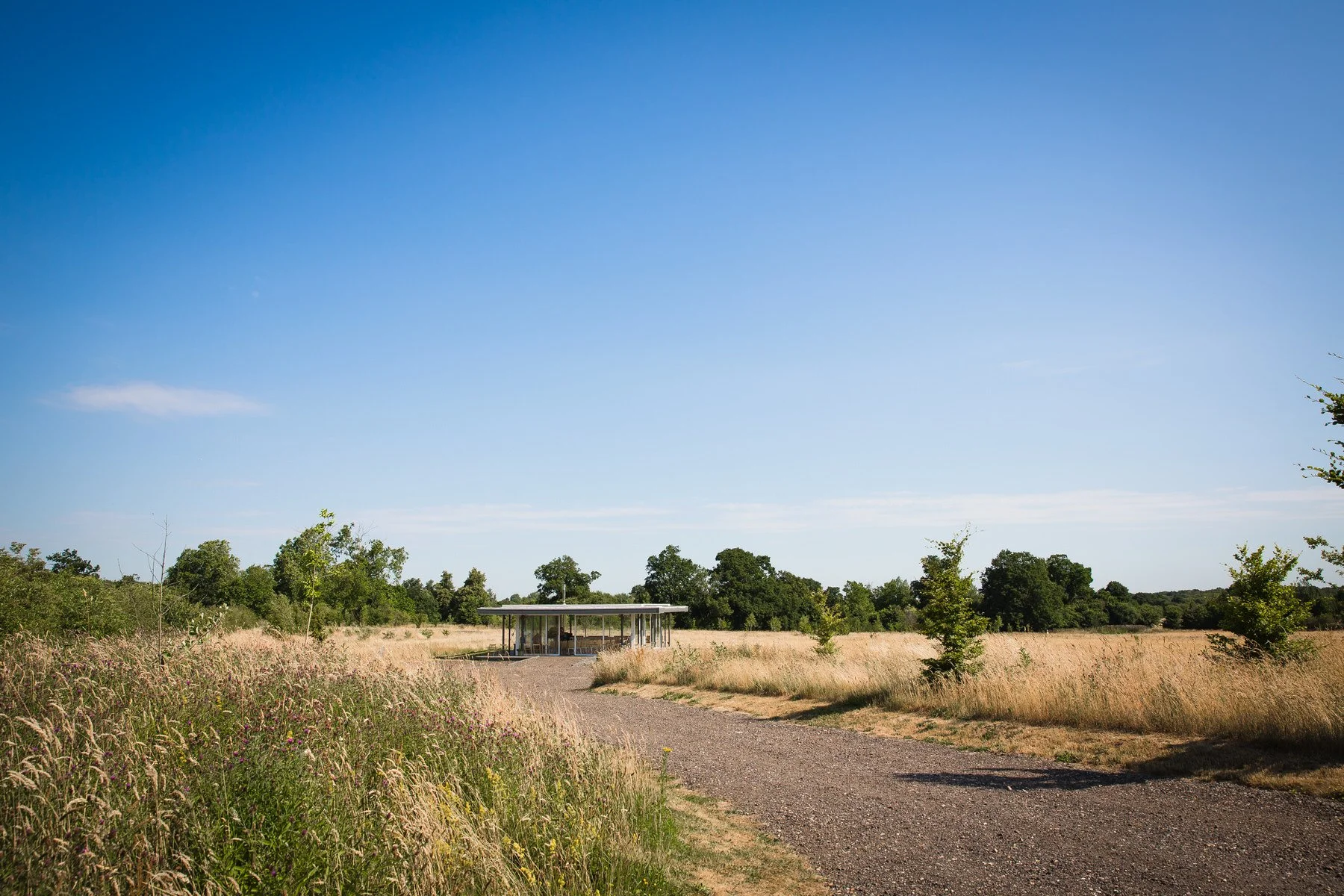
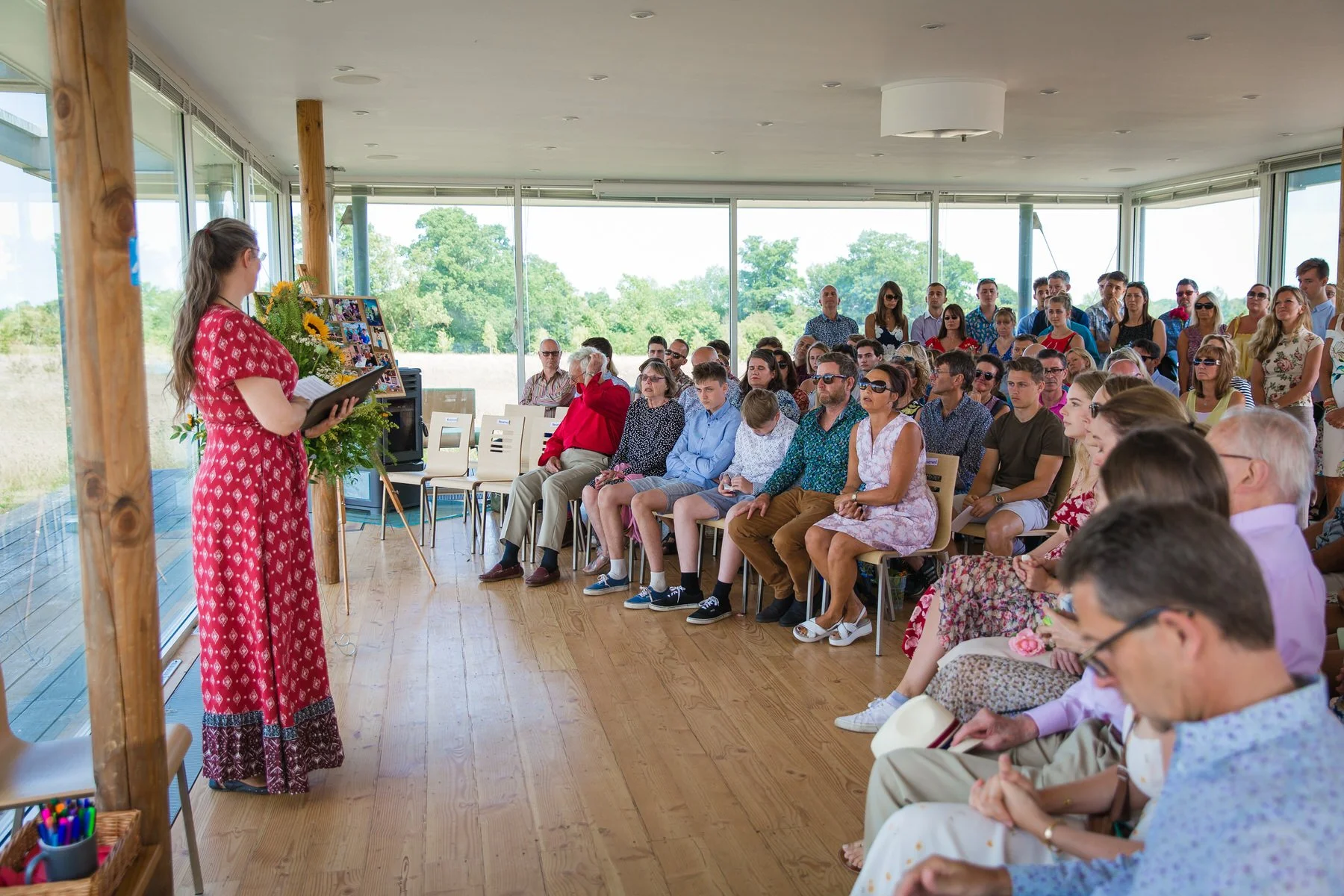
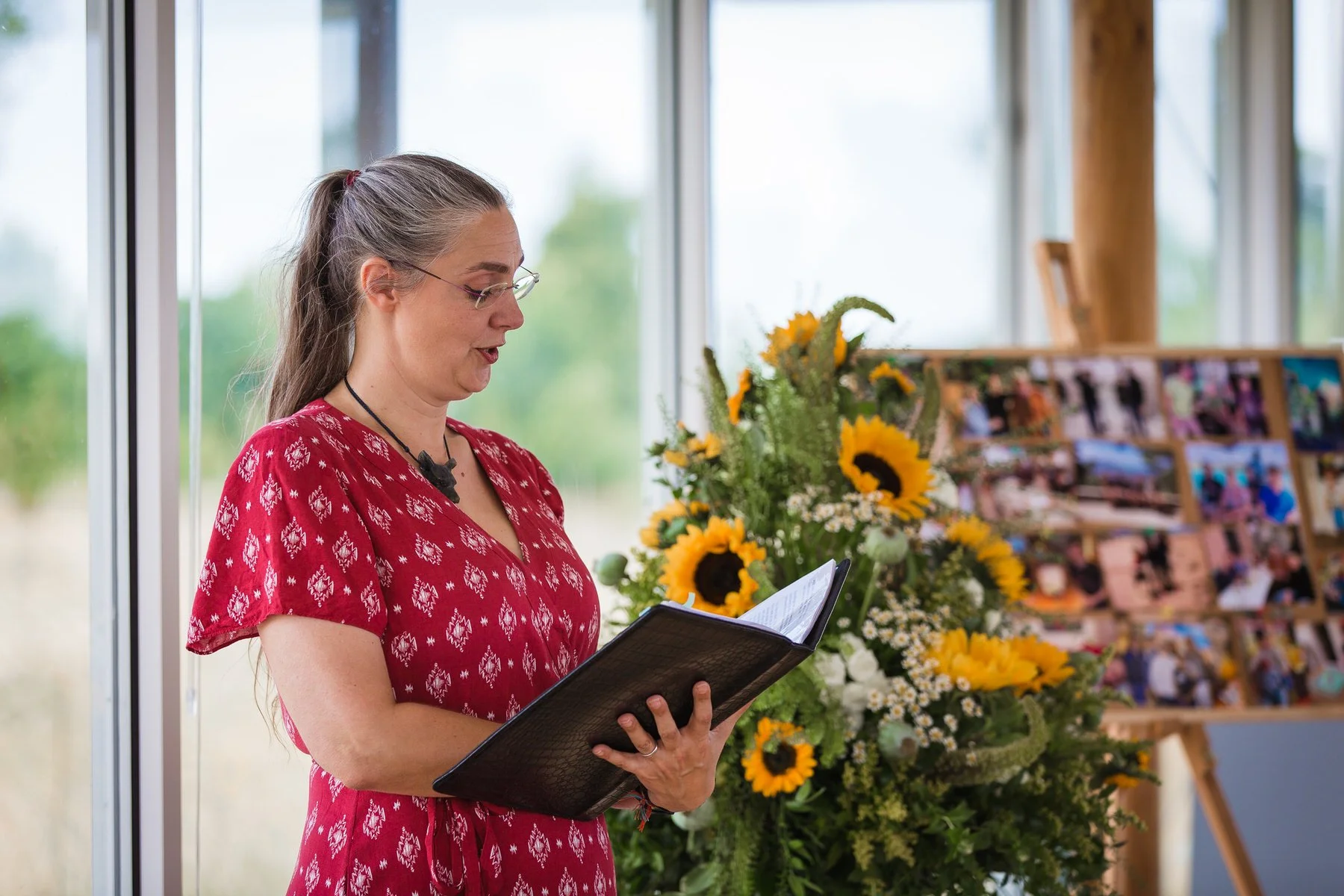
The funeral service later in the day also took place in Clandon Wood’s glass pavilion – a light, simple building with views over the meadows and countryside.
Inside, I focused on:
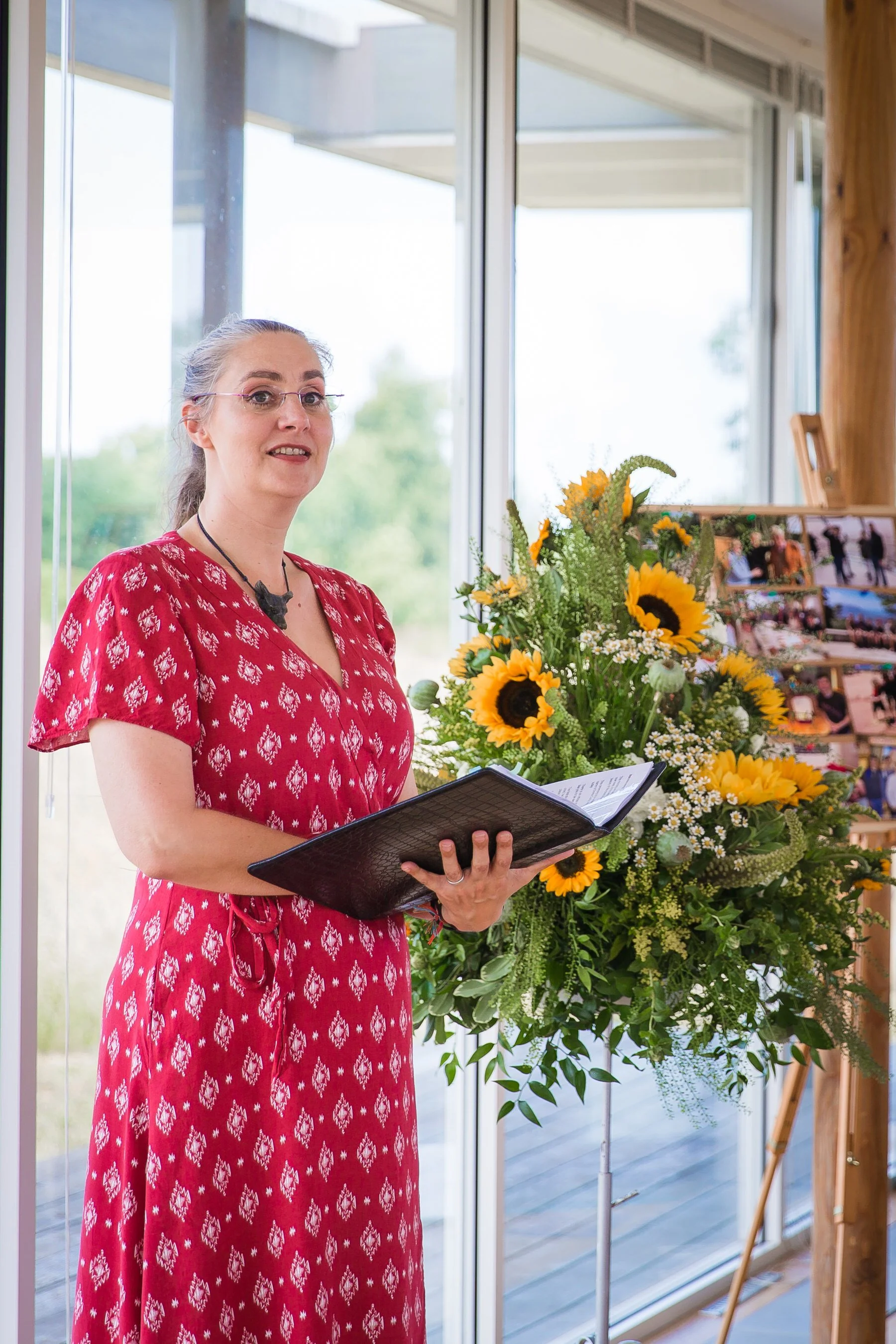
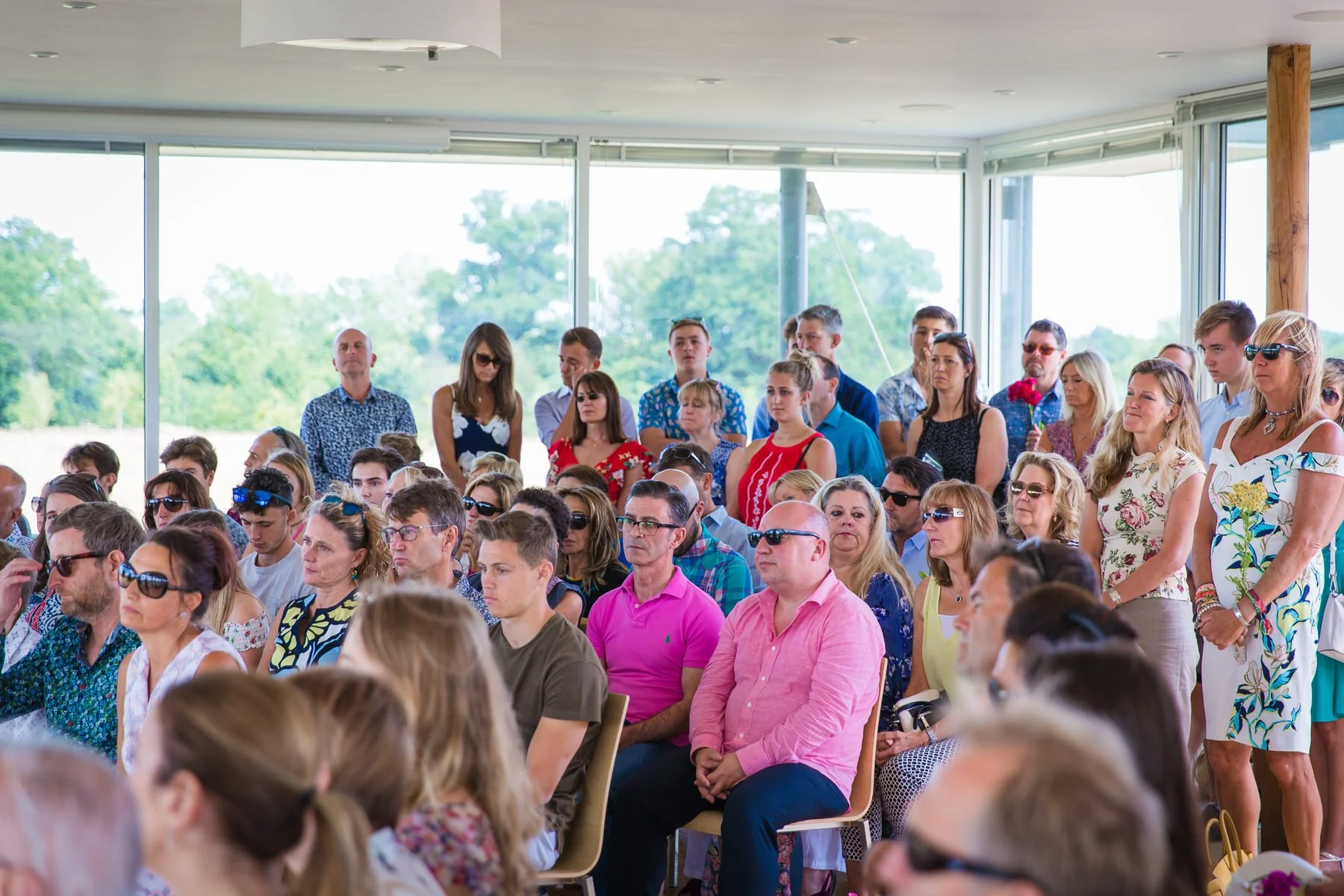
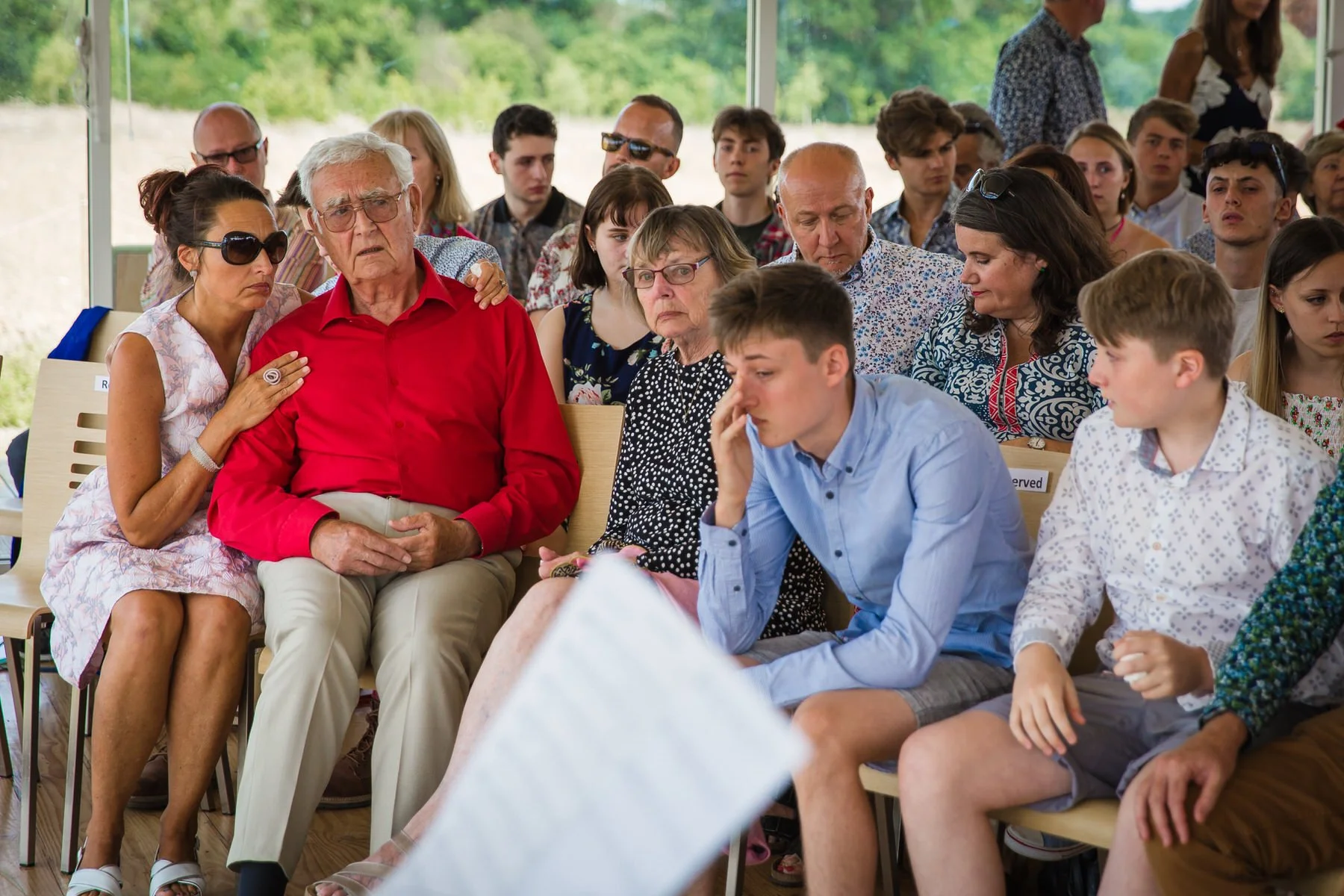
Faces and expressions during readings, tributes and music.
The interplay between people and the landscape outside – for example, framing the celebrant or family members with trees and sky softly visible beyond the glass.
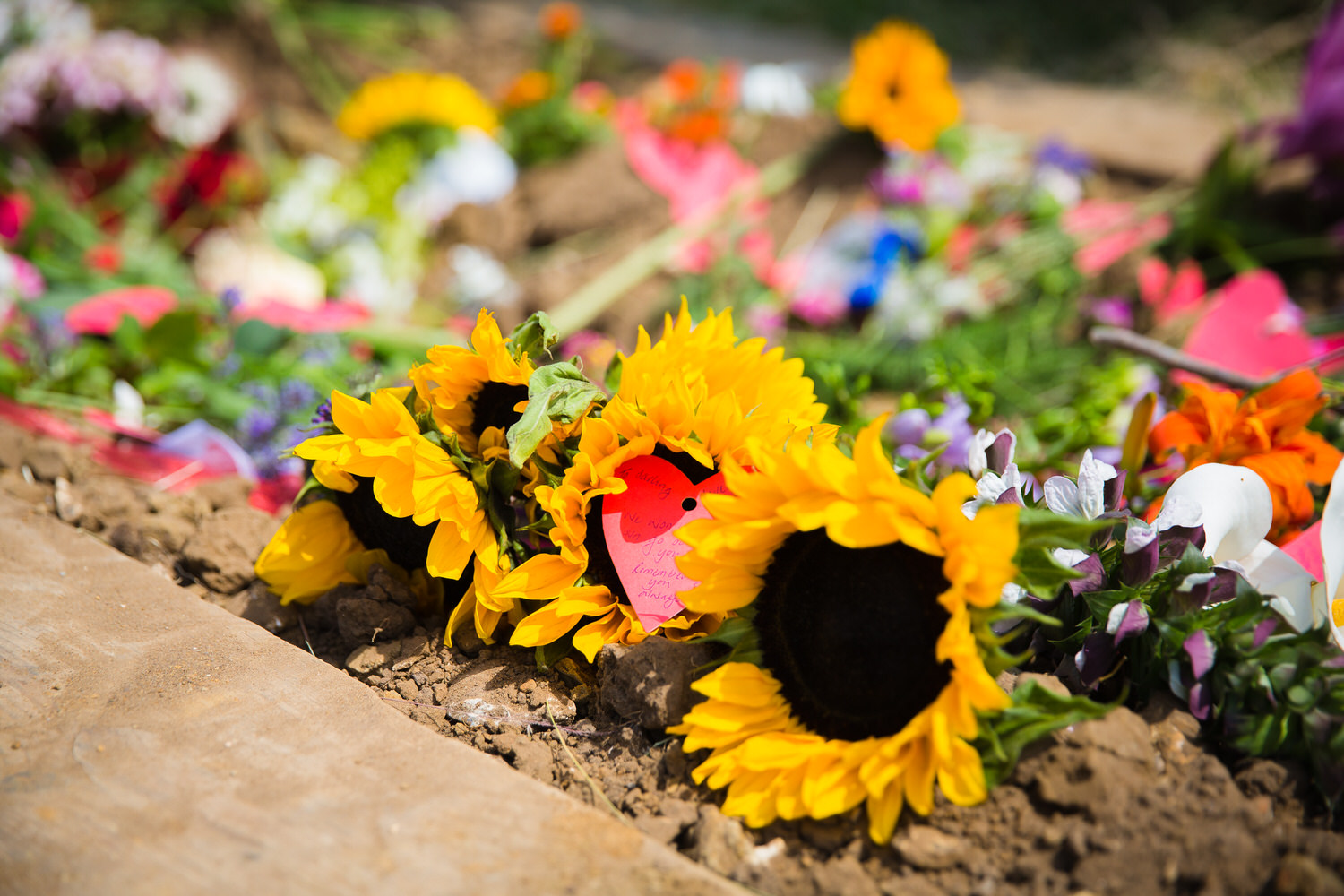
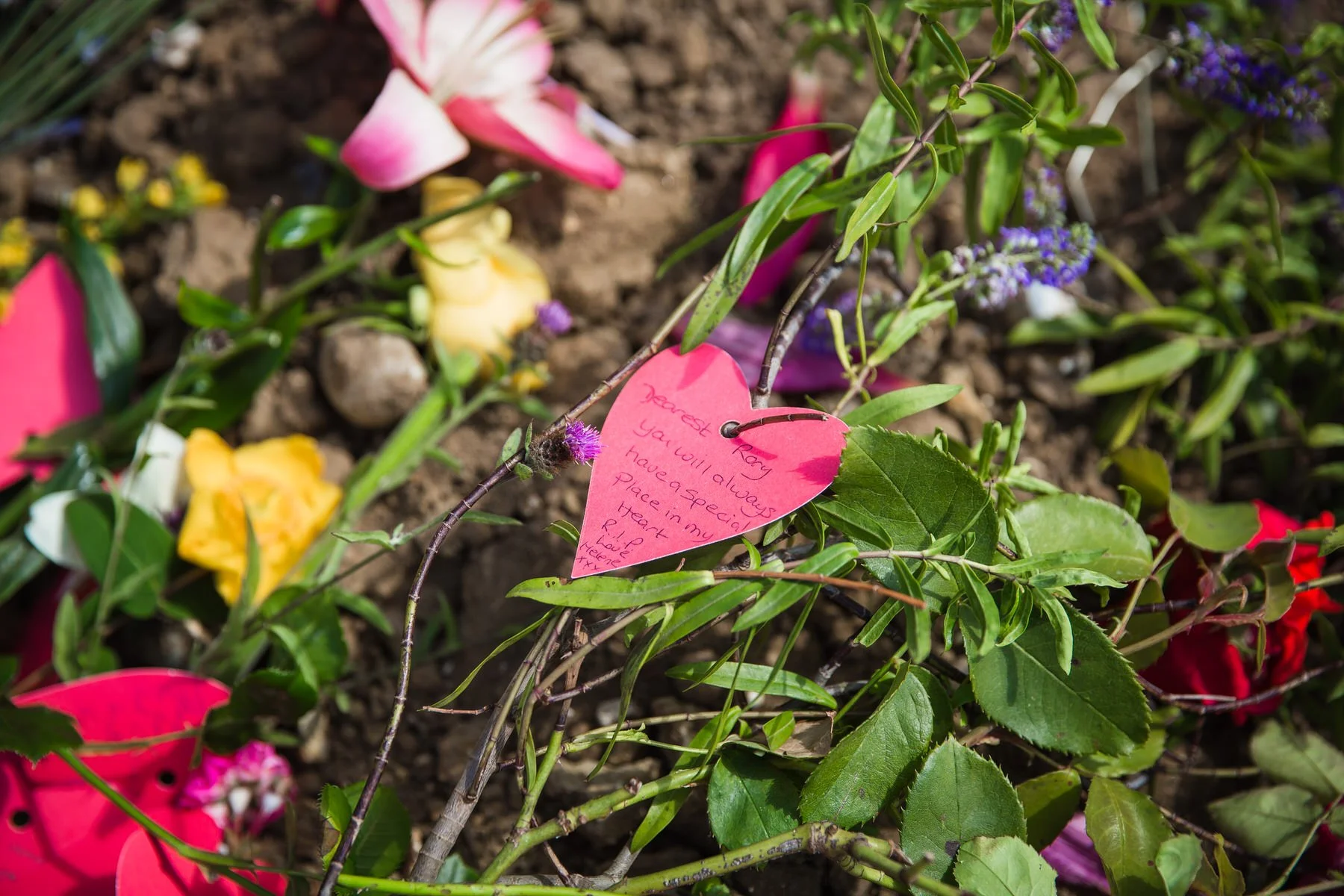
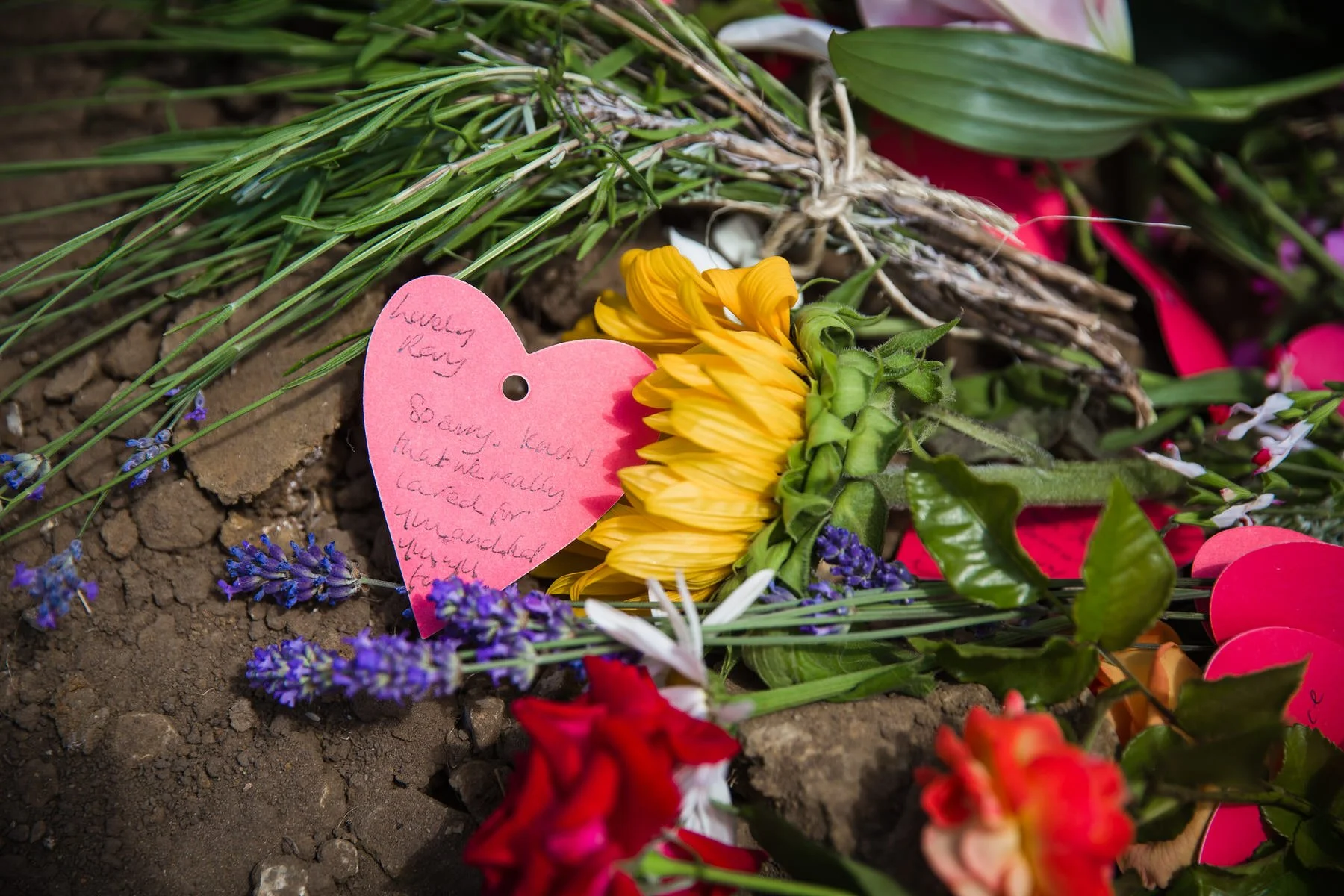
Details that mattered to the family: flowers, photographs, messages on red paper hearts, and items chosen to be placed at the grave.
Because the pavilion is surrounded by glass, the light moved throughout the day. Years of photographing live events meant I could work with that changing light – adjusting position rather than asking people to move, and exposing carefully so skin tones stayed soft and natural even against bright backgrounds.
My approach is always documentary and unobtrusive:
I do not interrupt the service or ask people to pause or repeat anything.
I work from the edges of the space, moving quietly to capture a range of angles.
The aim is that people quickly forget the camera is there, so they can be fully present.
You can read more about this style of work on my main Funeral Photography page.
Private family burial – a shroud, a cart and a walk through the meadows
Before the main service, the family chose to hold a small, private burial just for immediate family. This part of the day was deeply intimate.
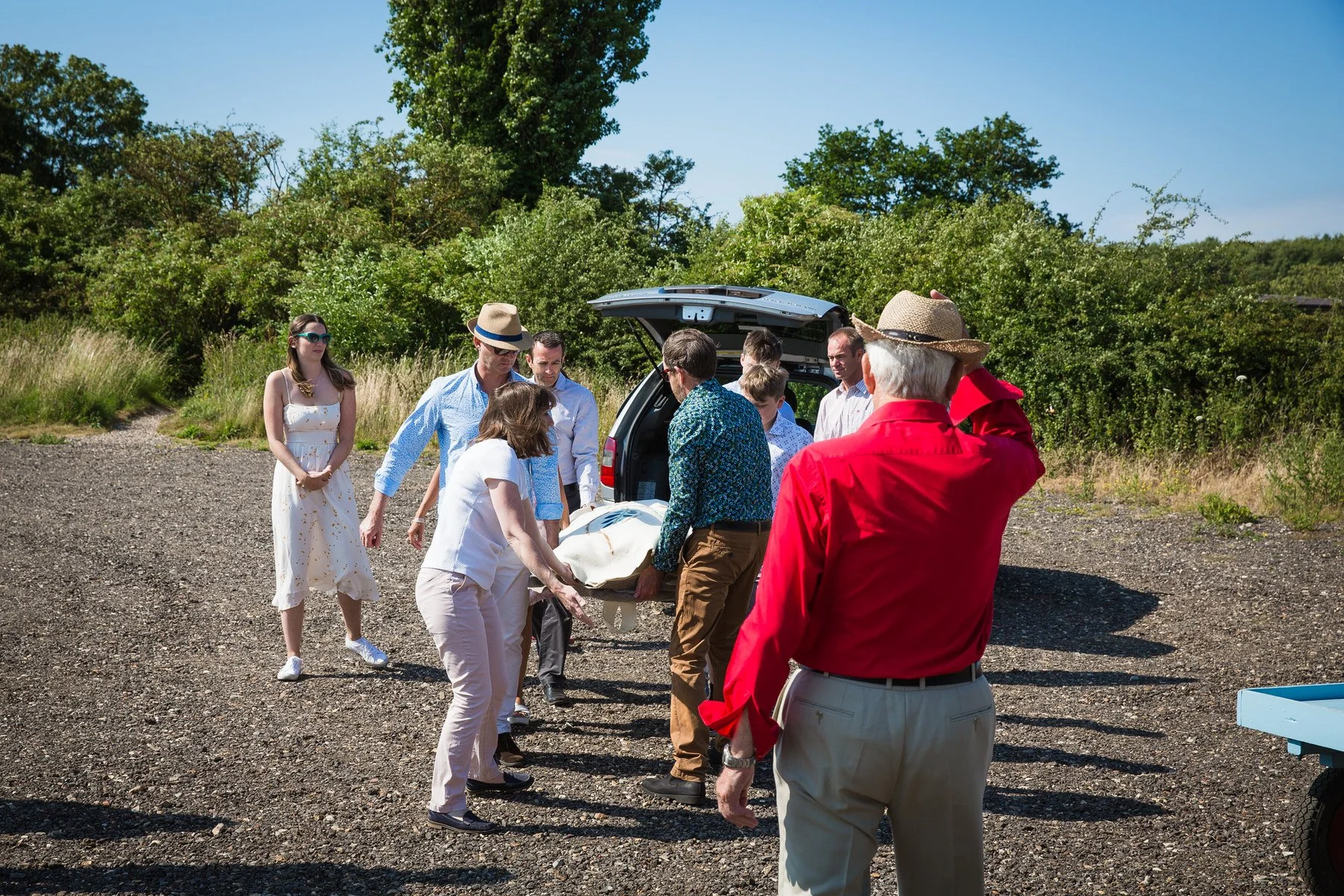
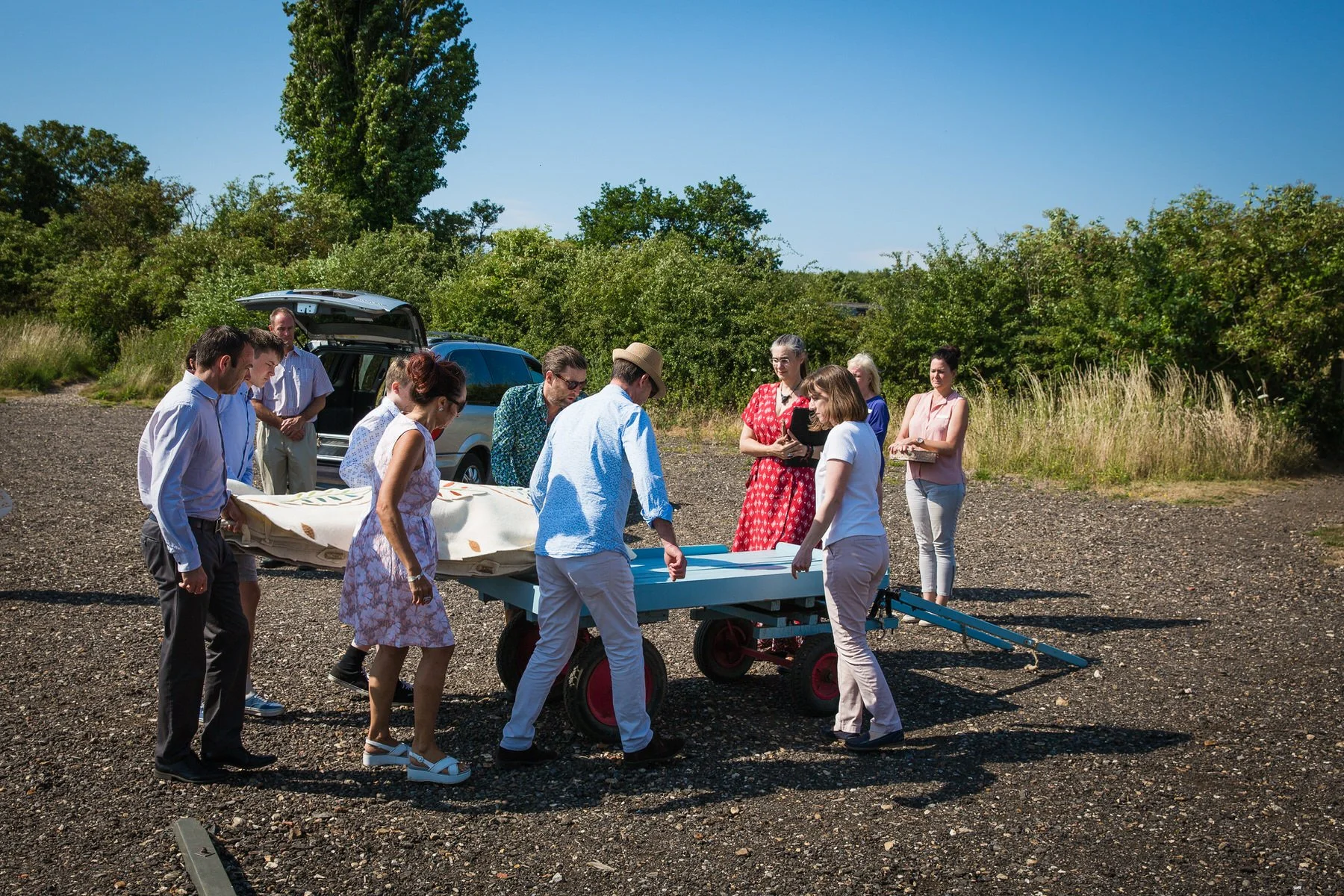
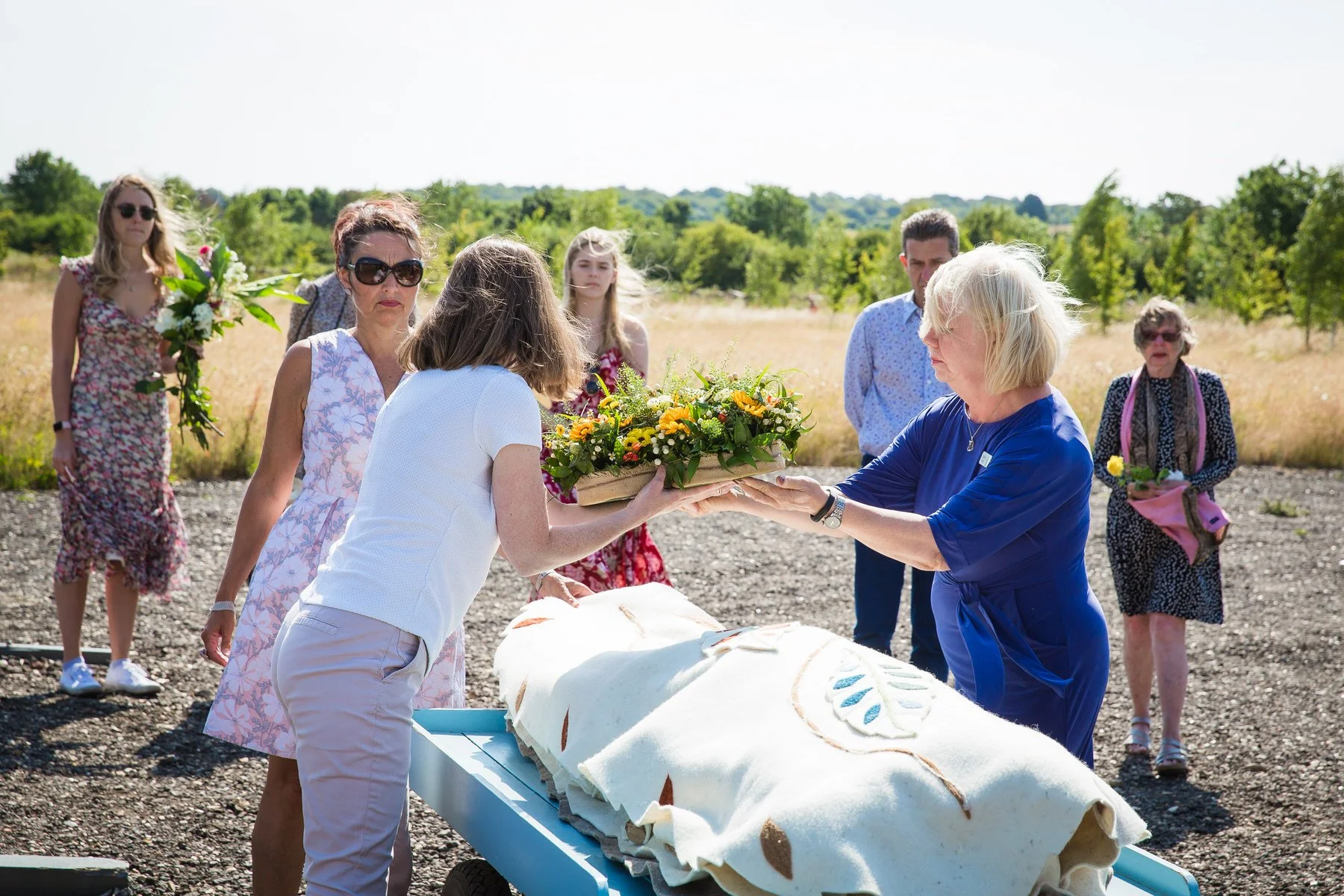
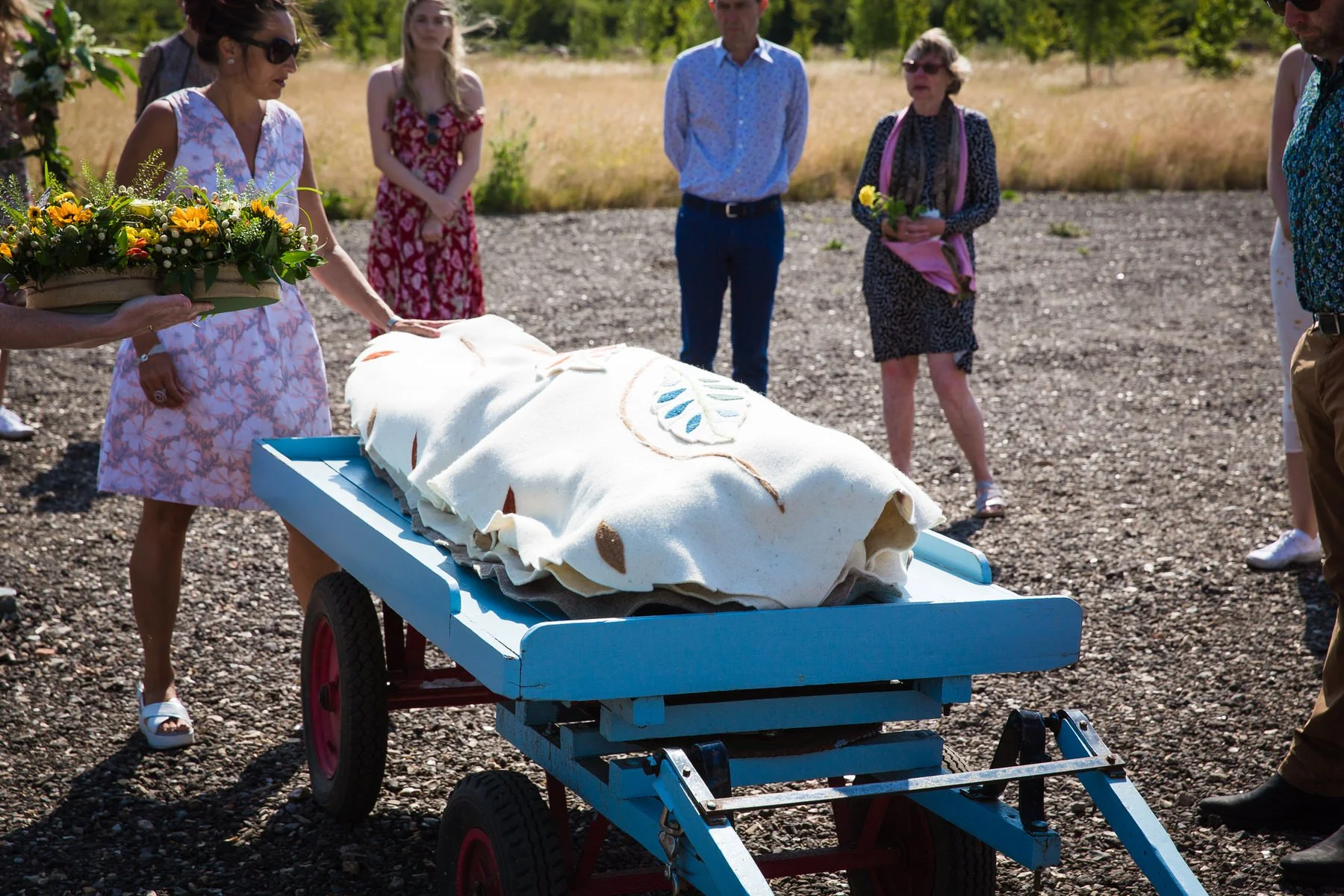
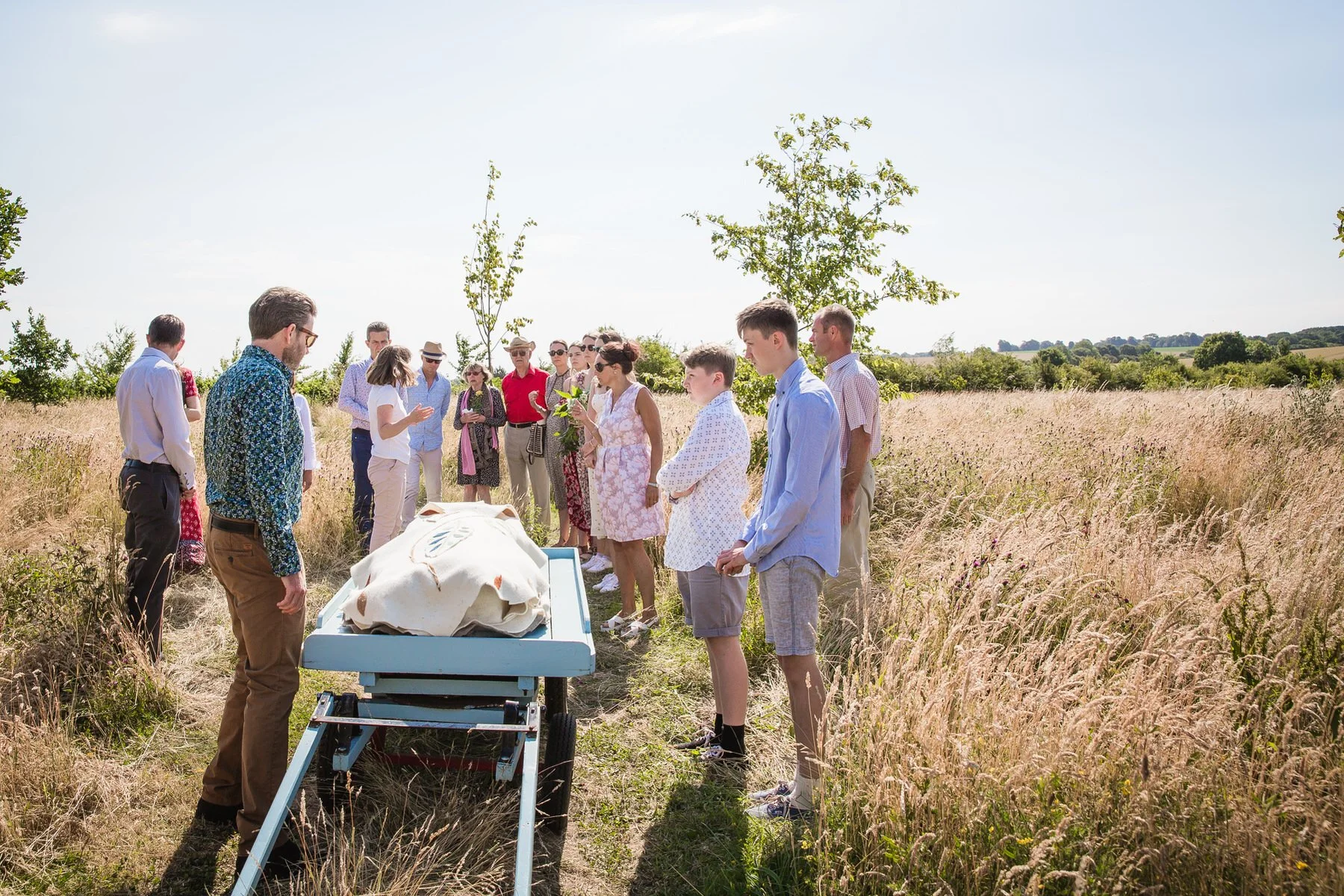
Rory was brought to Clandon Wood wrapped in a woollen shroud, in keeping with the family’s eco and green values. There was no coffin – just the shroud, the cart, and the landscape.
When he arrived:
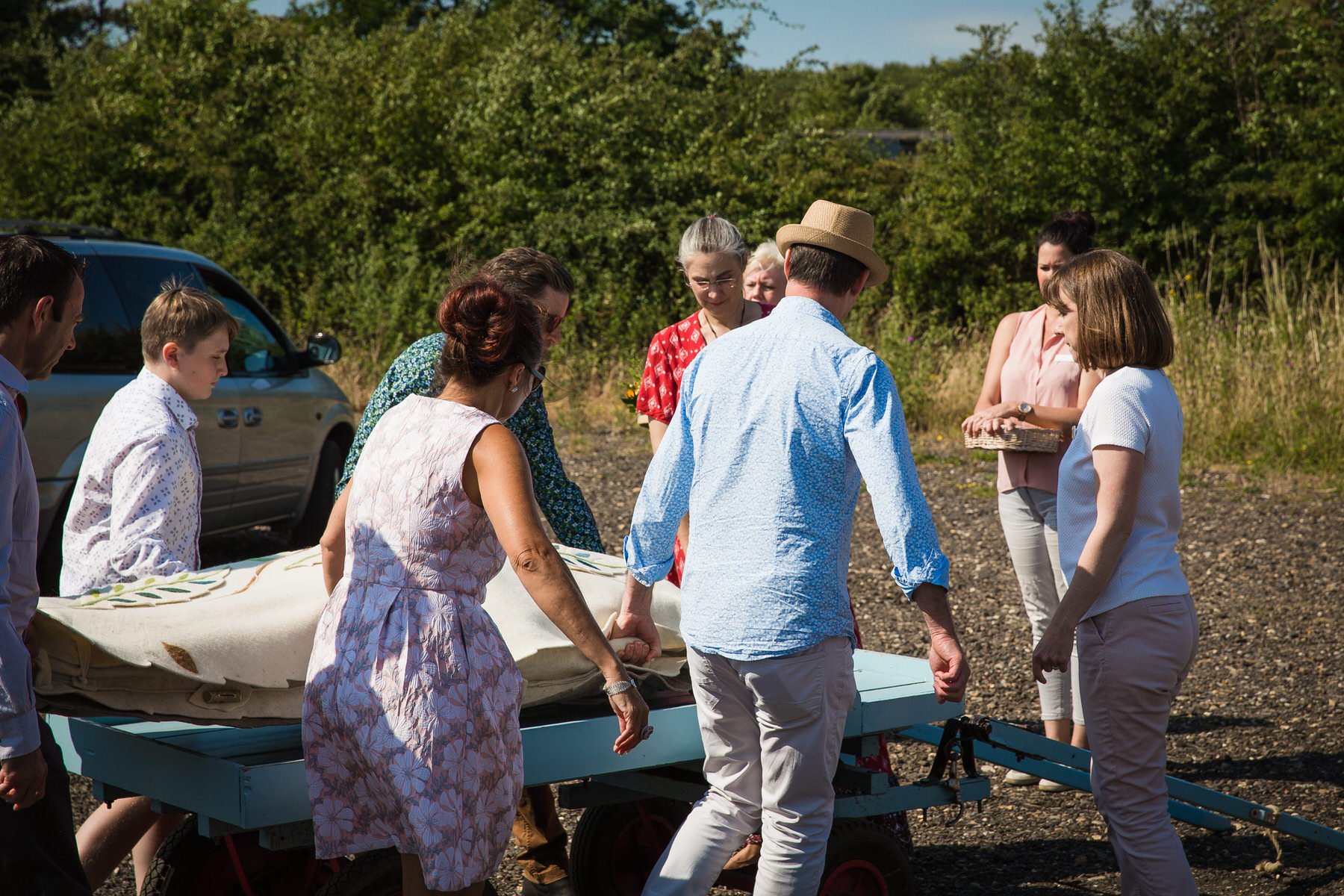
The family gathered at the pavilion and gently lifted him onto the cart that had been prepared.
Sunflowers, already placed on the cart, framed the shroud.
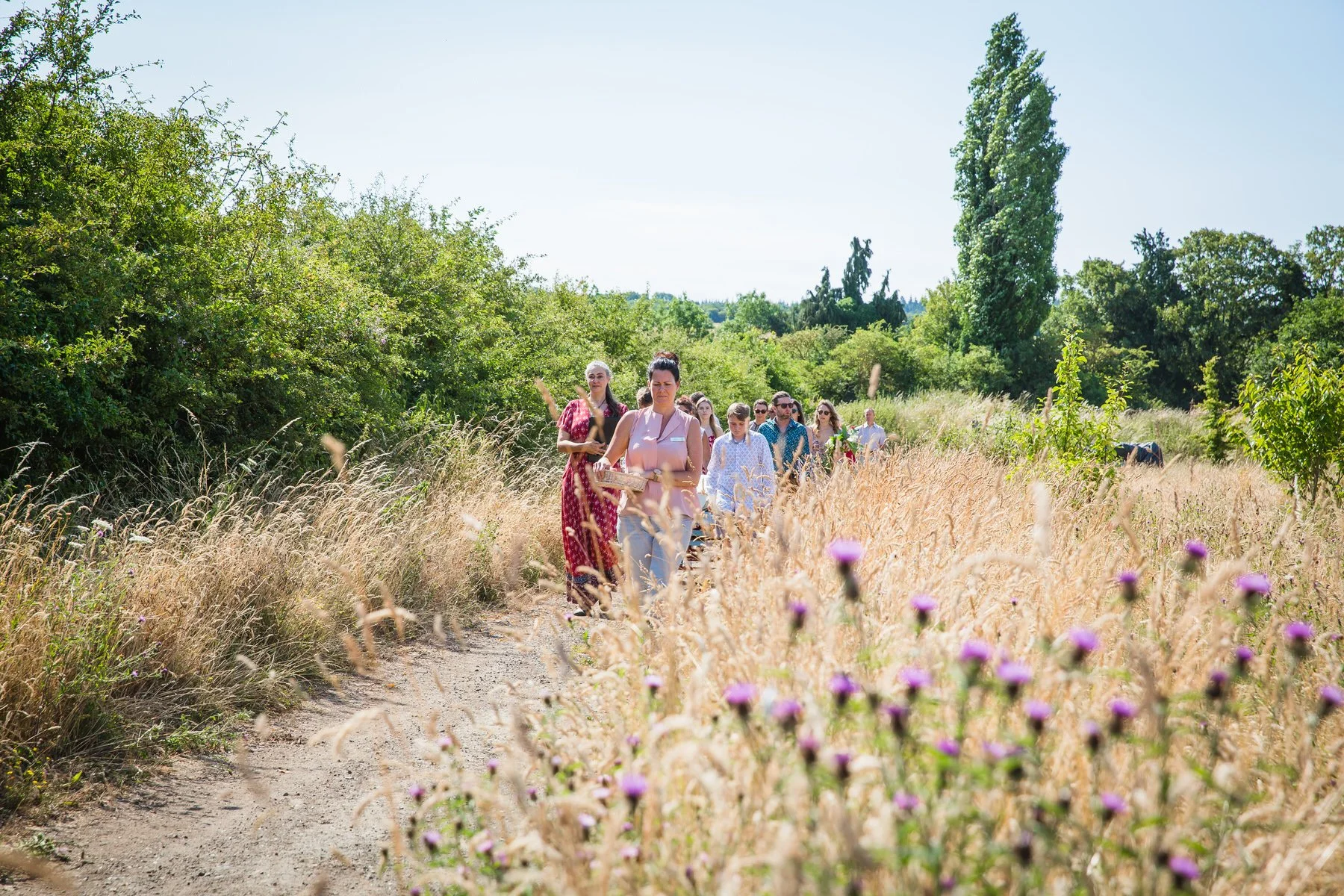
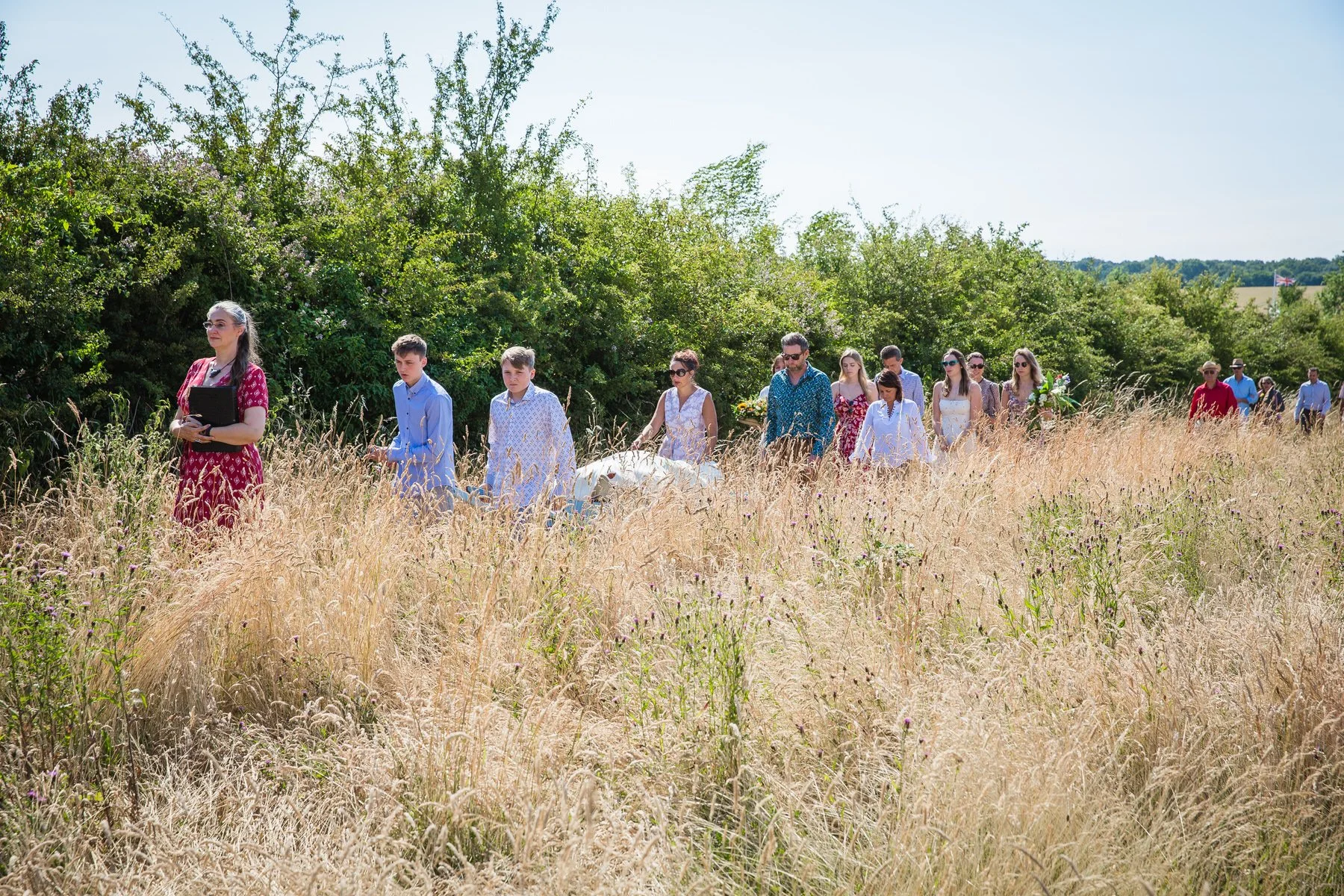
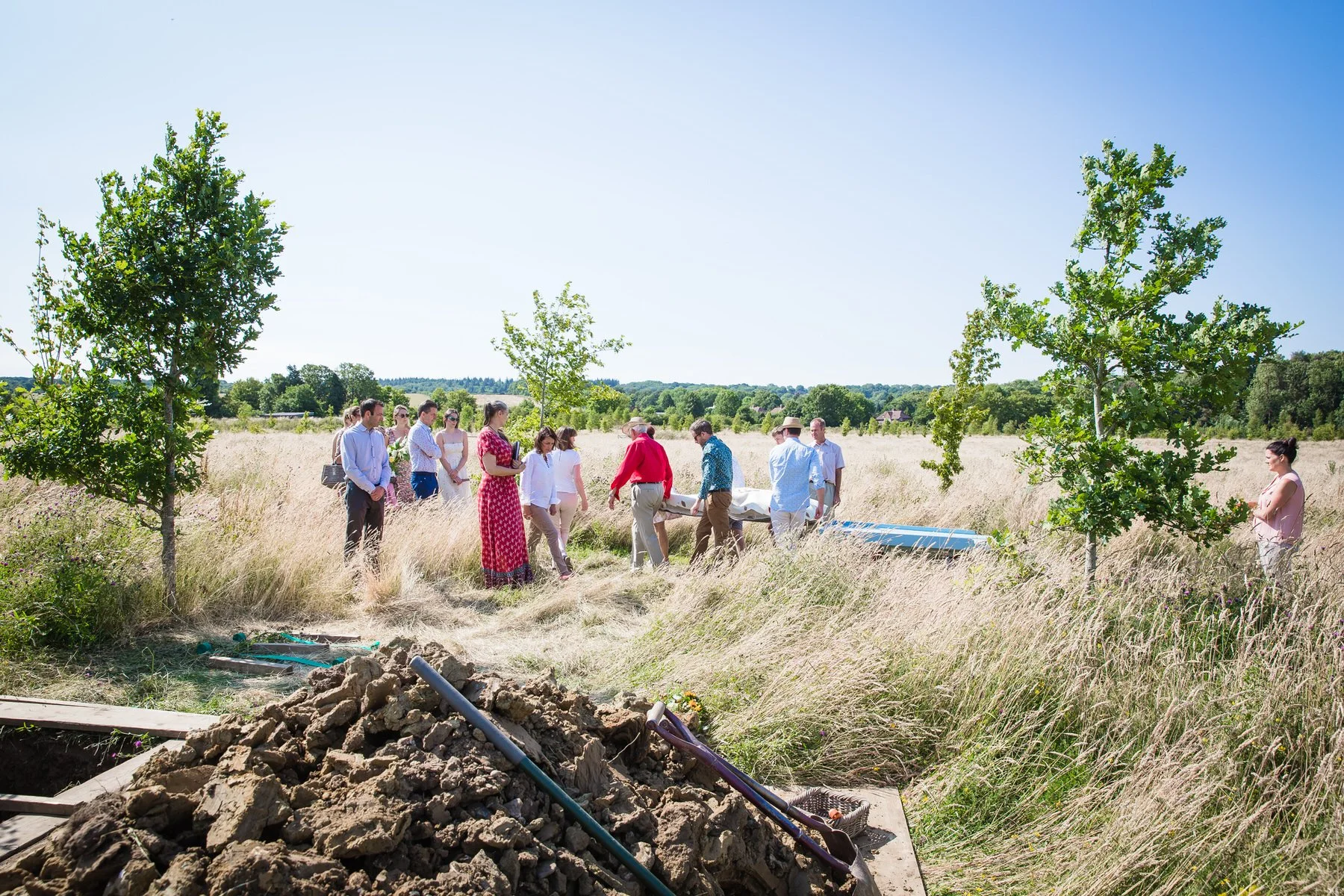
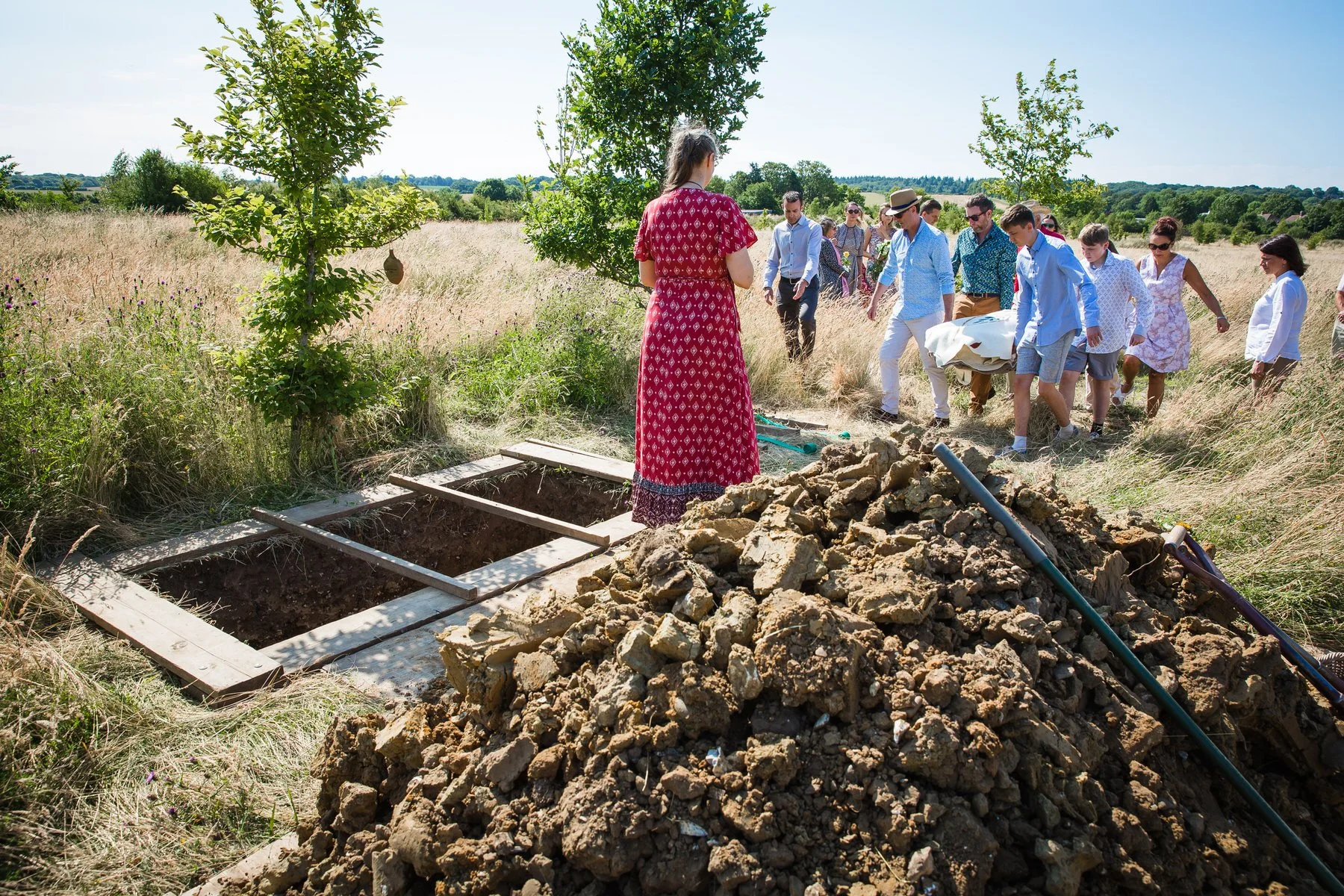
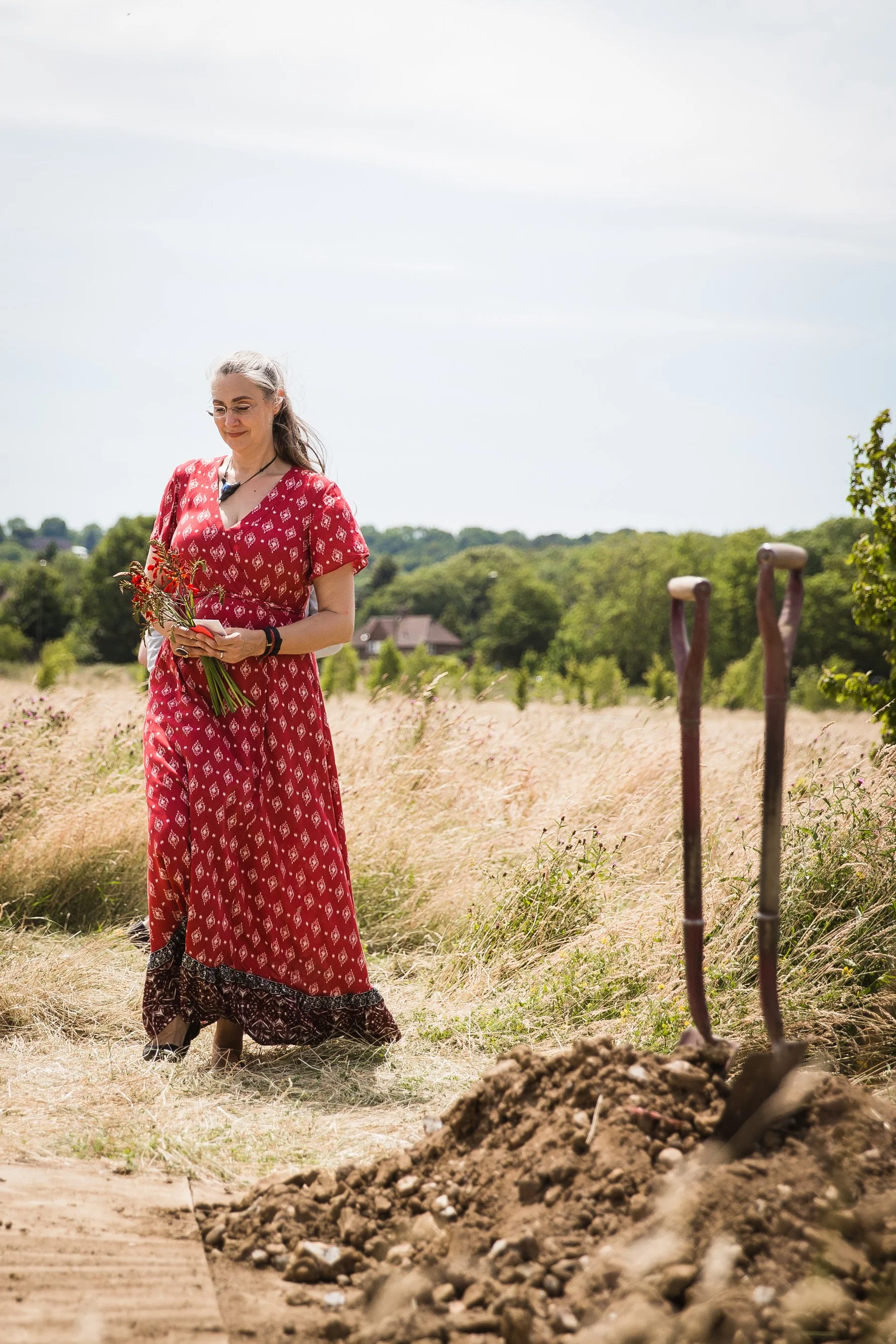
Led by the celebrant, the family began their walk through the fields and flowers towards the grave.
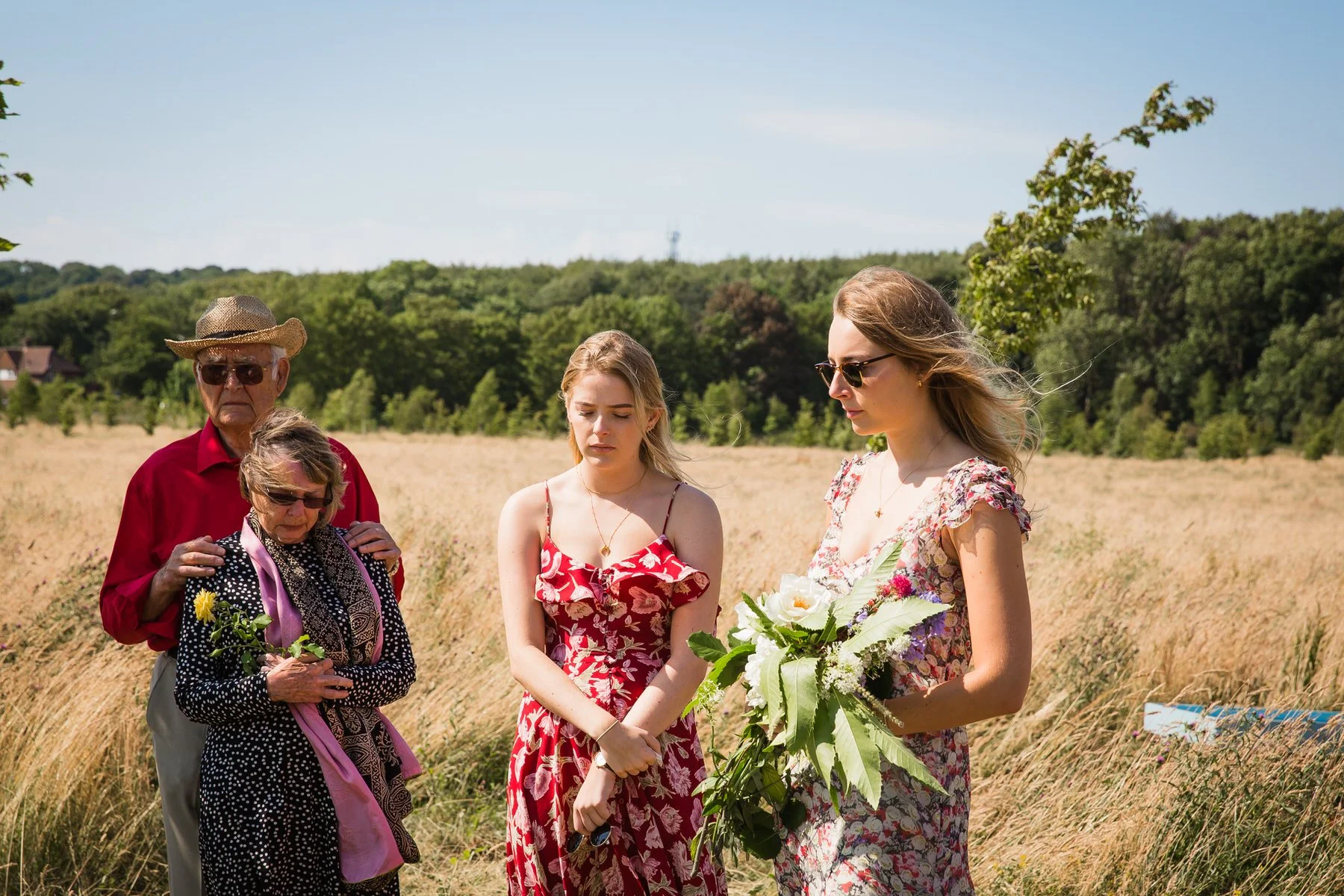
Photographing this part of the day required particular care. To tell the story properly, I needed a mix of wide, mid‑range and close‑up images, rather than everything from one position and one focal length. At times I stayed at a respectful distance, showing the family walking together behind the cart with meadows and sky surrounding them. At other moments I moved closer, capturing reactions, hands on the cart and the small details of the shroud, sunflowers and colours of the day. I would sometimes walk ahead to frame wide views of the family crossing the fields, then step back in again for more intimate, mid‑range shots.
The aim was always to record Rory’s final journey truthfully, without making the moment feel exposed. The walk itself – family following the cart through the bright, hot meadow – became a key visual thread for the whole story.
At the graveside – words, shroud and petals
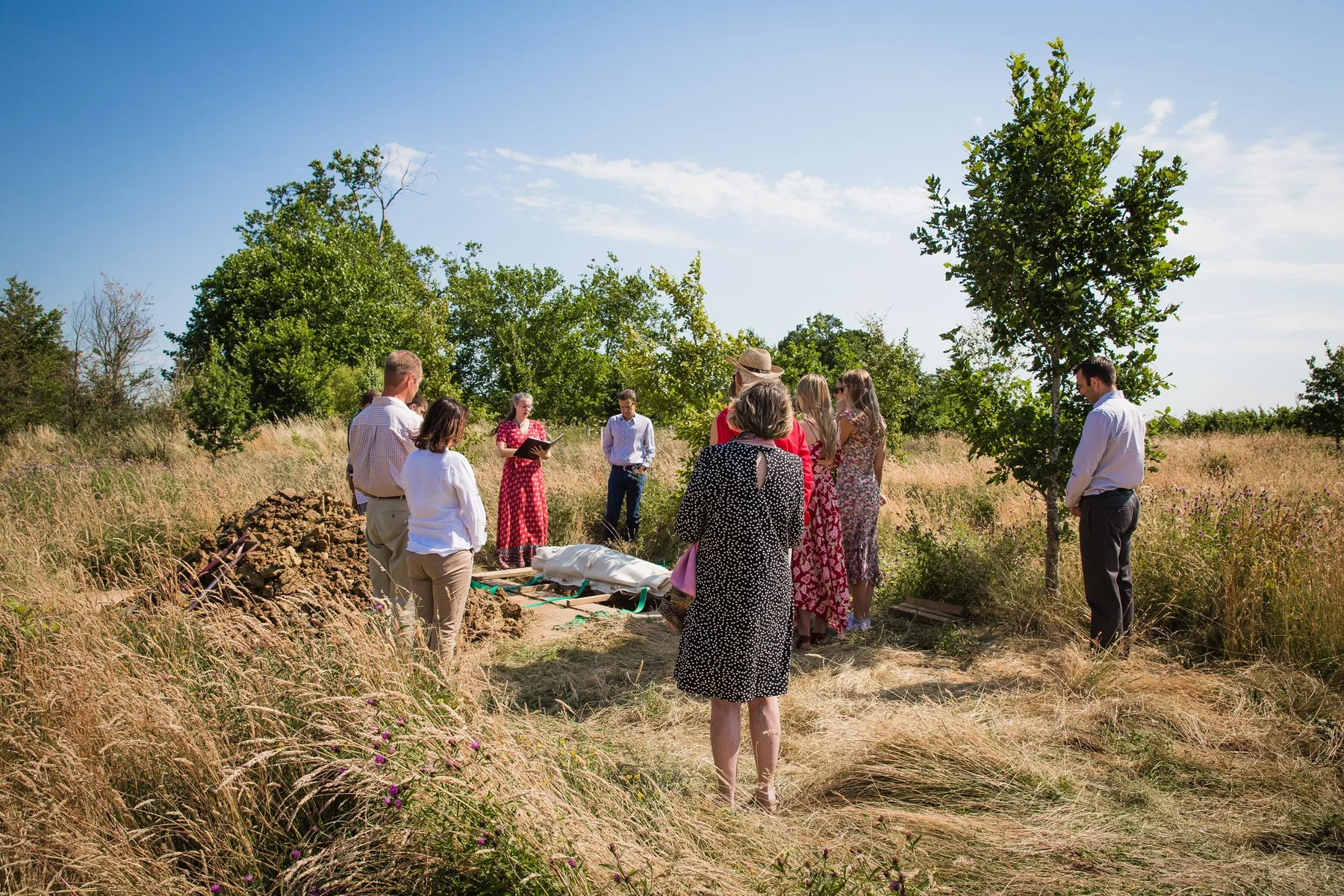
At the grave, the mood became even more focused and still. Clandon Wood’s natural burial plots are simple, with the meadow allowed to grow back over time so the grave becomes part of the wider landscape rather than standing apart from it.
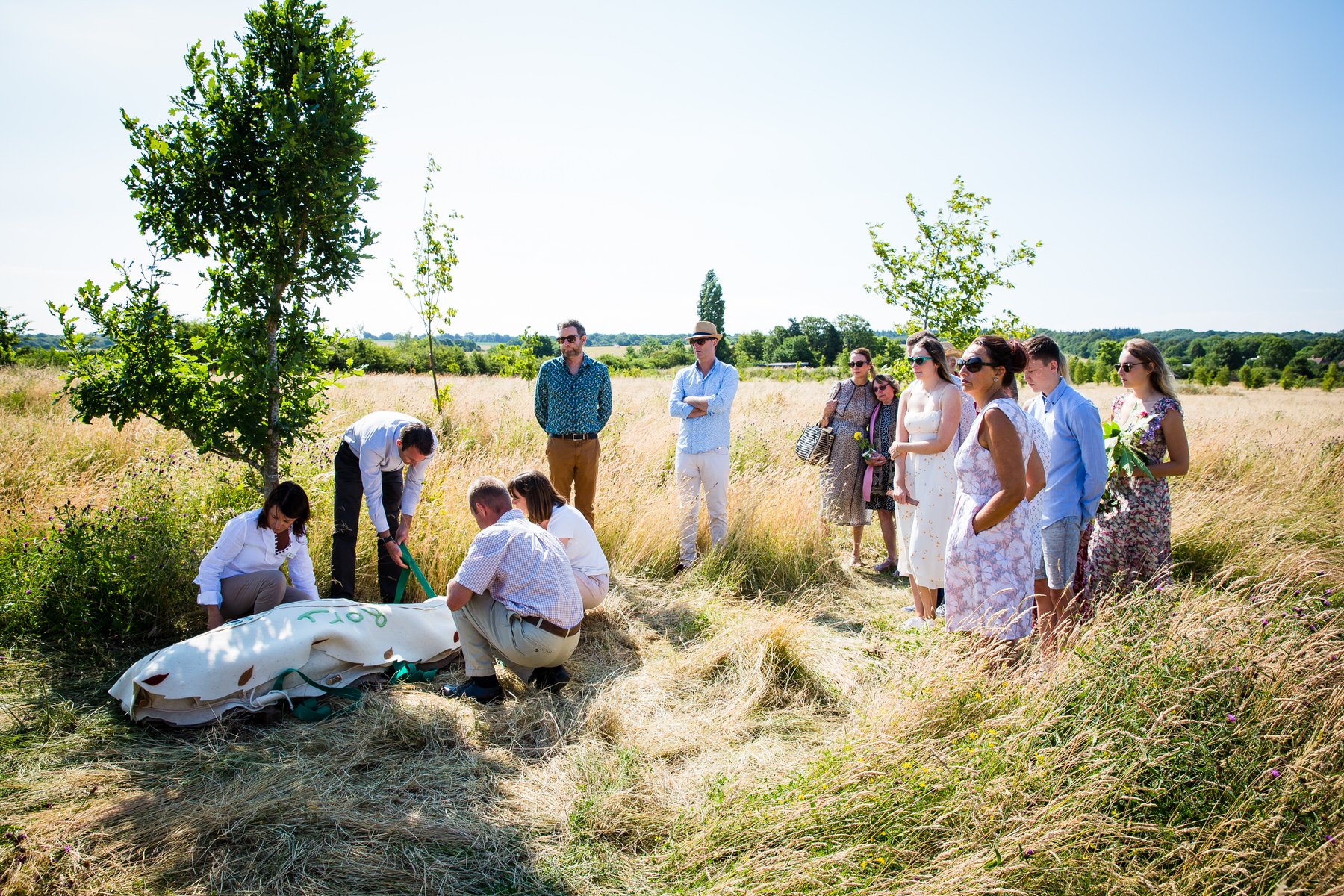
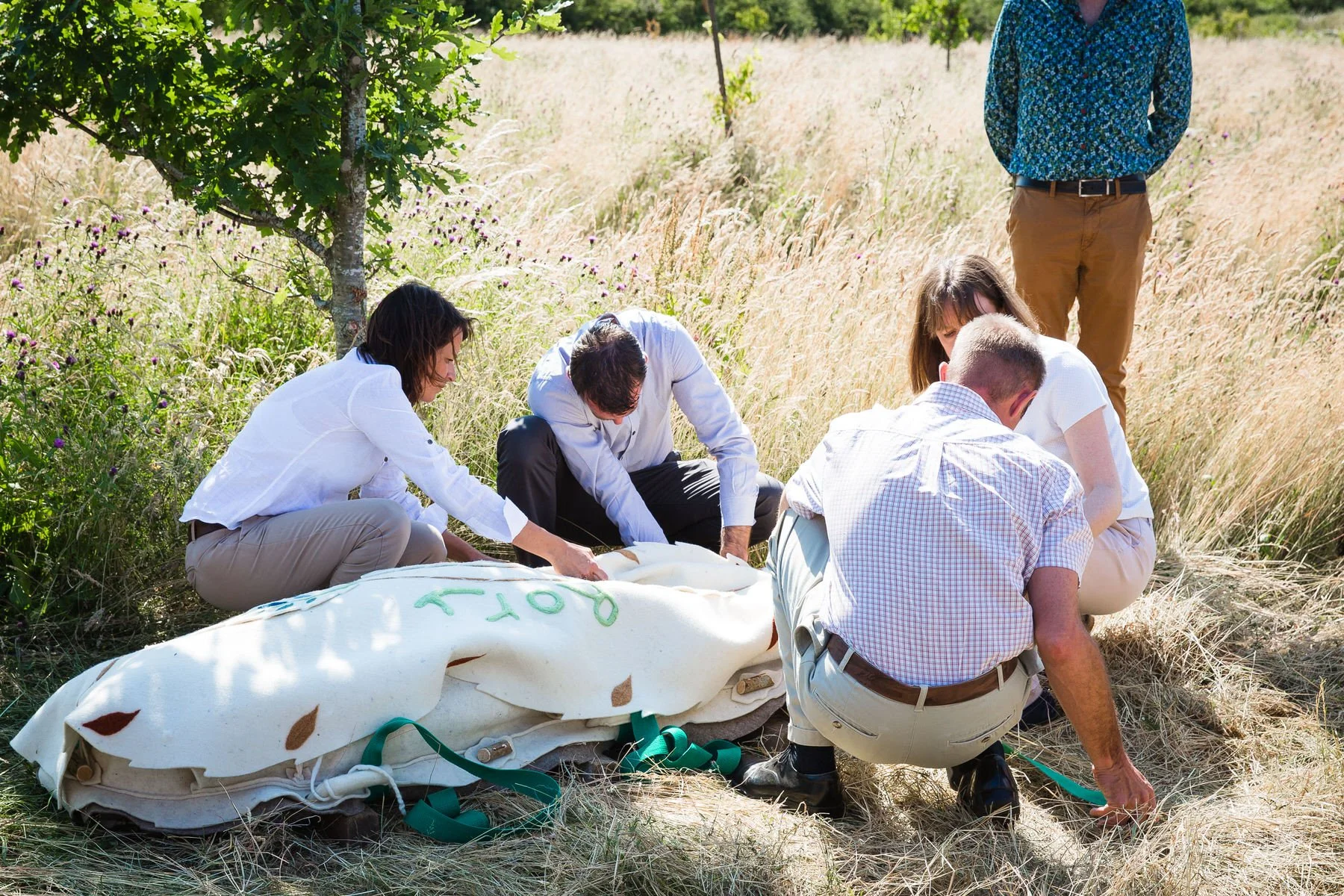
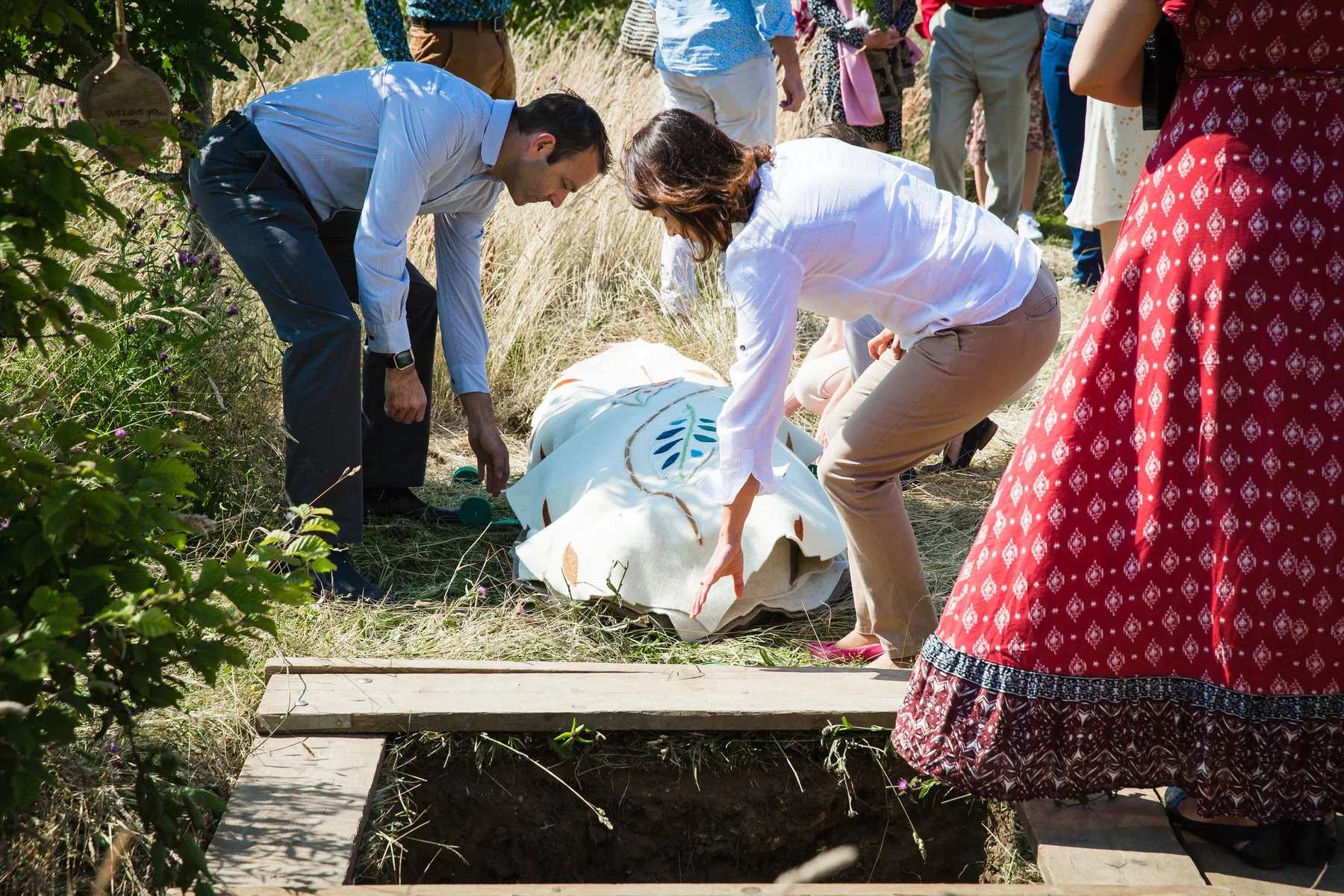
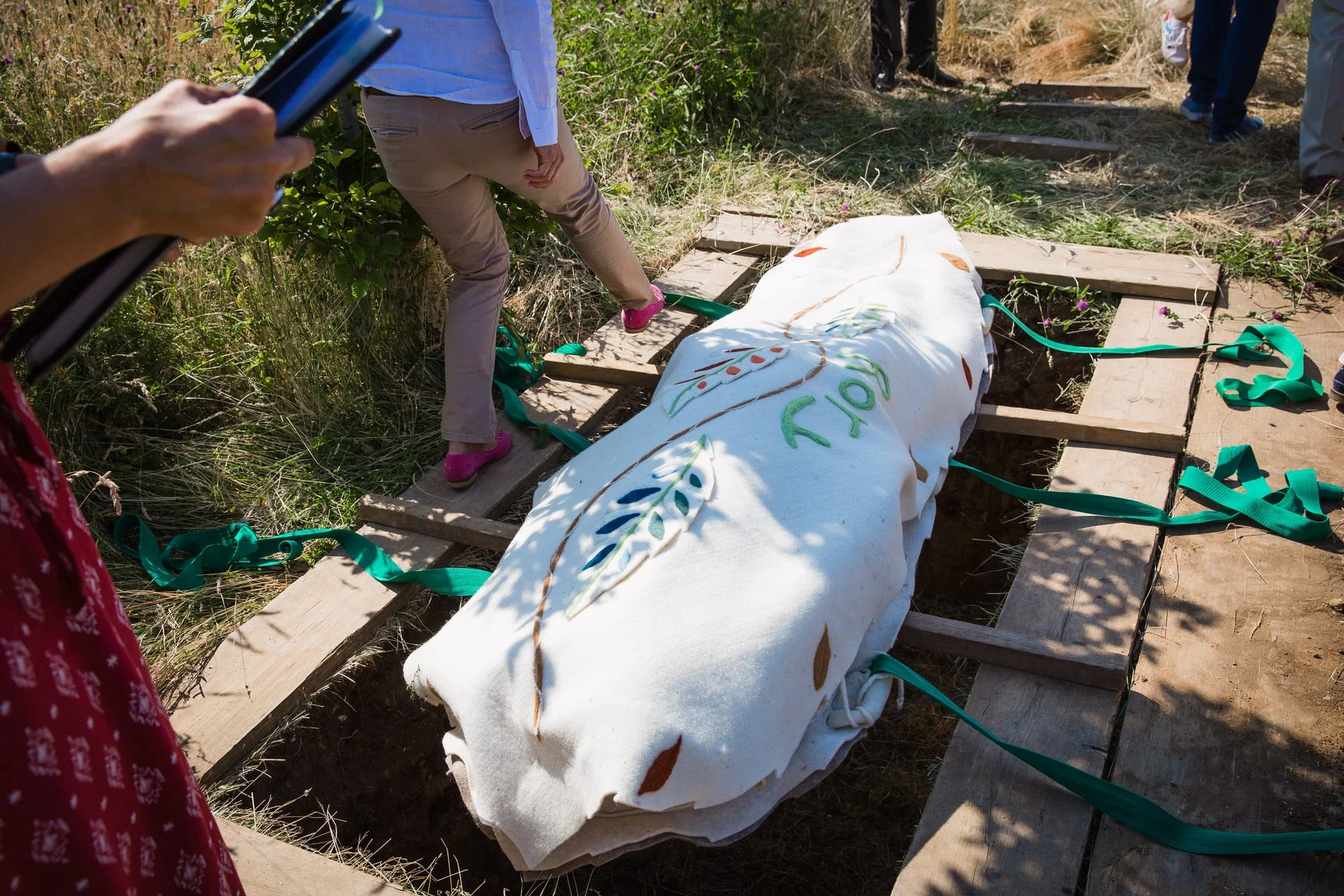
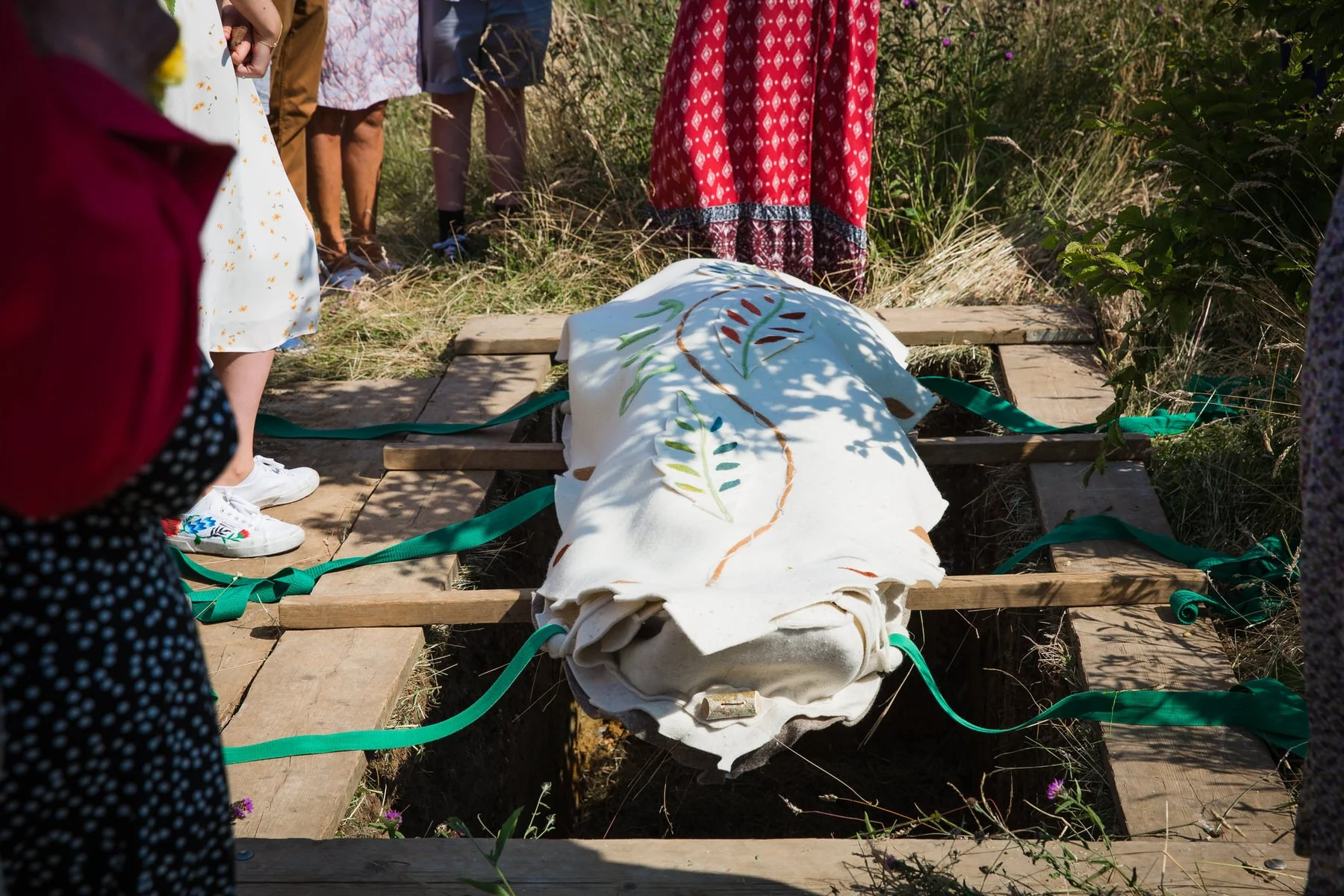
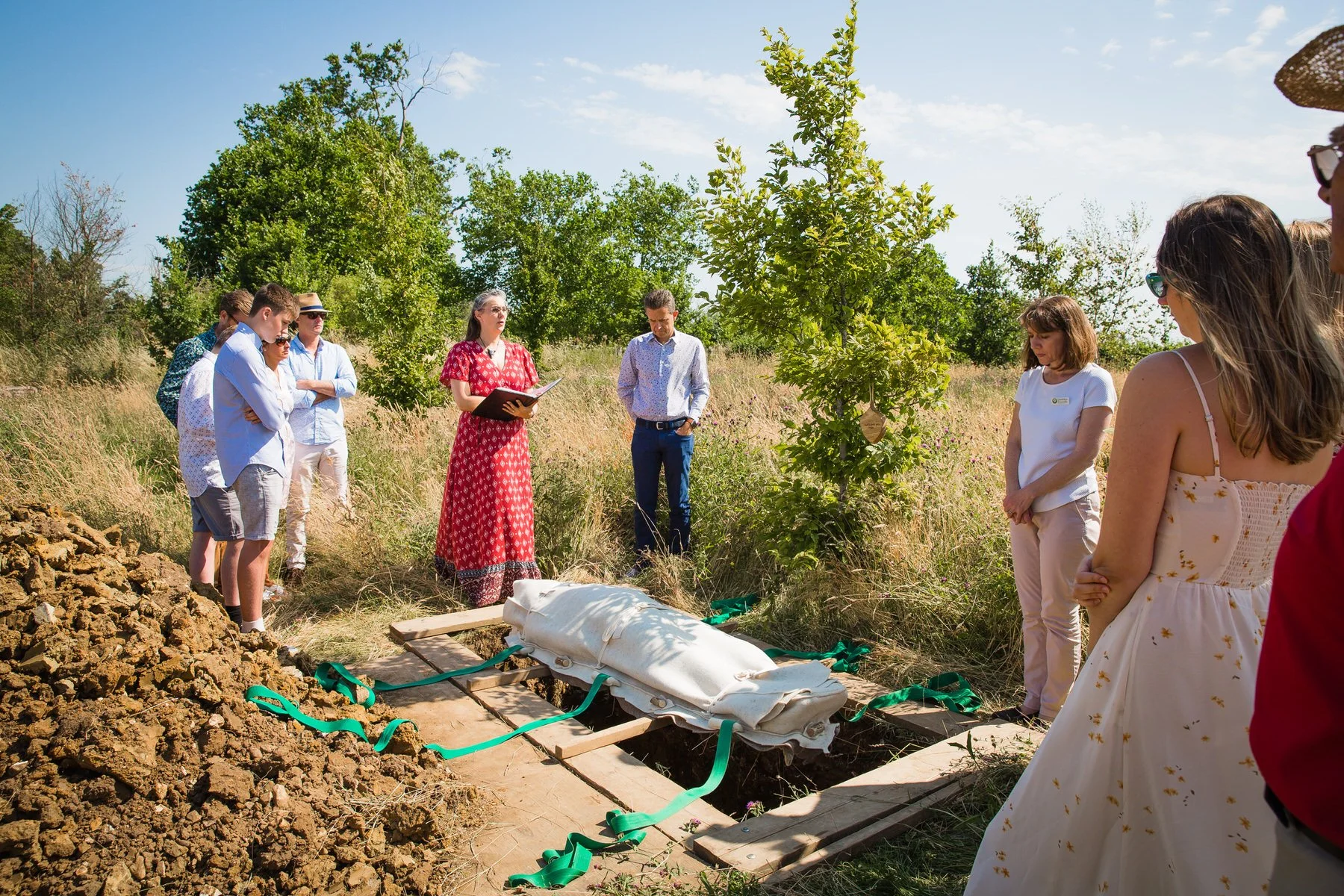
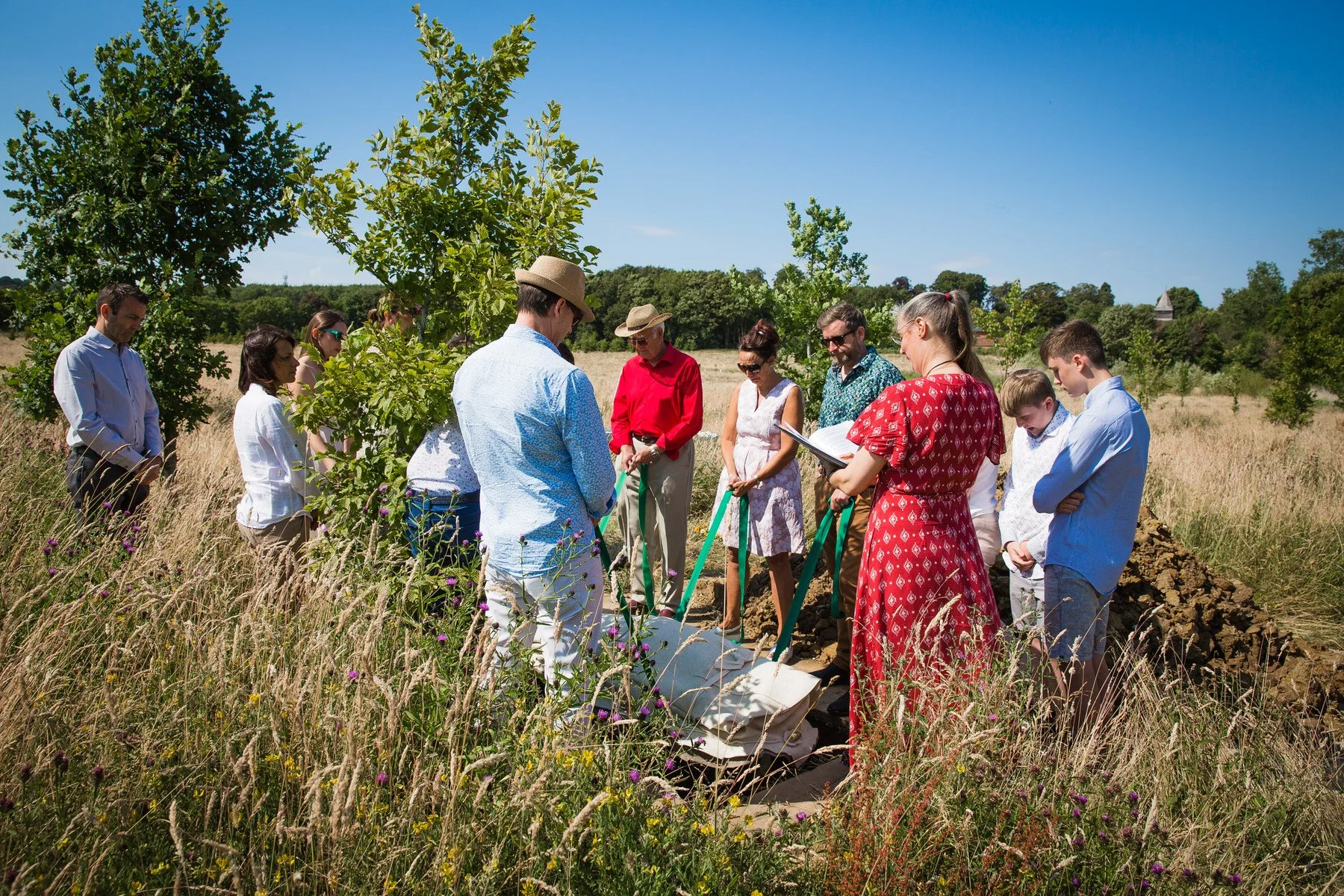
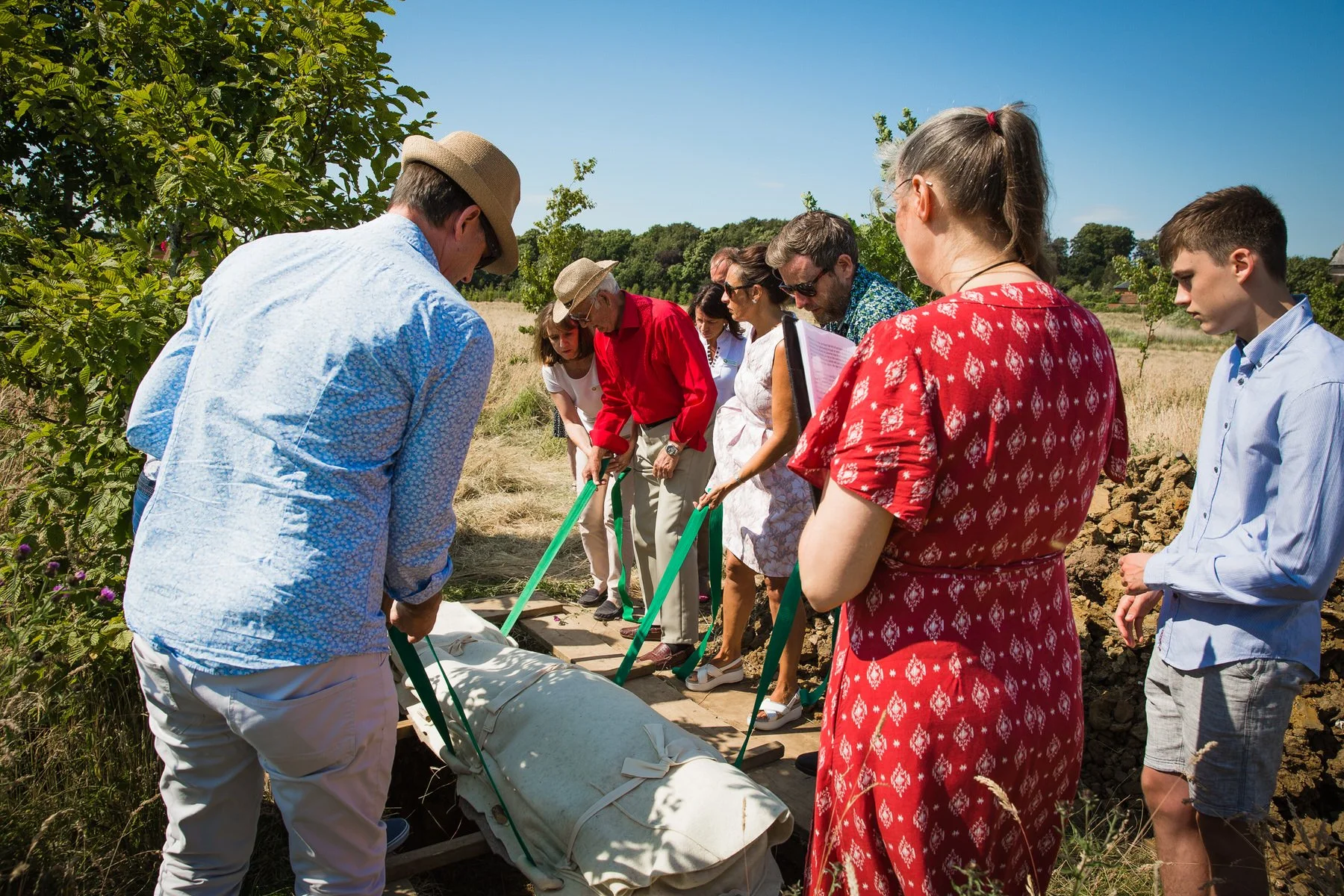
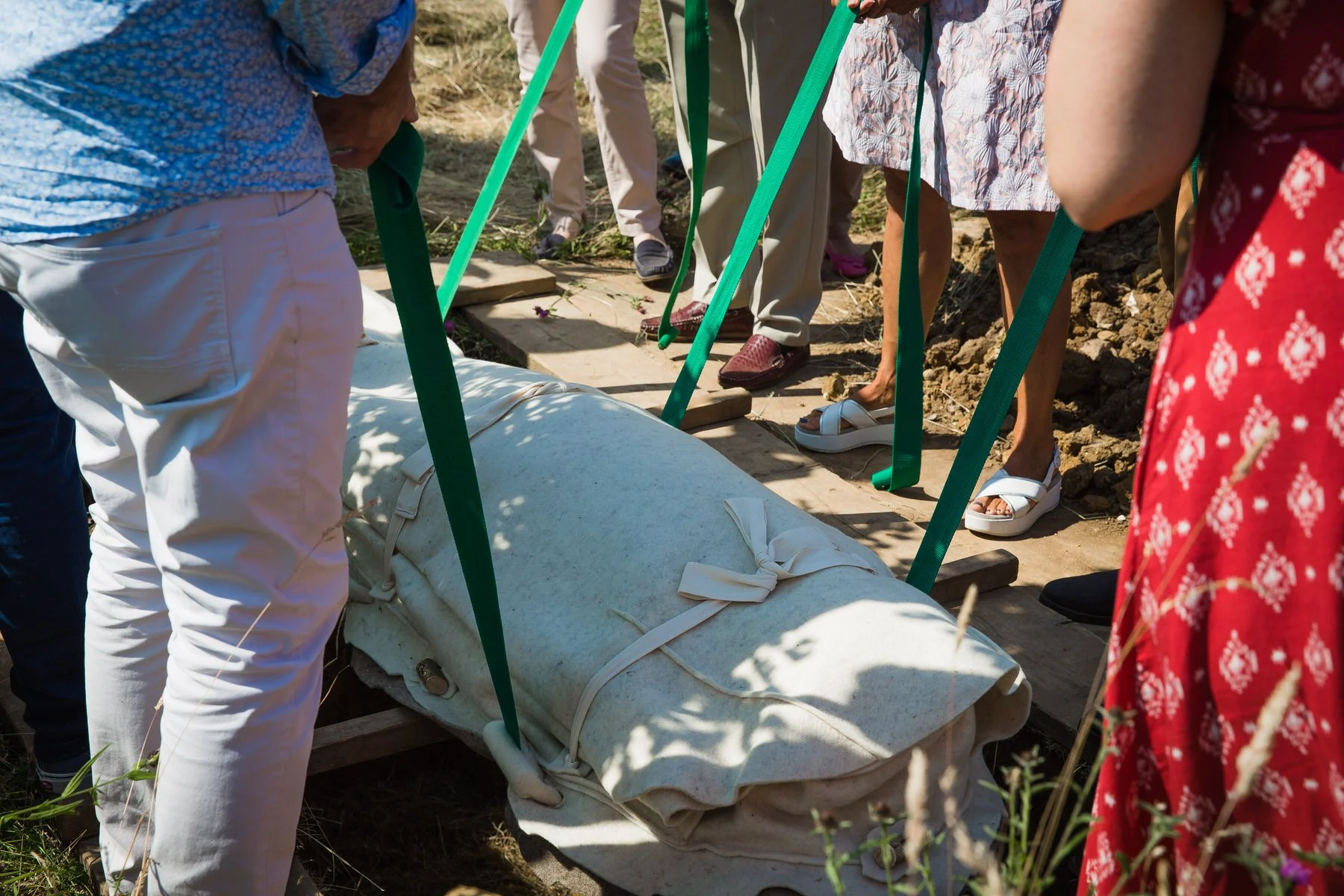
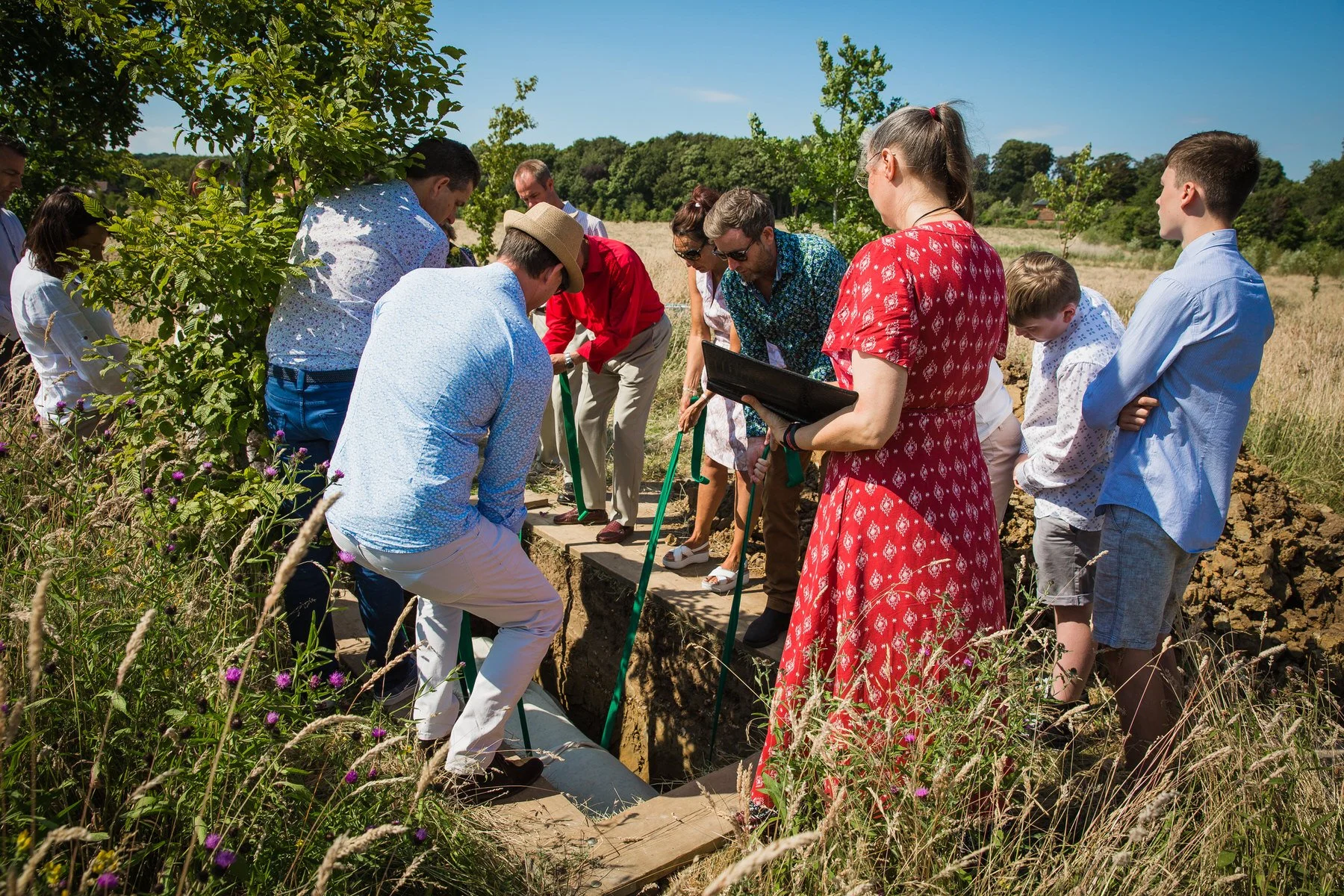
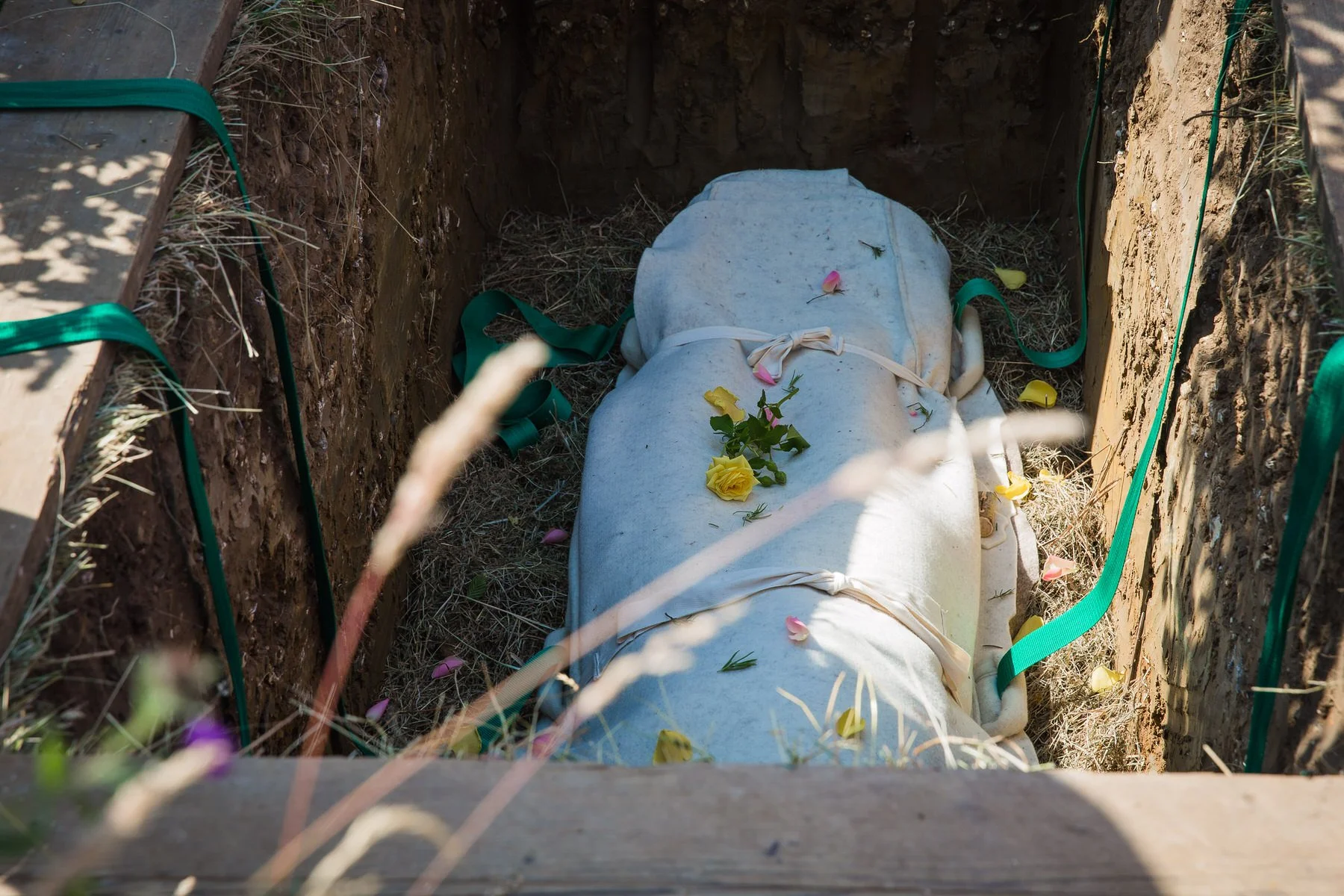
When the family reached the graveside, Rory was first lifted carefully from the cart onto wooden struts beside the grave. This gave everyone a moment to gather around him and take in where they were. After a short pause, the celebrant led a graveside service with words about Rory’s life, reflections on his character and relationships, and a time of silence that allowed people to stand together and absorb the moment.
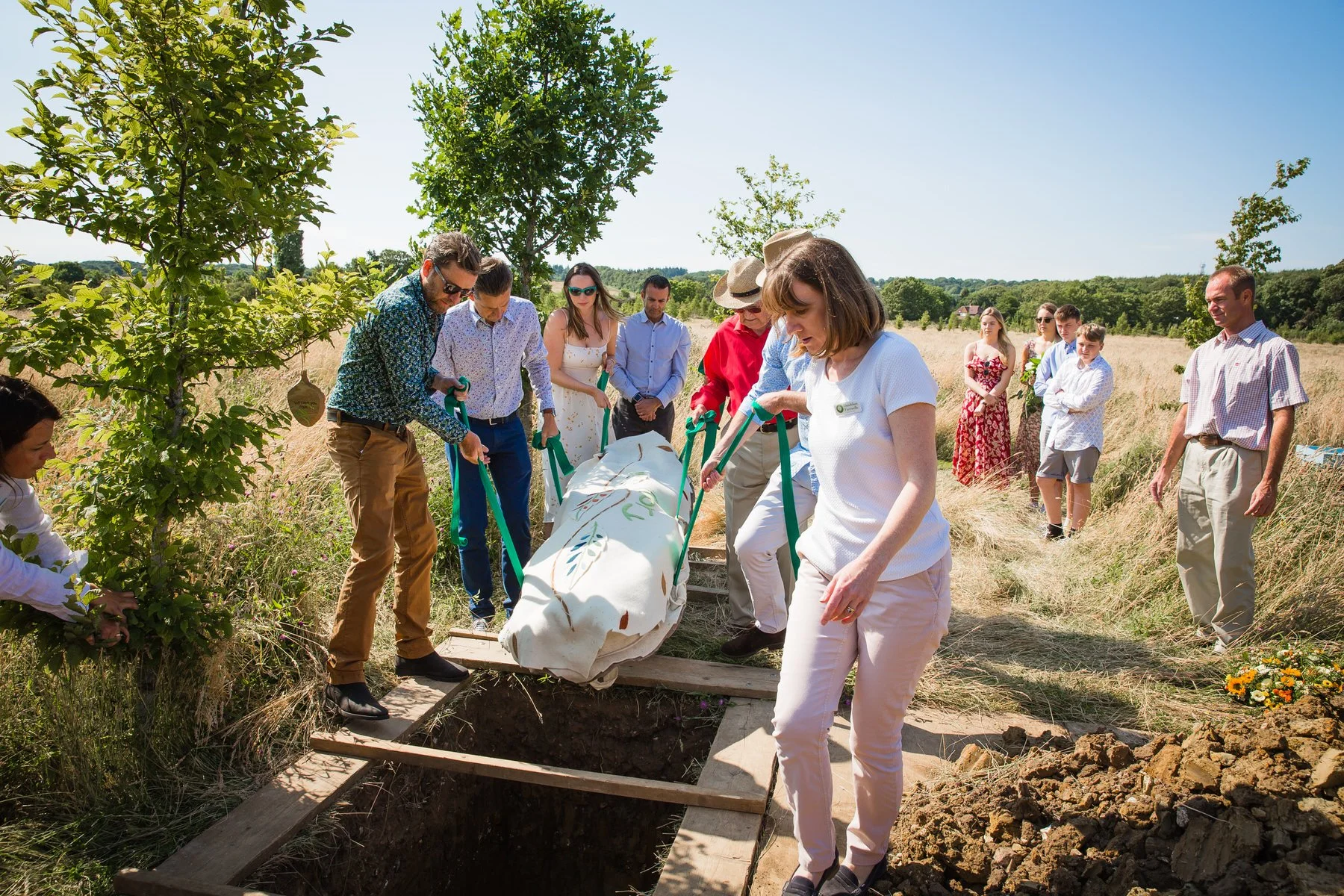
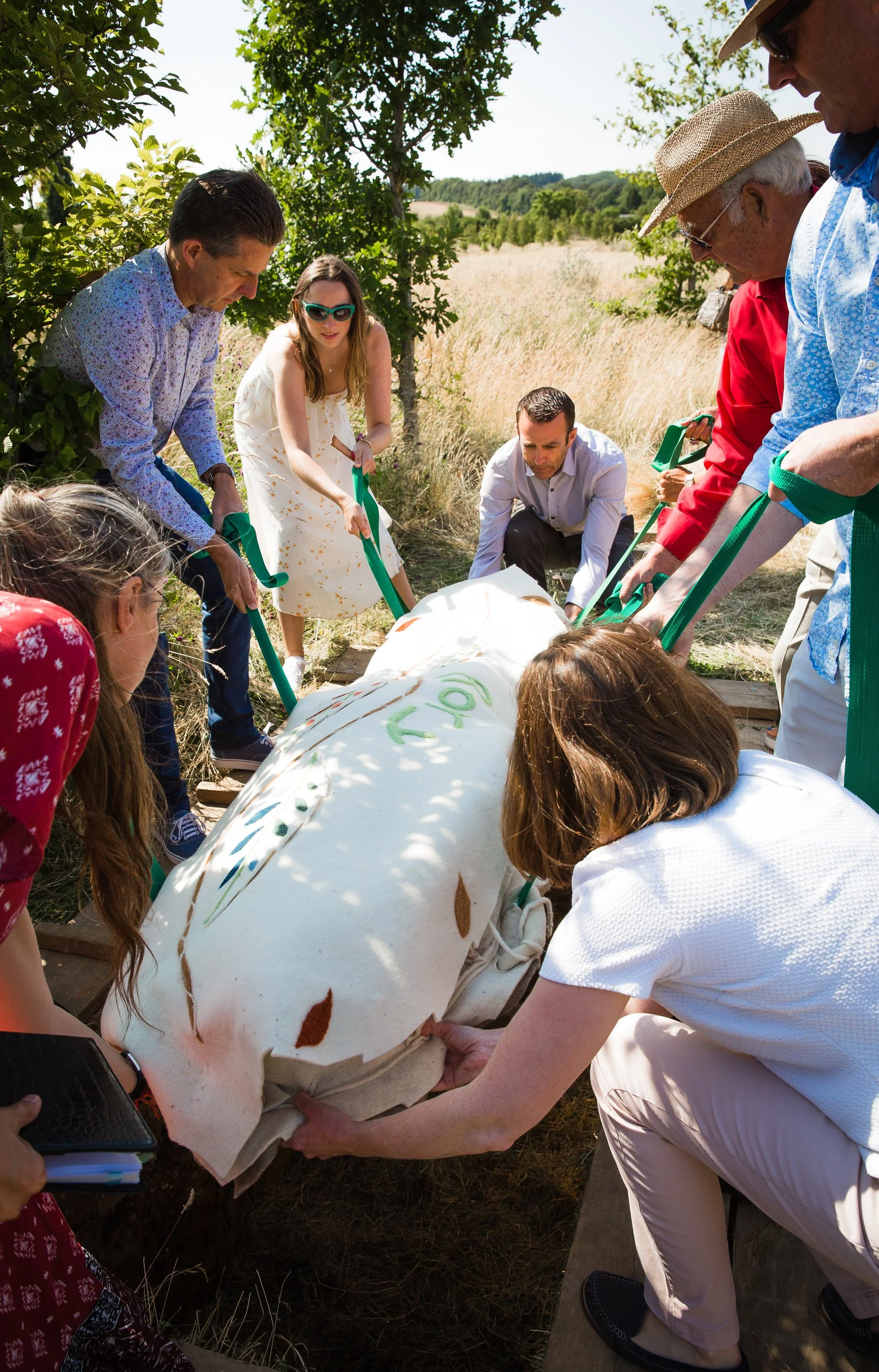
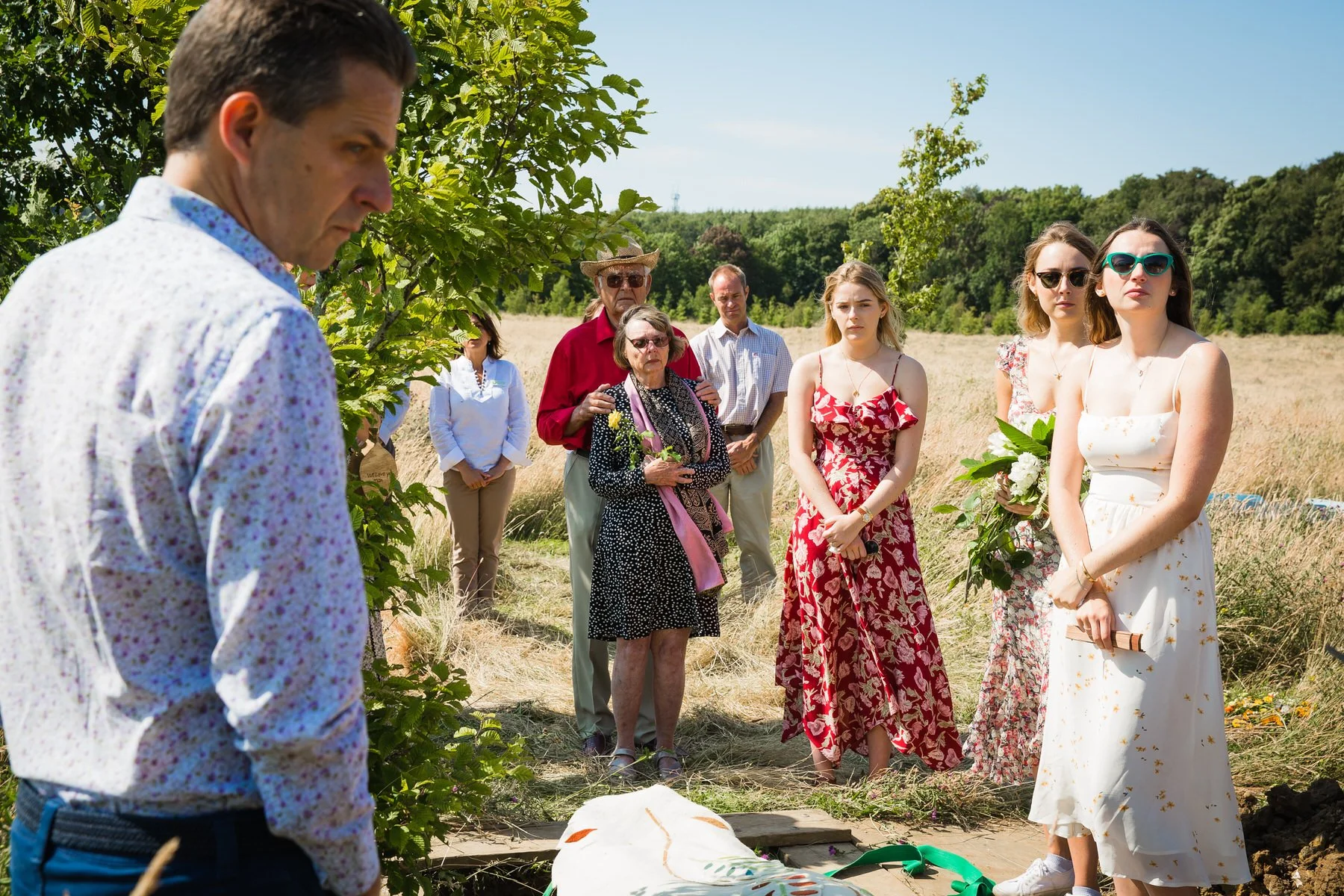
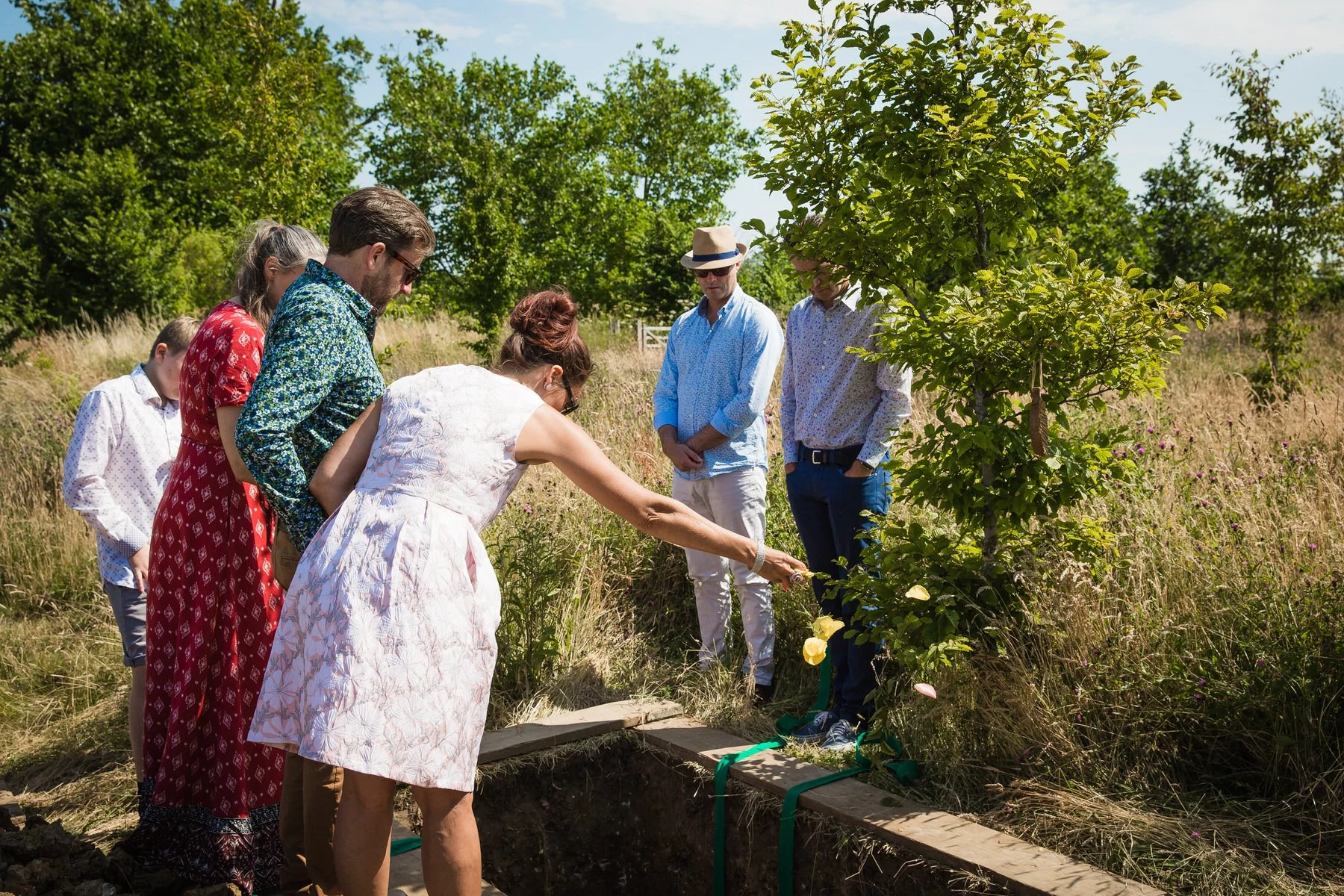
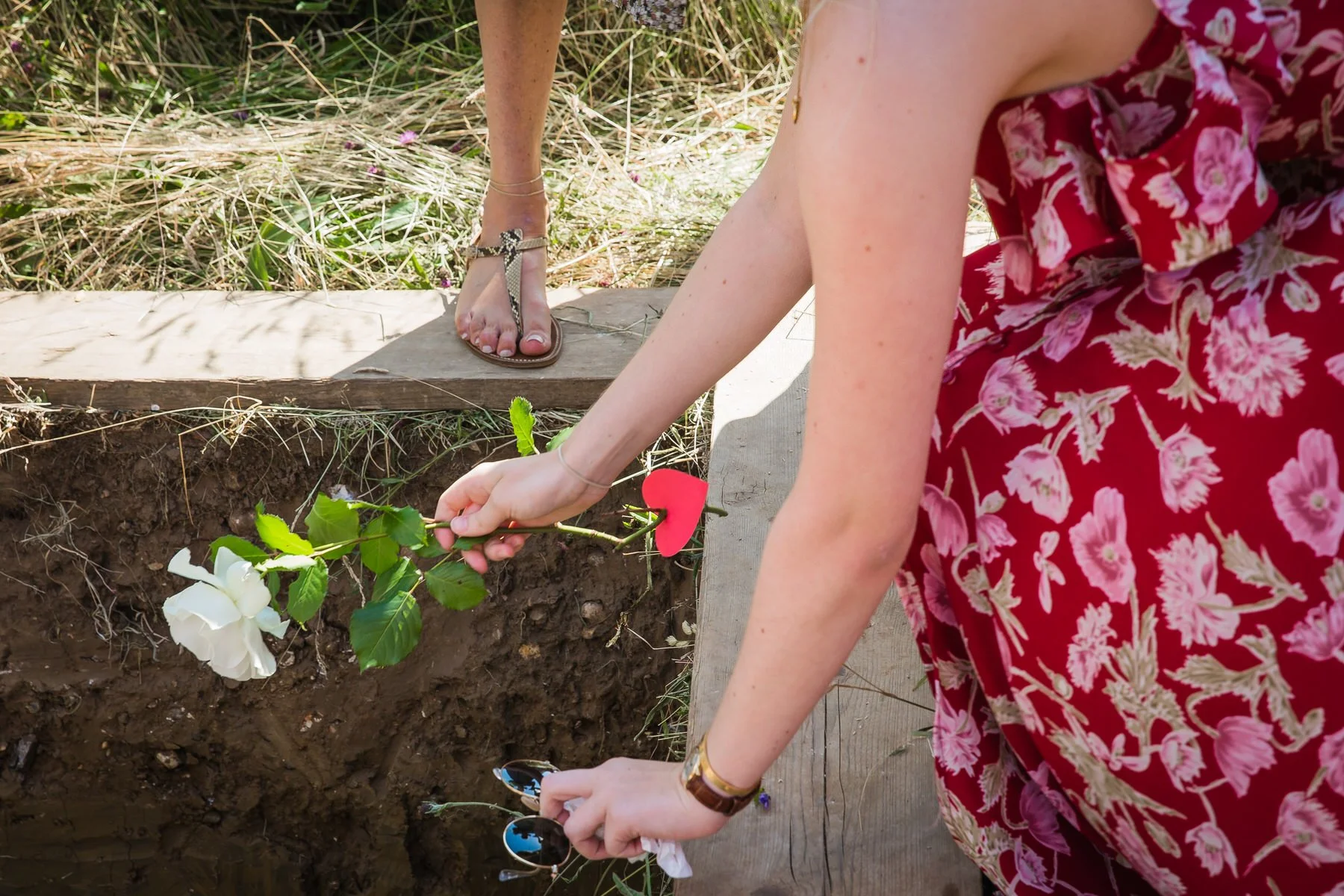
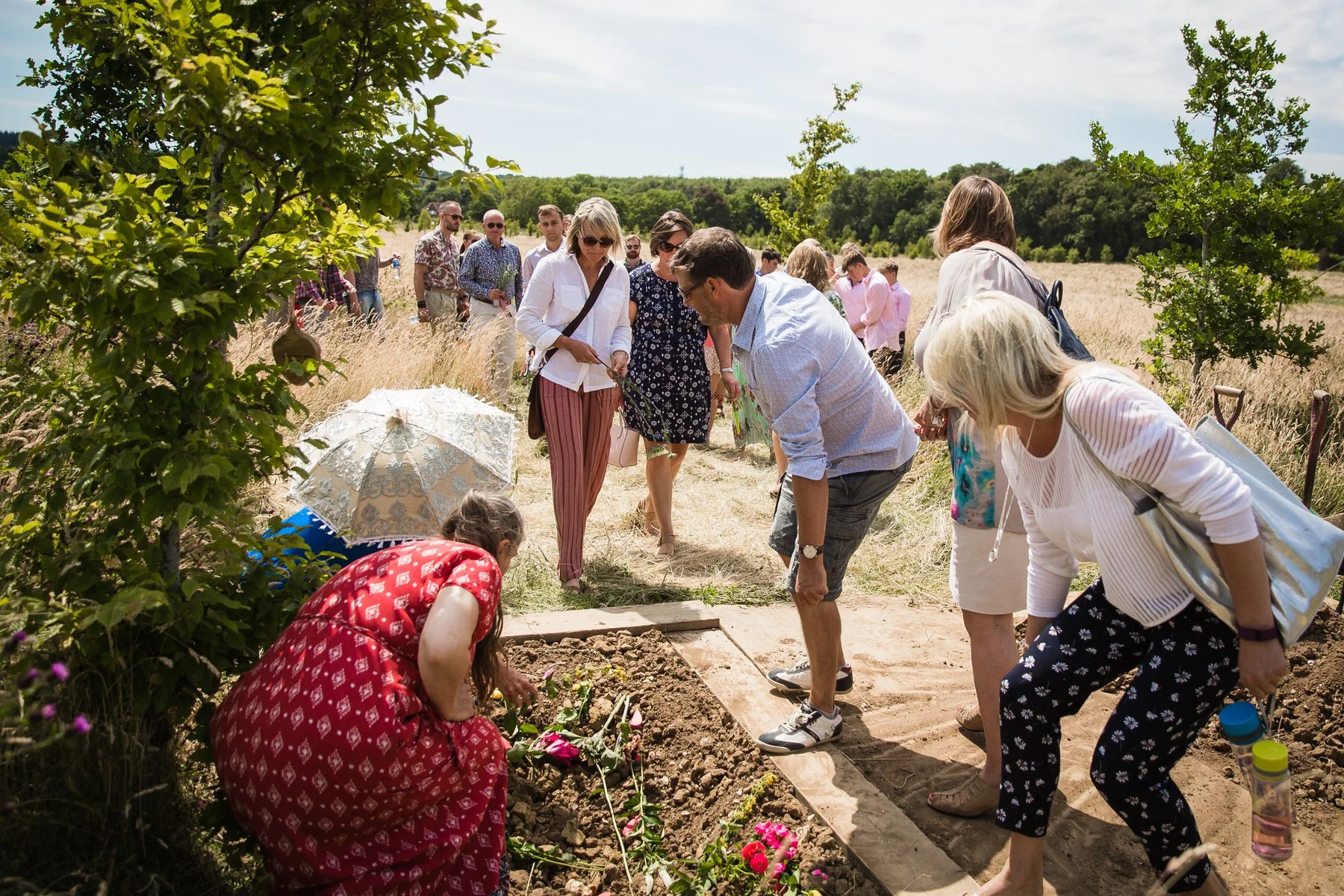
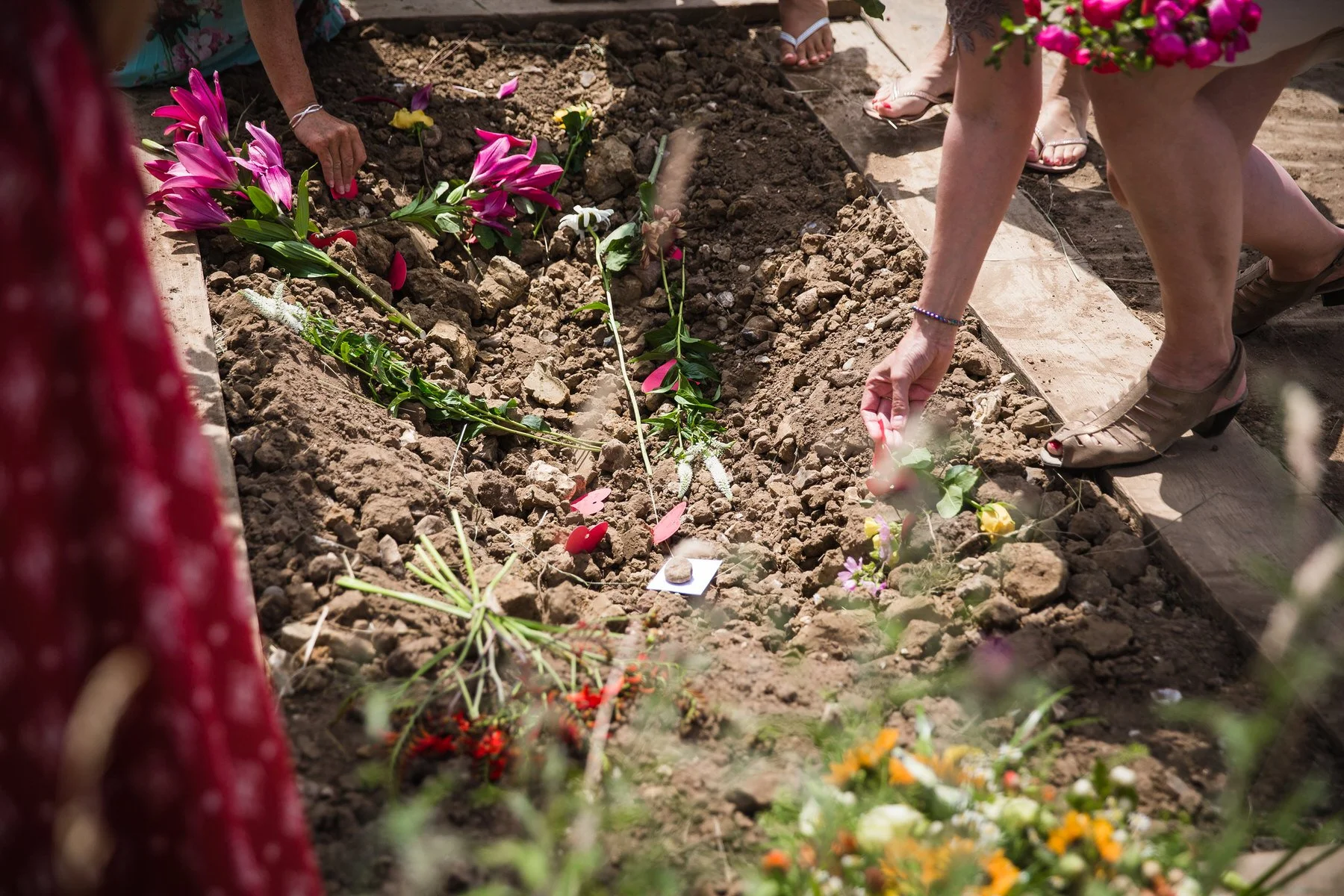
Once the family were ready, the straps were adjusted and Rory’s woollen shroud was gently lowered into the ground while the celebrant continued with thoughts, readings and prayers. Close family stood shoulder to shoulder around the grave, listening, holding one another and watching as he was laid to rest. When the time came, they stepped forward to throw petals and roses into the grave – a bright, physical gesture of love and farewell that softened the difficulty of saying goodbye.
Photographing this part of the day was about telling the full sequence in a way that felt truthful and respectful. That included:
The lift from the cart onto the struts and how the family gathered in close.
The moments during the lowering itself – faces, posture, the way people leaned towards each other.
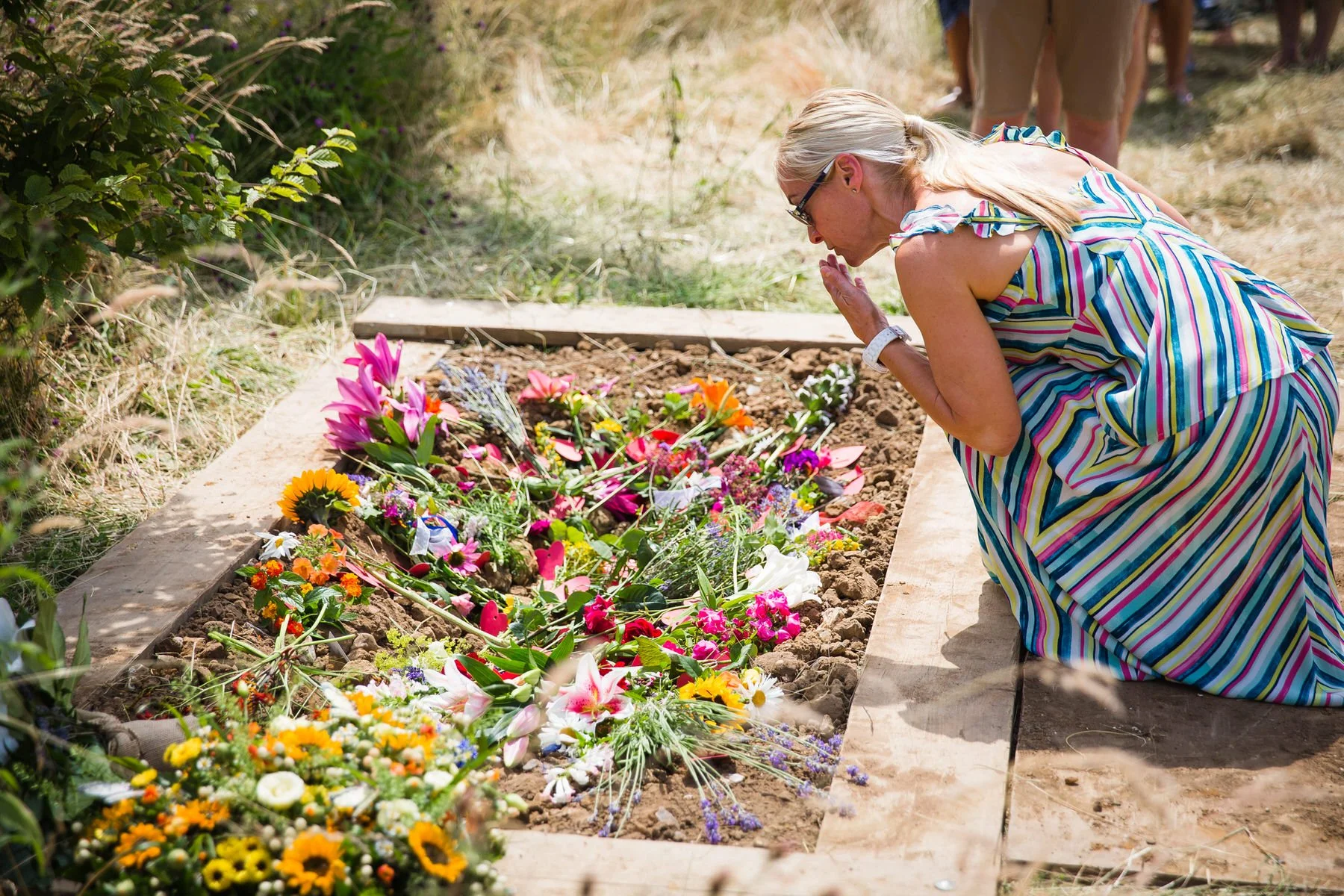
Petals and flowers falling into the grave, and the expressions of those standing at the edge.
I worked both wide and close throughout: wide frames to show the whole gathering and its place within the meadow, and closer frames that bring you nearer to individual faces, reactions and small gestures between relatives. The aim was to be close enough to record real emotion – tears, embraces, shared looks – without interrupting what was happening. Using different focal lengths meant I could move between broader scene‑setting images and more intimate portraits, so the family would have a complete visual record of this part of the day, rather than just isolated details.
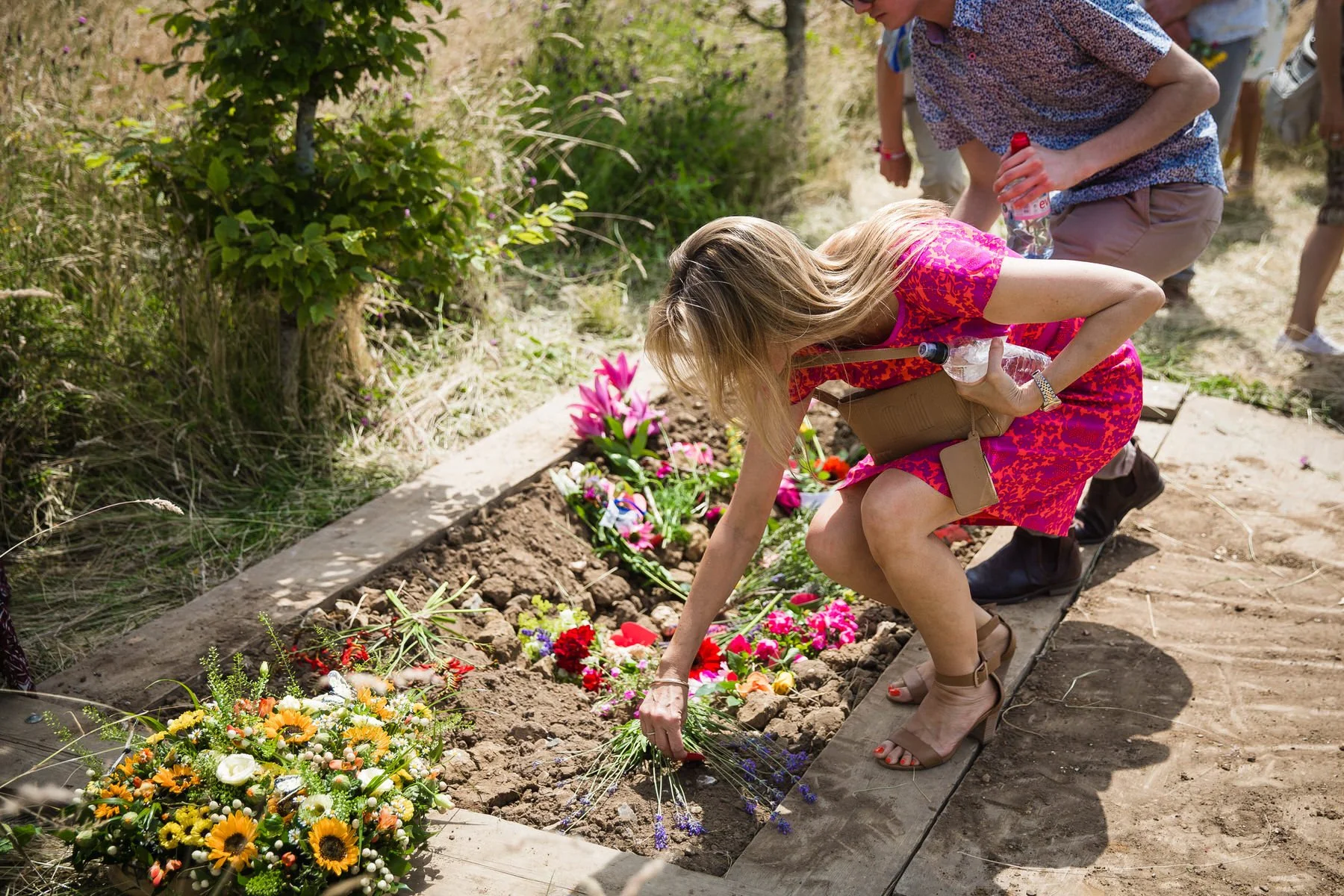
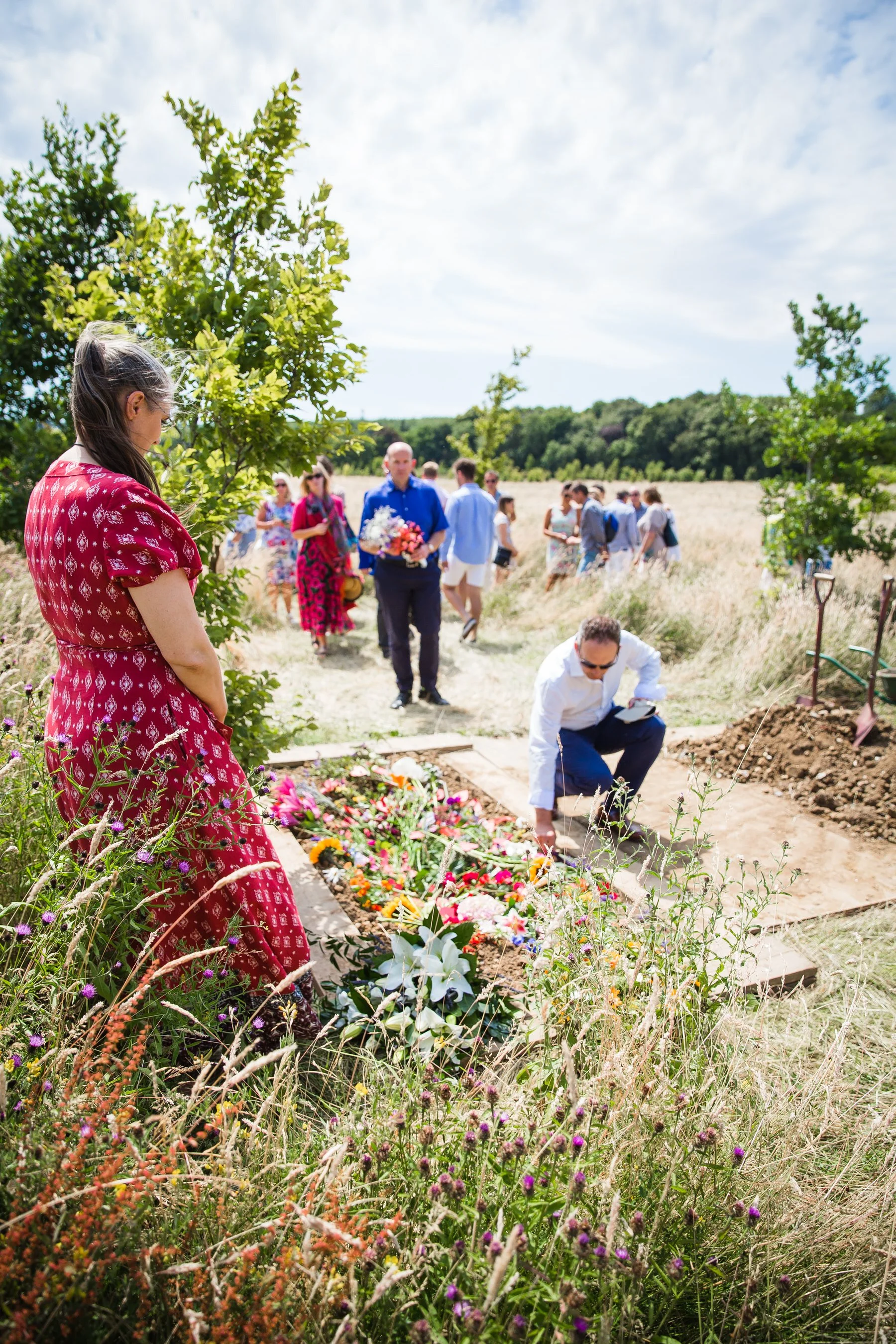
After the family had returned to the pavilion, the gravediggers delicately filled in the grave, preparing it for later when other guests would come to lay flowers and see where Rory now rests within the meadow.
Returning to the pavilion – guests, music and memories
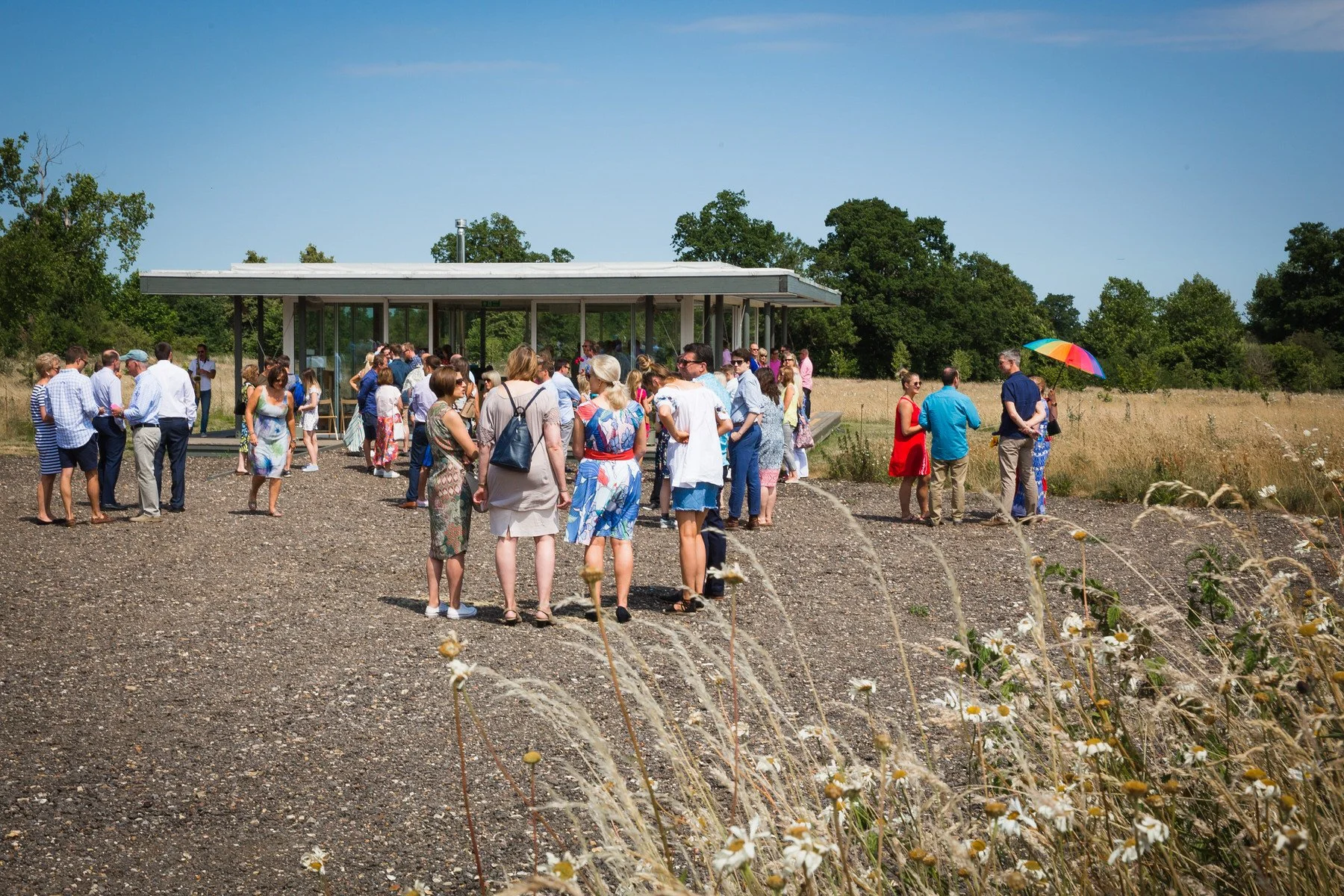
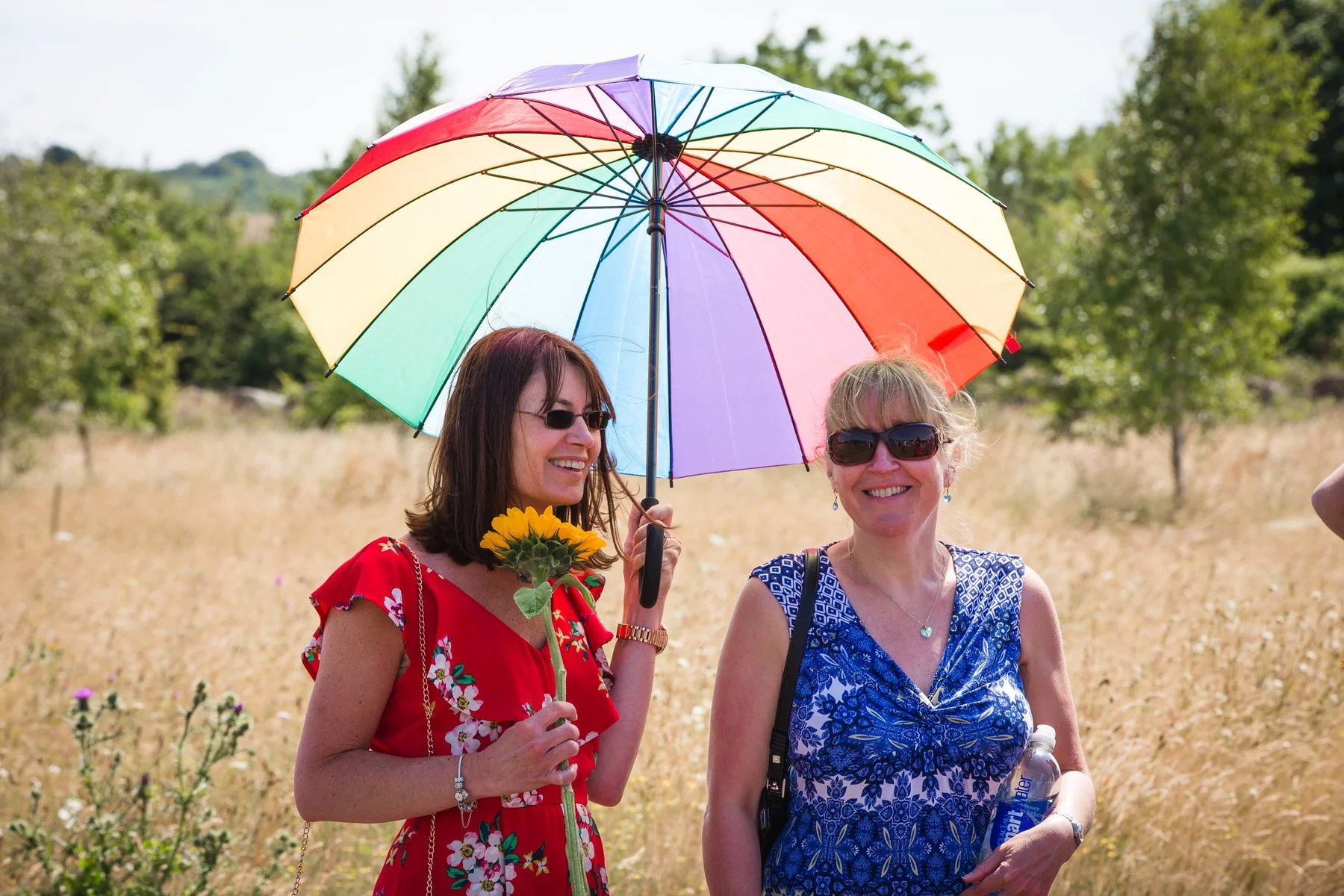
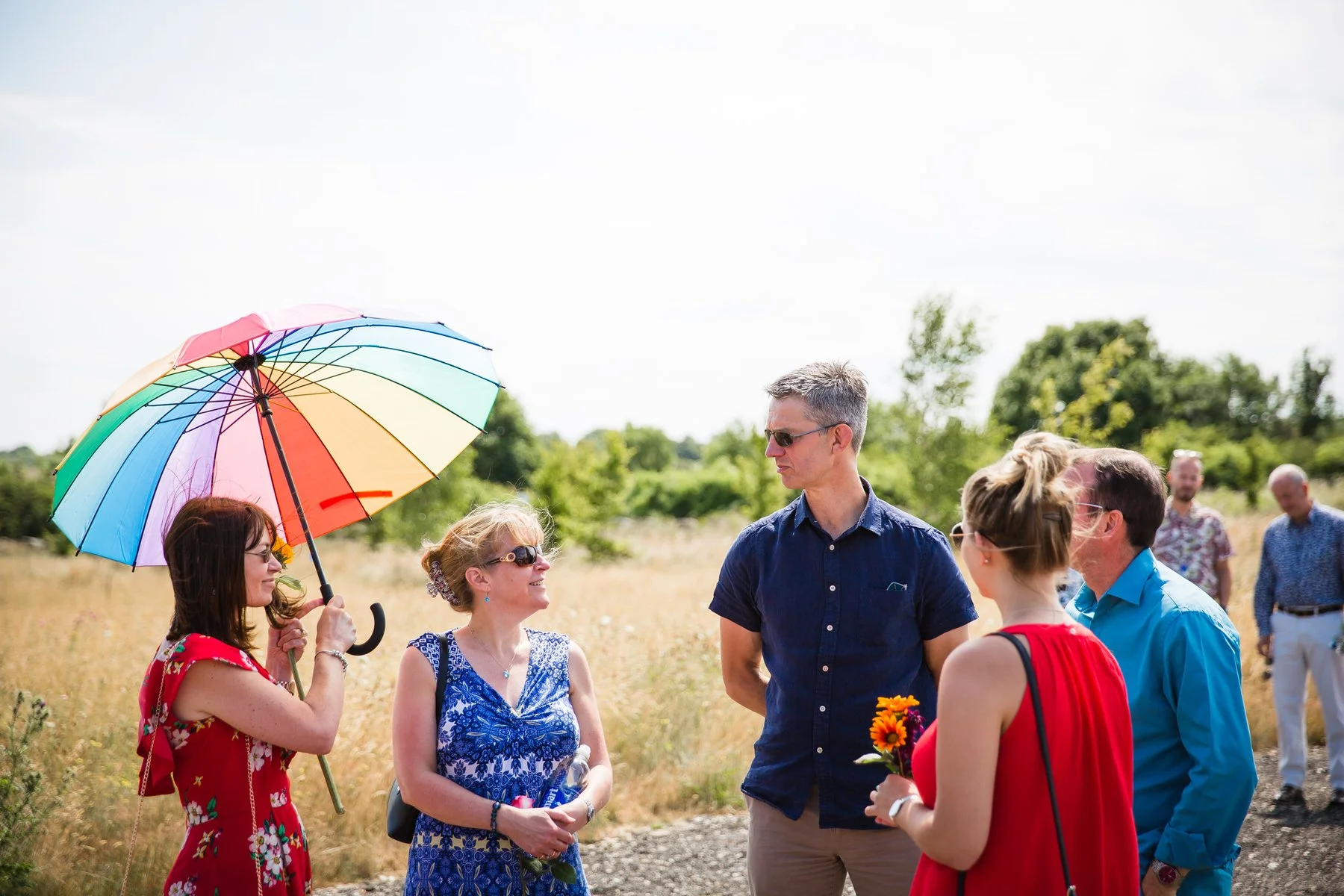
Back at the pavilion, the day shifted into its second chapter. Friends and wider family began to arrive for the main service.
As people gathered:
The pavilion filled and soon overflowed, with some guests standing outside and looking in through the glass.
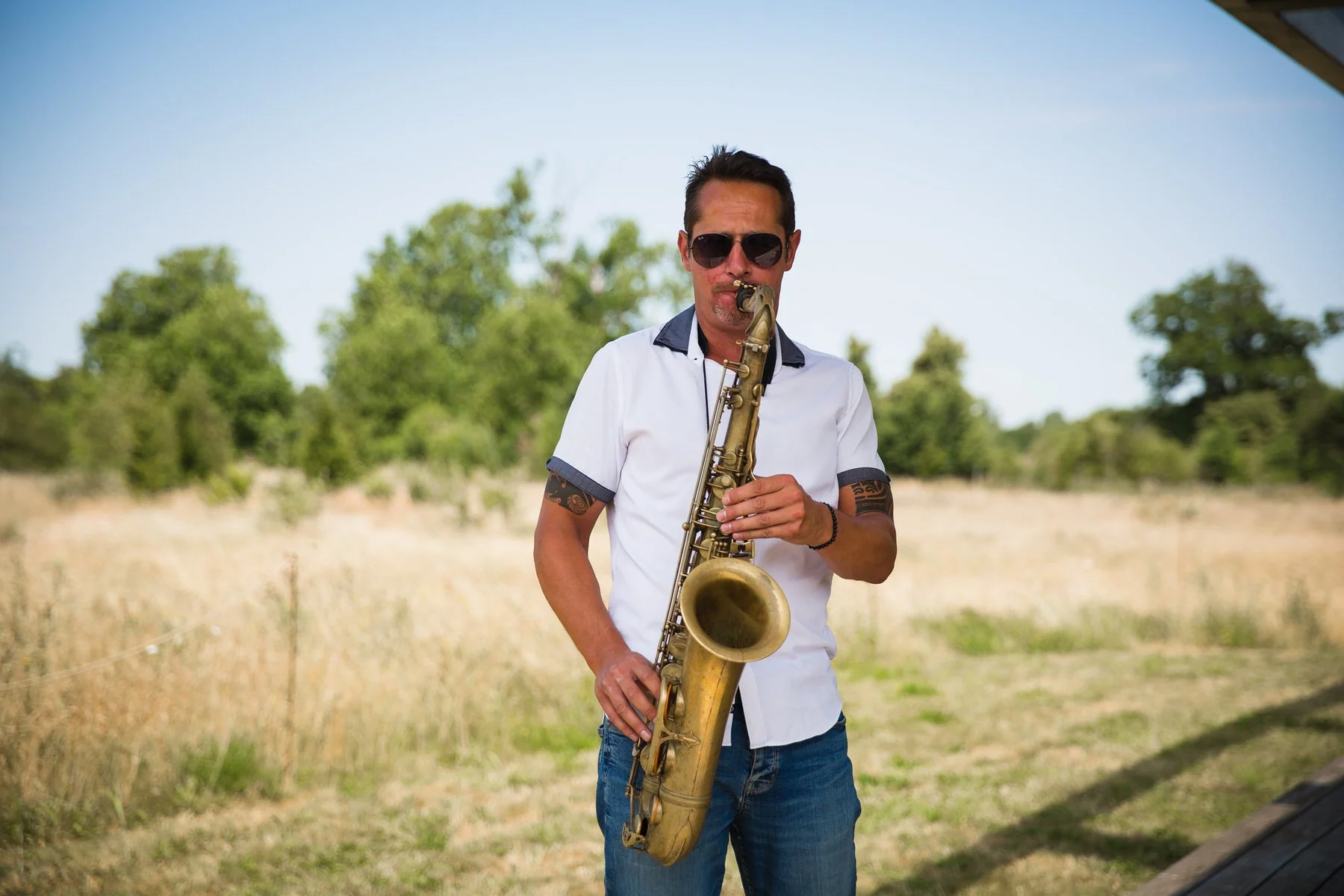
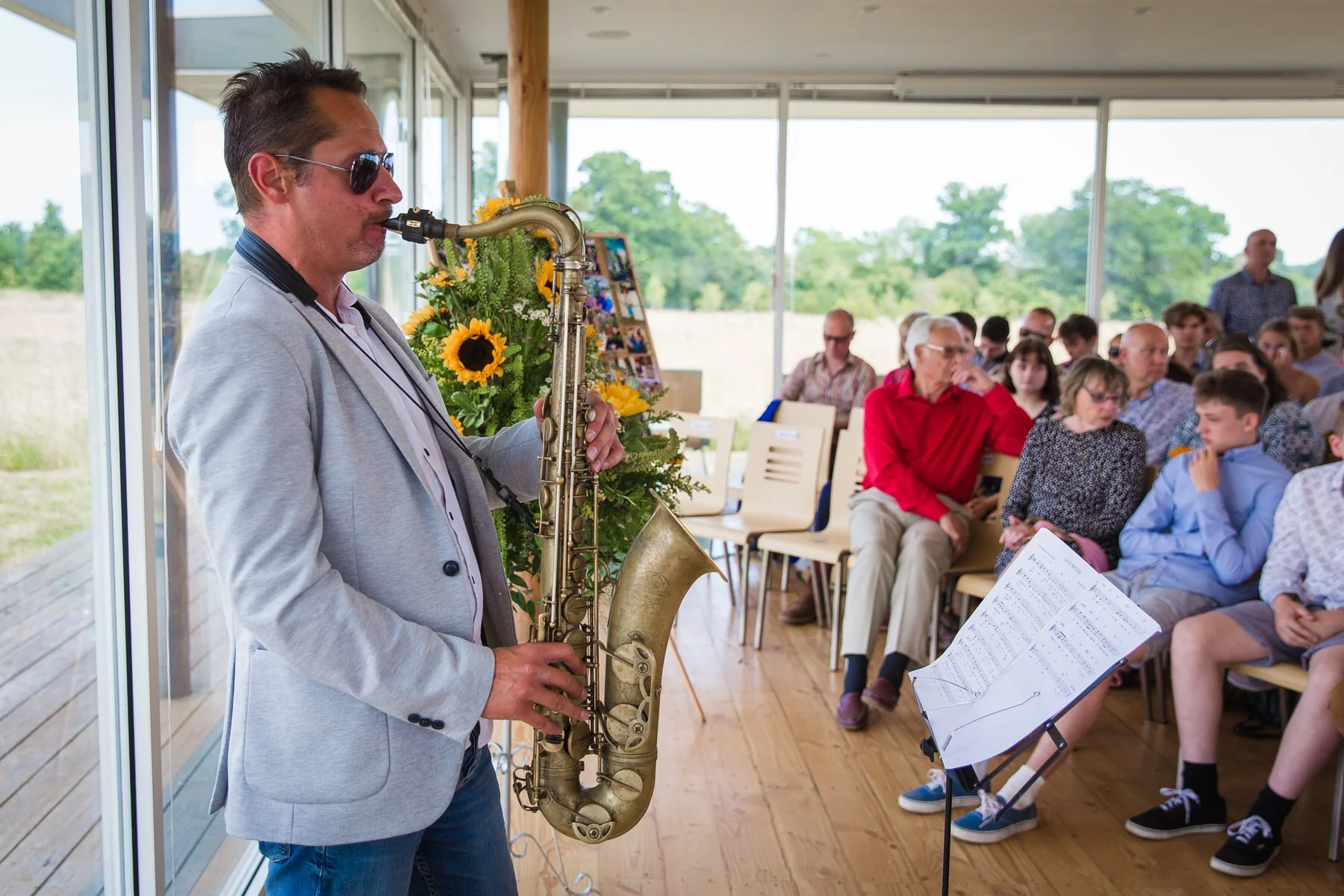
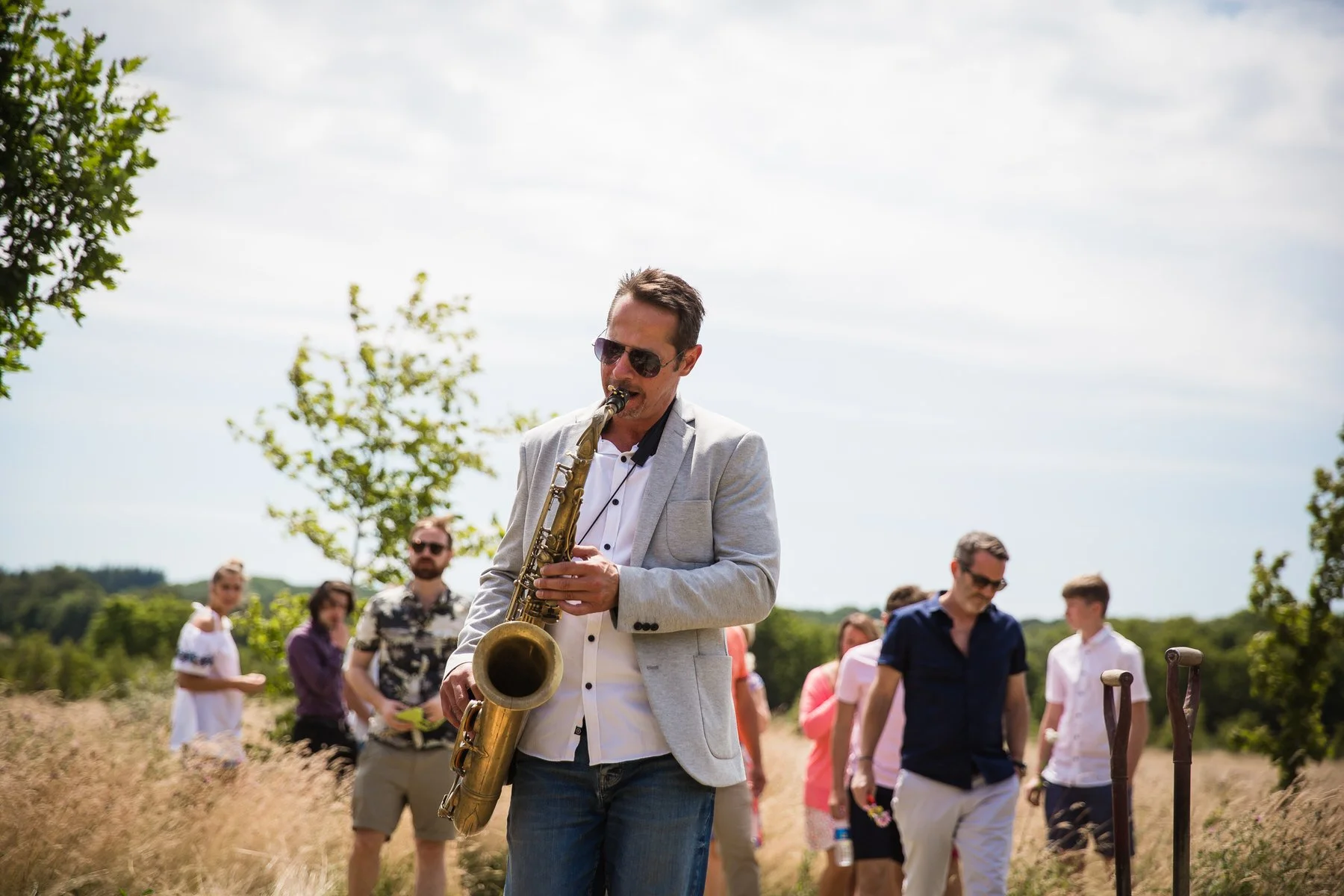
A saxophonist played as people arrived – a warm, expressive sound that set the tone.
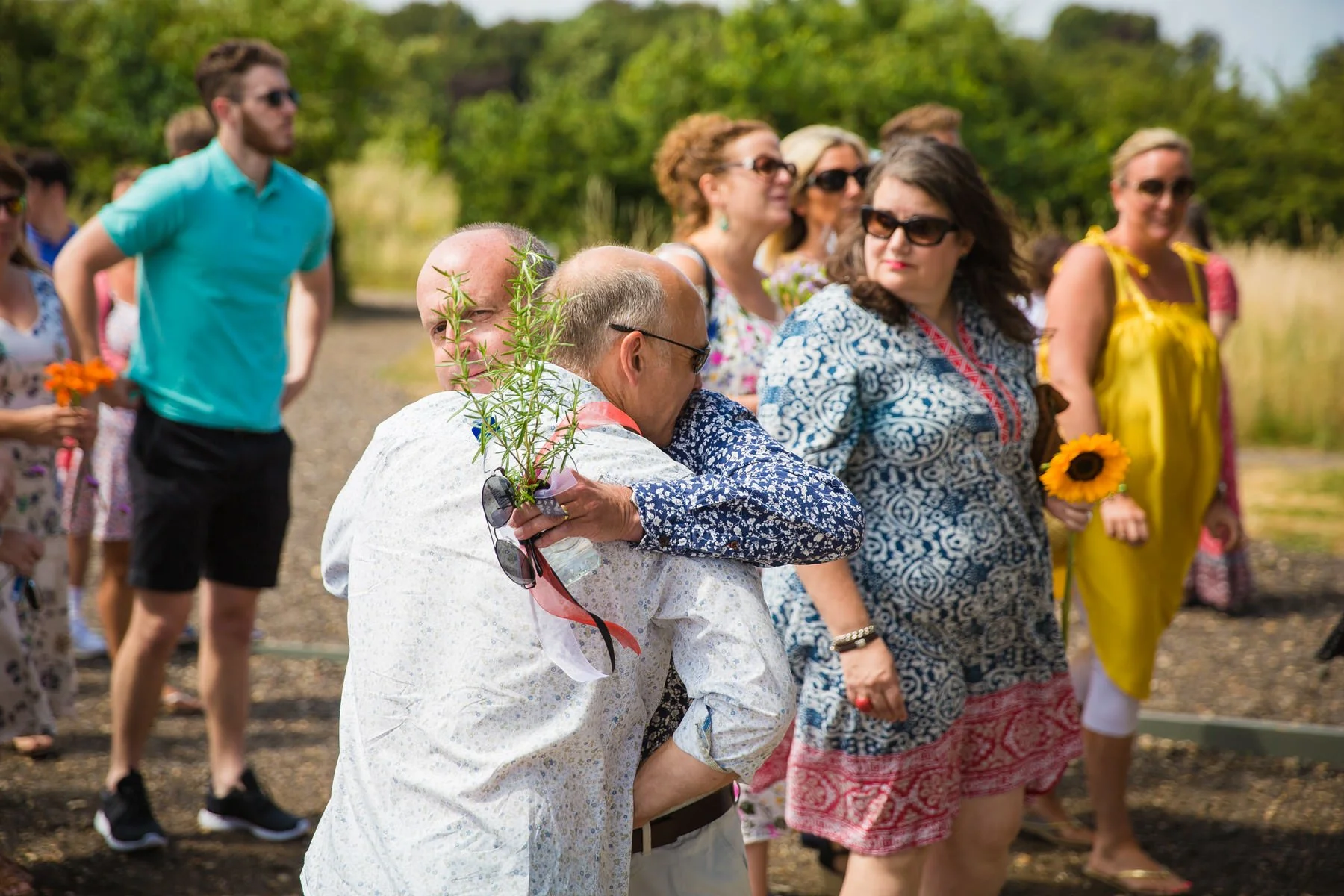
Guests greeted each other, hugged, and took time to look through photo books and memory boards laid out around the room.
This was another rich part of the story to photograph:
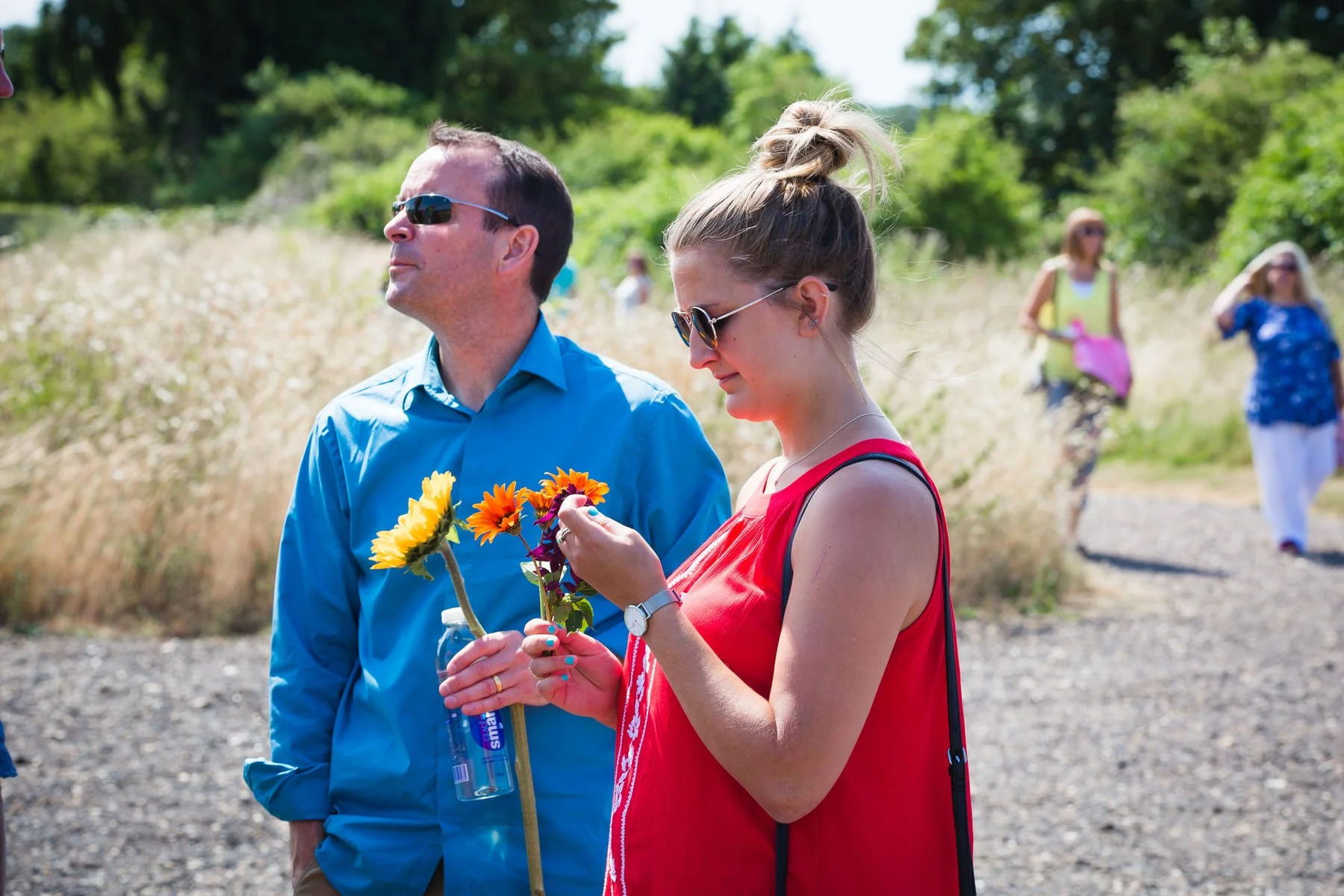
Candid moments of greeting and embrace.
People’s reactions as they looked through old photographs and albums.
Details of the saxophone, music, and the red love‑heart messages that guests would later write for Rory’s grave.
The service itself was full of tributes, stories and memories from Rory’s life, with the saxophonist playing at points during the ceremony. Again, my priority was to document everything without changing the flow: no staging, no direction, just watching and responding.
The second walk to the grave – red hearts and saxophone
Towards the end of the service, family and friends wrote messages to Rory on red paper hearts. Then, once again, it was time to walk.
This time:
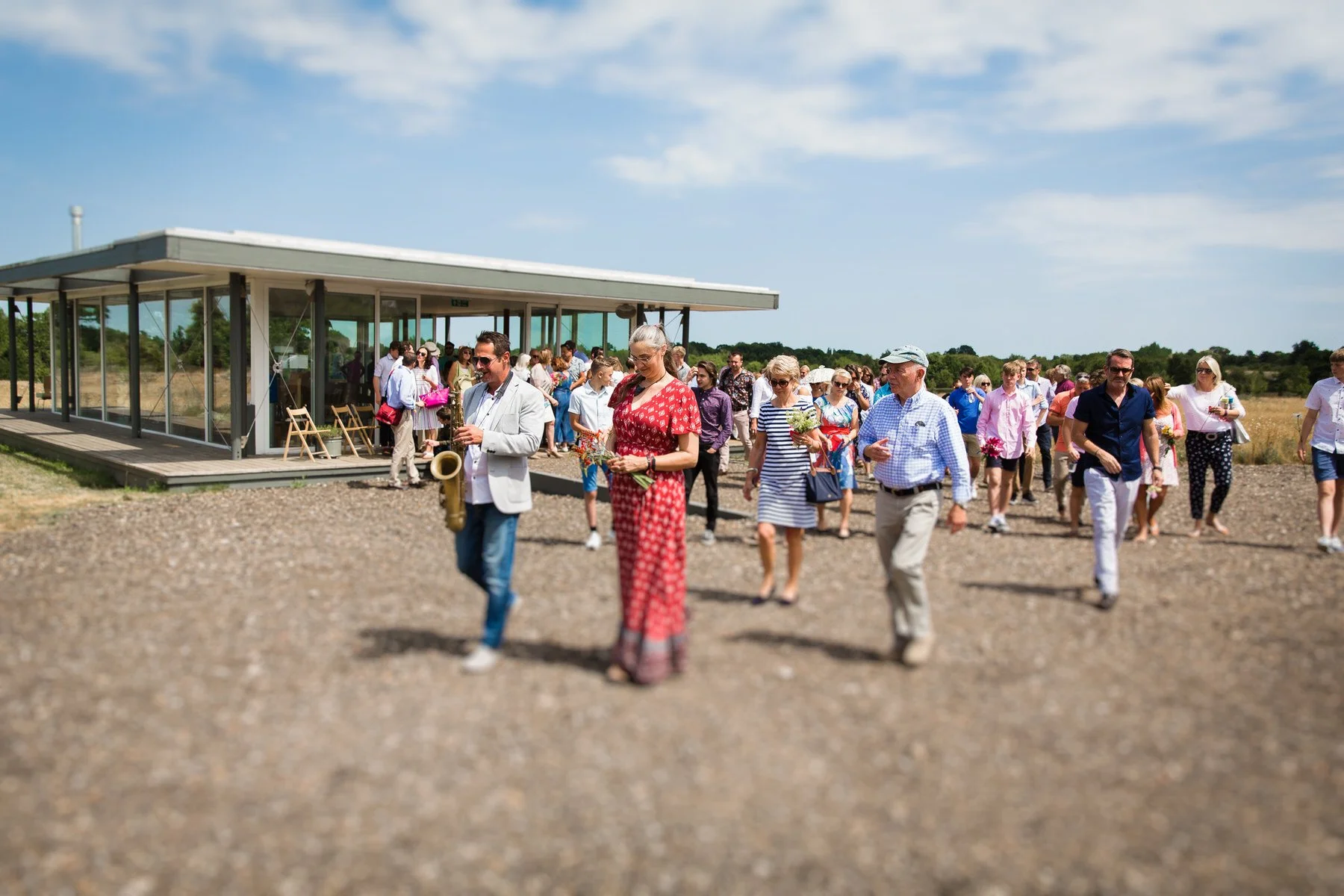
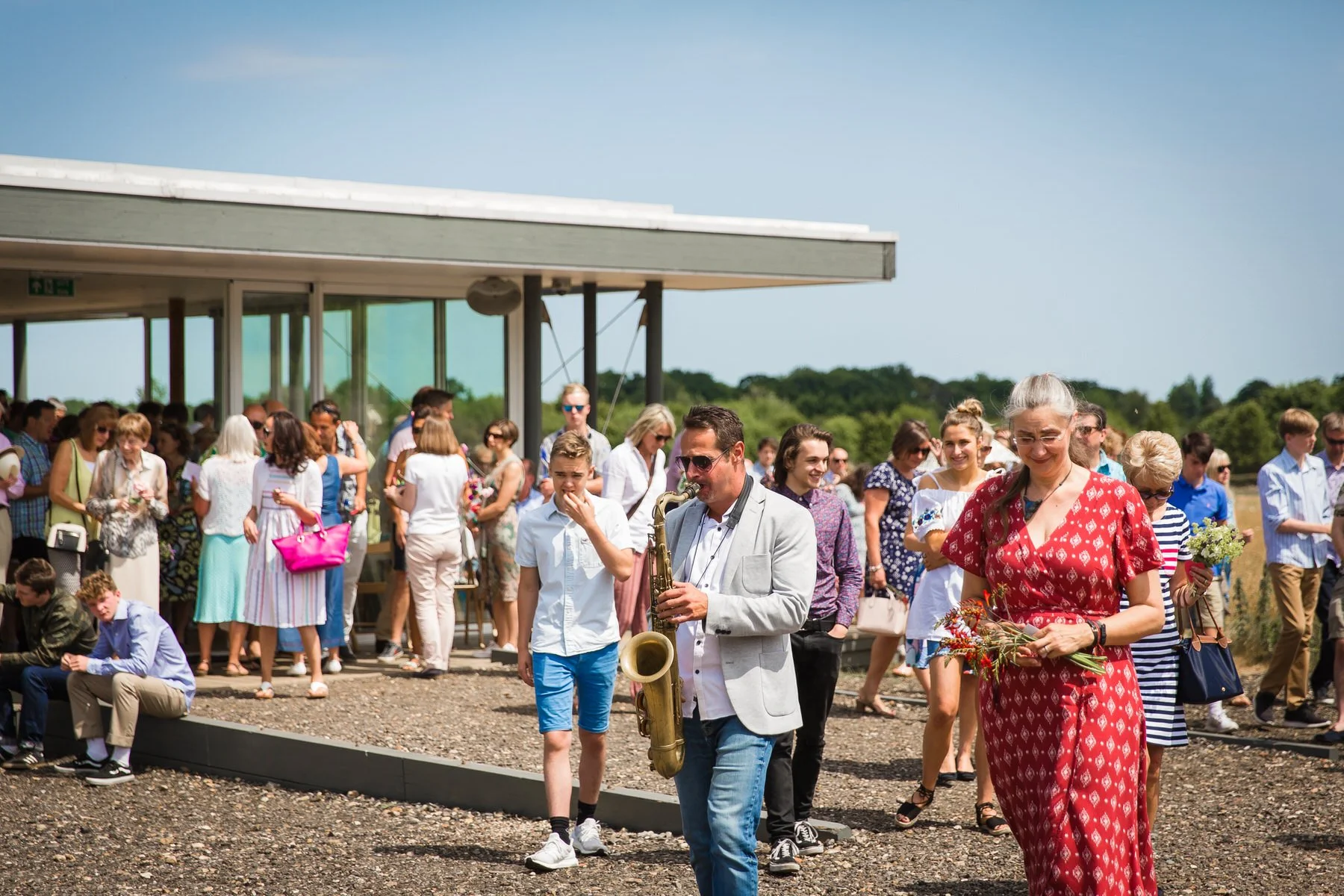
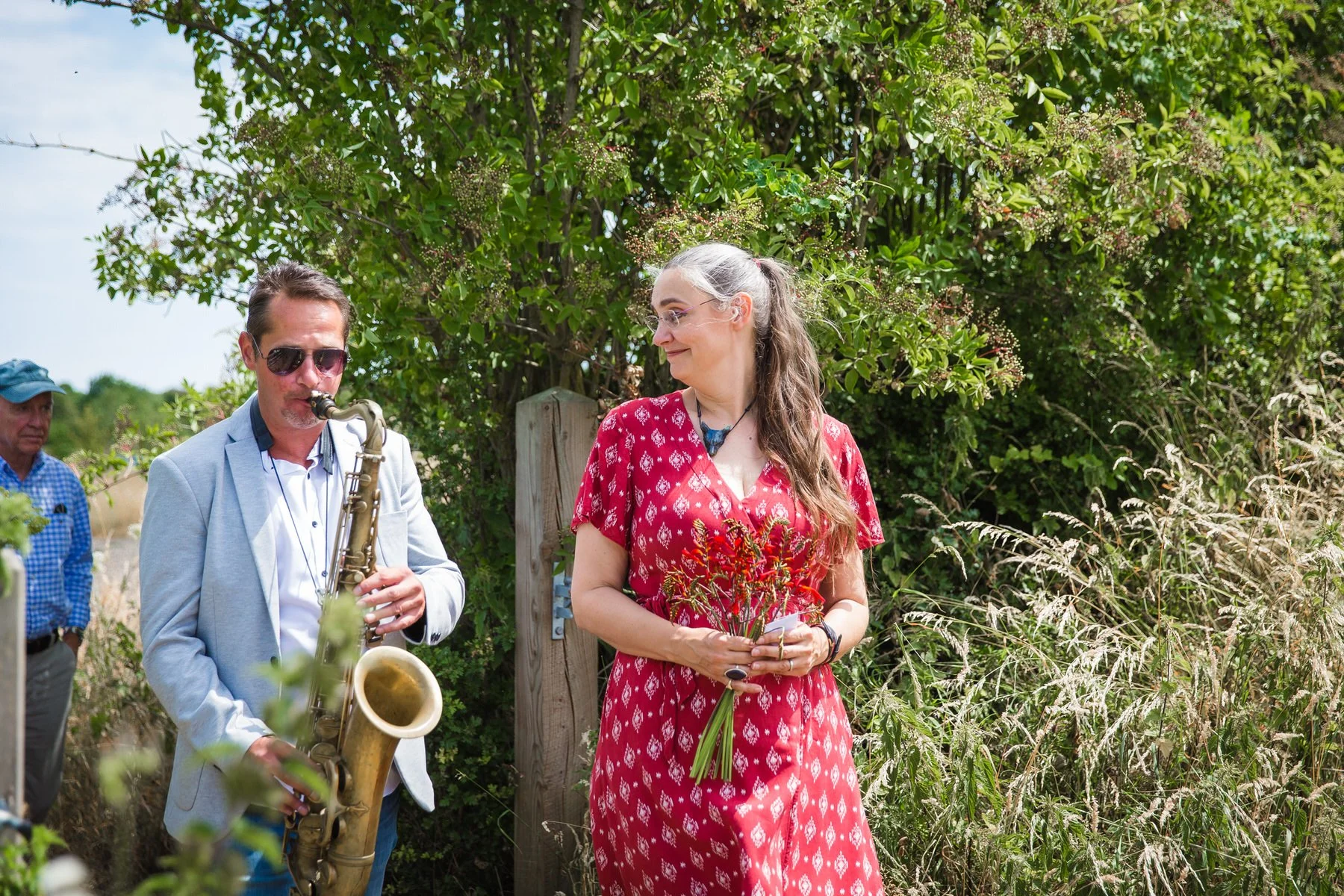
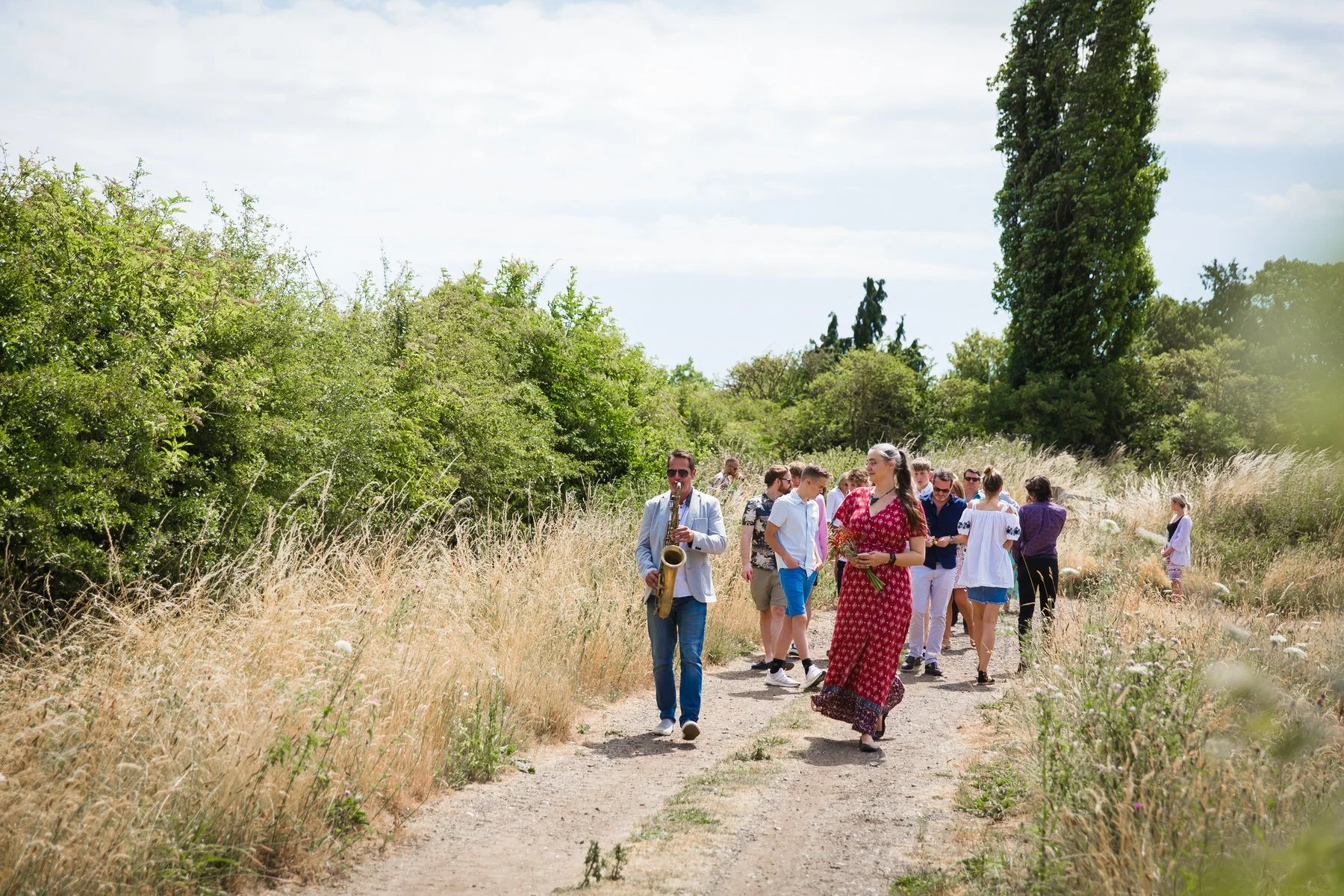
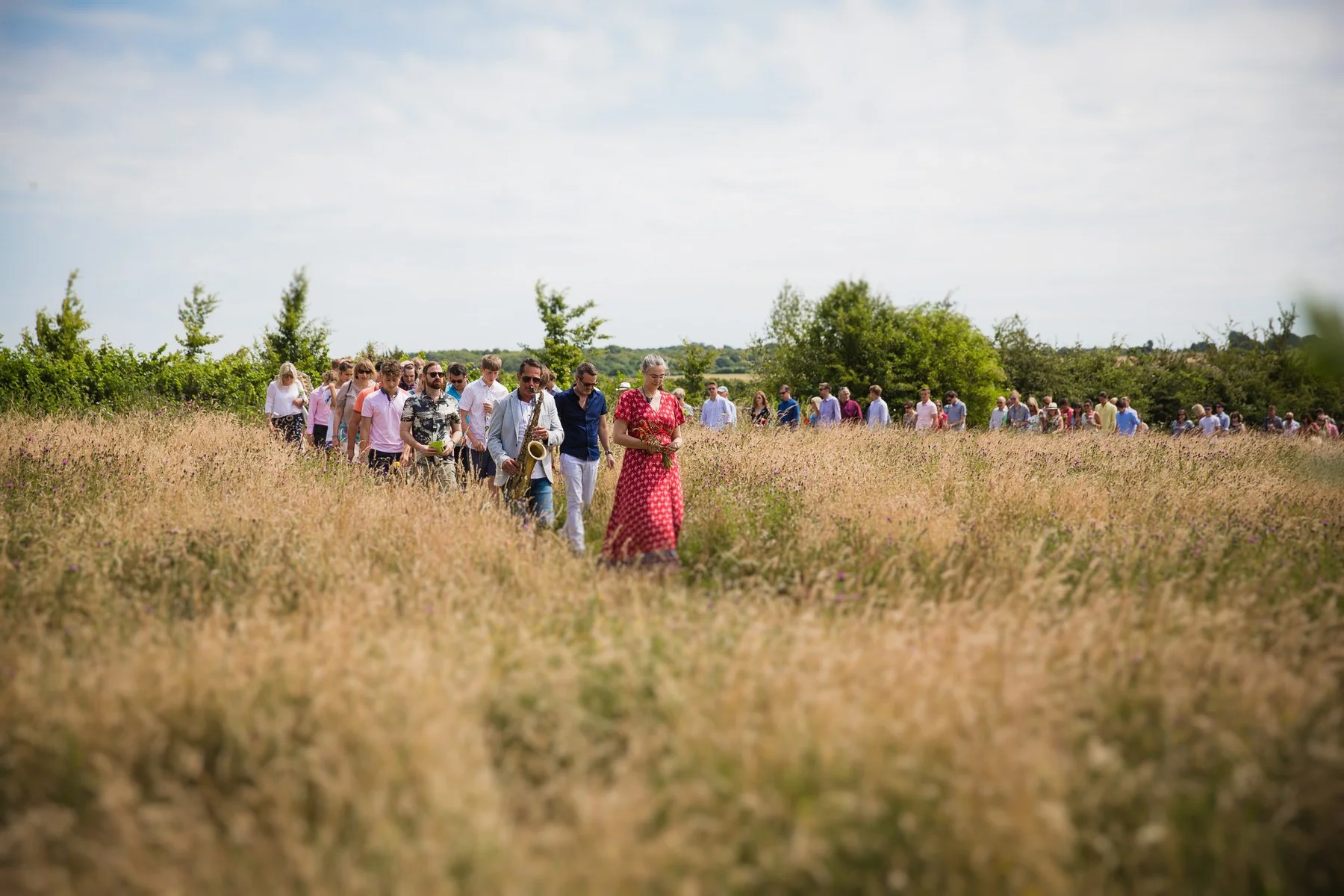
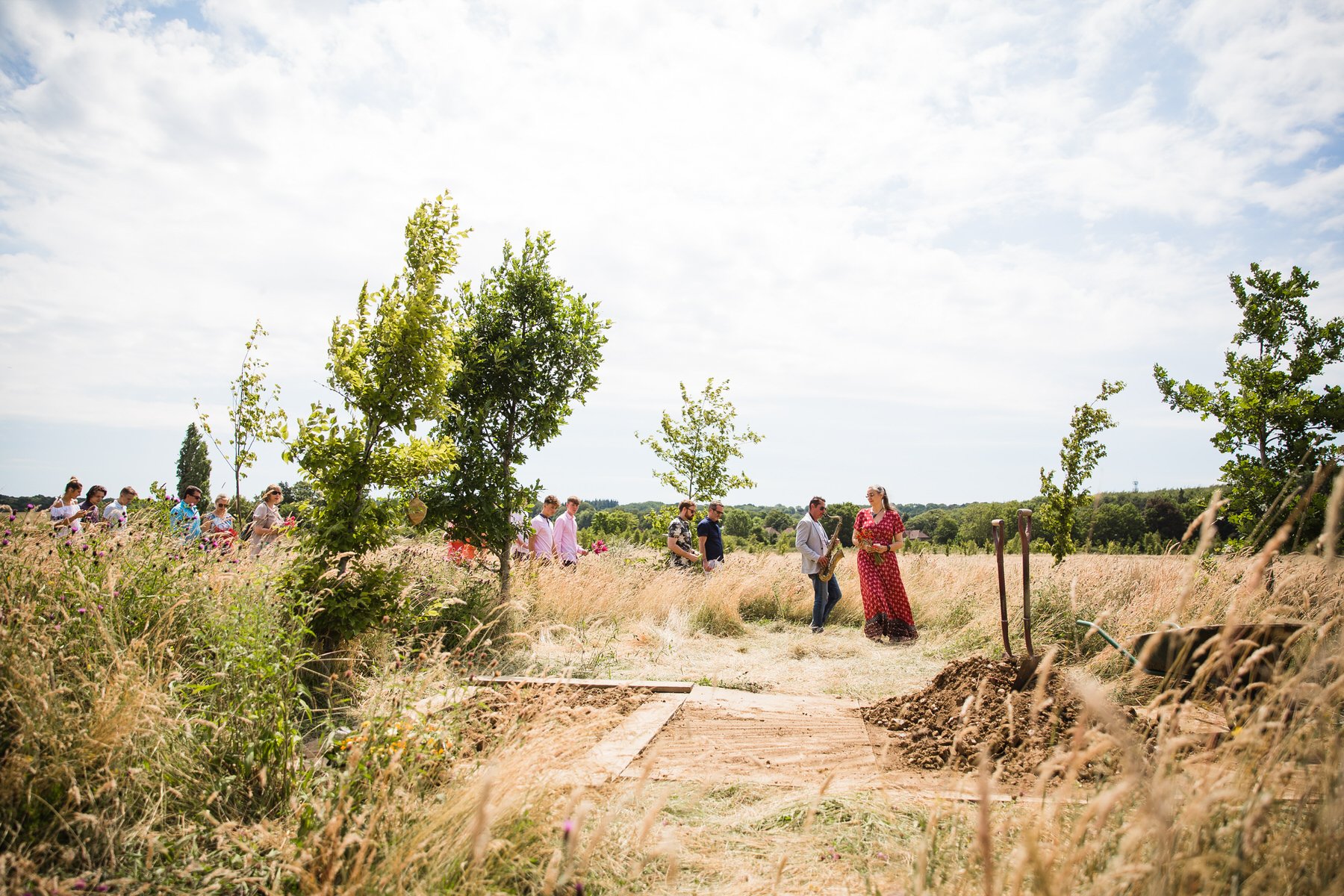
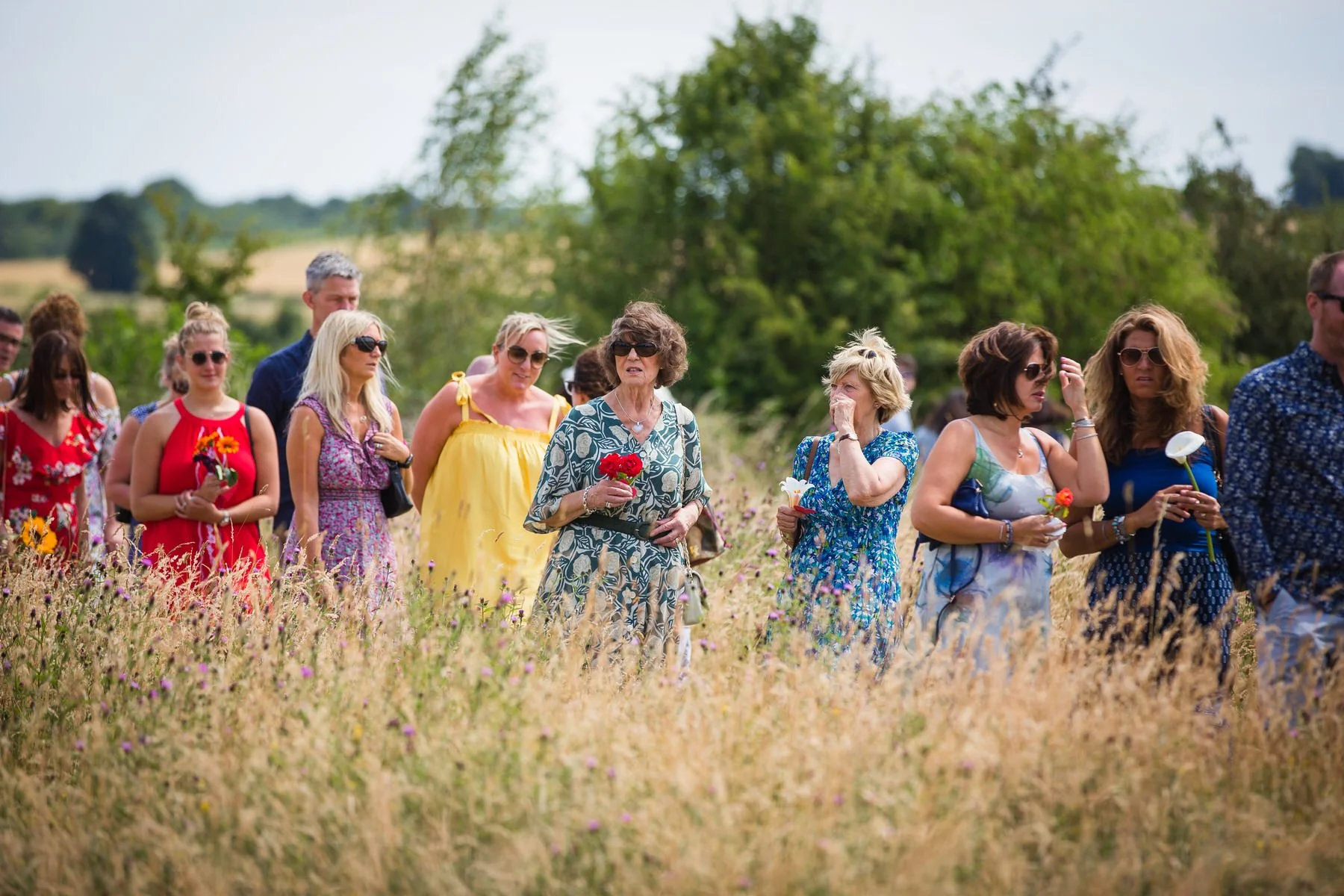
The saxophonist led the way, playing as he walked out of the pavilion and into the meadow.
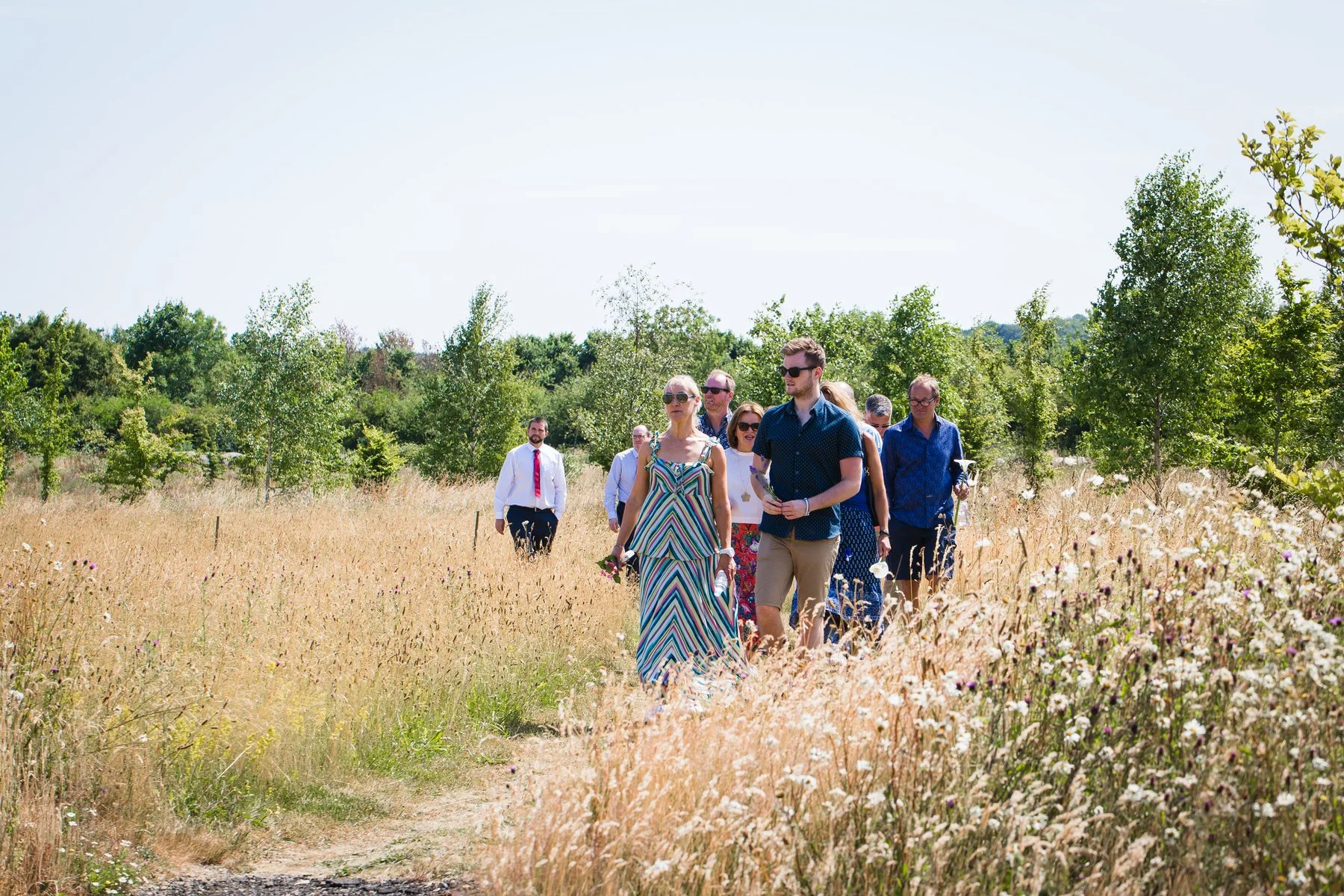
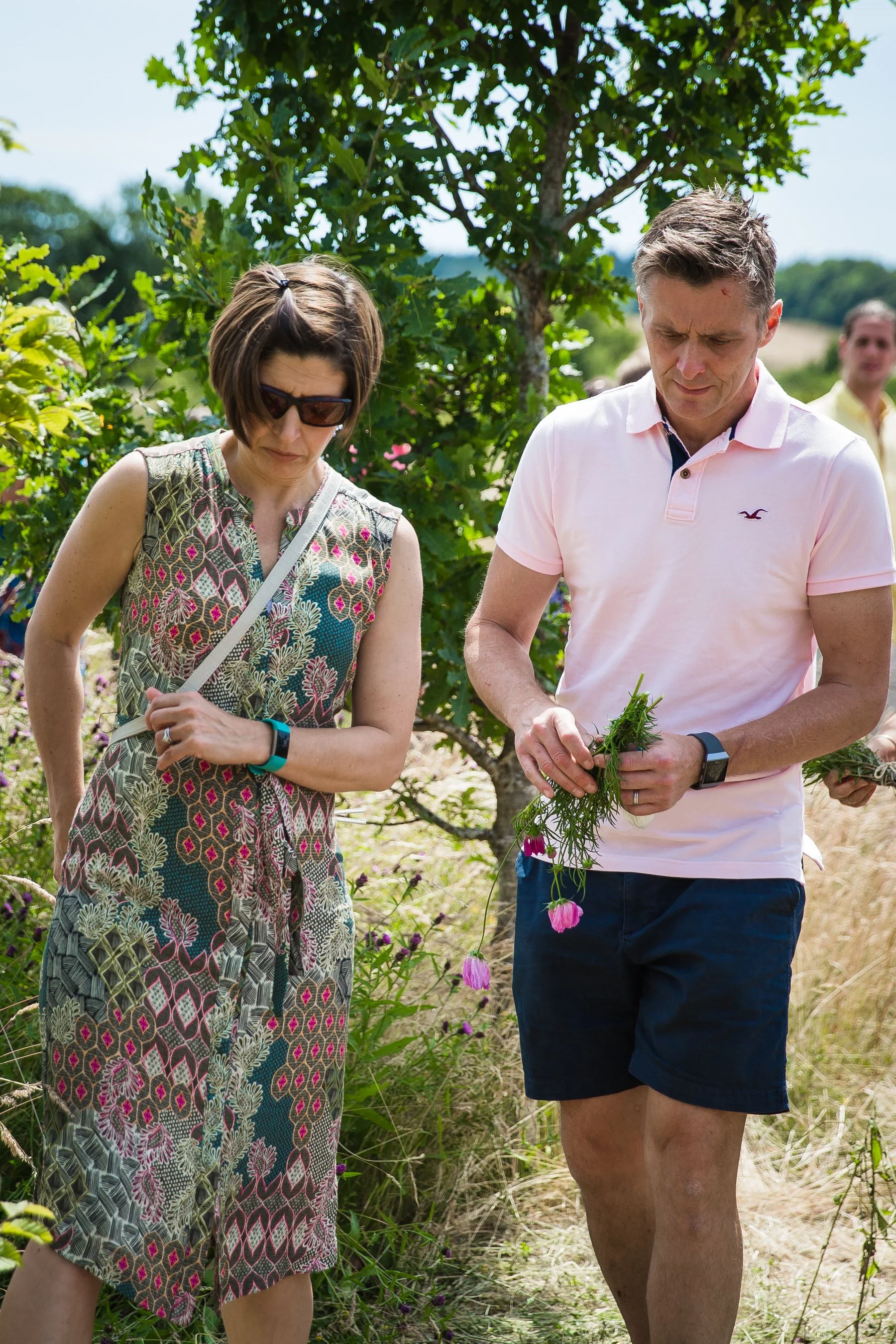
A long line of family and friends followed behind, carrying red hearts and flowers.
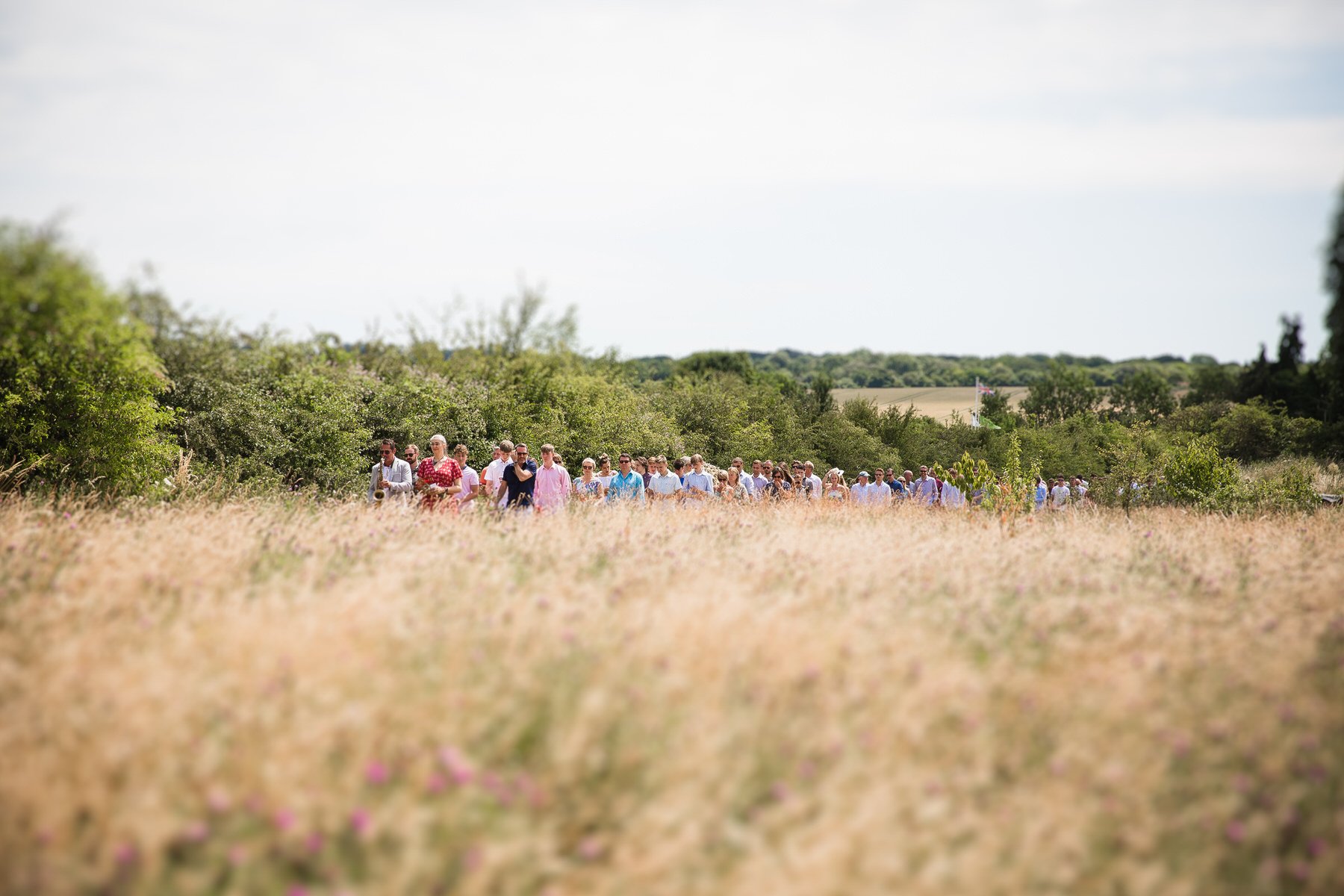
The procession moved slowly through the fields towards the grave, surrounded by nature and music.
From a photographic point of view, this was one of the most striking parts of the day:
A long, winding line of people stretching through the meadow.
The instrument and music at the front, pulling everyone forward together.
The red hearts and flowers providing small points of colour against green and gold.
At the grave, guests placed their love‑heart messages and flowers onto Rory’s grave. The celebrant led a short time of words and reflection, and people said their own quiet goodbyes.
My approach – unobtrusive, documentary, never interrupting
Across the whole day – from early preparations, through the private family burial, the pavilion service and the second walk to the grave – my approach remained the same:
Unobtrusive – always in the background, never directing or posing people.
Documentary – capturing what really happened, as it happened, in a truthful, caring way.
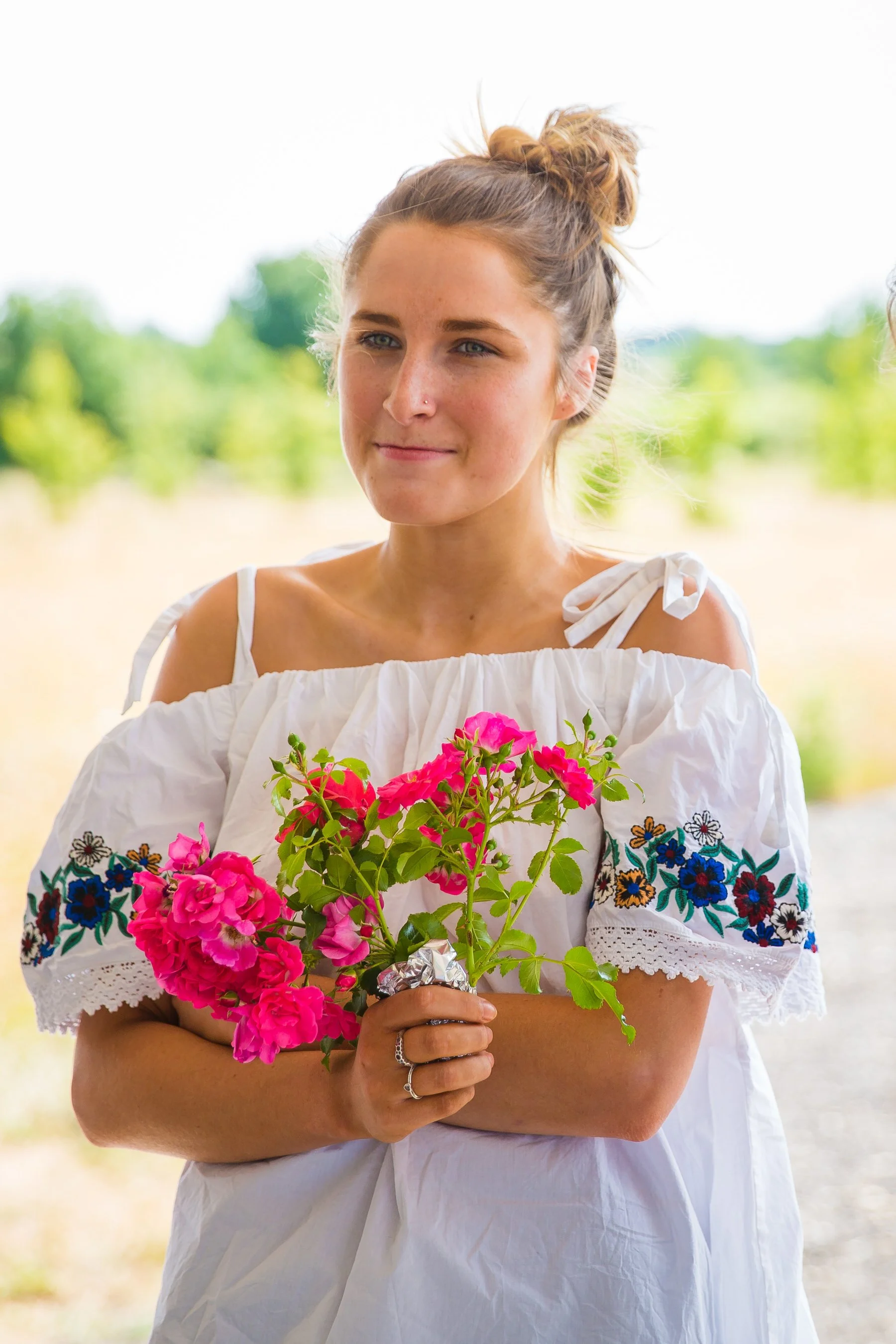
Attentive – noticing small gestures as well as big moments: a hand on an arm, a shared smile, a child reaching for a parent.
This way of working comes from years of photographing live events – theatre, performance, weddings, conferences and many hundreds of funerals – where timing, light and discretion are crucial. That experience means I can adapt quickly to changing light, changing plans and the emotional rhythm of the day without ever needing to take over.
Editing – every image carefully worked on
After the funeral, every selected photograph from the day was individually edited. There is no batch processing or one‑click filter; each image is worked on carefully so that:
Skin tones look natural and kind.
The bright sunlight feels real, but not harsh or uncomfortable.
Colours of the landscape – green meadow, blue sky, yellow sunflowers, red hearts – are true to how it felt to be there.
Distractions in the background are softened or removed where possible.
Families trust me with some of their most emotional memories. The editing process is where much of that trust is honoured, turning raw files into a cohesive, gentle, timeless set of images that tell a story of the day.
What families receive from a natural burial photographed this way
For a natural burial at a place like Clandon Wood, families typically receive:
A carefully curated set of high‑resolution images from the day – from early preparations to the final moments at the grave.
A mix of wide scenes (landscape, walks, gatherings) and intimate moments (faces, flowers, embraces, details).
Private online access to the gallery to share with those who could not attend.
The option to create prints, albums or a tribute slideshow if they wish.
Many families later say that:
The photographs helped them remember the day more clearly and gently than they expected.
Images of the environment and other details – the meadow, trees and sky – became as important as images of people.
The pictures were especially valuable for children and younger relatives who were present but may not remember everything.
You can find more practical information about what’s included, packages and how booking works on my main Funeral Photography page.
Considering a photographer for a natural burial?
If you are planning a natural burial or woodland burial – at Clandon Wood or at another site in the UK – and are unsure about whether to include funeral photography, you are not alone. Many families start with the same question.
It may help to know that:
A good funeral photographer will work quietly in the background, not turning the day into a photoshoot.
You can choose the level of coverage that feels right – from a private family burial only, to the full day, or just the main service.
The focus is always on respectful, honest images that reflect your loved one and your family, rather than on anything staged.
If you'd like to talk through what might be appropriate for your situation, you're very welcome to get in touch through my contact page or call me on 07772 509101. I can discuss your plans, the burial ground you've chosen, and how my funeral photography or funeral live streaming could fit in.
For more examples of my work, please visit my funeral photography portfolio.