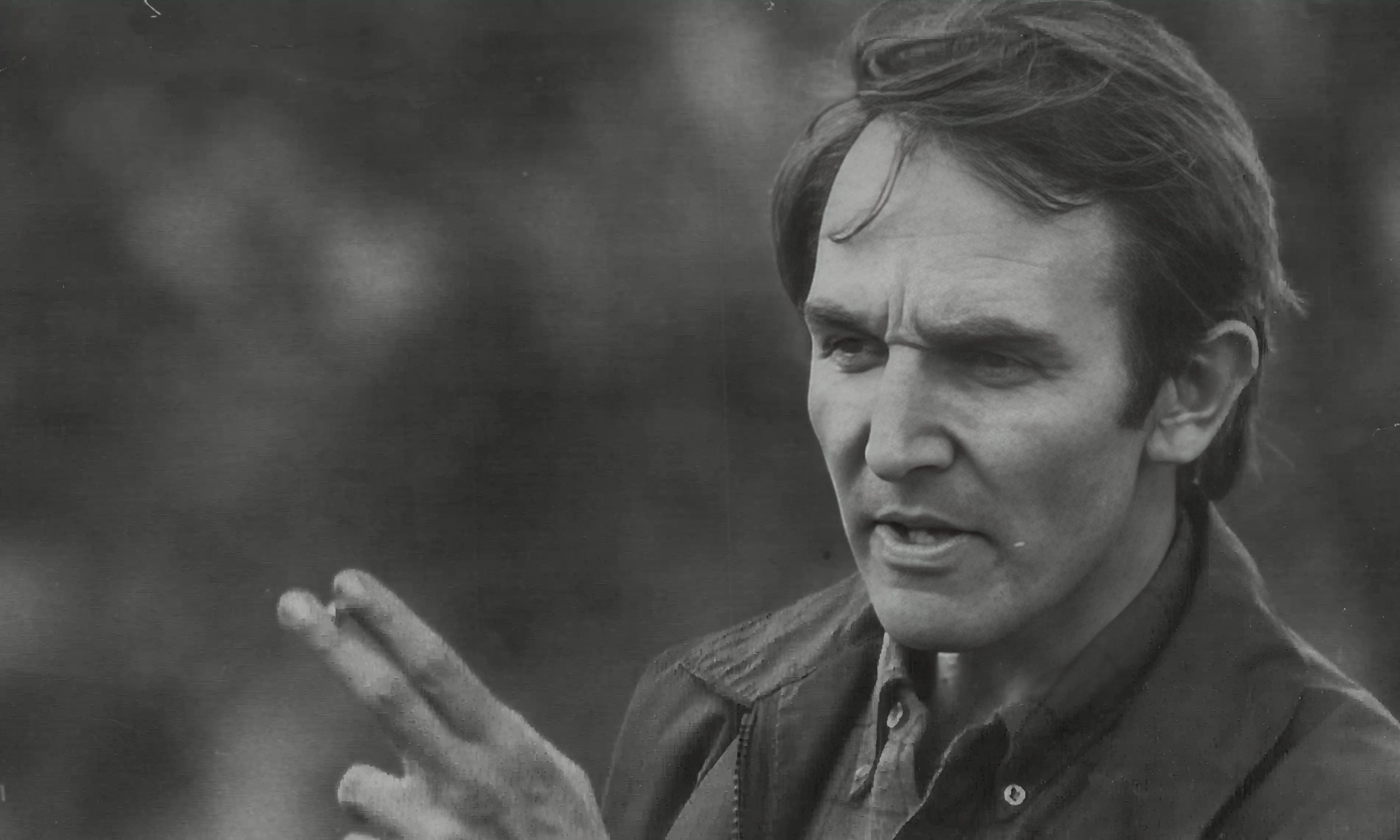
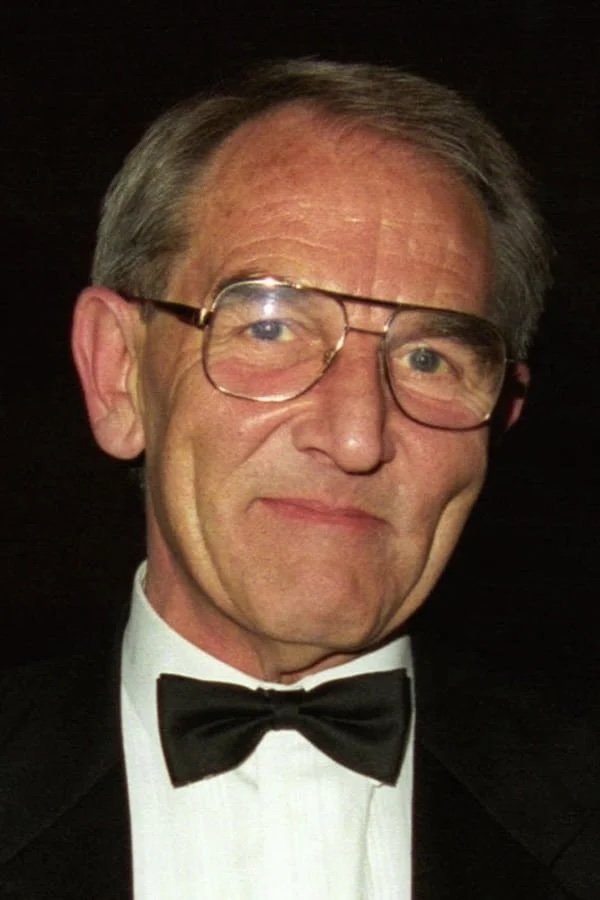
In early 2024, I was commissioned by actress Kate Beckinsale to provide funeral videography for the funeral and celebration of life of her stepfather, Roy John Battersby — one of Britain's most distinguished television directors, recipient of the Alan Clarke Award (BAFTA's highest television accolade), and the man behind some of the most celebrated detective dramas in British broadcasting history.
The service was held at Mortlake Crematorium in West London — a peaceful 1930s chapel on the south bank of the Thames. Roy's wife, actress Judy Loe, was present alongside Kate, Roy's sons Tom and Will, and a gathering of family, friends and colleagues from the film and television world, including Christopher Eccleston.
It was one of the most significant commissions of my career.

Who Was Roy Battersby?
Roy John Battersby was born on 20 April 1936 in Willesden, London. He began his career making documentary features for BBC programmes including Tomorrow's World and Towards Tomorrow — before going on to direct the dramas that defined an era of British television.
His credits read like a roll call of the best British drama of the past four decades:
Between the Lines — the acclaimed police corruption series
Inspector Morse — the Oxford detective drama that became one of ITV's most beloved series
Cracker — the Robbie Coltrane psychological thriller
A Touch of Frost — his final directing credit, a 2006 episode of the long-running David Jason series
Roy was also a man of strong political convictions. He was a committed Trotskyist for a period and a full-time organiser for the Workers Revolutionary Party — associations that led to him being blacklisted by the BBC for several years. That he eventually returned to the industry, built one of its most distinguished directing careers, and received BAFTA's Alan Clarke Award for outstanding contribution to television in 1996, is a remarkable story in itself.
He married actress Judy Loe in 1997, becoming stepfather to her daughter Kate Beckinsale — whose own father, actor Richard Beckinsale, had died suddenly in 1979 when Kate was five years old. By her own account, Roy became a central and beloved figure in her life.
Roy died on 10 January 2024 in Los Angeles, aged 87, after a stroke. Kate had flown to his bedside directly from the Golden Globe Awards, still in her evening gown. She announced his death with the words: "I have no words yet. I fought for you with everything I had."
In the weeks that followed, Kate publicly challenged BAFTA after receiving what she described as a cold email suggesting Roy might not be included in their In Memoriam tribute — despite his BAFTA Alan Clarke Award and his decades of work. BAFTA subsequently confirmed he would be honoured. The episode drew wide attention to how the industry sometimes forgets its own.
Being Commissioned by Kate Beckinsale
The commission came from Kate directly, and the brief was clear: to film the day with complete discretion and care, creating a record that the family could keep and return to — something that honoured both Roy's public significance and the private grief of the people who loved him.
Filming for a family that includes one of Hollywood's most prominent actresses, at a service attended by television industry colleagues, requires a particular kind of professionalism. The cameras cannot draw attention to themselves. The filming cannot make anyone feel watched. And the finished film must serve the family first — not the public profile of the occasion.
My approach was exactly what it is at every funeral: arrive early, set up before anyone arrives, work from the edges using long lenses, and follow the day rather than directing it.
The Service at Mortlake Crematorium
Mortlake Crematorium is one of London's quieter, more intimate crematoriums — a 1930s chapel surrounded by gardens, on the south bank of the Thames near Chiswick Bridge. The scale and atmosphere are very different from somewhere like Westminster Cathedral or Golders Green; it is a smaller, more contained space, and the filming setup needed to respect that intimacy.
The service was led by funeral celebrant John Gorick, who shaped the day carefully around Roy's life and the people who knew him.
The arrivals — family and colleagues gathering outside, the hearse arriving, the coffin carried into the chapel by the family.
The tributes — deeply personal reflections from family and colleagues, sharing stories from both Roy's career and his private life. The people in that room had known Roy across decades, across film sets, across the peaks and difficulties of a long life in the industry, and the tributes reflected all of that.
Live music — funeral singers and cello, whose performances gave the service much of its emotional weight and created some of the most moving moments of the day to film.
Moments of silence — space within the service to simply be still and to sit with memory and grief.
I used a multi-camera setup throughout: a wide camera covering the full chapel — the congregation, the coffin, the overall atmosphere — and a close camera for the speakers, the musicians, and the family. Switching between the two in the edit creates a film that feels natural and unhurried, moving between the personal and the wider scene without jarring changes of perspective.
Audio at Mortlake — Capturing Cello and Voice
The acoustic of Mortlake's chapel is relatively intimate, which is helpful for spoken word but requires care with live instruments. The cello in particular needed dedicated microphone placement to capture its full character rather than allowing the room's reflections to overwhelm it.
I placed microphones at the lectern for tributes and readings, a dedicated microphone for the celebrant, and positioned microphones to capture both the singers and the cello at close enough range to preserve the warmth and texture of the performance. General room sound picked up the atmosphere and the congregation's quiet responses throughout.
The finished film has a consistent, natural audio quality from first arrival to the departure of the hearse — tribute, silence, music and conversation all feeling like part of the same continuous day.
Filming for a Public Figure with Private Grief
Roy Battersby was a public figure — a BAFTA laureate, the director of some of British television's most iconic dramas, a man whose work was known to millions even if his name was less familiar than the actors he directed. His funeral attracted significant attention, and Kate Beckinsale's very public grief in the weeks surrounding his death had been followed widely.
At the same time, the funeral itself was a private family occasion. The family needed it to be handled with complete discretion, and the presence of cameras — however necessary for the record — had to be invisible in practice.
This is the balance I manage at every significant funeral. The film exists for the family. What they choose to share of it, and when, is entirely their decision. My role is to make sure the record exists — complete, clear, and handled with care — and then to step back entirely.
Funeral Videography for Well-Known Figures in London
Roy Battersby's funeral at Mortlake Crematorium joins a small number of significant London commissions I have had the privilege of undertaking, including:
The memorial service of novelist Andrea Levy at Golders Green Crematorium
The Catholic funeral at Westminster Cathedral, commissioned through Chelsea Funeral Directors
Streaming at Wellington Barracks for a military ceremony at the Guards' Chapel
Each of these required the same approach: genuine discretion, careful preparation, and the understanding that the family's needs come first — whatever the public significance of the person being remembered.
If you are arranging a funeral in London and would like to discuss funeral videography, funeral photography or funeral live streaming, I'm happy to talk through what would work for your family.
Call or text me on 07772 509101 — available seven days a week, 9am to 10pm — or get in touch online.
Related pages and guides:
Funeral Videography
Westminster Cathedral & Mortlake Crematorium — Catholic Funeral Photography